- Updated:
- Published:
Big data black-ops: how AI is re-engineering online gambling in 2026

Why it matters right now
Online gambling is no longer “a product + a bonus + a media plan.” It’s a high-frequency decision engine.
Market researchers now peg the global online gambling market on a steep climb toward the $150B–$170B range by 2030. And while the industry debates regulation and attribution models, the real arms race is simpler:
Who can turn data into action in minutes, not quarters.
Because at scale, operators aren’t analysing “customers.” They’re processing streams: clicks, scrolls, session rhythms, payment events, KYC friction, device fingerprints, promo responses, and the subtle stuff players never say out loud.
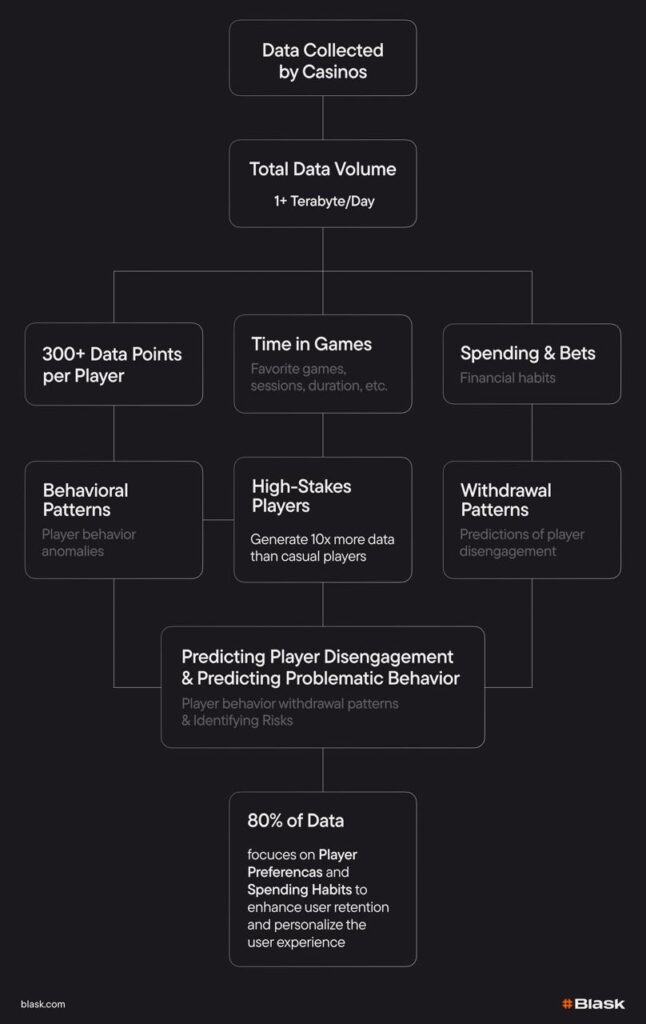
Data: from gut feeling to 1-terabyte workdays.
Gambling has always been statistical, but 2025 operators move far beyond odds-setting.
They stream every micro-event: spin velocity, UI dwell time, even device-gyro movement. Those signals feed deep-learning pipelines that forecast value (or risk) for every user in milliseconds.
✨ Blask handles the outside-world signals for you.
Blask Index turns every hour of search activity — across every iGaming brand in a chosen country — into a single, live market-volume score. With that feed on your dashboard you can:
- spot a rival’s TV-ad surge the same hour it airs, not four weeks later;
- measure how much overall demand is growing (or slipping) day-by-day;
- benchmark your own share against both local and international operators;
- trigger automated alerts or campaigns the moment your share wobbles.

📚 Want the technical deep dive? Read more → What is Blask Index
Market Explanation: turning “what happened” into “why it happened”
Dashboards are great at answering what.
Boards, regulators, and growth teams keep asking why.
That’s where Market Explanation comes in.
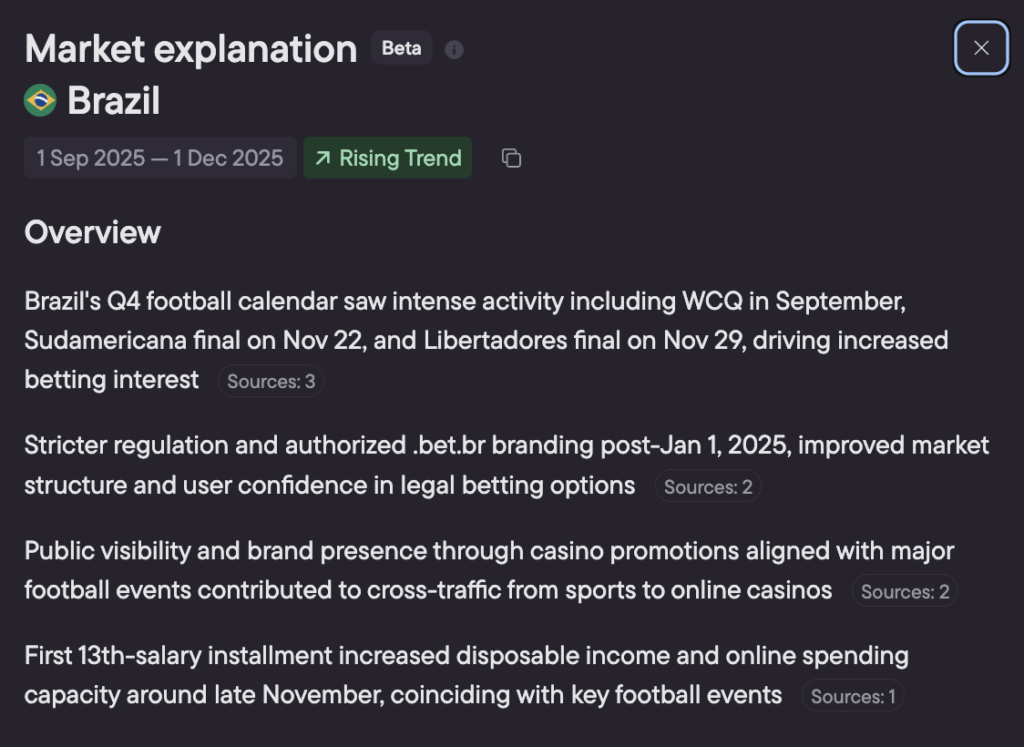
Instead of staring at a line chart and inventing a narrative in Slack, Market Explanation:
- flags inflection points (drops, spikes, sustained reversals)
- maps them to probable drivers: sports events, holidays, payment disruptions, regulatory actions
- creates a structured story with sanity checks, driver segmentation, and a source-backed event table
- outputs a ready-to-ship market note you can reuse for internal decks, briefs, or campaign planning
Think of it as:
“Explain this market like a sharp analyst would—using data, not vibes.”
If you’ve ever had the “Is this a real trend or just noise?” argument—Market Explanation is the feature that ends it politely.
Personalisation becomes prediction.
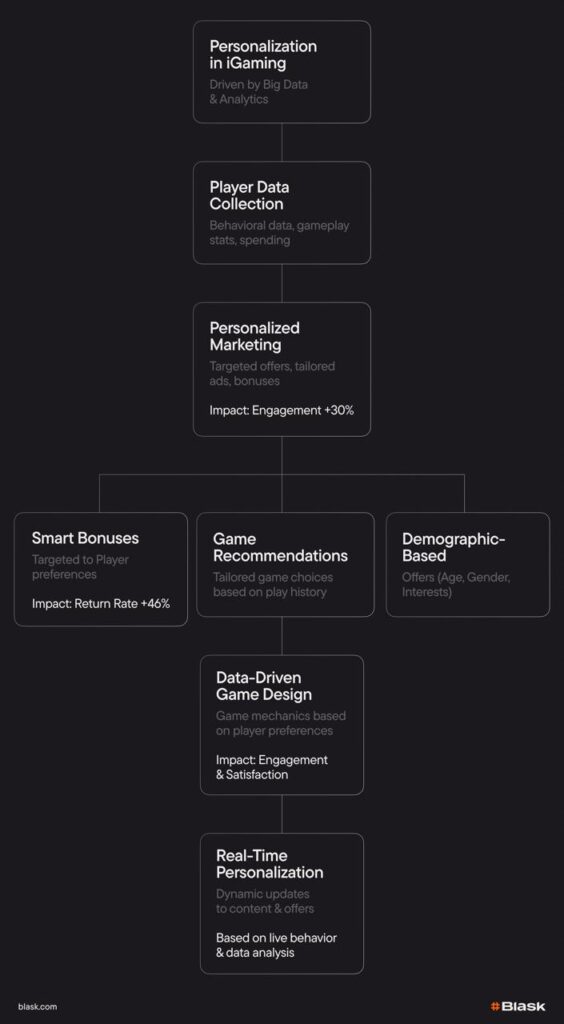
Data’s first payoff is ultra-specific personalisation.
By analysing those 300+ behavioural variables (time-in-game, bet size, device graph, etc.), AI suggests the next bonus, bet type, or slot theme before the player even looks for it.
Operators that moved to AI-driven targeting saw engagement climb 30–40% in recent case studies.
✨ Blask Customer Profile deepens that lens.
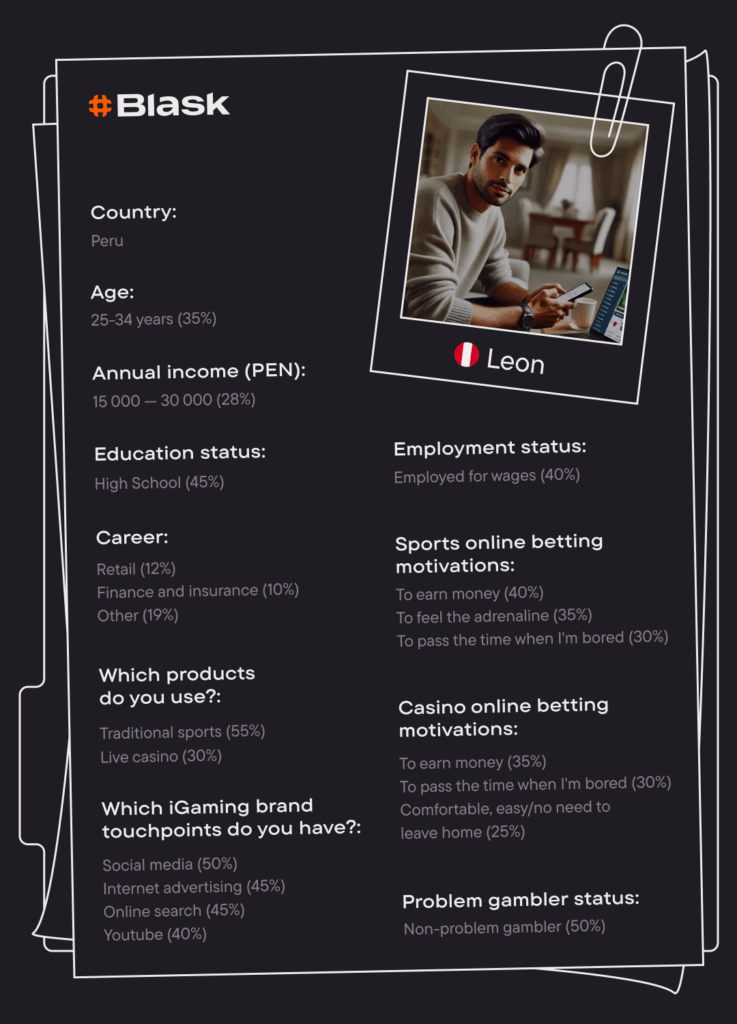
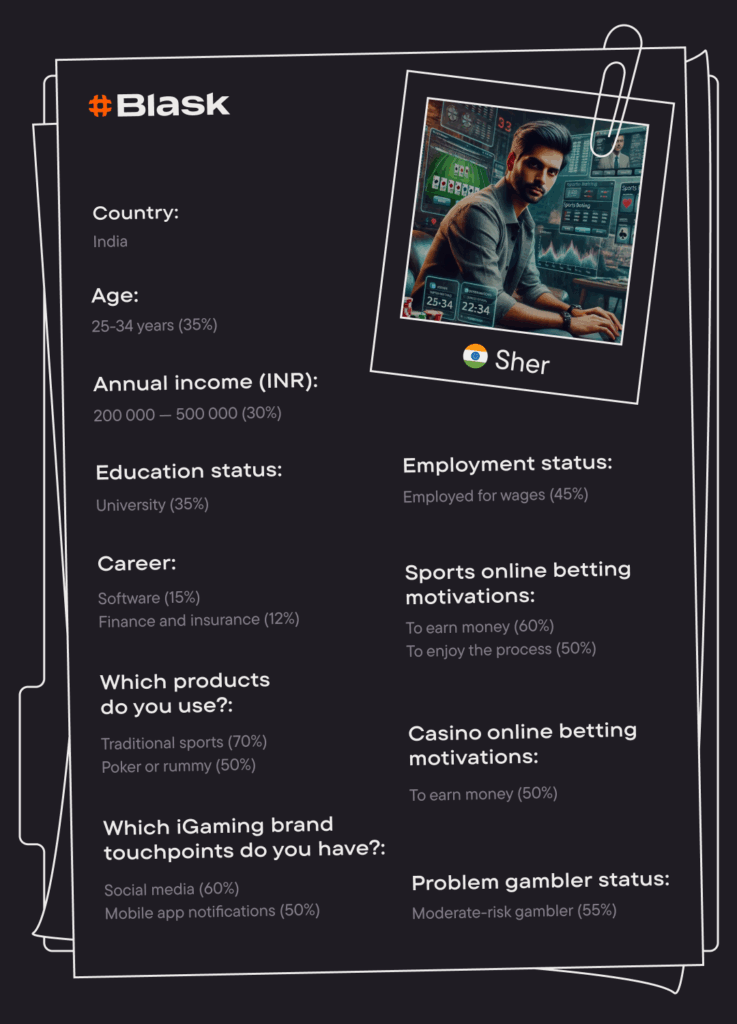
Built from 80 000 on-the-ground surveys plus modelled trends, it answers questions databases can’t: How do bettors in India differ from esports fans in Peru?
Marketers swap spray-and-pray bonuses for country-specific offers that lift conversion yet stay within affordability guidelines.
📚 Read more: What is Blask Customer Profile?
Real-time risk: fraud, AML and safer play.
The darker side of growth is fraud. Sumsub’s 2024 report logged a 64% year-on-year jump in attempted gaming fraud, with selfie mismatches topping the chart.
Machine-learning models now scan thousands of transactions per second and quarantine suspect wallets before chargebacks land, delivering roughly 48% fewer fraudulent payouts across early adopters.
Regulators are leaning in: the UK’s 2024 white paper calls for algorithmic transparency, while Ontario already mandates real-time risk flags.
Marketing ROI in an AI era.
Data isn’t valuable until it pays rent.
Platforms report double-digit ROI uplifts once campaigns are driven by behaviour scores instead of segments built by hand.
Blask automates the upstream step: its Brand’s Accumulated Power (or BAP) widget ranks every competitor, while APS and CEB translate share into projected new customers and revenue.
📚 Read the Blask’s CEO essay: Ushering in APS & CEB for a new era of brand performance
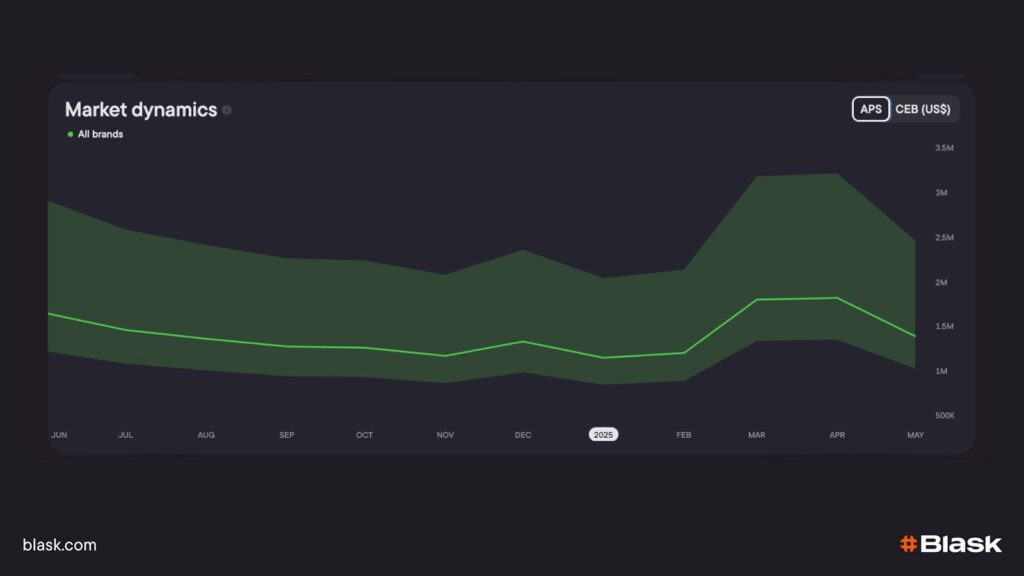
A CMO can open the dashboard, see India tilting toward parlay-heavy brands, and redirect creative spend the same afternoon.
Ethical edge & regulation-ready analytics
2025’s operator lives under sharper scrutiny: dynamic loss limits in Malta, spend-cap pilots in the UK, algorithm audits everywhere.
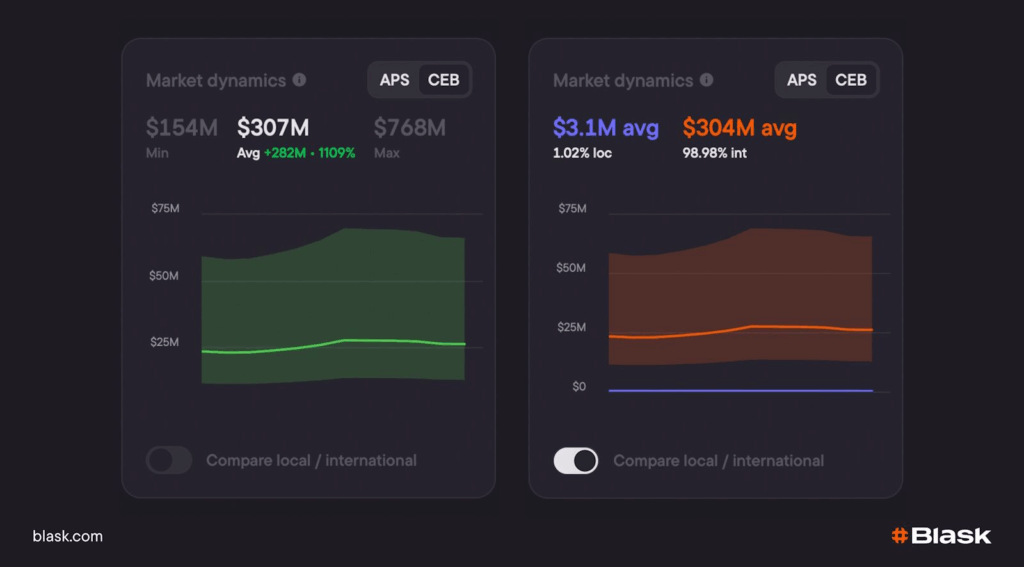
Blask’s datasets come with country-tagged compliance modes; toggle “LOC vs INT” and all charts split instantly between domestically licensed and offshore brands, making regulator submissions (and board decks) painless.
Looking ahead
IDC forecasts global AI spend to hit USD 950 billion by 2026.
In gambling the winners will be the firms that marry internal telemetry with outward-facing tools like Blask, swap monthly PDFs for hourly dashboards, and balance personalisation with proactive care controls.
Big data may be the hidden hand, but with Blask on the console that hand is visible, measurable, and — most importantly — profitable.