

MarketsAfrica iGaming market 2026: South Africa and Nigeria speed up, Kenya stalls
Blask data from the Vision by Clast magazine is now online, and nine months of 2026 data show where the Africa iGaming market is actually growing.


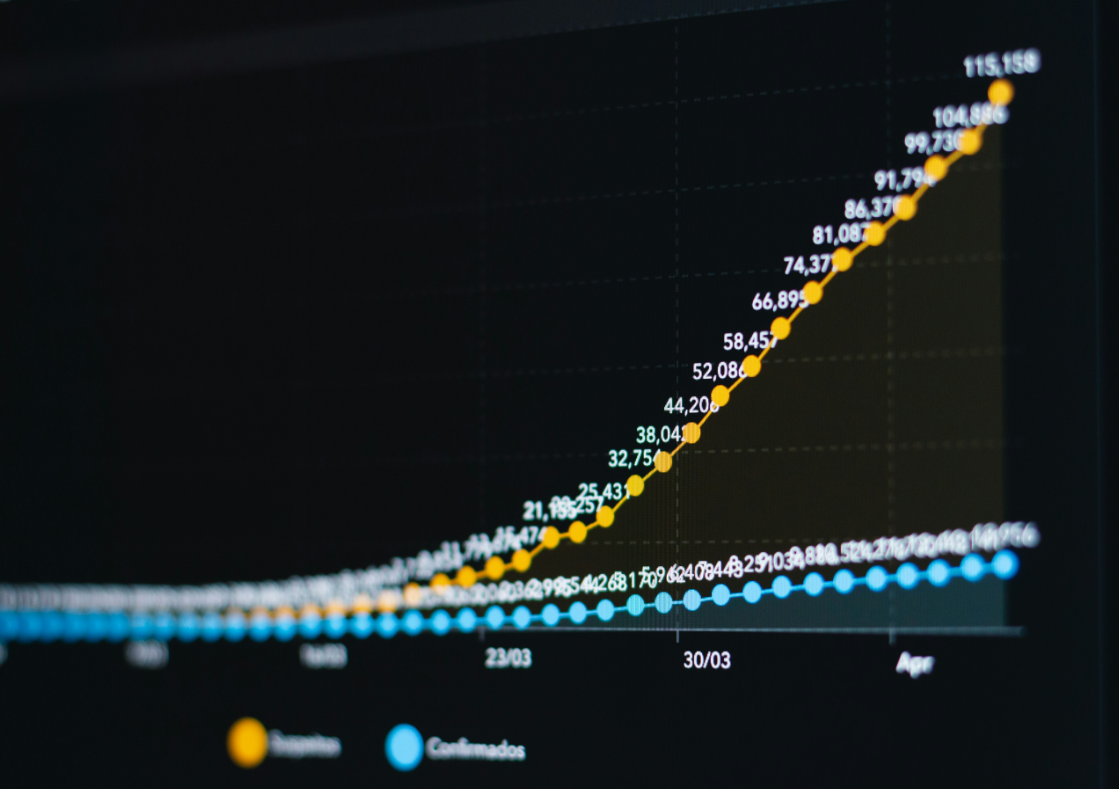





The click-to-registration rate (Click-to-Reg) is the percentage of tracked clicks that end in a completed player registration. It sits between the ad click and the first deposit in the iGaming acquisition funnel. Operators and affiliates use it to check whether landing pages, traffic sources, and sign-up flows turn interest into accounts. Click-to-Reg is the share of eligible tracked clicks that lead to registrations under a defined set of attribution and measurement rules. It answers one question: of the people who arrived, how many created an account? Three components define the number: Some reports, however, divide by unique clicks or landing-page sessions instead. Every report should name its denominator. A registration is not a verified account and not a first-time depositor. Click-to-Reg (%) = (Attributed Registrations ÷ Eligible Tracked Clicks) × 100 For example, a campaign generates 2,000 tracked clicks and 200 attributed registrations. Click-to-Reg = 200 ÷ 2,000 × 100 = 10% Thus, the campaign produced 10 registrations for every 100 eligible tracked clicks. Also, count both numbers under the same attribution rules and observation window. Google Ads, for example, credits conversions within a conversion window after the ad interaction, 30 days by default. An affiliate campaign for a casino brand delivers these results over one month: Four problems distort the result. For example, bot clicks inflate the denominator. Duplicate registration events inflate the numerator. Unattributed registrations vanish from the count. Finally, tracking changes make two periods incomparable. Timing matters too. A player can click on October 30 and register on November 2. If the October report closes on October 31, that registration falls outside it. As a result, the newest campaigns look weaker than they are. Click-through rate (CTR) measures engagement before the click: how often an impression turns into a click. Click-to-Reg, in contrast, starts where CTR stops. It measures what happens after the click, when the visitor decides whether to create an account. For example, the illustrative campaign has 100,000 impressions → 2,000 clicks → 200 registrations. A high CTR does not guarantee a high Click-to-Reg. For example, a loud bonus banner can collect clicks from people who never planned to sign up. However, reading both shows where visitors drop. Still, each metric is a form of conversion rate for its own step of the funnel. Click-to-Reg covers one step. Next, two more metrics carry the funnel through to the first-time deposit (FTD). The three formulas are: Click-to-Reg = Registrations ÷ Clicks × 100 Reg-to-FTD = First-Time Depositors ÷ Registrations × 100 Click-to-FTD = First-Time Depositors ÷ Clicks × 100 Also, some teams calculate Reg-to-FTD against verified registrations or another eligible population, not all registrations. State which one. Illustrative funnel: The three rates connect: Click-to-FTD = Click-to-Reg × Reg-to-FTD Still, the equation holds when both stage rates use consistent populations and attribution rules. First, convert percentages to decimals before multiplying. For example, 0.12 × 0.20 = 0.024, or 2.4%. It also shows why registrations alone mislead. For instance, a campaign can double its Click-to-Reg and still deliver fewer depositors if Reg-to-FTD falls by more than half. No single Click-to-Reg benchmark fits every iGaming campaign. The same landing page can convert very differently depending on where the traffic comes from and whom it reaches. These factors move the baseline: Public benchmarks rarely disclose sample, GEO, product, period, and definition together. Because of this, one publisher’s number can’t serve as an industry standard. Instead, your own data gives a better benchmark. Group campaigns with the same GEO, channel, device mix, product, and attribution rules, and judge each group against its own history. Seven factors explain most changes. Each, however, gives you a hypothesis to test, not a verified cause. So a drop right after a landing-page change makes that change a suspect. Only a controlled test confirms it. Six practices help performance marketing and product teams lift registration conversion without hurting traffic quality. In affiliate marketing, Click-to-Reg is one of the first numbers operators and affiliates review together. Several mechanics shape it: Two click types often get mixed up. A click from an ad to the affiliate’s page is one funnel stage. A click-out from that page to the operator is the next stage. Each needs its own denominator. Otherwise, two conversions merge into one number. However, a high Click-to-Reg can still mean weak results if registrations don’t verify, deposit, or qualify. Campaign A generates twice as many registrations as Campaign B and half as many first-time depositors. By contrast, Campaign B converts 2% of clicks into depositors, against 1% for Campaign A. Also, at the same price per click, Campaign B’s cost per FTD is half of Campaign A’s. As a result, judging by registrations alone would scale the wrong campaign. Instead, read registration volume together with acquisition cost, traffic validity, and deposit conversion. However, low downstream conversion doesn’t automatically mean fraud. For example, mismatched offers, a different GEO mix, or missing payment methods can cause it too. First, Click-to-Reg comes from internal data: ad platforms, affiliate trackers, and the operator’s registration events. It shows what happened inside your funnel, not in the market around it. Blask Index also adds that outside view. It is an AI-enhanced indicator of iGaming demand built from search activity, tracked by country and brand. Take an operator whose registration conversion in Brazil declines in the third quarter of 2026. The team first checks landing pages, traffic composition, tracking, and registration friction. Then it looks at the market. For example, Brazil’s monthly Blask Index fell from 239.2M in June 2026 to 156.13M…