
- Updated:
- Published:
Bangladesh’s 2026 gambling law names online betting as CEB falls 24.5%
Dhaka replaced an 1867 house-gambling ban with a statute that finally covers iGaming.
On 1 July 2026 Bangladesh enacted the Gambling Prevention Act 2026, Act No. 98, and repealed the Public Gambling Act 1867. The 1867 text covered gambling houses and said nothing about a website, a mobile wallet, or a foreign-hosted sportsbook.
What the Gambling Prevention Act 2026 is about
The replacement defines online gambling and online betting — websites, apps, VPNs, live sports, betting exchanges, virtual casinos, fantasy contests, and e-sports. It also criminalises advertising, affiliate and influencer promotion, fake SIMs, and gambling payments through banks, mobile wallets, hundi*, hawala*, or crypto.
*Hundi and hawala are informal broker networks that settle a payment in one country against a payout in another, with no bank transfer between the two.
Those payments count as a predicate offence under the Money Laundering Prevention Act 2012. Online gambling carries up to five years or a Tk10M (USD$81,000) fine. Online betting carries up to seven years or Tk50M (USD$406,000), and the Cyber Tribunal hears those cases. Bookmaking, match-fixing, and VPN mirrors sit under the same statute.
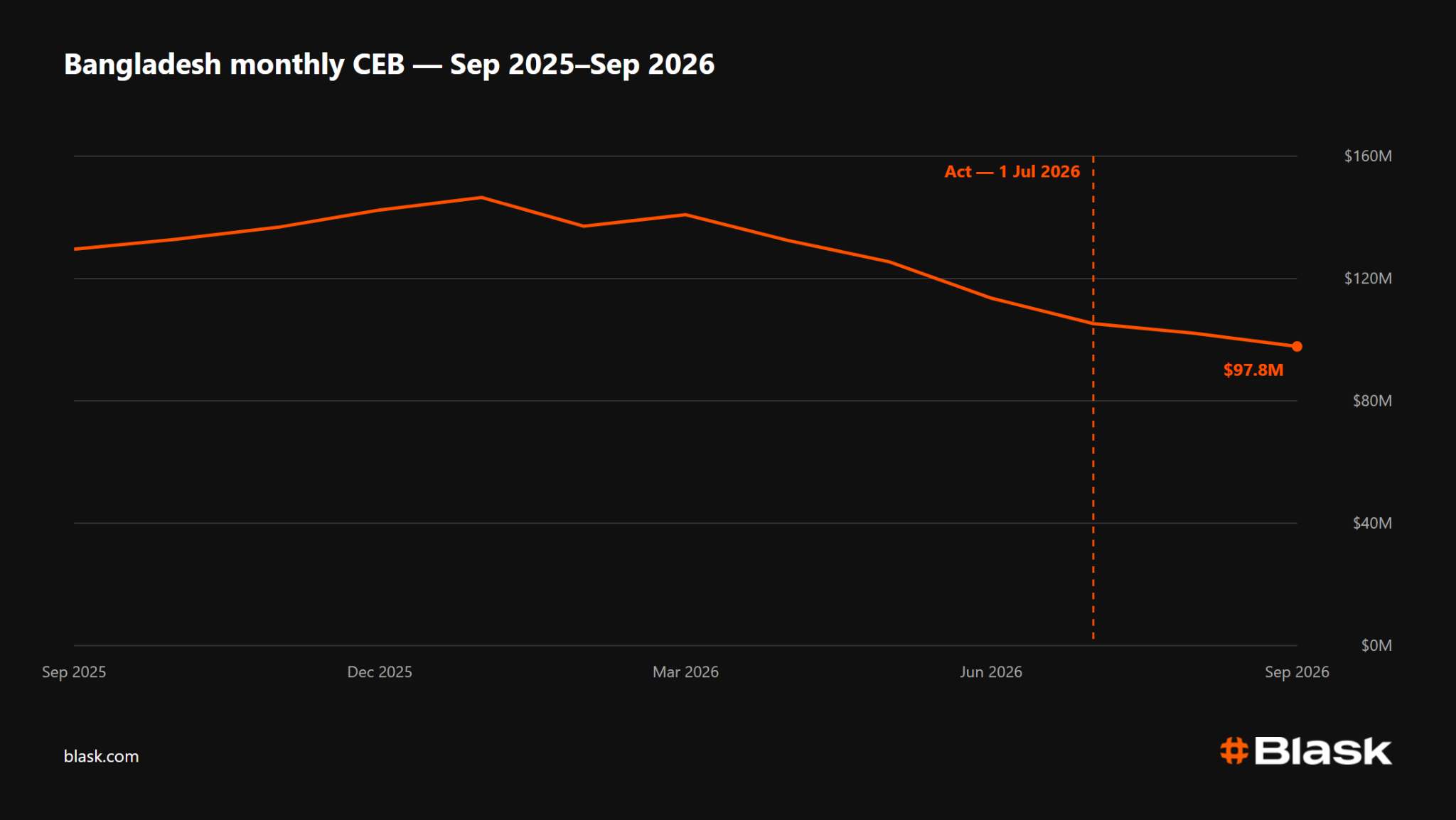
Blask data shows the market had already turned before the gazette. CEB peaked at $146.5M in January 2026 and was down 22.5% by June. September closed 24.5% below September 2025.
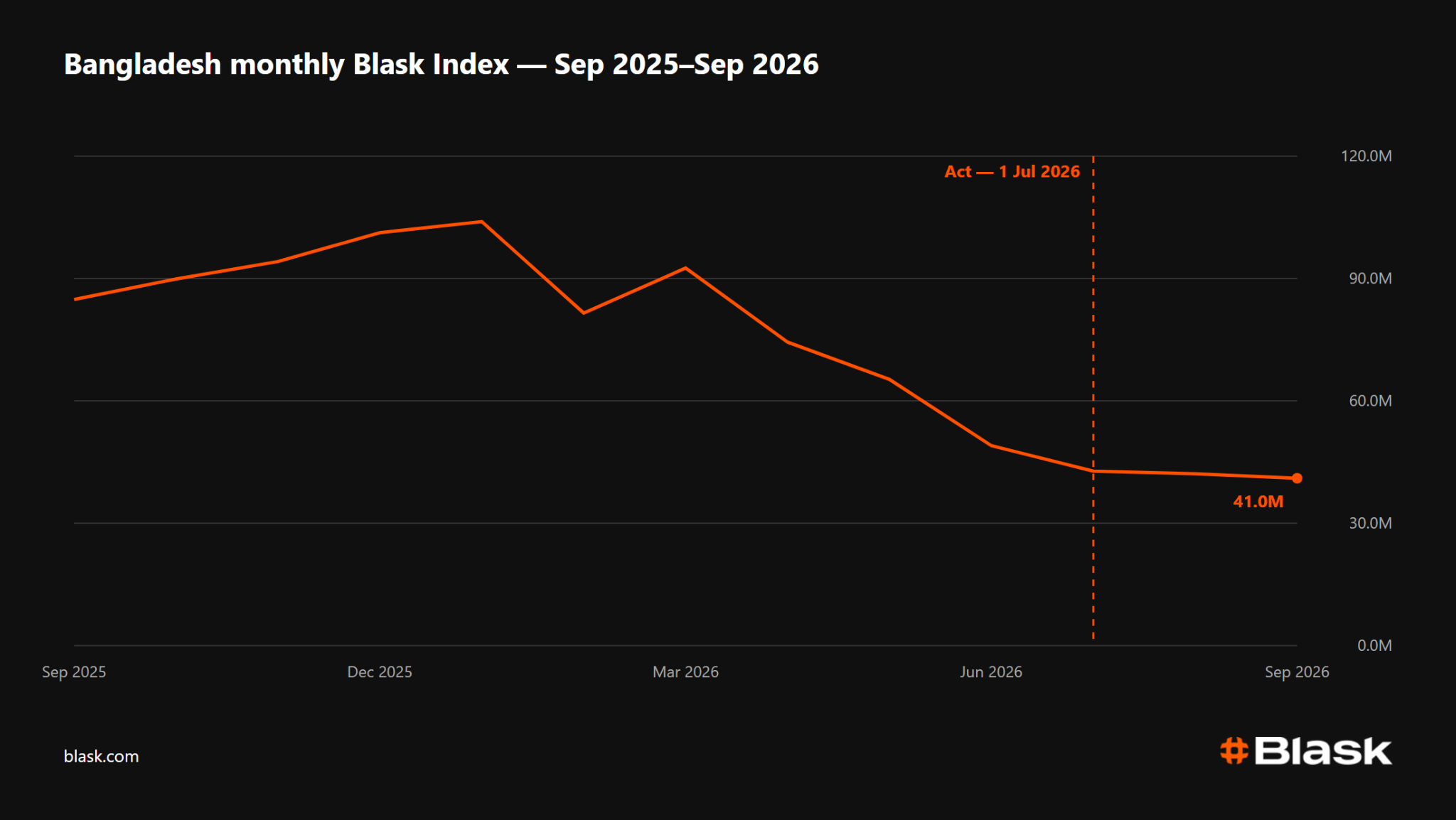
Search priced the act earlier. Blask Index fell 52.9% from the January peak to June — 87.3% of the peak-to-September drop. After 1 July the decline continued at a slower monthly pace.
The leftover demand sits on an entirely offshore market. The statute names iGaming as a crime and does not create a licence.