
- Updated:
- Published:
Brazil’s betting ban has cost licensees about R$1.2B in ten days
Ten days into Brazil’s betting ban, the licensed market has lost its revenue and most of the search behind it.
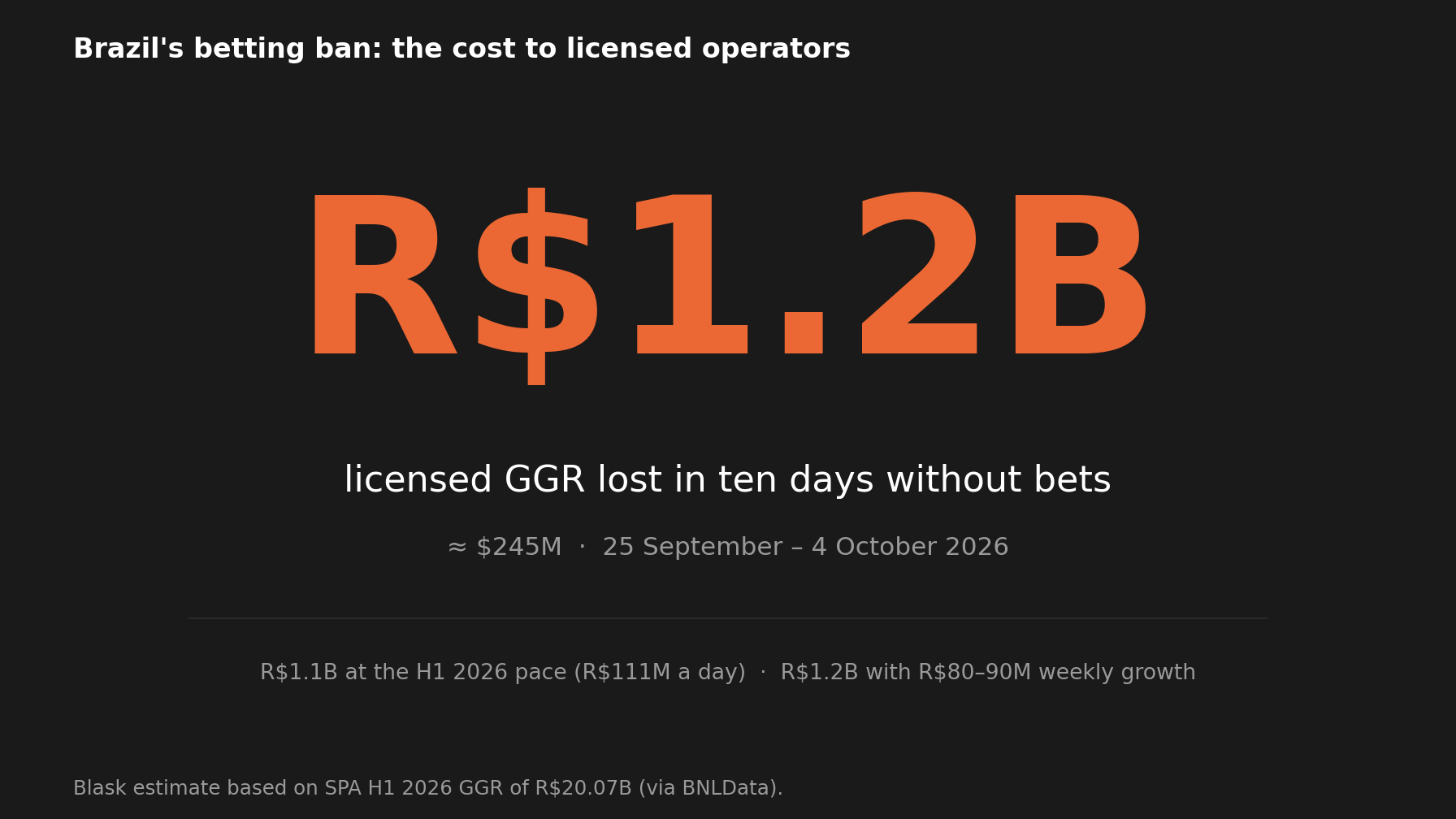
President Lula’s Provisional Measure 1,394 barred new deposits and bets on 25 September and orders licensed sites offline from 6 October. Blask has estimated what the pause has already cost Brazil’s licensed operators, and whether their players went looking for offshore brands.
The estimate starts from the regulator’s own figures. Licensed operators generated R$20.07B in GGR in January–June 2026, 15.3% more than a year earlier, according to Secretariat of Prizes and Betting data obtained by BNLData. That works out to about R$111M a day. Brazil’s seasonality is flat by the standards of other markets and the licensed book kept growing month on month, so Blask adds R$80–90M a week to the H1 pace before counting the days without bets.
Demand fell with the money. After a spike the day after the decree, onshore Blask Index dropped 82% between 1–24 September and 28 September – 3 October.
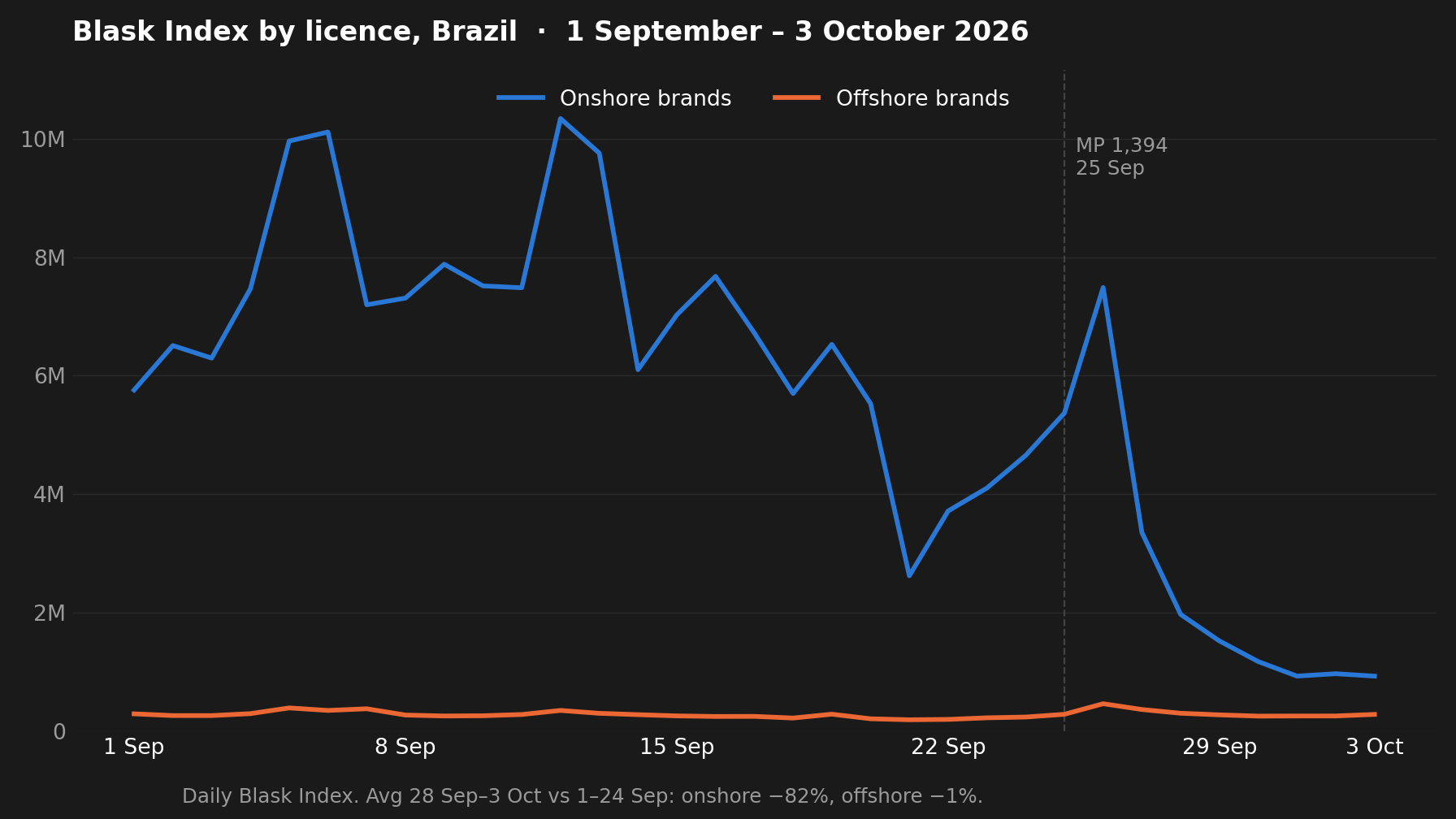
Offshore brands drew the same search as before the decree, within 1%. Their share of Brazil’s Blask Index rose from 3.8% to 17.8% only because the licensed side shrank. CEB (Competitive Earning Baseline, projected revenue) was even more one-sided before the ban: onshore brands held 96.8% of it in January–September 2026, offshore brands 3.2%.
So far the R$1.2B has not changed hands in search: Brazilians stopped looking for licensed brands and did not start looking for unlicensed ones by name. Congress has 120 days to keep or drop MP 1,394, and the onshore line is where a reversal would show first.