- Updated:
- Published:
How different events influence the iGaming market

The world never stops generating events — pandemics, sporting finals, political upheavals, regulatory shifts, platform outages. Each one leaves a measurable trace in the iGaming market. Some send demand plummeting. Others create demand spikes that last for months.
With Blask, you don’t have to guess. You can see exactly what happened, exactly when — and now, with Market Explanation, you can understand why.
Five types of events that move markets
Not all disruptions behave the same way. Here’s what Blask data shows across real events, with one consistent pattern: the market always tells you what happened before the headlines do.
📉 COVID-19: when fear outweighs entertainment
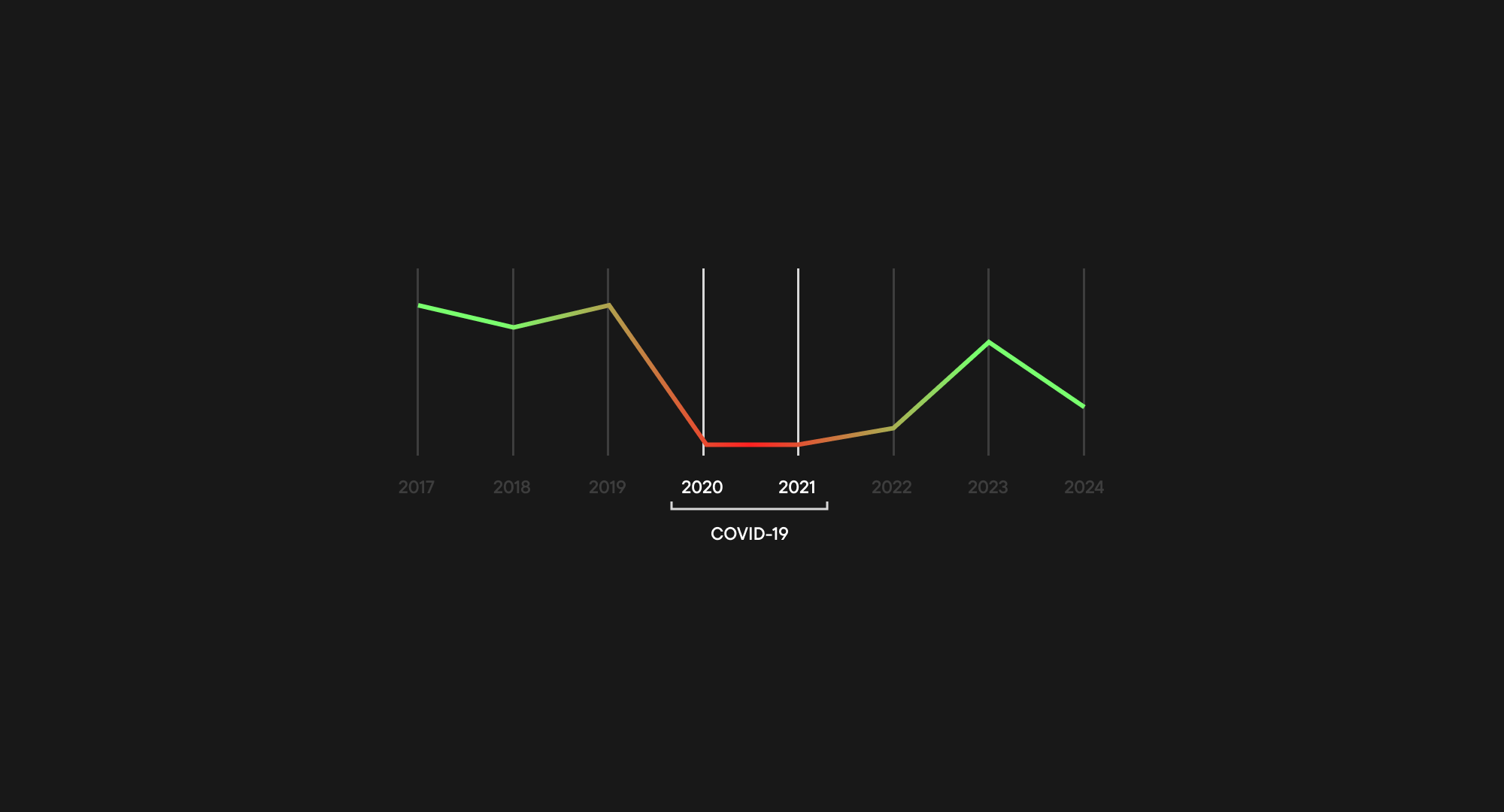
The COVID-19 pandemic remains the clearest stress-test the iGaming industry has ever faced — not because of regulations, but because of psychology.
Looking at the Blask Index for Poland, Tanzania, and India across early 2020, the picture is consistent across three continents: a decline from February onward, hitting record lows in April 2020, precisely during the peak of global uncertainty.
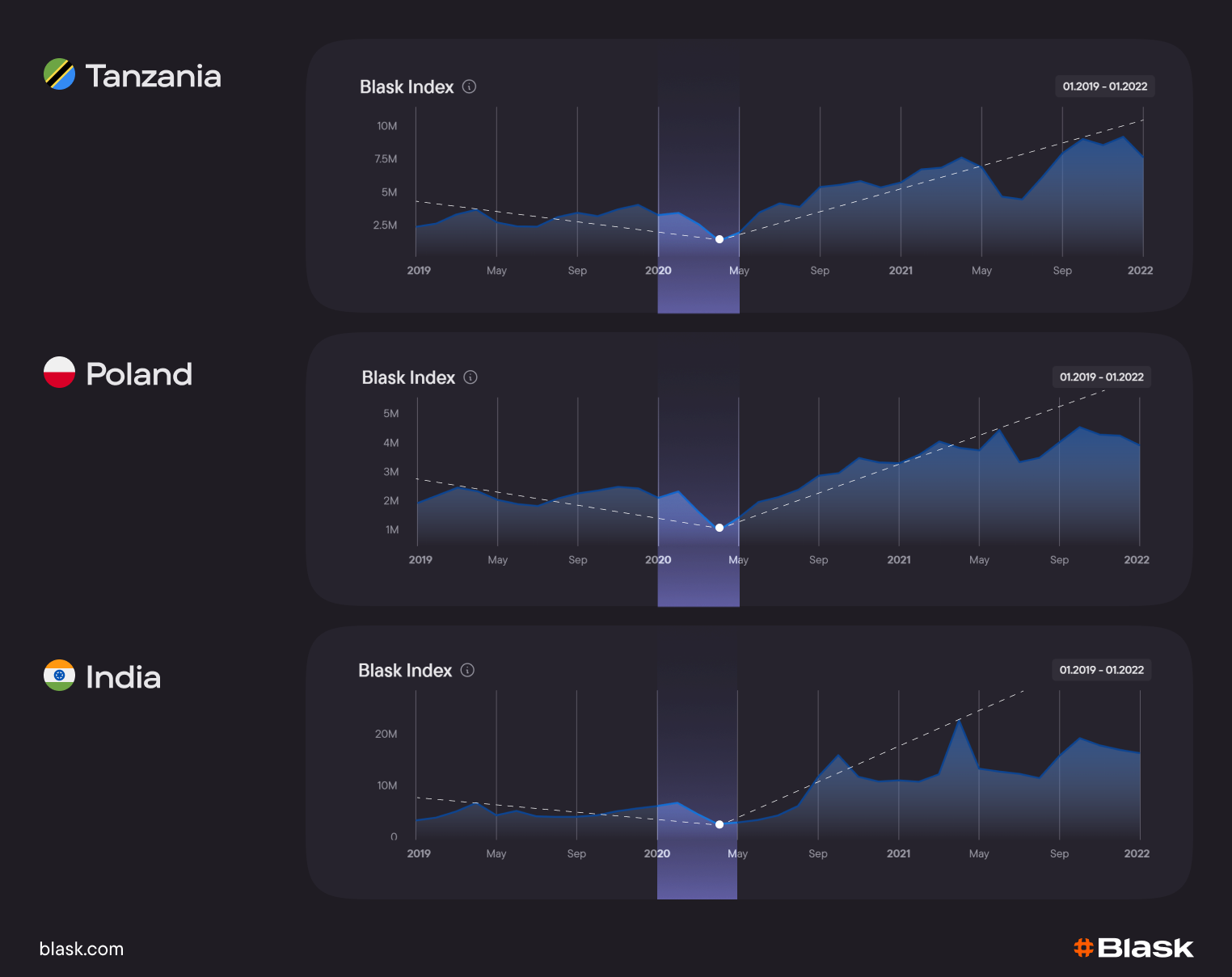
Fear and the sense of instability suppress entertainment spending. People who were stockpiling groceries or monitoring health news weren’t placing bets. The iGaming market dropped not because it was targeted — but because people’s attention and disposable income went elsewhere.
Then came the recovery. And not just a return to previous levels — a significant uplift.
By summer and autumn 2020, as restrictions eased and people adapted, iGaming demand surged. Several factors converged:
- People confined at home sought new entertainment — and many found online gaming
- Remote work freed up time and reduced commuting costs
- First-time visitors to online casinos arrived from physical venues that had closed
- Cryptocurrency adoption accelerated payment options
iGaming marketers responded quickly, and the industry emerged from COVID at a structurally higher baseline.
The takeaway: Market-wide crises depress demand temporarily — but recovery tends to overshoot the pre-crisis level. Operators who maintained visibility and retention during the trough were best positioned for the bounce.
🏏 Sports events: IPL and the demand multiplier
Blask has studied the impact of IPL (Indian Premier League) on India’s iGaming market in detail — including day-by-day tracking and brand position changes.
The full report is here: IPL 2024 impact on Indian iGaming — Blask Team Analysis.
In this article, we will explore the IPL’s influence in a more superficial manner.
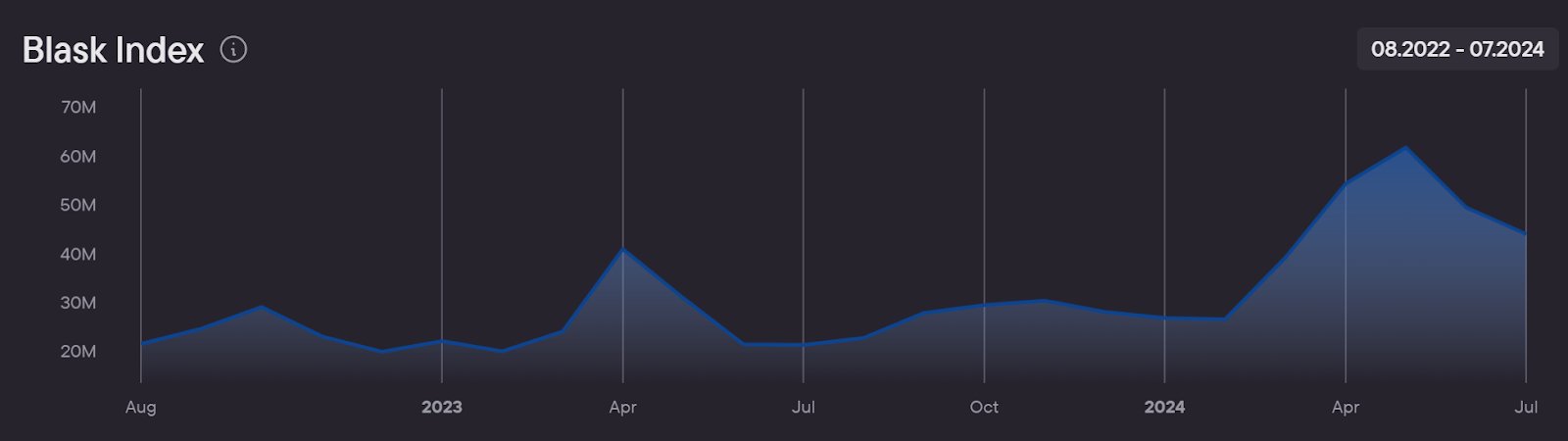
The consistent pattern confirms what operators in high-sport-engagement markets already suspect but rarely have hard evidence for: major sporting events don’t just accompany growth — they actively generate it. New audiences enter the market. Existing players engage more. APS (Acquisition Power Score) rises alongside the Blask Index, confirming that the interest converts.
And just as reliably: when the event ends, metrics return toward baseline. Act fast and align campaigns to the event window.
Blask updates every hour during sporting events, letting operators track brand-by-brand responses and adapt campaigns in real time — not the day after. data every hour, allowing you to stay on top of developments and promptly adapt your marketing campaigns to align with market realities.
💡 Read more: From Hours to Years: How Data Granularity Impacts Decision-Making in iGaming.
🗳️ Political crises: Bangladesh and what happens when a country stops
In summer 2024, Bangladesh experienced mass protests that led to the Prime Minister fleeing to India. The iGaming market dropped more than 90%.
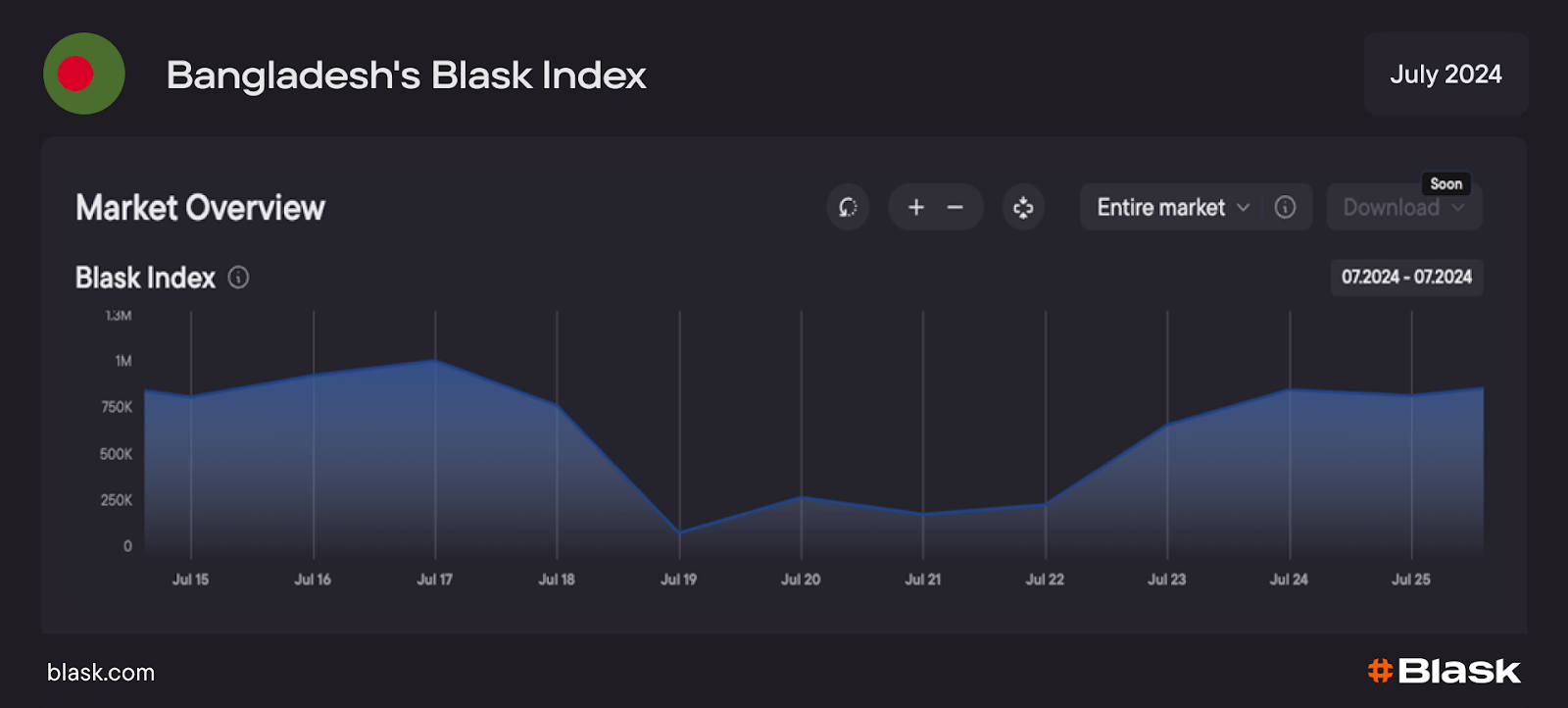
The full Blask x NEXT.io analysis is here: Political turmoil causes Bangladesh’s iGaming downturn.
The mechanics were straightforward: when a country enters political crisis, entertainment is the first thing people stop doing. Attention shifts to personal safety, movement, and news. Betting and gambling become irrelevant.
What made the Bangladesh case instructive was what came after. Once the situation stabilised, the market recovered fully — effectively returning to its pre-crisis trajectory as if the event hadn’t happened. The underlying demand was intact; only the circumstances had suppressed it.
🌎 Geopolitical pressure: Venezuela and the resilient market
Venezuela in January 2026 provided a different data point entirely — a market that faced extraordinary geopolitical disruption and largely held.
Blask’s daily Index for Venezuela remained within its normal corridor from 1–4 January, in the high-200K range. On the day of the major political event, the Index dipped 5% to 257.4K — and recovered the following day.
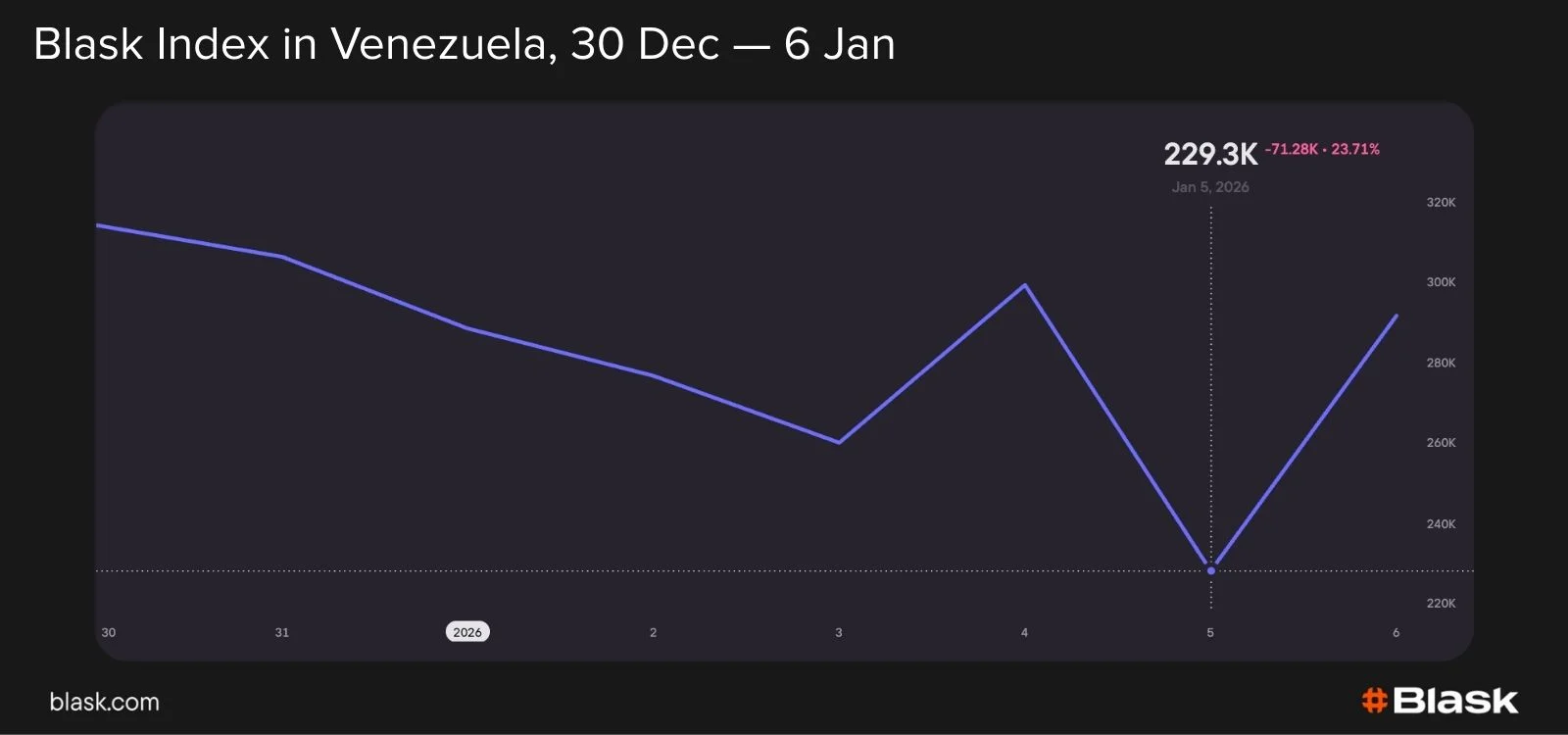
Context: Venezuela had grown its Blask Index by 134.9% year-on-year through 2025, the second-highest growth rate globally. By December, the top brand held 59% BAP (Brand’s Accumulated Power), with the top three brands collectively above 85%.
Full analysis: How Venezuela’s iGaming market is reacting to US pressure
The takeaway: Market resilience correlates with the strength of the underlying demand base. Venezuela’s growth trajectory going into 2025 gave the market structural momentum that a single geopolitical event could not reverse overnight. Operators with strong brand penetration and diversified payment infrastructure showed no fundamental disruption.
📆 Seasonality: the most predictable event of all
Not every market movement is triggered by a specific event. Many follow recurring seasonal patterns — and those patterns are just as actionable.
Blask captures seasonality at two levels:
- Monthly rhythm. Every country has a characteristic demand curve across the calendar year. In most football-driven markets, demand softens in winter (Nov–Jan) and peaks in the spring run-in and early autumn. In cricket markets like India, the IPL window creates a consistent May spike. In markets with Ramadan or major national holidays, the calendar shows corresponding patterns year after year.
- Day and time patterns. Blask’s heatmap data reveals when, specifically within the week, players are most active. For example, in Azerbaijan: weekday demand peaks strongly Mon–Fri between roughly 11:00–18:00 local time, with a secondary shoulder ahead of evening kick-offs. Weekends are active but lighter than the mid-week core.
Knowing your market’s seasonality means you can plan campaign intensity, CRM cycles, and acquisition spend ahead of predictable demand curves — not just react to them.
🧠 Market Explanation: now Blask tells you why
Understanding that a market moved has always been the easy part. Explaining why — fast, and with evidence — used to require hours of analyst work. Market Explanation does it in one click.
It’s an AI-powered layer built directly into the Blask Index chart. Click any trend segment — growth, stagnation, or decline — and the system returns a structured brief explaining the forces behind that period: sports calendar events, regulatory changes, payment shifts, operator activity, macroeconomic conditions, or seasonality. Every driver comes with numbered, linked sources. No speculation.
For operators: the Bangladesh collapse, Nepal’s platform ban, Venezuela’s resilience, the IPL spike — all of these would now generate an automatic Market Explanation the day they appeared in Blask data. No consultants, no research lag. Just context, when you need it.
Blask tracks everything
Whether an event is global or local, a sporting final or a social media ban, a pandemic or a political transition — its effect on the iGaming market will appear in the data before most people start talking about it.
Blask updates across all tracked brands and markets every hour. Market Explanation tells you why the movement happened. Blask Trends shows you whether it’s a temporary spike or a sustained direction shift.
The world never stops generating events. The operators who see them first — and understand them fastest — are the ones who stay ahead.