
- Updated:
- Published:
Kazakhstan iGaming market 2026: licensed bookmakers lost 70% of demand in 6 months

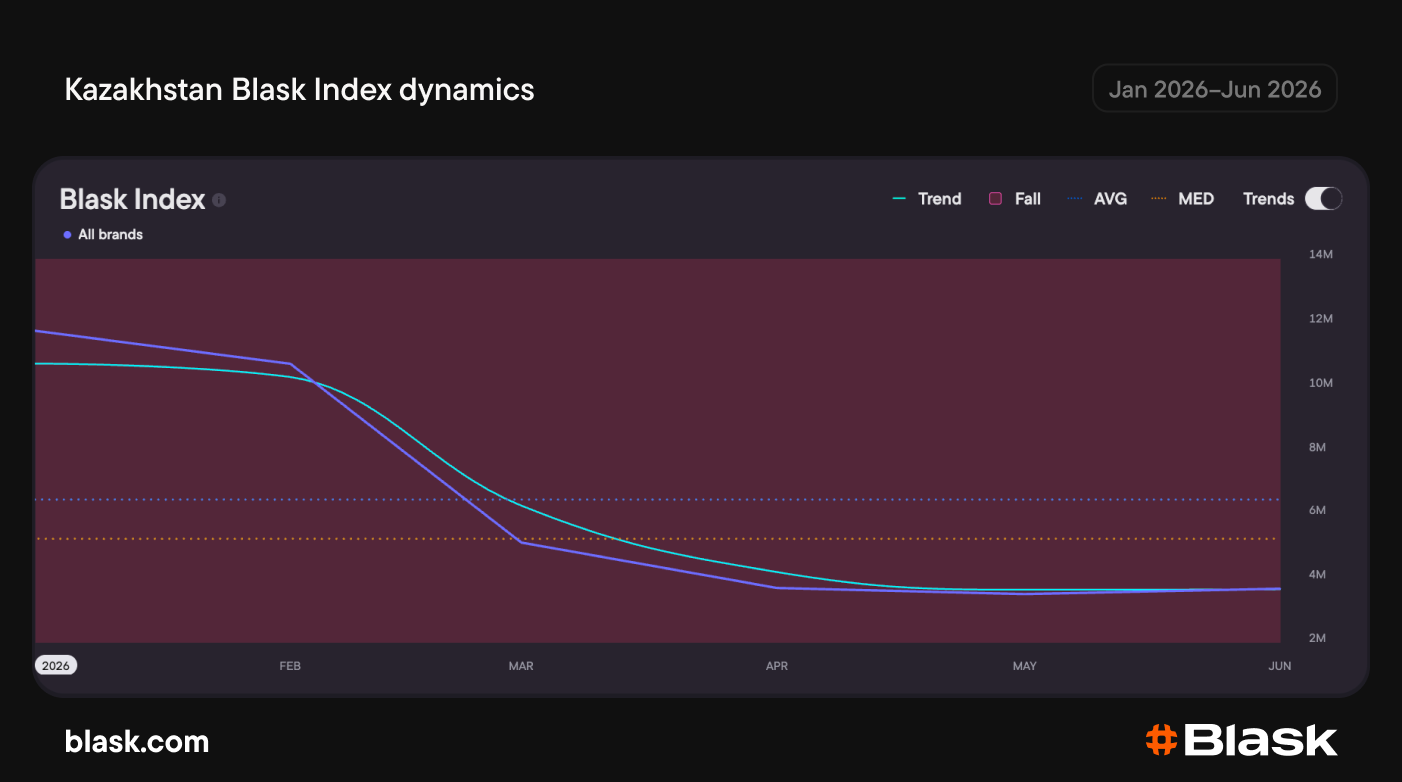
Kazakhstan’s licensed iGaming brands lost nearly 70% of their combined Blask Index between January and June 2026, after mandatory NomadPay payment integration on March 5 cut off deposits and withdrawals for almost every local bookmaker. 1xBet fell 36.76% month over month, and Bet365 dropped 26.91%.
Kazakhstan’s licensed iGaming market lost nearly 70% of its Blask Index from January to June 2026 — the sharpest decline Blask has recorded in a major CIS market. Three regulatory measures triggered the crash, and one bookmaker turned the disruption into a competitive advantage.
Kazakhstan’s licensed bookmakers lost 70% of demand in six months
Onshore brands took the hardest hit in the broader decline, with their Blask Index falling nearly 70% from January to June.
The trouble started on March 5, when the ESU went live with mandatory integration through NomadPay. Banks cut off deposits and withdrawals for almost every local bookmaker, and tight deadlines left many operators unprepared. Tennisi CEO Ruslan Suleymanov explained that the legal market effectively ground to a halt.
While licensed operators couldn’t process payments, offshore brands’ share of total BAP rose 9 percentage points, from 3% in February to 12% in April, as some players shifted to unlicensed platforms. But on May 1, the Financial Monitoring Agency ordered mobile carriers to block payments to illegal online casinos. Offshore Blask Index also fell after that, declining 11.7% from March to June.
Fonbet was the only bookmaker that never went offline
From March to June, Blask Index kept falling for most brands hit by the payment freeze: 1xBet dropped 36.76% month over month, Parimatch fell 22.36%, Bet365 dropped 26.91%, and Vavada fell 33.77%.
Fonbet was the exception — the brand had already completed its integration and never stopped processing payments. Blask Index jumped in March as competitors stumbled, and it added another 20.95% month over month in June. The timing lines up closely with the window when competitors were locked out, though Blask data can’t isolate how much of that growth was a direct transfer of players versus a broader shift toward the one operator still functioning.
Some market participants have questioned whether the rollout timeline itself played a role, given how unevenly the integration deadlines landed across top brands — a dynamic Blask will continue tracking as more operators report Q2 numbers.
OlimpBet, which also temporarily paused operations during the switch to the new payment system, is recovering more slowly. Its Blask Index rose 13% from May to June but remained 8% below its March level and was still down 0.55% YoY.
FAQ
Why did Kazakhstan’s licensed bookmakers lose demand in 2026?
Licensed bookmakers lost nearly 70% of their combined Blask Index between January and June 2026 after mandatory NomadPay payment integration launched on March 5, cutting off deposits and withdrawals for almost every operator except Fonbet, which had already completed the switch.
Which Kazakhstan bookmaker survived the payment system overhaul?
Fonbet was the only major bookmaker that never went offline during the ESU/NomadPay integration. Its Blask Index rose sharply in March as competitors stumbled and gained another 20.95% month over month in June 2026.
Did offshore betting grow in Kazakhstan during the payment crisis?
Temporarily, yes. Offshore brands’ share of total BAP rose from 3% in February to 12% in April 2026 as players shifted away from locked-out licensed platforms, but it fell again after a May 1 order blocking mobile payments to illegal casinos, dropping offshore Blask Index 11.7% by June.
How much did 1xBet’s demand fall in Kazakhstan?
1xBet’s Blask Index fell 36.76% month over month during the payment disruption between March and June 2026, one of the steepest declines among major Kazakhstan bookmakers, alongside Bet365’s 26.91% drop and Vavada’s 33.77% fall.