
Walk through any Japanese city and you will hear it before you see it: the metallic rain of steel balls, amplified jackpots, and LCD reels selling the latest anime tie-in. Neon facades say pachinko in katakana, foreigners call it pinball. Neither label captures the economics. This is Japan’s largest commercial gambling category, a vertical that predates integrated resorts, ignores online casino licensing, and runs on a legal architecture everyone understands but almost no one quotes at dinner. For iGaming operators mapping East Asia, pachinko is the baseline offline giant you cannot import as a product template. The machine looks like a vertical pinball cabinet. It behaves like a low-strategy, high-frequency gambling loop with audiovisual spectacle layered on top. Modern units are overwhelmingly electronic, with reels, animations, and licensed characters driving foot traffic the way franchise slots do in Western casinos. Pachinko parlors spread after World War II as small entertainment halls and hardened into a national institution. For decades they occupied a grey zone: socially treated as gambling, legally classified under amusement and public morals regulation rather than casino statutes. The industry peaked in scale when Japan had fewer digital distractions and smoking indoors was still the norm. JRPass’s cultural guide notes that market revenue reached roughly ¥35 trillion in 2005, a figure often compared to the combined gambling revenues of Las Vegas, Macau, and Singapore in the same era. Peak is not present. Demographics, smoking bans, mobile entertainment, and parlor consolidation pulled the market down, but it remains enormous by any global benchmark. Integrated resorts arrived late to the story. The IR Promotion and Implementation laws (2016–2018) legalised casino gaming inside certified resort districts, with Osaka’s plan certified in 2023. That path does not legalise online casino play or replace pachinko’s street-level footprint. The player journey is repetitive by design. Kawaraban’s 2026 beginner guide for foreigners puts typical jackpot odds between roughly 1/99 and 1/399 depending on machine type, which is why experienced players talk about machine selection the way slot players talk about volatility. Major manufacturers include SANKYO, Sammy, and Heiwa; modern cabinets lean heavily on anime IP, with the screen acting as much as marketing as mechanics. Most parlors run two floors in one building. Pachinko uses steel balls and continuous launch loops. Pachislot (pachinko’s slot-machine sibling) uses tokens or coins, button timing, and reel stops closer to Western slot UX. The difference between pachinko and pachislot is mechanics and pacing: balls and launch tuning versus tokens and reel-stop timing; both share parlors and prize-exchange economics. Japan-Zone’s feature on pachislot describes cabinets with music, LED displays, and franchise tie-ins that would look alien on a Vegas floor but familiar to anyone who sells branded slots. Both share prize exchange mechanics and parlor real estate. Pachinko is easier for first-time visitors to watch; pachislot demands quicker decisions. Online lobbies outside Japan sometimes label digital adaptations pachislot or pachinko-style games; those are product marketing borrowings, not licensed exports of the parlor supply chain. Direct cash payouts inside the parlor would run afoul of Japan’s Penal Code gambling provisions. The industry therefore runs the santen hōshiki (three-store system): a structure that splits parlor, prize buyer, and wholesaler so cash does not change hands on the gaming floor. How do players get cash from pachinko? Winning balls convert to prizes inside the parlor; nearby exchange counters buy those prizes for cash under this three-step arrangement. Three entities, three transactions, no cash on the gaming floor. Japan Culture Discovery’s explainer describes the National Police Agency’s long-standing stance that the arrangement is “not immediately illegal” under existing statutes, a formulation that preserves public tatemae while everyone privately understands the economic loop. Operators entering Japan for IR casino projects must not confuse this tolerance with a template for online real-money products. The loophole is parlor-specific, administratively tolerated, and unrelated to remote wagering licences. Articles 185–187 of the Penal Code criminalise gambling and running gambling places for private gain, with narrow exceptions for public lottery and publicly operated racing products. Is pachinko legal in Japan? Parlors operate under amusement and public morals regulation with a long-tolerated prize-exchange system; they are not licensed as casino gambling on the gaming floor. Pachinko sits outside the casino chapter as yūgi (gaming/amusement) regulated under public morals enforcement rules on prizes and exchange methods. Casino gaming is permitted only inside certified integrated resort districts under the Japan Casino Regulatory Commission, land-based only. Chambers’ Gaming Law Japan 2025 guide confirms that online gaming activities remain prohibited under the Penal Code even after IR legalisation. iGaming Times’ Japan jurisdiction page states plainly: there is no route to a Japanese online casino licence; betting with offshore operators from inside Japan is an offence for the player as well as the operator. Japan’s online casino market, where it exists in consumer behaviour, lives offshore and unlicensed. Can you play pachinko online legally in Japan? Not as a licensed domestic online casino product: there is no Japanese online casino licence, and betting with offshore operators from inside Japan is an offence for the player as well as the operator under the Penal Code. Enforcement has tightened around advertising, celebrity endorsements, and payment rails, but the structural fact remains: domestic online casino GGR is not a regulated reporting category because the product is not legal to offer. Digital…
Articles
Analysis, guides and market insights from the Blask team




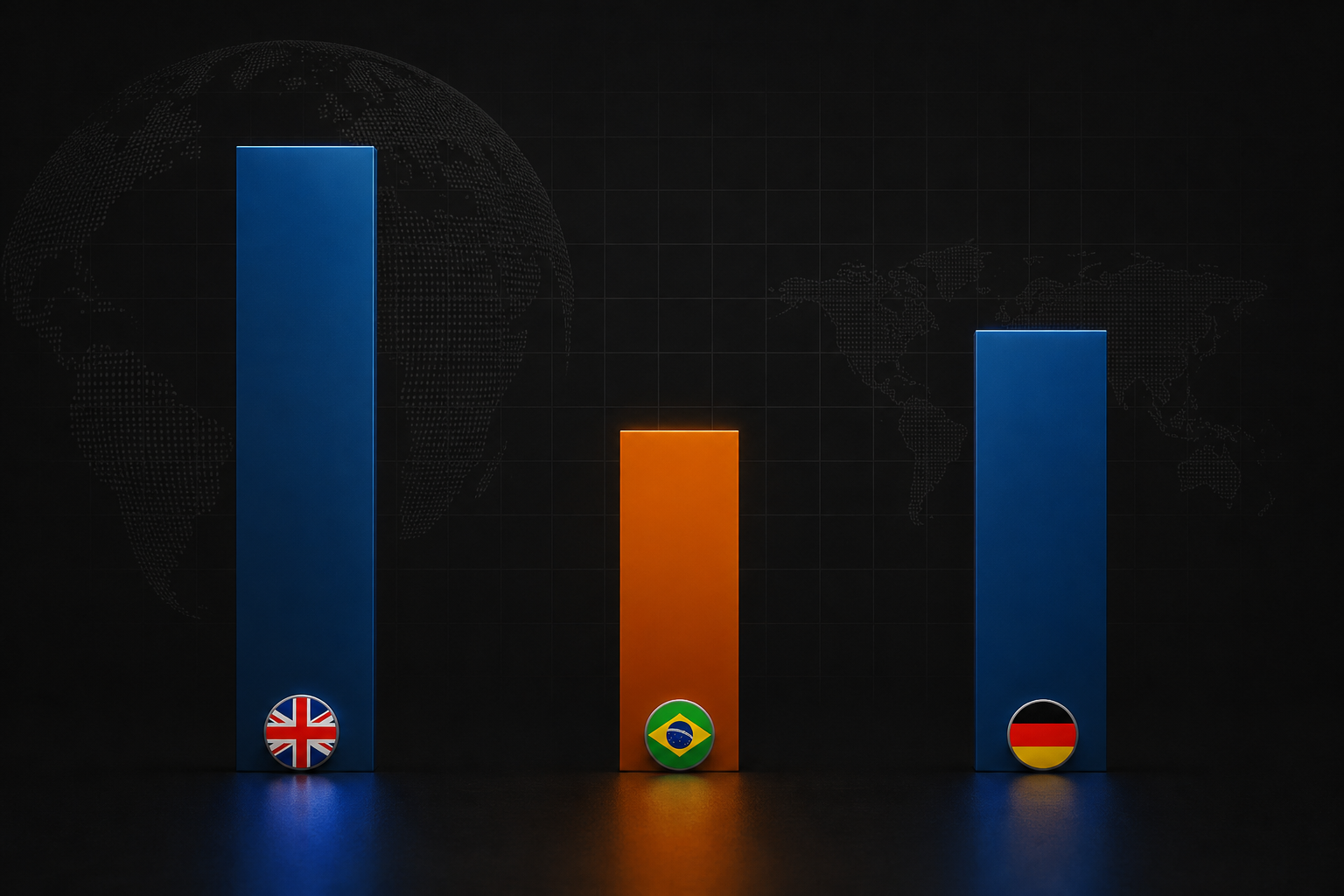



















A PSP (Payment Service Provider) is the B2B layer that moves money between players and an iGaming operator — processing deposits, routing withdrawals, and connecting the platform to card networks, bank rails, e-wallets, and local alternative payment methods (APMs). In gambling, payments are not a checkout add-on: they are high-risk, two-way, and tightly regulated. Understanding what a PSP is — and how it differs from a payment gateway, an acquirer, and the operator-side PSP Manager role — is the starting point for any serious payment stack conversation. At the simplest level, a payment service provider is a third party that enables a merchant — here, an online casino or sportsbook — to accept and disburse electronic payments without building direct relationships with every bank, card scheme, and local rail. In iGaming, a PSP typically: The PSP is usually not the player-facing cashier screen itself. That UI sits in the operator’s product or in a dedicated cashier platform — but the PSP’s APIs and merchant credentials power what happens when the player confirms a deposit or requests a withdrawal. Important disambiguation: a PSP is a company or service. A PSP Manager is an operator employee who owns PSP relationships, routing logic, and payment KPIs. This article explains the provider; the role guide explains the person who manages it. Gambling payments differ from standard e-commerce because money flows both ways, at high frequency, under heavy compliance scrutiny. The typical deposit path: Speed at authorization matters for first-time deposit (FTD) conversion. Slow or confusing cashiers leak players before the first bet. Withdrawals reverse the direction and are usually stricter: A PSP that handles deposits but not reliable payouts is incomplete for iGaming. Player trust lives in the withdrawal flow as much as in the lobby. PSPs and adjacent tools score transactions for risk, enforce 3DS where required, and flag patterns for operator review. Chargebacks, friendly fraud, and bonus abuse surface through the same pipes — which is why PSP selection sits next to antifraud and AML policy design, not inside finance alone. Search queries like “payment gateway iGaming” often mean PSP in practice. Operators need the full stack; a standalone gateway without an acquiring partner cannot settle card volume. Many operators also run a cashier platform and payment orchestrator above the PSP layer to manage multiple providers, routing rules, and unified reporting. Think of payments as stacked layers, not a single vendor: Cashier / player-facing layer. Method selection, amount entry, saved cards, auto-deposit options. Owned by product; configured with compliance and market rules. Payment orchestration (optional but common at scale). Routes transactions across PSPs by GEO, method, amount, or approval outcome. Provides failover when one provider is down or de-risking. PSP and acquiring. Authorization, settlement, dispute handling, APM connections. This is where MDR, reserves, and scheme relationships live. Fraud and compliance. Rules engines, 3DS, velocity checks, AML handoffs — often shared between PSP tooling and operator-owned systems. Reconciliation and finance. Matching PSP reports, bank statements, and internal ledgers. Where payment truth is verified daily. A launch is not complete when a deposit works once. Every transaction must be traceable from cashier event to settlement line — especially when an operator adds a method, enters a market, or migrates providers. Operators entering new GEOs often discover that local method fit matters more than global brand recognition. Brazil without Pix-capable rails is not a licensed launch plan; grey markets may lean on e-wallets and crypto-adjacent flows with different fraud profiles. The PSP layer is where those market choices become technical and commercial reality. Real-money gambling is classified as a high-risk merchant category — commonly MCC 7995 on card schemes. Processors treat it differently from standard retail: Payment access also ties to licensing. Without a valid iGaming licence and compliant structure, banks and PSPs often refuse onboarding regardless of product quality. Mature operators rarely rely on a single PSP. Common reasons: GEO and method coverage. Cards dominate some markets; Pix owns Brazil’s licensed stack; e-wallets and bank transfers lead elsewhere. One PSP rarely covers every priority rail. Redundancy and failover. If a provider has downtime, changes gambling policy, or exits a region, traffic can route to a backup — protecting conversion and revenue. Approval rate optimization. Smart routing sends transactions to the PSP or acquirer with the best historical approval rate for a given BIN, country, or method. Commercial leverage. Multiple active contracts improve negotiating position on fees, reserves, and SLAs. Regulatory fit. Licensed operators in multiple jurisdictions often need different PSP footprints per entity or market rule set. This is a criteria checklist — not a vendor ranking. Before signing, operators typically validate: The best PSP on paper fails if it cannot pay out reliably in the operator’s core markets or if scheme ratios drift unchecked. Technology selects rails; people keep them performing. Operators hire a PSP Manager — or equivalent payments lead — to own provider relationships, approval rates, routing logic, chargeback response, reconciliation discipline, and market-specific method strategy. If this article maps what a PSP is, the PSP Manager guide maps who runs the stack day to day: KPIs, career path, salary bands, and how to hire for the role. A PSP in iGaming is the B2B intermediary that connects an operator to the financial system — deposits, withdrawals, fraud signals, and settlement. It is not the same as a gateway alone or an acquirer alone; in practice, operators integrate PSPs (often several) beneath a cashier and optional orchestration layer, inside a high-risk category that demands specialist…