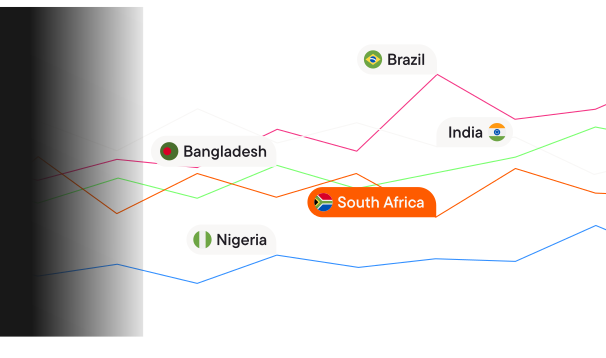
World Cup 2026 peak betting demand days
Blask Index data across five major markets shows that betting demand peaked during opening matches, knockout games and the tournament’s first weekend — not during the final.
No matches found

Blask Index data across five major markets shows that betting demand peaked during opening matches, knockout games and the tournament’s first weekend — not during the final.
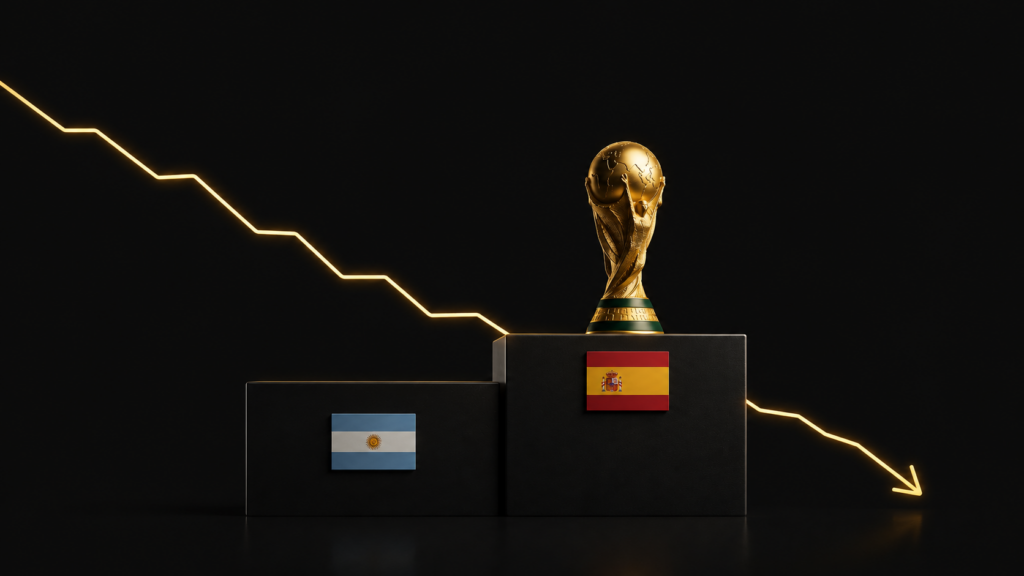
Argentina reached the 2026 World Cup final, yet betting demand had already passed its peak. Blask Index shows that interest in betting brands was strongest weeks before the final and continued to decline through the semifinal and championship match.
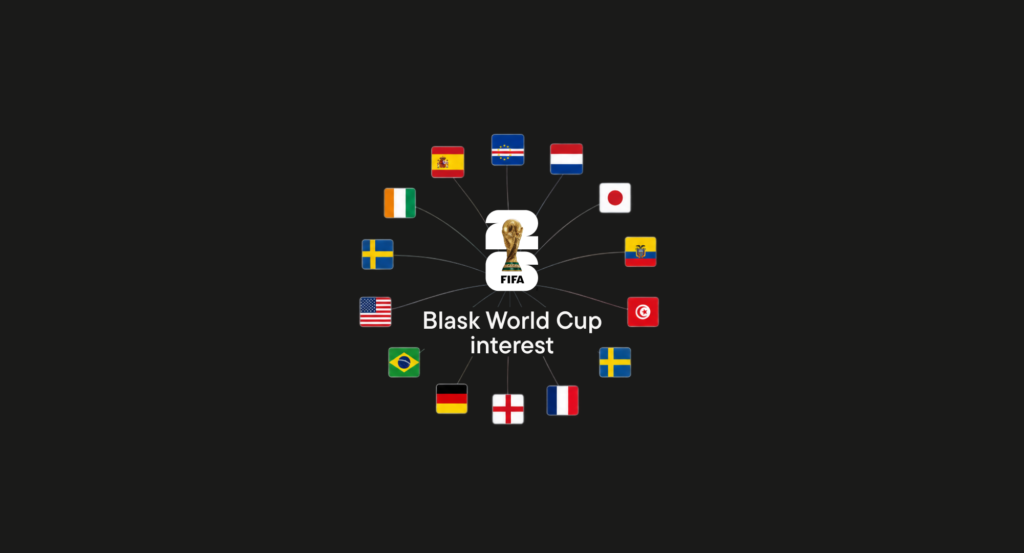
England recorded the quarterfinals’ biggest single-day market gain, while Switzerland and Norway lost share immediately after elimination. Blask World Cup Index shows how results and controversy reshaped iGaming demand.
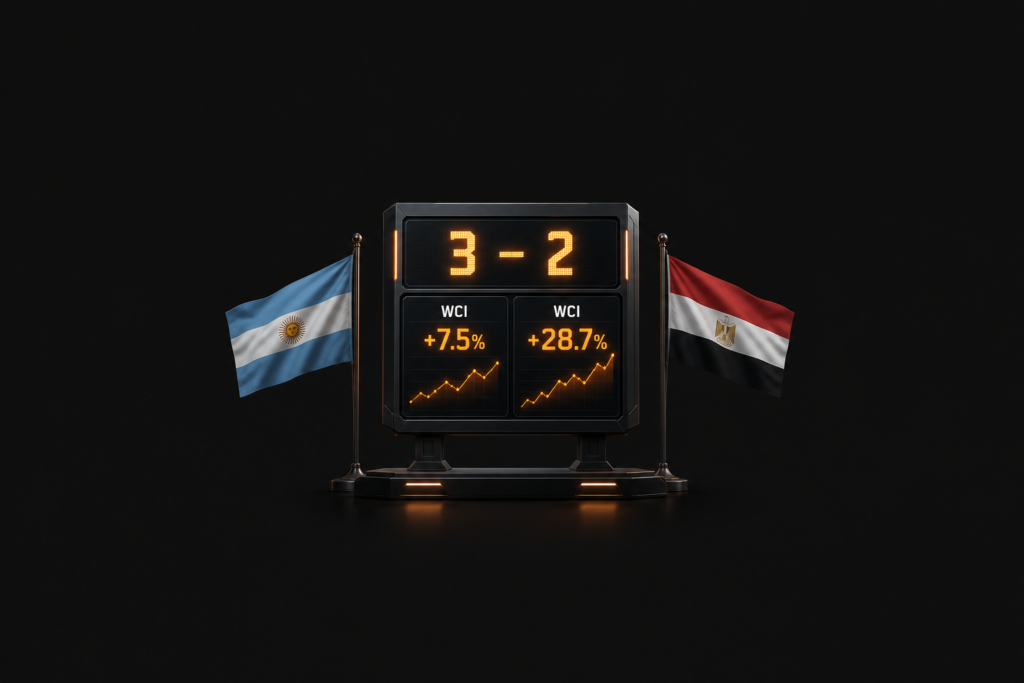
Argentina survived Egypt’s comeback challenge at World Cup 2026, but Blask World Cup Index data shows the eliminated team generated stronger market growth, with demand rising nearly four times faster after the match.



US World Cup Index jumped 51% on match day despite the team’s 4–1 loss to Belgium. Blask data shows the surge was driven by the Balogun controversy, Trump’s FIFA intervention and pre-match media attention.
Blask Index data shows that the World Cup 2026 knockout stage lifted iGaming demand in seven national markets, with Japan, Norway, Germany and France among the fastest-growing.
Three World Cup 2026 knockout matches delivered a Belgium comeback, a Harry Kane rescue act for England, and a controlled USA win with 10 men.
Three Round of 32 matches delivered three different World Cup stories: Haaland’s late winner for Norway, Mbappé’s brace for France, and Mexico’s first knockout-stage win since 1986.