- Updated:
- Published:
February madness: the US betting peak nobody talks about
Blask Index data from 2026 tells a clear story: February was not a spike. It was a sustained, three-week compression of the largest sports betting catalysts in American culture — all landing in the same 30-day window.
The setup
The US iGaming market runs on a weekly rhythm. Blask Index peaks fall almost exclusively on Saturdays and Sundays, when Americans search for and place bets. Weekday baselines are quiet. The pattern is that predictable.
February 2026 broke the pattern.
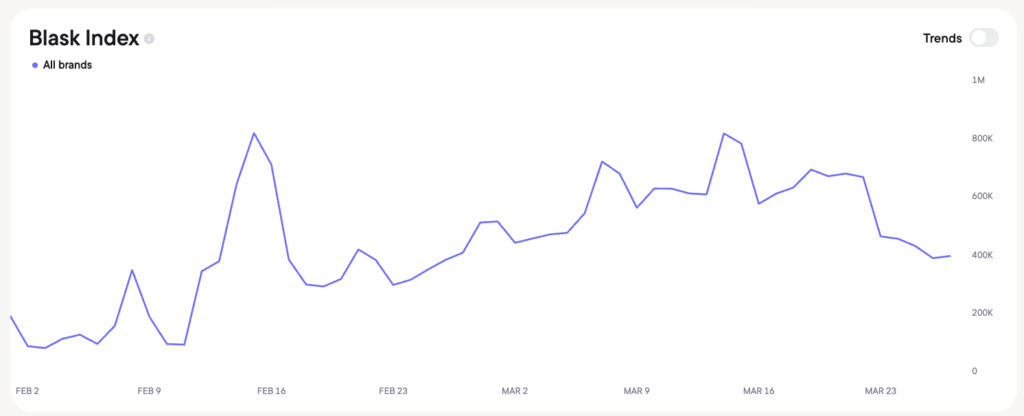
Between February 8 and February 22, the US Blask Index never fully came back down between events. Each peak arrived before the previous one had settled.
What actually happened
February 8 — Super Bowl LX
Super Bowl remains the single largest betting day in the United States. The American Gaming Association estimated over $23 billion wagered on Super Bowl LIX in 2025, and 2026 continued that trajectory. Patriots vs. Seahawks at Levi’s Stadium, kickoff at 3:30 PM ET.
The February 8 peak was the absolute high for the entire 2026. No other event came close in absolute Blask Index volume.
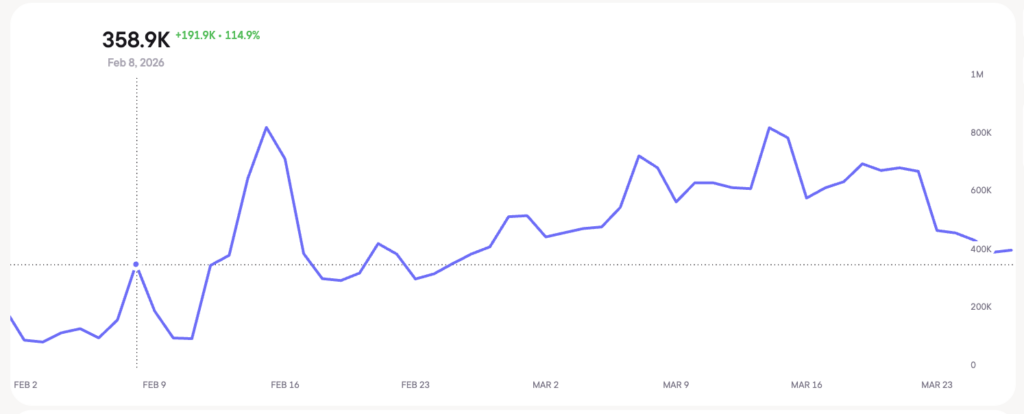
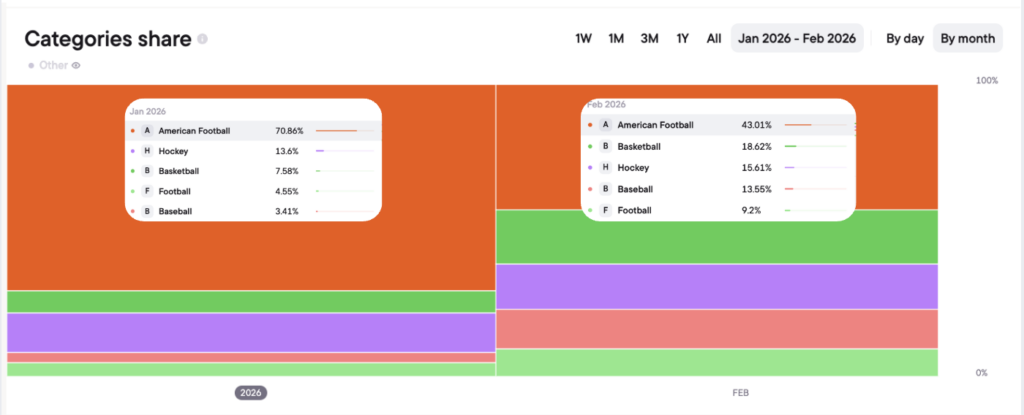
For context: American Football Blask Index in January 2026 (NFL playoffs) reached 172,578. In February, it dropped to 51,007 as the season ended — but basketball rose to 24,107 and hockey to 10,035 simultaneously. Super Bowl absorbed and redistributed demand across the entire sports calendar in a single weekend.
February 15 — Olympic hockey, group stage final
The 2026 Milan-Cortina Winter Olympics ran through February, with the US hockey team advancing cleanly through the group stage.
February 15 was the final group day: USA beat Germany 5–1. The Blask Index shows a distinct secondary peak — 829.8K, with the trend line at 383.6K.
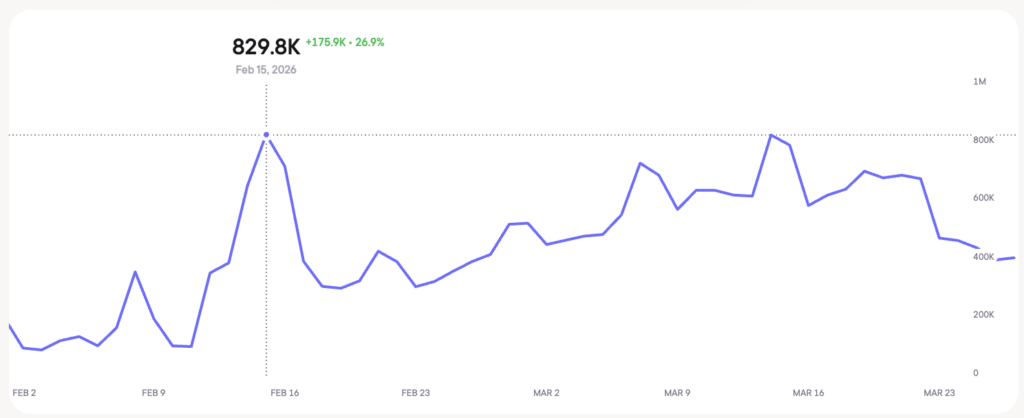
Group stage results don’t typically generate this kind of demand signal. The explanation is structural: with the Super Bowl high still in recent memory, US bettors were already primed and active. The Olympic hockey story gave them a continuation. The search volume reflects sustained engagement, not a discrete event spike.
February 21 — Olympic semifinals
This is the most behaviorally interesting data point in the dataset.
The US beat Slovakia 6–2. Canada beat Finland 3–2. The final was set: USA vs. Canada on February 22 at approximately 2:30 PM UTC — early morning ET.
The Blask Index peaked on February 21, not February 22.
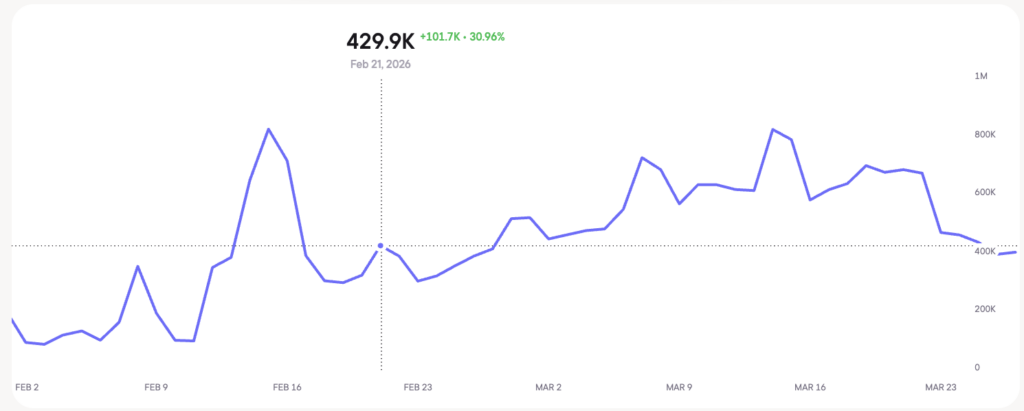
American bettors placed their searches Saturday evening Eastern Time in anticipation of the Sunday morning final. By Sunday, lines were largely set and the window for research had closed. Blask captures betting intent before it converts to wagers — and here, intent peaked the night before the most-watched hockey matchup in years. US-Canada Olympic hockey finals consistently rank among the highest-rated winter sports broadcasts in North America.
The structural factor behind all of it
The individual events explain the peaks. They don’t fully explain the elevated baseline.
Blask Index for US “All Brands” was running in the 200–300K range through December 2025. By February, the baseline between events was consistently higher. This reflects a trend visible across the full annual dataset: US offshore market volume has been growing, and the addressable audience for iGaming search is larger than it was 12 months prior.
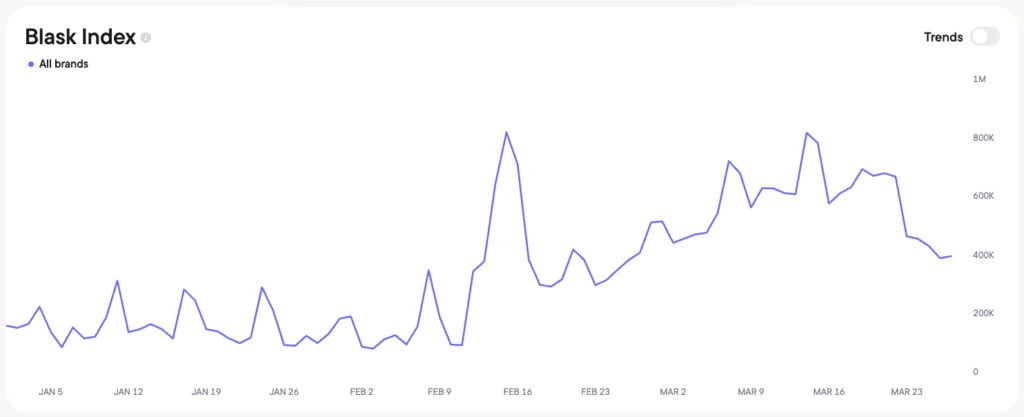
This is consistent with broader industry data. The AGA reported $13.71 billion in US sports betting revenue for 2024 — a 26% YoY increase. But that number captures only licensed domestic operators. Blask data estimates over 66% of total US iGaming demand flows to offshore, unlicensed platforms — a market segment that regulated reporting doesn’t reach.
The February events landed in a market already running hotter than headline figures suggest.
What the numbers show
| Date | Day | Event | Signal |
|---|---|---|---|
| Feb 8 | Sun | Super Bowl LX — Patriots vs. Seahawks | Absolute annual peak |
| Feb 15 | Sun | Olympic Hockey group stage — USA 5–1 GER | 829.8K Blask Index |
| Feb 21 | Sat | Olympic Semifinals — USA advances to final vs. Canada | Peak precedes game by one day |
| Feb 28 | Sat | Post-Olympics: NHL resumes, NBA in full swing | Baseline holds above December levels |
What this means for anyone covering US sports betting
February is not an anomaly to explain away. It is the annual compression point for US iGaming demand — the one month where football’s climax, international hockey, and Olympic betting intent overlap.
March Madness drives significant handle for legal sportsbooks — the AGA estimated $3.1 billion wagered on the 2025 NCAA Tournament.
But in raw demand signal terms, the Super Bowl alone outperforms the entire tournament in search-based intent. Add two weeks of Olympic hockey into the same calendar month, and February becomes the outlier that the industry largely ignores.
Blask Index data shows the audience for US sports betting is larger, more active, and more event-responsive than regulated reporting captures. The full market is significantly bigger than what shows up in state gaming commission filings.
February is where you see it most clearly.