- Updated:
- Published:
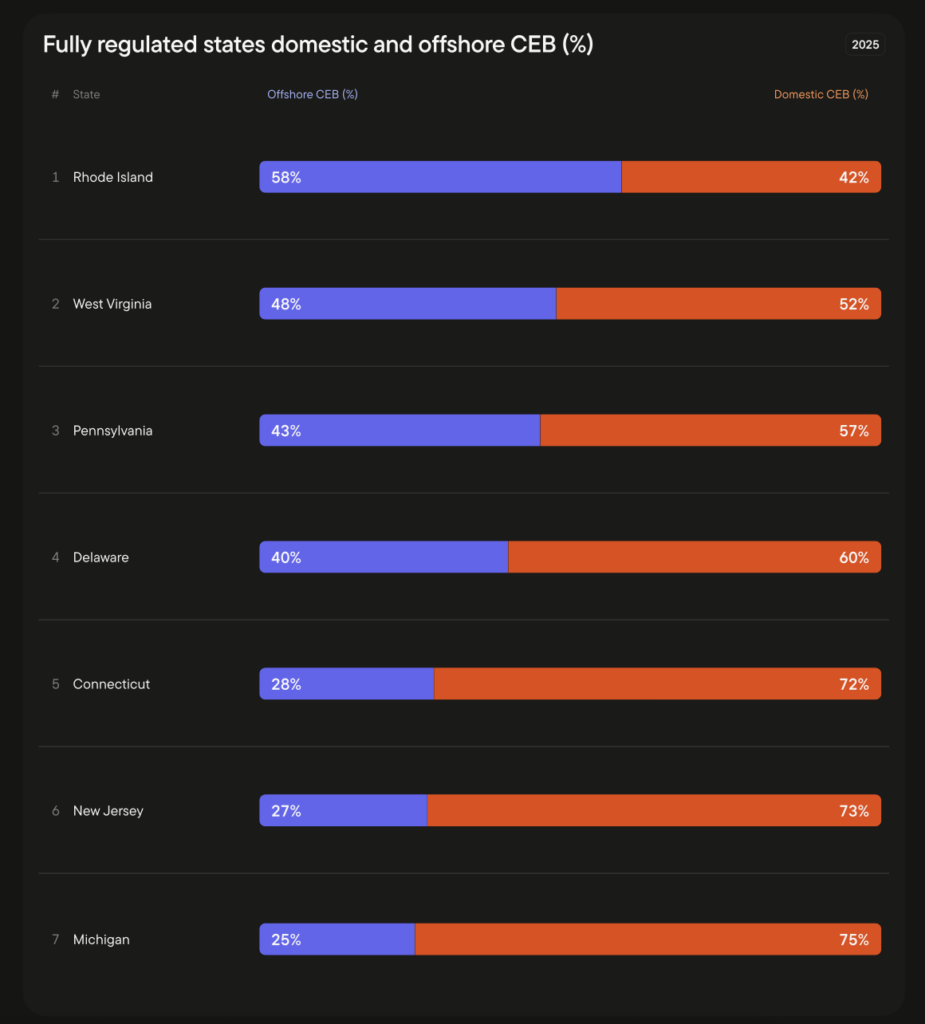
Michigan has 75% licensed operators CEB. No other state has done better
Four years after launching both online casino and sports betting simultaneously, Michigan has achieved the highest domestic brand’s Competitive Earning Baseline (CEB) of any regulated U.S. state, with licensed operators capturing approximately 75% of the state’s estimated $4.9 billion online gambling market.
The Michigan result is not an accident.
It reflects a specific regulatory design: comprehensive licensing that covers casino and sports betting simultaneously, a competitive multi-operator framework that prevented any single brand from monopolizing the market, and enough time for the licensed ecosystem to develop marketing reach, loyalty infrastructure, and product quality that rivals or exceeds offshore alternatives.
A market unlike any other in America
Michigan launched online casino and sports betting on the same day: January 22, 2021. That decision was deliberate. The Michigan Gaming Control Board spent the months after the 2019 legalization bill negotiating licenses with every major operator simultaneously.
By launch day, five competing platforms were live. Players could bet on sports and play slots through the same app, from the same account.
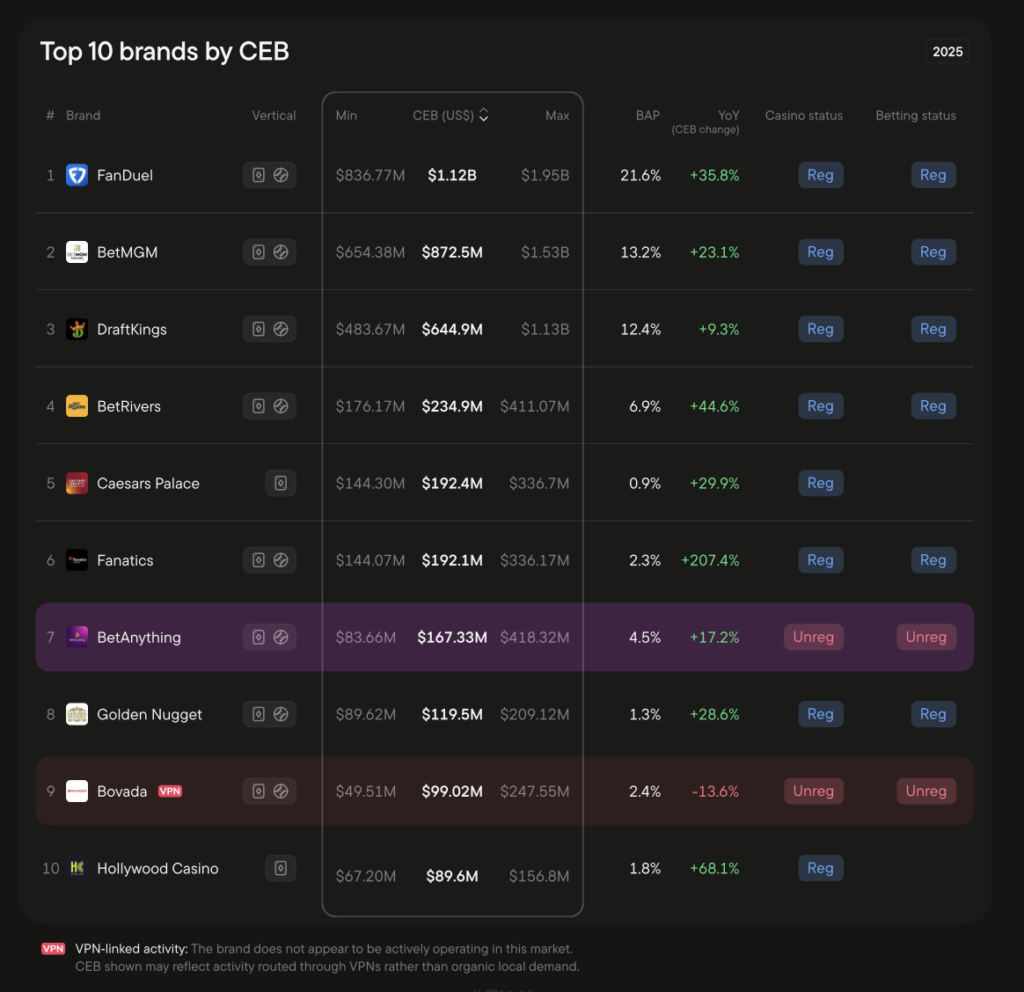
The result four years later is unusual by any American standard. The top five brands in Michigan by revenue are all licensed. FanDuel, BetMGM, DraftKings, BetRivers, and Caesars Palace all hold Michigan gambling licenses.
The only two unlicensed brands in the top ten — BetAnything and Bovada — hold a combined 6.9%.
The numbers
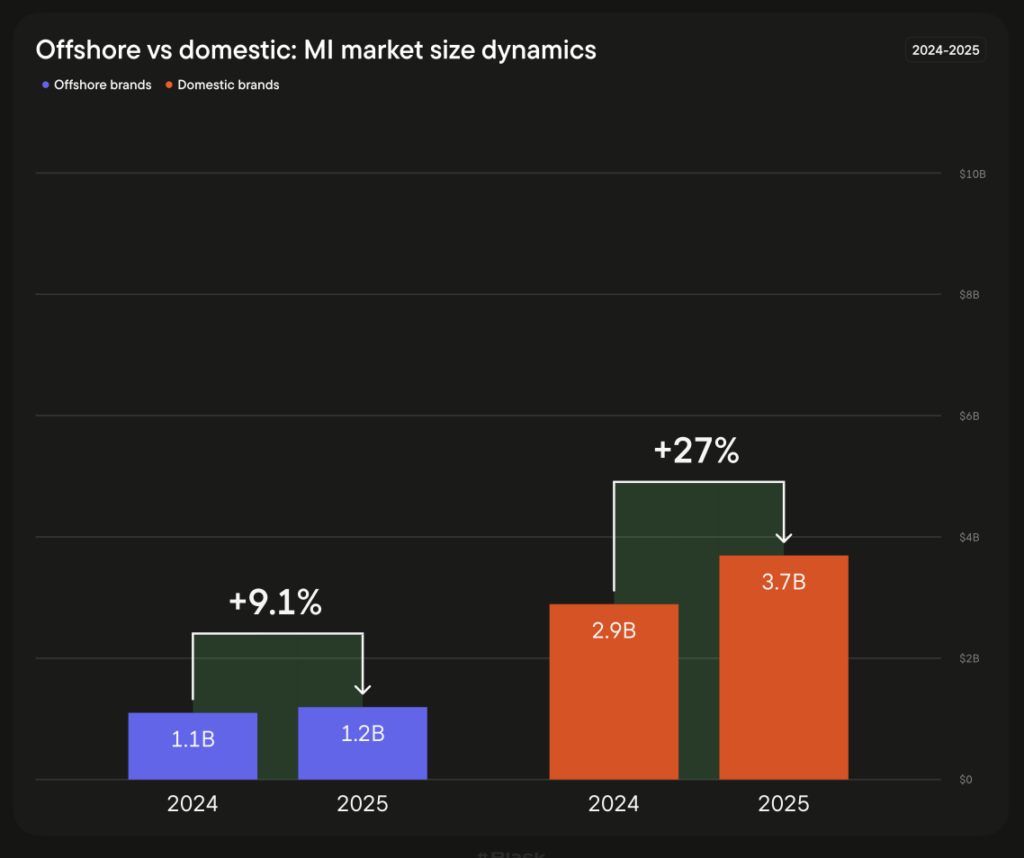
FanDuel leads the state with an estimated $1.12 billion in CEB. It grew 35.8% year-over-year. BetRivers grew 44.6%. BetMGM grew 23.1%. DraftKings grew 9.3%. The domestic segment as a whole grew 27% in 2025 — faster than the national average.
The offshore segment grew just 9.1%. That is the slowest offshore growth rate of any state in the Blask report. Offshore platforms captured about $1.2 billion in Michigan. Their share fell from 30% in 2024 to 25% by year-end. Channelization is accelerating.
Why it worked
Three factors explain Michigan’s performance.
- The simultaneous launch
Players who signed up for a licensed sportsbook in January 2021 found casino games in the same app. They did not need a new account, new payment method, or new login. The friction that typically drives players to offshore platforms never arose. Sports bettors became casino players on licensed platforms without changing operators. - The competitive market
Michigan gave all major operators — including those previously in gray-market status — a path to licensure. FanDuel, DraftKings, BetMGM, PokerStars, and BetRivers launched together. No single brand held a monopoly. Competition drove product investment from day one. - Pre-existing demand
Michigan has the highest lottery search interest of any state in the Blask analysis: 23.6 million index units. That reflects a deeply embedded gambling culture. When licensed platforms launched, they entered a market that was already active and ready.
Can other states copy it?
Legislators in Illinois, Ohio, and Virginia increasingly reference Michigan when debating online casino legalization. The contrast is hard to ignore.
Illinois has licensed only sports betting. Its domestic market was flat year-over-year in 2025. Ohio, also sports-only, sits at 82% offshore despite two years of legal wagering. Michigan, with the full product set, sits at 25% offshore after four years.
The regulatory design is replicable. The political conditions are harder to transfer. Industry lobbying, tribal gaming disputes, and responsible gambling concerns have stalled casino legalization in every major state that has tried. Michigan resolved those conflicts in 2019. Most of its peers have not yet done the same.