
In-house Russian operations no longer match the scale.
Сhief executive Ruslan Suleymanov said that Tennisi left the B2C market and focused on the B2B — the company developed its own software for iGaming operators. Tennisi already has a partner and will supply its platform to that company, then stop running the Russian business as the operator. Suleymanov did not give its name, though it brings a large budget and deeper marketing experience.
Suleymanov said Tennisi’s software for iGaming operators took five years to develop at a total cost of $15M. Oinabet in Kazakhstan and Komyob in Tajikistan already run this software.
He cited a heavier tax load from 1 January 2026, with further changes from 1 September 2026, and said staying on those terms had turned the expected value negative. He added that competing with Fonbet and Winline is beyond what Tennisi can spend.
Tennisi turned bets off on 1 September. By his account, 99.9% of client balances are paid and open bets are settled. What passes to the new operator is the scoring file: bonus history, player value and stake limits, including cuts already placed on restricted accounts. Suleymanov said agreements exist for one or two further countries, which he did not name.
He is also looking at prediction markets on the Kalshi and Polymarket model, the non-sport prices he said Tennisi used to post in Russia before the law limited bets to sport.
Tennisi’s August CEB (projected revenue) was $1.1M against a Russia CEB of $688.9M.
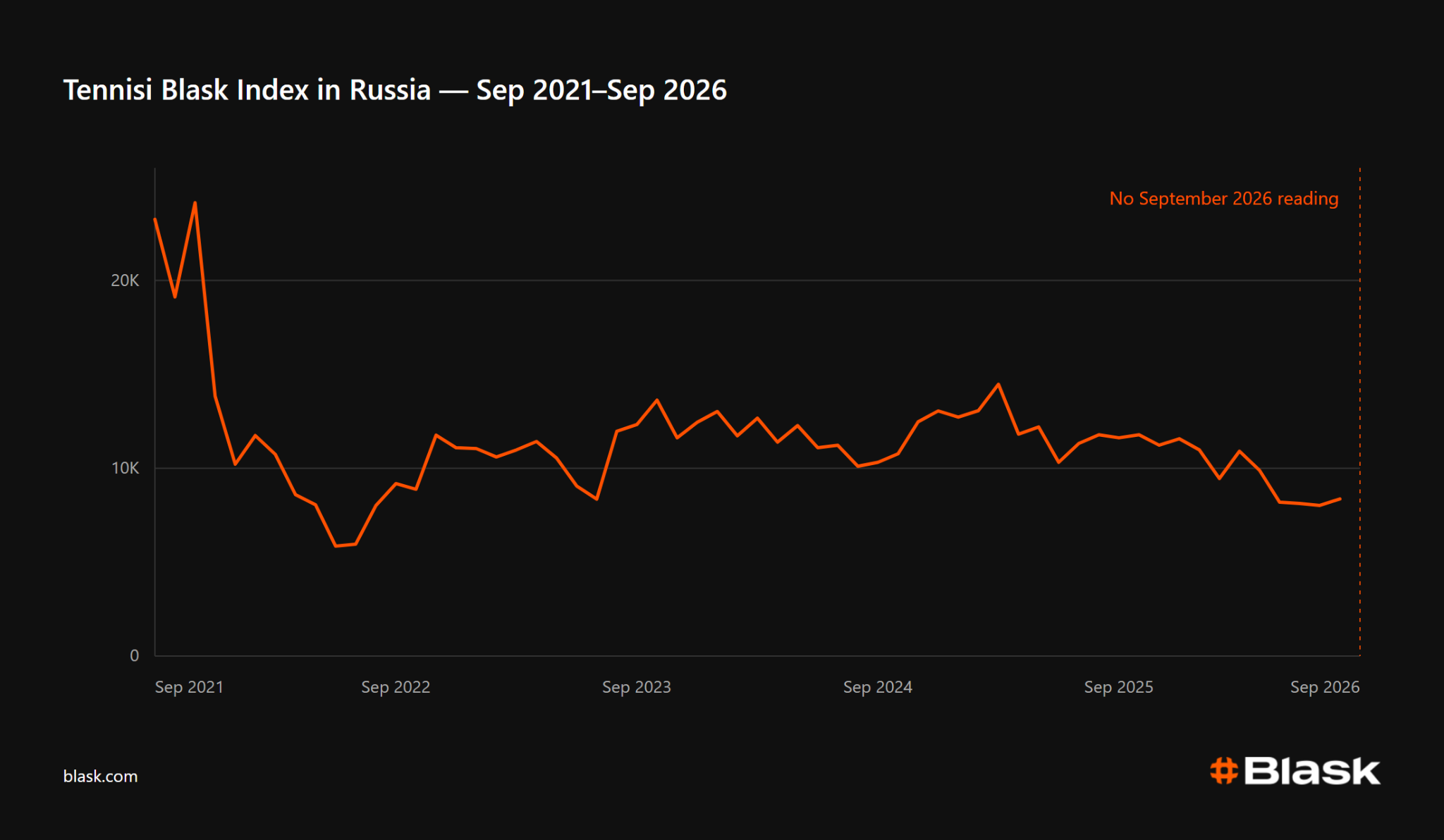
After 2021, Blask Index dropped and then moved sideways. By August 2026 it was about a third of the November 2021 peak.
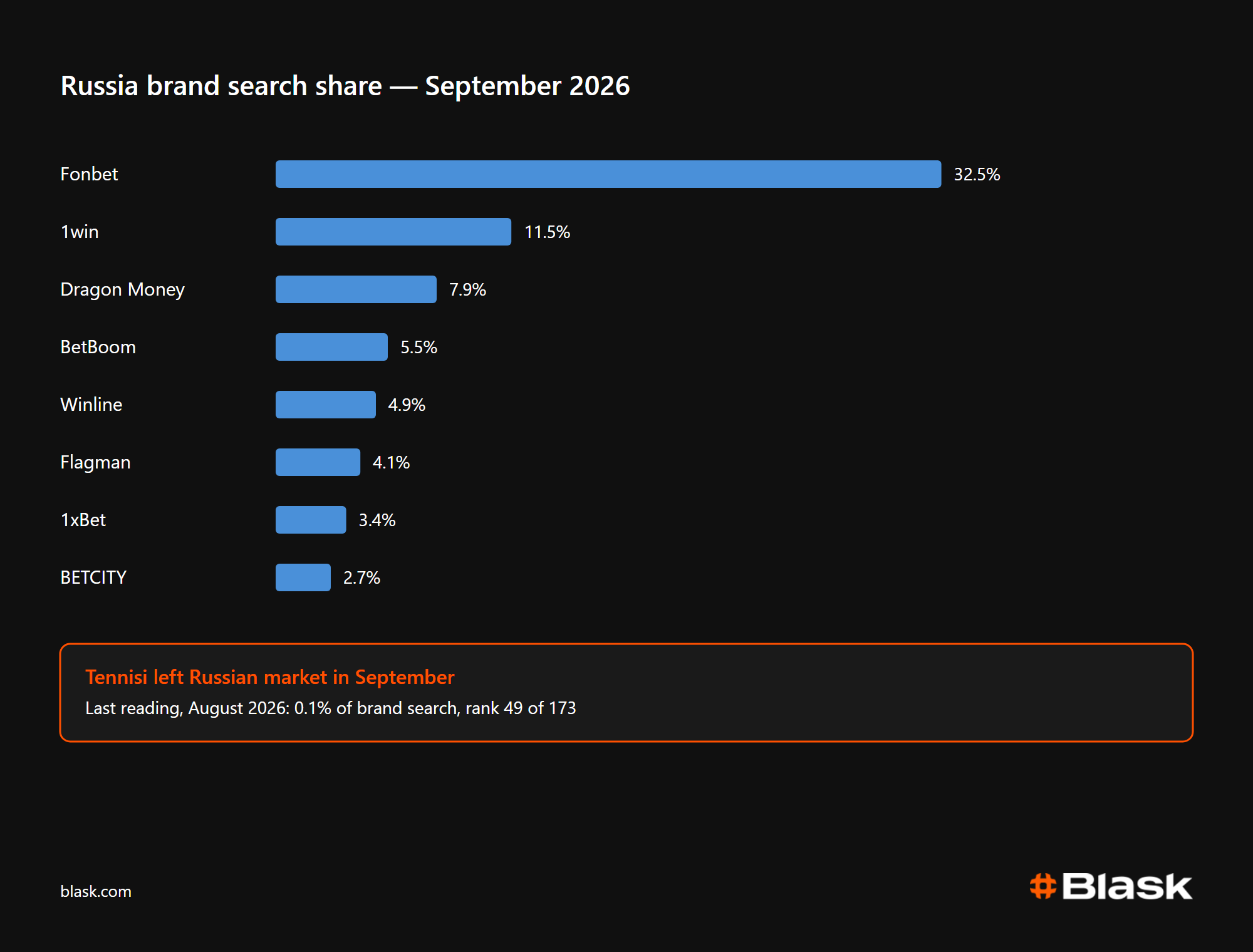
A marketing fight with Fonbet costs more than Tennisi earns. The new bookmaker holds the licence and pays Tennisi a fee, a percentage of its betting profit.