- Updated:
- Published:
Protests and revolutions: Blask data on how iGaming survives through tough times

Worldwide iGaming markets have faced several upheavals recently. From youth-led uprisings to economic crises, data from Blask shows that betting interest inevitably rebounds once crises ease.
Nepal’s 2025 unrest and a sharp iGaming contraction
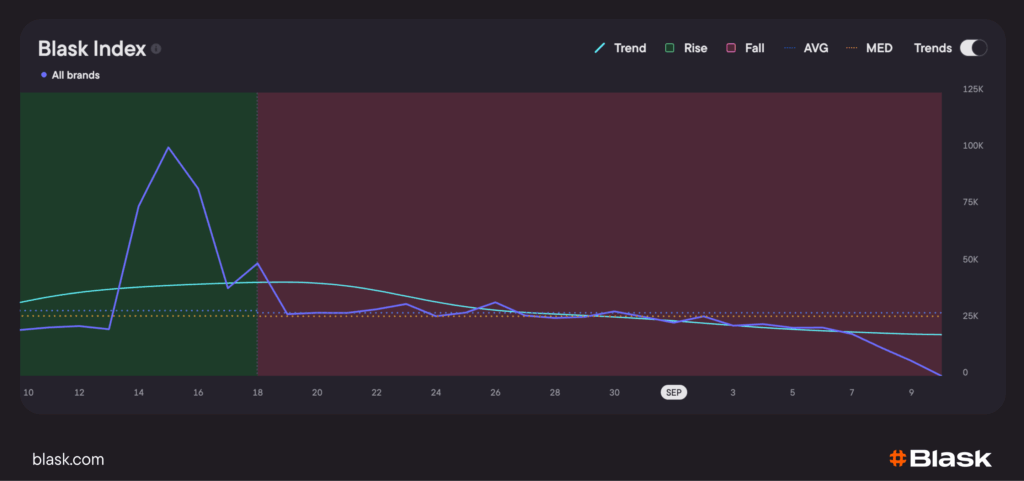
Nepal’s “Gen Z Revolution” in September 2025, triggered by a government decision to block 26 major social platforms, including Facebook, Instagram, and YouTube, sparked nationwide protests, curfews, and violent clashes. At least 19 people were killed and more than 100 were injured, with parts of Kathmandu placed under strict curfew. For iGaming, the immediate impact was severe: Blask’s tracking of 48 operating brands in Nepal shows Blask Index dropping from 23.47K on Sept 1 to 18.47K by Sept 7, before collapsing further to just 6.57K on Sept 9.
This represents a ~74% contraction in top-of-funnel activity within little more than a week. Although the ban was rolled back and access gradually restored, the data highlights how quickly acquisition funnels can collapse when digital platforms are throttled or blocked.
Bangladesh’s July 2024 crackdown: A case study in rapid rebound
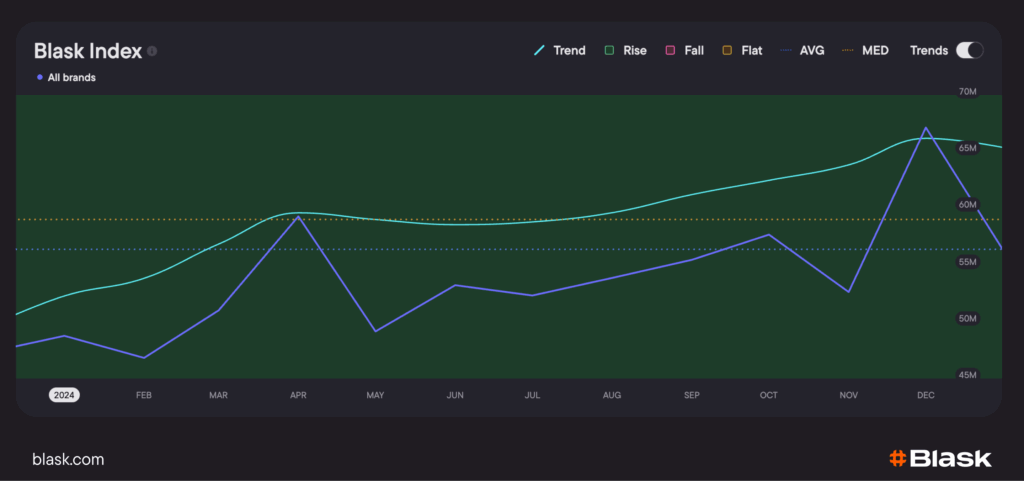
In July 2024, Bangladesh saw its own upheaval as nationwide youth protests over university admission quotas escalated into deadly clashes and an internet blackout. Blask’s analysis (working even under Bangladesh’s legal ban on gambling) found that the country’s iGaming market virtually collapsed during the worst days: Blask Index plummeted from ~757K on July 18 to only 70K on July 19 amid curfews and army deployment.
Player interest barely recovered at first (rising to 262K by July 20 and staying low through July 22) because protests and restrictions kept people offline. Importantly, though, the downturn was extremely short-lived. As soon as the unrest paused on July 22, the index rebounded to 653K (July 23) and then 843K (July 24); essentially back to normal (850K–1M) by late July once the crisis passed.
The metrics underscore how new player sign-ups did dip (~10% drop in July eFTD), but overall revenues barely moved (only a ~3.8% eGGR decline) during the turmoil. By late July, existing Bangladeshi bettors were already wagering again, helping the market recover quickly.
Kyrgyzstan: Late-2023 protests and market volatility
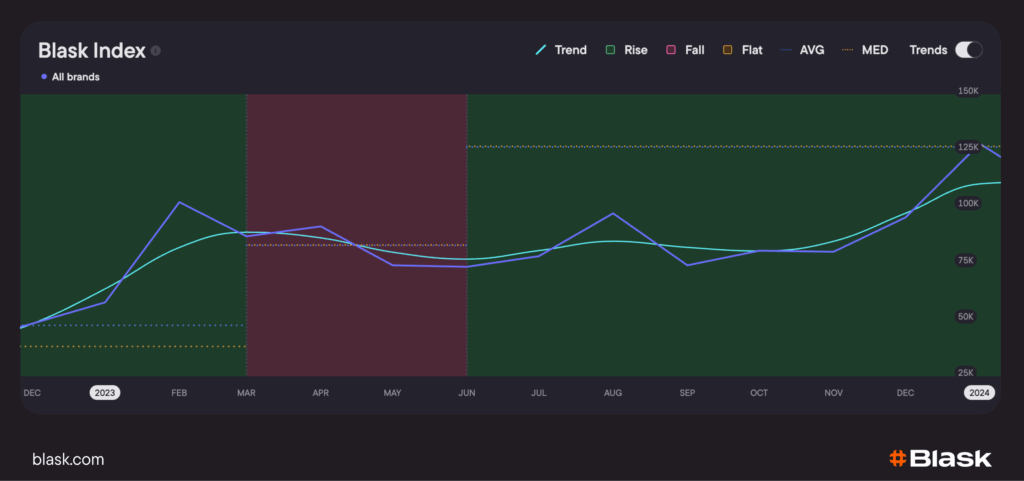
Kyrgyzstan saw its own stirrings in 2023. After years without major rallies (despite official bans), merchant-led protests erupted nationwide in December 2023 against a new and controversial tax policy. These demonstrations ended “a long period without any large demonstrations” in Kyrgyzstan.
Blask Index for Kyrgyzstan (tracking the small local market) dipped modestly in autumn 2023, from ~97K in August to ~71K in September, then began rising as the government loosened restrictions. Notably, after the December tax protests, the index climbed steadily, reaching ~95K in Dec 2023, and then surged to 128.1K by January 2024. This sharp rebound suggests that once the crisis phase passed, Kyrgyz bettors returned in force.
Sri Lanka’s 2022 economic crisis and spikes in iGaming
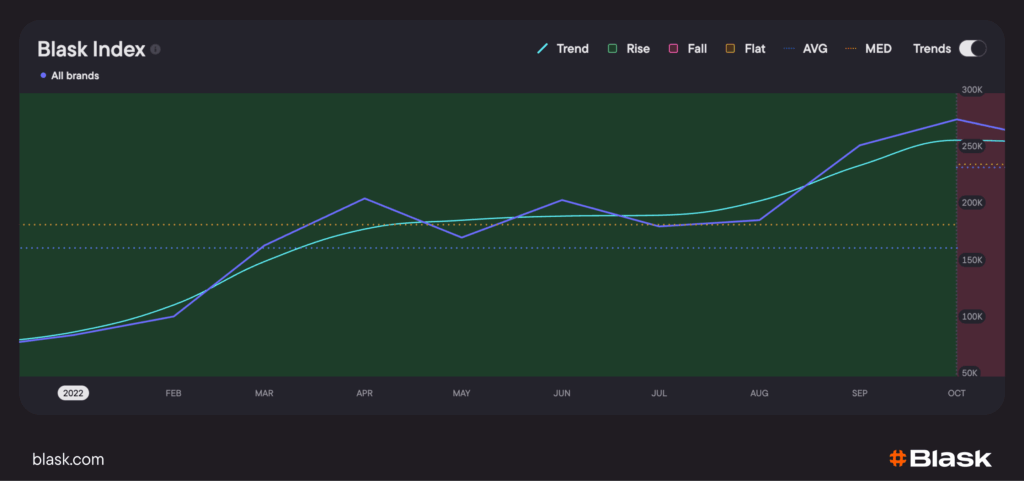
Sri Lanka’s 2022 “Aragalaya” uprising, driven by an economic collapse and fuel/food shortages, also had a pronounced impact on iGaming interest. Mass protests began in March 2022 and peaked in April and July with sweeping political changes. Sources note that on April 3, 2022, “all 26 members of the … Rajapaksa cabinet resigned” under public pressure, and by mid-July, protesters had stormed the President’s House, forcing President Gotabaya Rajapaksa to flee.
Blask Index mirrored this turmoil: it climbed from ~103K in February 2022 to 207K by April (the height of initial protests) and remained elevated through July. By October 2022, even after the president had resigned and a new government was in place, the index peaked at ~279.6K, reflecting sustained public interest. In short, Sri Lanka’s Blask data show multiple spikes tied to political crises, but also that after each surge, the market stabilized.
Military conflicts (2016–Present)
Since 2016, multiple armed conflicts have disrupted daily life in affected countries, ranging from regional insurgencies to full-scale civil wars. These conflicts often caused temporary blackouts in digital infrastructure, capital flight, and heightened uncertainty that made online entertainment, including iGaming, secondary to survival and safety.
iGaming recovery after conflicts
Despite these severe disruptions, the iGaming market has demonstrated remarkable resilience. Across case studies, downturns are sharp but short-lived: as soon as internet connectivity, payment channels, and public safety return, betting activity tends to rebound to pre-crisis levels within days or weeks. This has been visible in cases as diverse as Bangladesh’s protests, Sri Lanka’s political upheaval, and Kyrgyzstan’s economic unrest. Recovery is driven largely by existing player bases resuming activity, with new acquisitions following once stability returns.
Strategic insights for operators and affiliates
- Diversify channels: Relying too heavily on social media exposes acquisition funnels to government bans. SEO, direct apps, and owned media provide resilience.
- Protect unit economics: Pause discretionary marketing spend during turmoil; focus on maintaining engagement with core players.
- Index monitoring: Track market indices like Blask’s in real time to distinguish structural shifts from short-term volatility.
- Scenario planning: Prepare phased reactivation strategies linked to clear signals (lifting of curfews, restoration of platform access, stabilization of traffic).
- Leverage loyalty: Existing players help cushion revenue losses; prioritizing retention during crises ensures faster recovery.
In summary: While revolutions, protests, and even armed conflicts can cause immediate shocks to iGaming activity, the industry consistently demonstrates resilience. Acquisition funnels are sensitive to access disruptions, but markets rebound quickly once conditions normalize, making iGaming one of the fastest-recovering digital industries in times of crisis.