
- Updated:
- Published:
What Is Spread Betting
What spread betting is, how it covers both the US point spread system and the UK variable-risk model, how margin-based betting works across different sports markets.
What Is Spread Betting
At its core, what is spread betting comes down to pricing a margin, not just picking a winner. In US sportsbooks, the market focuses on the expected gap between two teams. In UK firms, the same term often describes a quoted range with variable returns. The shared idea is simple. The result is measured against a line or spread, not against a plain win-or-lose outcome.
How Spread Betting Works
The sportsbook starts with a number that separates the favorite from the underdog. That number gives the weaker side a cushion. It also forces the stronger side to win by more. This is where spread betting explained clearly becomes much easier to grasp. The wager settles by comparing the final margin with the posted line.
The Point Spread Concept
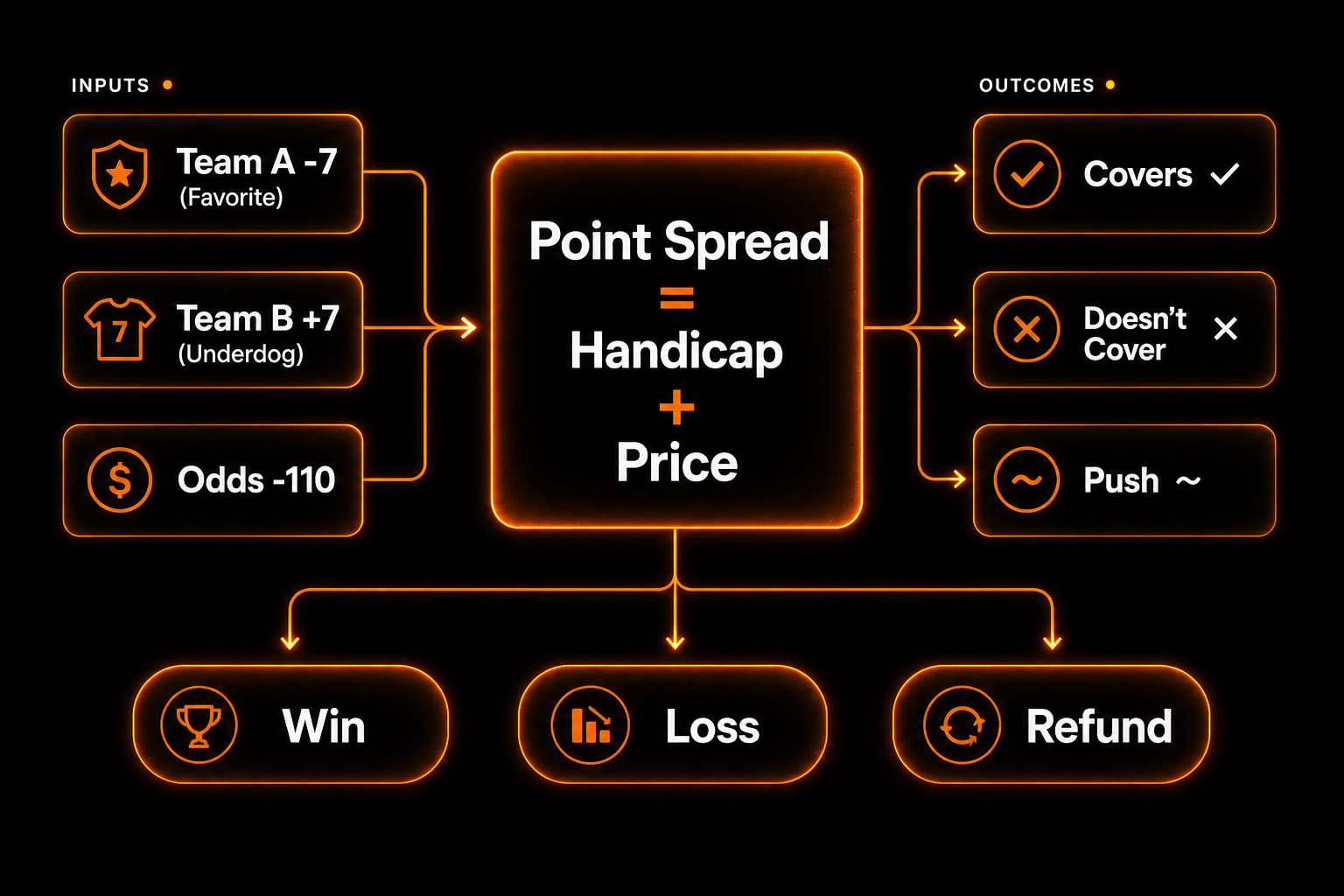
A point spread is a handicap created to make uneven matchups feel more balanced. If Team A is stronger, it may be listed at minus points. Team B then receives plus points. The market no longer asks only who wins. It asks by how much.
The -110 Odds Standard
Most American spread markets sit near -110 on both sides. That means a bettor risks 110 to win 100 profit. The extra 10 is the book’s charge. Some operators change the price first. They do that before moving the actual number.
Covering the Spread
A favorite covers by winning with enough margin. An underdog covers by losing narrowly or winning outright. If the final result beats the handicap, the ticket cashes. If it lands short, the wager loses. That simple mechanic drives the whole market.
Reading a Point Spread
It is important to interpret the board properly. The sign, the number, and the odds that come with it have significance. Half points mean no tie. Whole numbers could lead to refunds. That is why point spread betting begins with careful reading, not gut feeling.
The Handicap Numbers (-7, +3.5, etc.)
A team playing at -7 needs to win by eight or more. A team that plays at +3.5 will not lose even when it loses by three points. The positive indicates the underdog. The negative indicates the favorite. The point half indicates a purpose. It ensures that a tie does not happen.
Favorite vs Underdog
It is assumed that favorites would win the match, while underdogs will lose. Spread equalizes that difference and makes it an even game. Even though a powerful team could win the game, it would lose on the spread.
The Vig (Vigorish)
The vigorish, or juice, is an intrinsic commission built into the bookie’s betting system. In the traditional -110 format, each side will incur the cost of the tax. This is how the gambler loses money over the long run even with odds of fifty percent.
Pushes and Pick ‘Em Games
A push occurs when the final margin comes out to be exact. This results in refunding the stake placed by the bettor. Pick Em or PK is where no handicap is assigned to either team.
US Point Spreads vs UK Sports Spread Betting
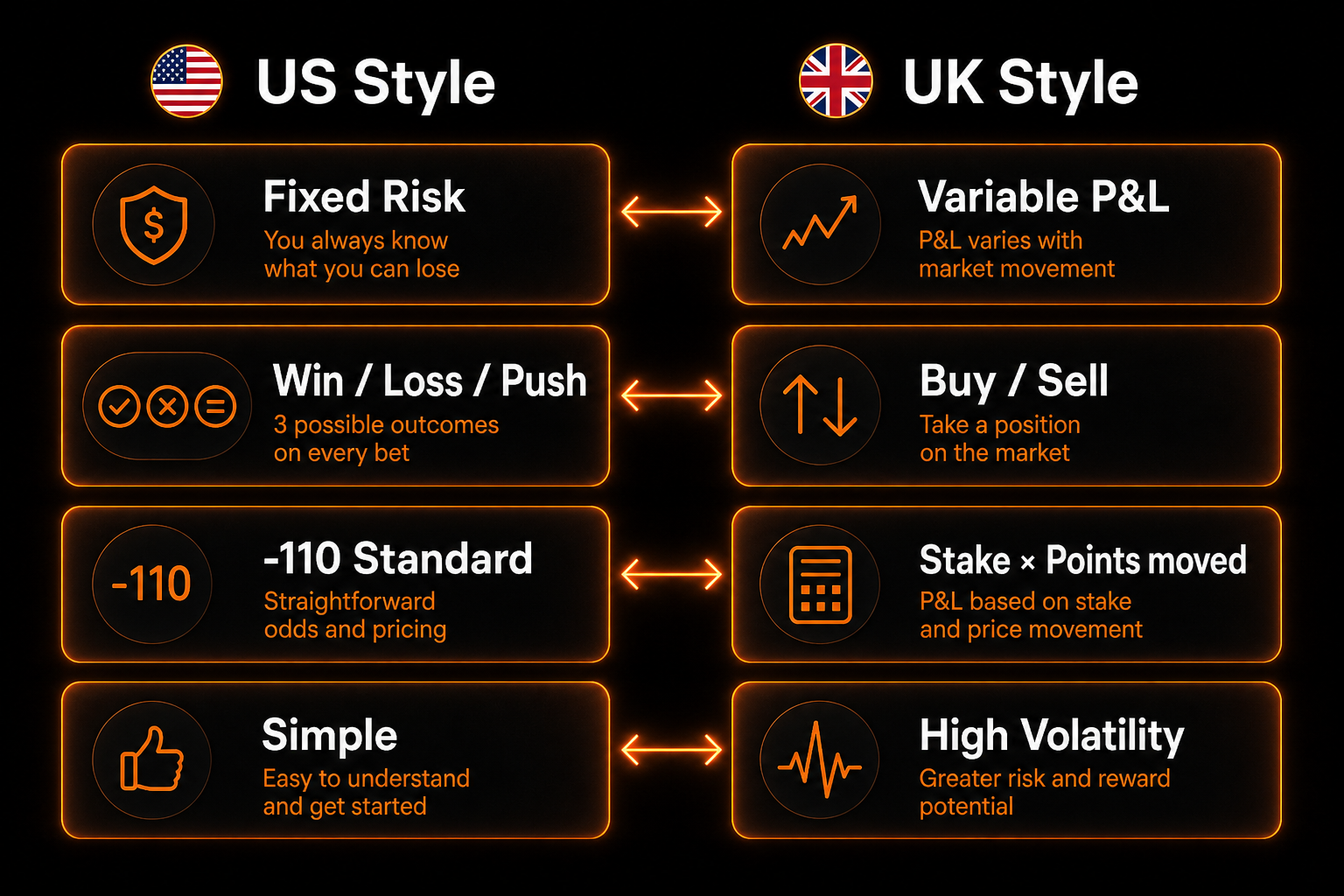
Even though they have the same name, there are some differences between the two types. The difference lies in the risk associated with the bet, which is fixed in America. In Britain, sports spread betting often scales profit and loss by every point away from the quote. That is a much sharper instrument.
US Style: Fixed -110 Payout
American-style betting is straightforward when it comes to payouts. The bettor has prior knowledge of the stake involved, the odds, and the payout potential before the game commences. It is either a win, loss, or tie. There is no risk beyond the amount that was wagered.
UK Style: Variable Profit and Loss
But things operate quite differently in the UK version. The client trades within the quote range. The ultimate outcome of gain or loss depends upon the distance of the result from the entry point. Good reads make money quickly. But bad reads do too.
Buy vs Sell Bets (Spreadex Model)
Spread firms quote two prices, not one. The lower number is the sell price. The higher number is the buy price. A customer places a spread bet by choosing one side of that quote. If the final make-up beats the buy price, the buy wins. If it finishes below the sell price, the sell wins.
Volatility Ratings in UK Spread Betting
Each market is not equally dangerous. The total points tend to be less volatile than the total minutes on the goal line. This is important since losses are calculated based on point differences. Even a quiet market may cause harm, while an unruly one can go crazy in no time from small stakes.
Sport-Specific Spread Variations
It varies according to the sport. In football and basketball, wide odds are used. For baseball and hockey, standard narrow odds are used. For soccer, conventional odds may be combined with others. This makes sports spread betting a flexible concept rather than one rigid template.
NFL Football Spreads
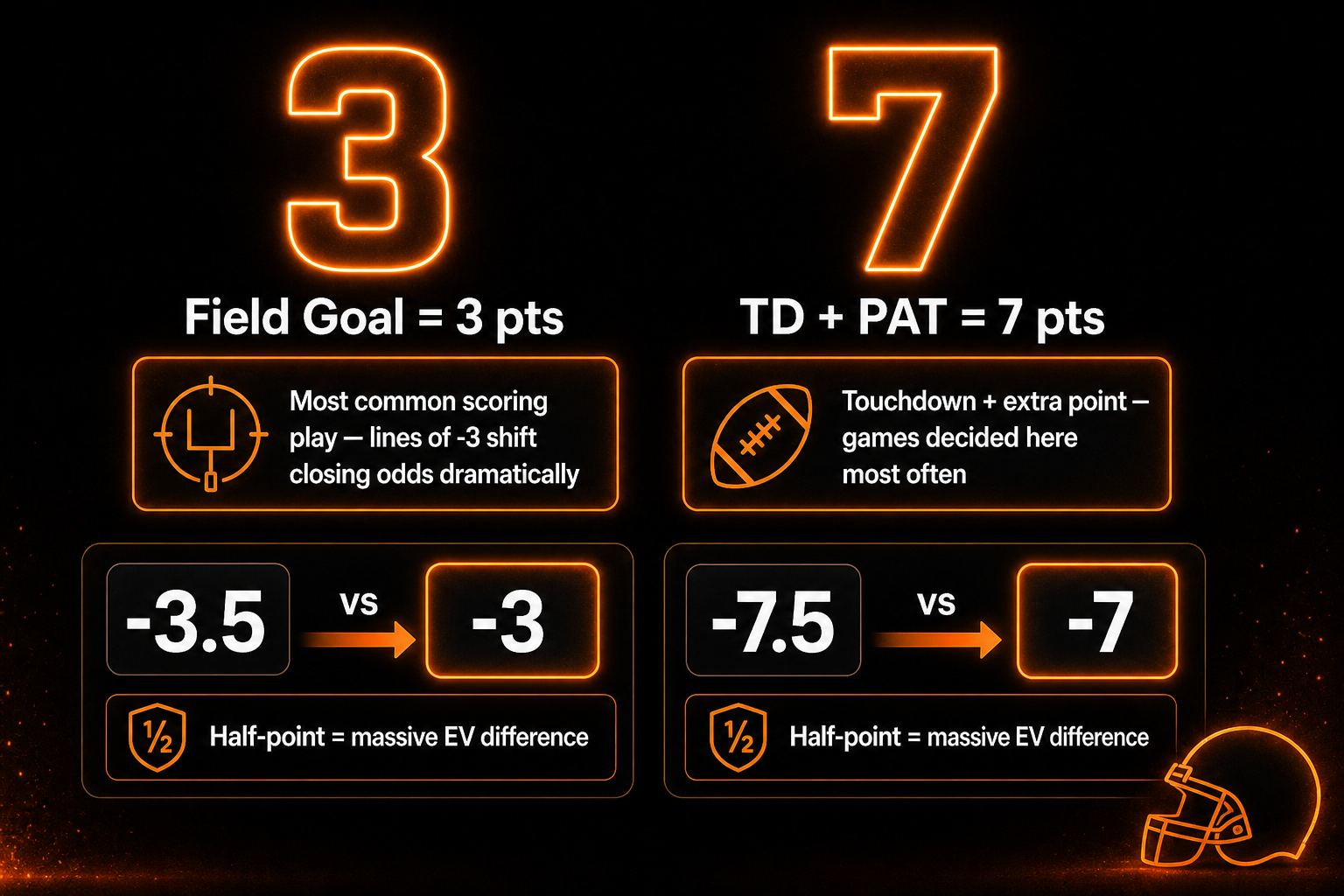
The spread in the NFL is determined by critical points such as 3 and 7 points. This means that half points become extremely important in this regard. The information on the quarterback plays a big role, and even the weather at outdoor venues is taken into consideration.
NBA Basketball Spreads
The NBA betting lines change rapidly due to quick scoring runs. The effects of rotations, tiredness, and late injury reports are relevant factors. Back-to-back games play an important role in determining the odds price as well. Betting markets often fluctuate rapidly pre-game and in-play.
MLB Run Lines
Baseball uses the run line instead of a classic point spread. The number is usually 1.5 runs. Favorites often sit at -1.5 with plus money. Underdogs at +1.5 often carry heavier juice. Low scoring games make that half-step feel huge.
NHL Puck Lines
In the game of hockey, the puck-line betting is used. It too is mostly 1.5 goal difference. One-goal games happen often in the NHL, and that provides an underdog team enough margin to get some value at +1.5. The favored team has to score two goals to win.
Soccer and Other Sports
Spreads in soccer games may be employed in order to drive up the price of favorites. Set handicaps apply in tennis. In all other sports, one just needs to adopt a similar approach to the sport-specific scoring. It looks different, but the approach is familiar.
How Point Spreads Are Calculated and When They Move
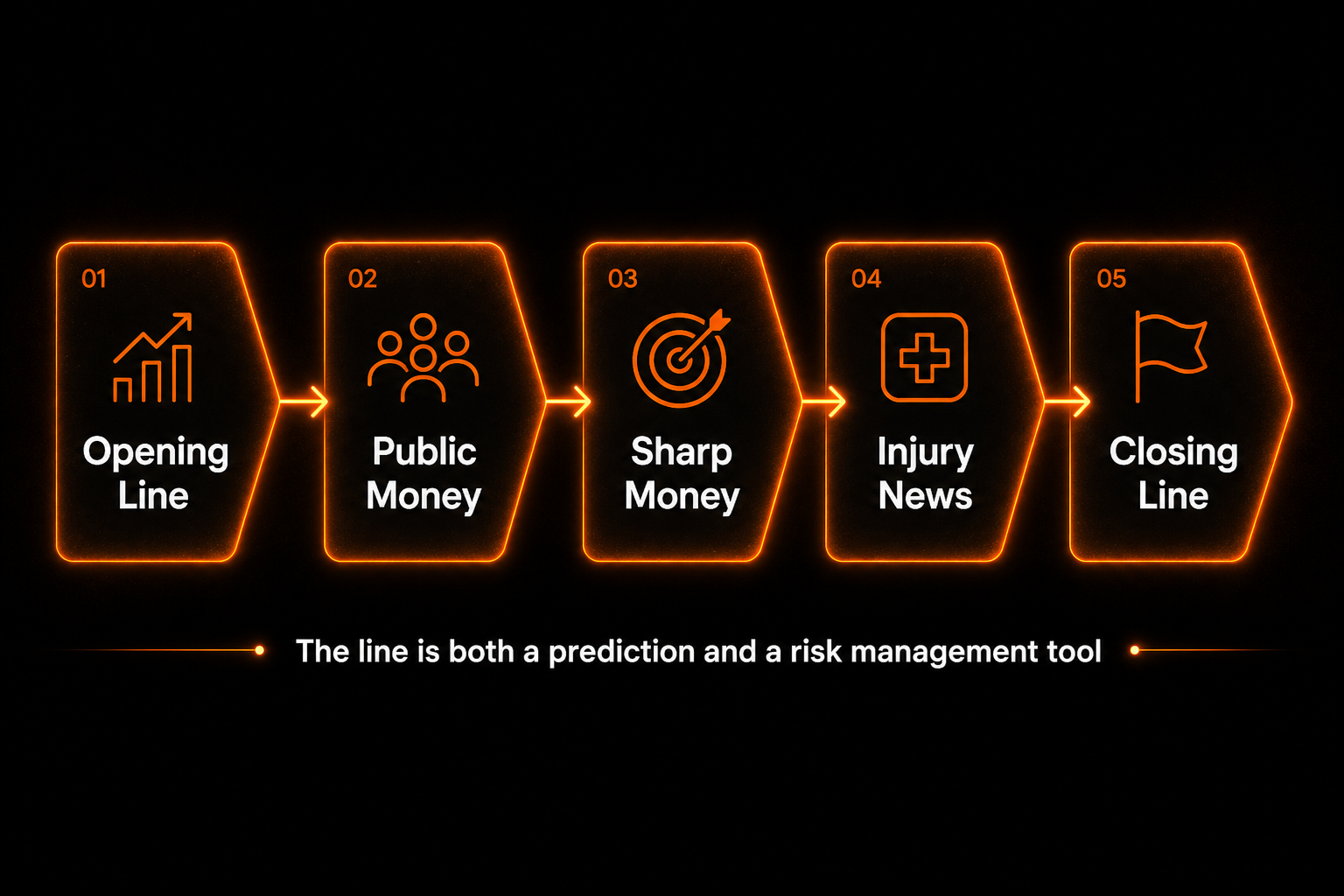
Oddsmakers do not build numbers from instinct alone. They combine data models with human judgement. Then the market starts talking back through money flow. This is another place where spread betting explained in plain terms needs real detail. The line is both a prediction and a risk tool.
Key factors:
- Team strength and internal power ratings
- Home field or home court advantage
- Injuries and lineup changes
- Recent form and matchup history
- Public betting pressure
- Sharp money and market-wide movement
Power Rankings and Sportsbook Models
Books often begin with power rankings for the teams. These power rankings predict the strength of the teams in a neutral venue. Traders then factor in the advantage of playing at home, injuries, form, and strategy matchups. The number used is seldom picked randomly.
Public Betting Sentiment
Public money can drive a line even when the opening itself was good. It is not uncommon for well-known teams to generate recreational betting. The book responds to this pressure by altering the line’s odds or its point spread. Public money isn’t all that counts either. The smart money has an influence as well.
Injuries and Line Movement Triggers
Injuries provide one of the cleanest lines of triggers in the market. The absence of a quarterback can easily move an NFL point spread by a few points. An injury to a key player in the NBA can also do the same even later on.
Spread Betting vs Other Bet Types
Spread markets sit in a useful middle zone. They are more nuanced than simply picking a winner. Yet they remain easier to read than many derivative markets. For many bettors, this is where point spread betting feels most natural. It adds context without becoming unreadable.
vs Moneyline
Moneyline bets only determine which team wins. Spread betting requires determining whether or not the margin will be higher than the point spread. This makes it more advantageous for the favorite because it is cheaper to bet against the spread. The same is true for underdogs.
vs Total (Over/Under)
Total betting does not concentrate on the victor but rather on overall points. Spread betting concentrates on the distance separating two teams. The price structure for these two forms of betting can be quite similar. Both betting types take injury and weather into account. However, their rationale differs. One is concerned with time while the other is with control.
vs Parlay
A parlay consists of various bets on one ticket. All legs should be winning for this to happen. Since the spread bets are common bets, people can add them to their parlay. Nonetheless, if one fails, then the whole ticket loses. This makes it way more risky than betting on a straight game.
vs Fixed Odds Betting
The importance of this difference is felt mostly in the United Kingdom. The fixed odds betting comes with an expected return when placing the bet. The variable spread market does not have an expected return. Loss and gain depend on the precision of the prediction.
How to Place a Spread Bet (Step-by-Step)
It becomes simple after getting accustomed to the board. A punter starts by selecting his game and the line and makes up his mind which team he wants to bet on. He stakes his amount, and the ticket gets verified. In the UK market, the stake amount depends on points. In the US, the ticket works just like any other fixed-odds bet.
Tips and Strategies for Spread Betting
Advantages in the market over the long term tend to be marginal. This is why process beats enthusiasm. Good numbers, timing, and discipline always win. Great behavior appears boring at first. But in the end, it appears crucial.
Line Shopping Across Sportsbooks
Different books often show different lines for the same game. One book may offer -3. Another may show -3.5. That half point can decide the whole wager. Line shopping is one of the few reliable habits that improves point spread betting results without changing the handicap itself.
Fading the Public
A person betting in the public domain would likely favor the favorites, celebrities, and well-known teams. This could affect the number. There are people who bet against the popular choice to gain advantage out of the deal. This practice is known as fading the public.
Home Underdog Strategy
Underdogs at home are a good story because the home team sticks with what they know and do not need to travel. College games have an obvious example of that. Professional leagues have something similar but less pronounced. The key is how much the market overreacts to a brand team.
Bankroll Management
Discipline is essential to any form of betting system. Flat betting reduces the impact of bad periods on the gambler. Loss-chasing always makes the situation worse. The live market environment offers even more allure due to rapidly changing odds. Bankroll management may be boring, but it helps avoid catastrophes.
How Sportsbooks Set Point Spreads (Operator Side)
But the operators do not simply make attempts at forecasting the ultimate result. They attempt to mitigate the risks and protect their margins as well. They need balanced measures and vig on both sides. At times they shift the spread; at other times – the odds alone. In spread betting in igaming, this operator logic sits at the heart of market design.
Live and In-Play Spread Betting
Pregame lines are just a portion of what is offered in books. Books can provide live lines during the game. This type of line will be influenced by the score, clock, possession, momentum, and new liability. They could possibly freeze for a minute or so as the book makes its calculations. Live sports spread betting moves fast and usually carries a heavier in-game tax than pregame markets.
Common Mistakes Spread Bettors Make
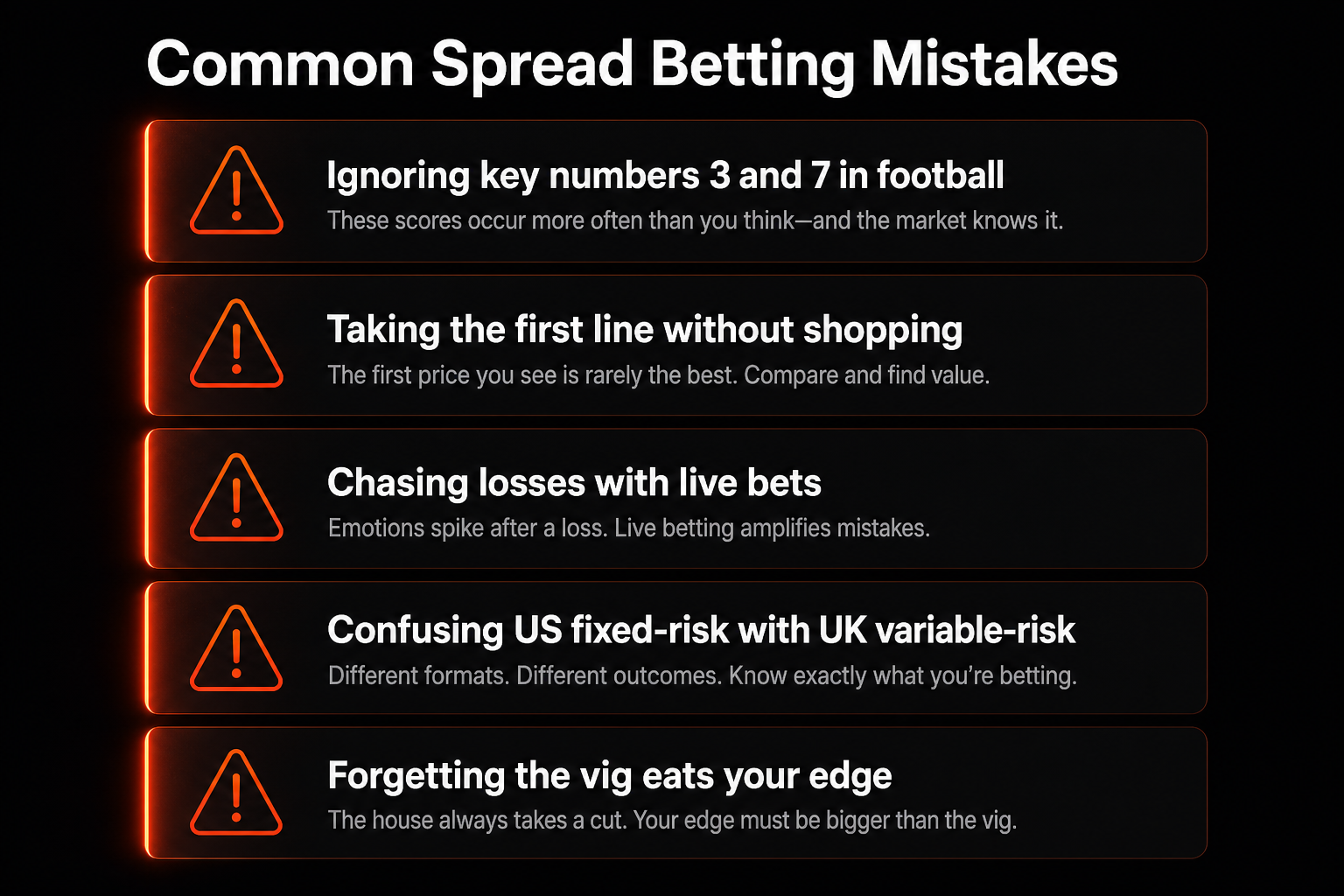
A lot of loss results from mistakes that should have been avoided. For example, some punters do not look at essential figures and do their shopping too late. Other players go for live games after misjudging the pre-game game. Mistreating the UK odds as fixed-odds bets is another error.
FAQ
| What is spread betting? | Spread betting refers to placing bets through margins instead of just placing bets on the winner. When it comes to American sports betting, this is mostly associated with betting on whether the team beats the handicap or not. However, for the UK market, this may also refer to risky betting through margins. |
| What does it mean to cover the spread? | “Winning the Spread” refers to a case where the team beats the handicap that has been assigned by the bookmaker. A favorite needs to win by more points than the handicap assigned while an underdog wins or loses by less points than the handicap. |
| What does -110 mean in spread betting? | -110 price is the regular price associated with many US spread markets. The meaning of -110 is that 110 dollars are wagered to earn 100 dollars in winnings. The extra dollar is the margin, also known as vig or juice. |
| What is the difference between US point spreads and UK spread betting? | In most cases, the US line spreads bet works on the basis of fixed risk where there is a possibility of either winning, losing, or a tie game. In the UK system, there are buying and selling prices, and the player earns money depending on whether the spread exceeds or falls below the initial price. |
| What happens if the final result lands exactly on the spread? | A bet will be considered a push in the event that the final difference is exactly what the spread was. Here, you neither make any money nor lose any, since the money stake is refunded. This situation occurs only on even-numbered spread lines due to half-point lines. |
Final Thoughts
The popularity of this market lies in the fact that skill, context, and price are compressed into one easy-to-read figure. The market provides hurdles for favorites and a buffer for underdogs. Spread betting described effectively is all about margins, pricing, and discipline.