

- Updated:
- Published:
PSG’s Champions League win shows betting demand follows local narratives
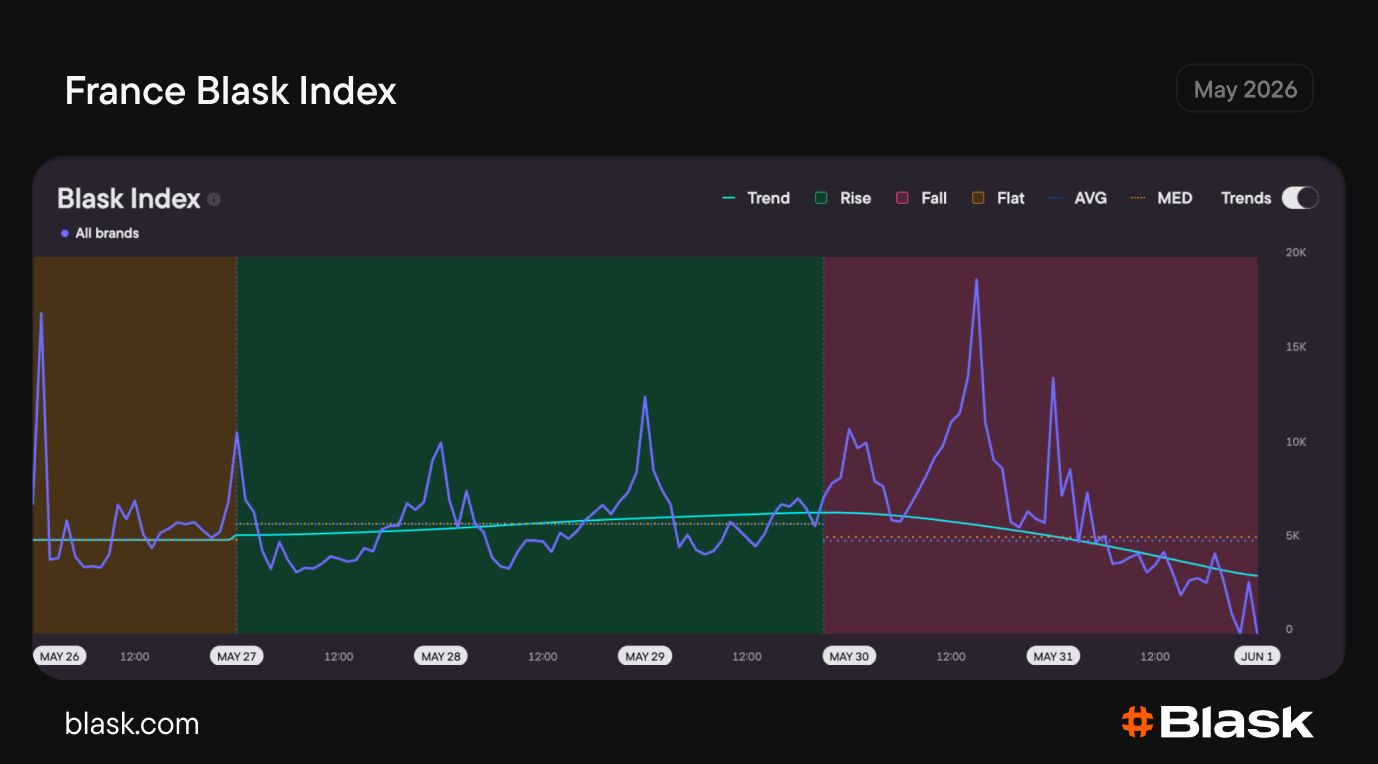
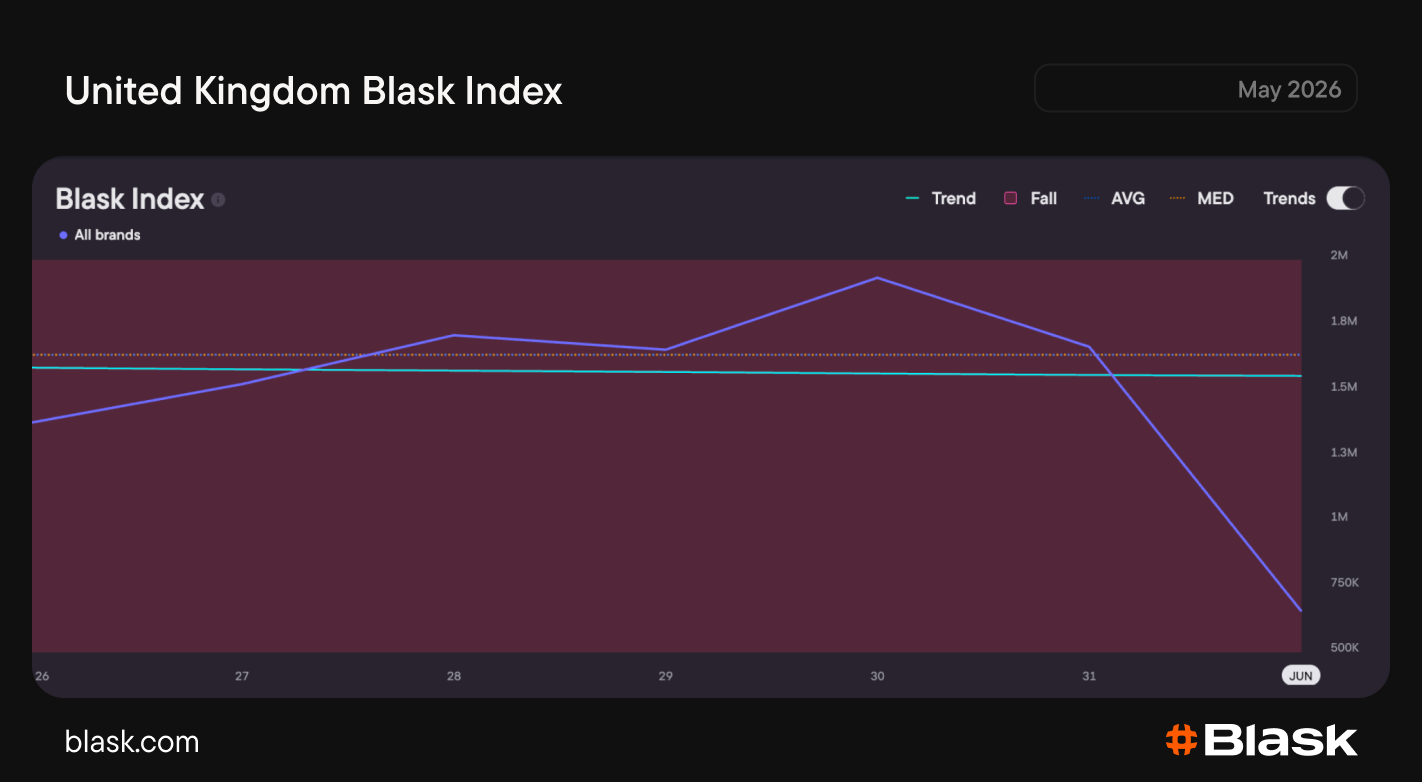
Blask Index data from the Budapest final shows that iGaming demand in France rose 48% on match day, while the UK market stayed within its normal Saturday baseline.
On May 30, 2026, the football world watched the same match. But Blask data shows that the Blask Index did not rise evenly across markets.
PSG beat Arsenal 4-3 on penalties after a 1-1 draw after extra time at Puskás Arena in Budapest and became only the second club in history to defend the Champions League title.
France reacted immediately. iGaming demand in the country jumped 48% compared with the previous Saturday. The UK, where Arsenal reached the final for the first time in a generation, did not record any demand above a normal Saturday level.
France: +48% in one day
Blask data recorded a 48% increase in the French market compared with Saturday, May 23. It was the sharpest one-day movement in the 10-day period covered.
The scale of the event explains the amplitude. The final was watched by 9.1M viewers on M6 and Canal+. During the penalty shootout, the audience reached 12.9M.
Blask Index peaked exactly on match day. By the next morning, the index had dropped to the lowest point of the entire 10-day period. This was a clear event-driven pulse: sharp entry, fast exit, and no structural after-effect.
United Kingdom: zero as the perfect control experiment
Arsenal reached the Champions League final for the first time in a generation, and the match drew more than 10M UK households across TNT Sports and HBO.
The UK market followed its normal weekend pattern. Compared with Friday, the Blask Index rose 15%, consistent with the typical Friday-to-Saturday uplift. Compared with the previous Saturday, the index was down 0.9%.
England had six clubs in the 2025/26 Champions League league phase: Arsenal, Liverpool, Manchester City, Chelsea, Tottenham Hotspur and Newcastle United. Football demand was spread across several elite-club narratives throughout the season. Arsenal’s final entered a large, mature betting market with a deep weekly football baseline. The event mattered, but it did not push demand above the UK’s normal weekend pattern.
Why event demand needs local context
The Champions League final data shows that betting demand does not follow broadcast reach alone.
France had one dominant winning narrative: PSG. When the club won, the reaction was visible immediately, with the Blask Index up 48% on match day before returning to baseline the next morning.
The UK market behaved differently. Arsenal’s defeat mattered, but so did the structure of the market. England had more Champions League clubs, a larger betting base and a broader weekly football calendar, so the final was absorbed into an already active ecosystem.