
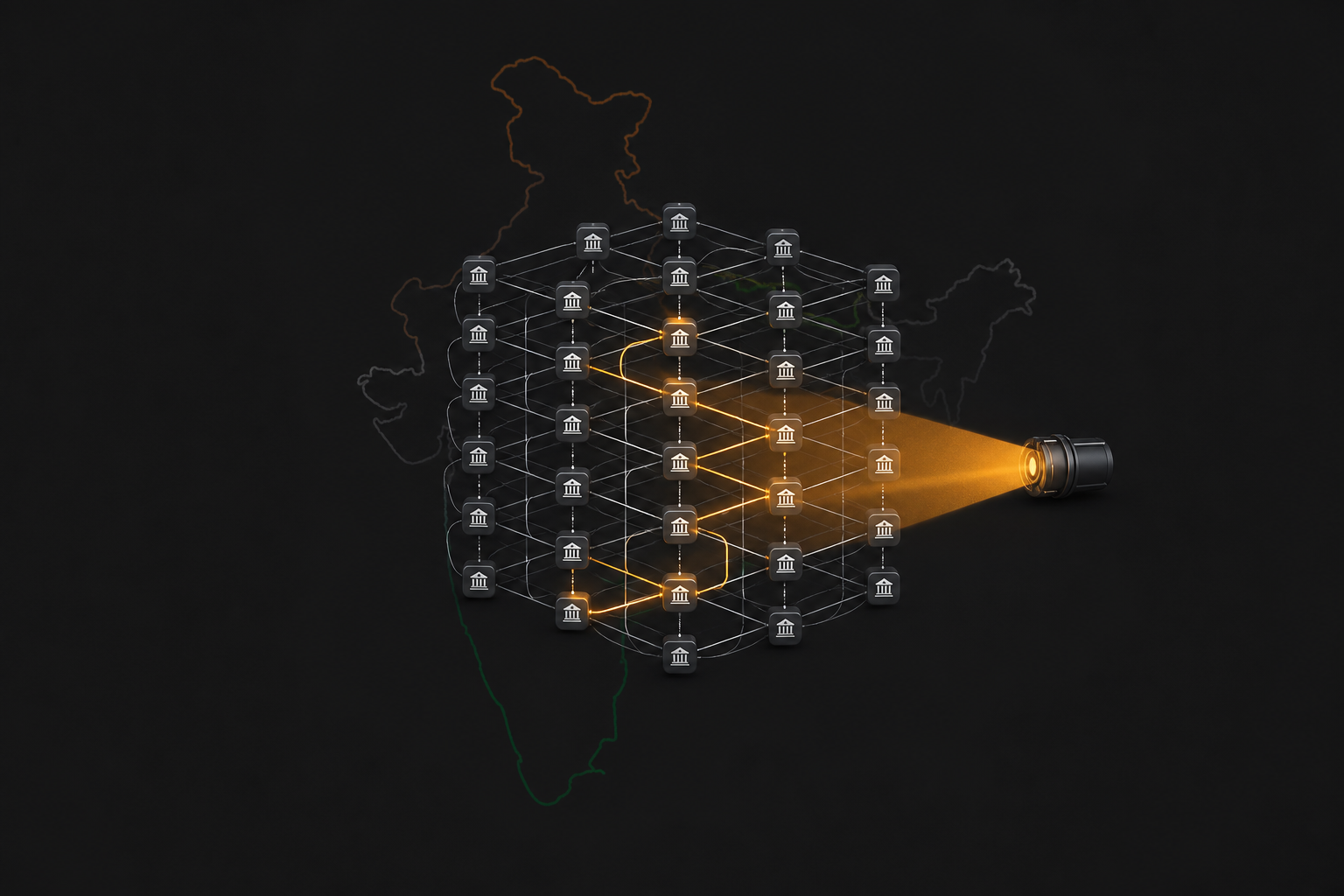
Eleven arrests in Telangana exposed Dafabet’s local payment network. Blask ranked it India’s third-largest brand before the raid.
In early June 2026, the Criminal Investigation Department (CID) of Telangana arrested 11 people who investigators say ran a local support network for online betting platform Dafabet. The probe uncovered 46 mule bank accounts layered across eight transaction levels. Player funds moved between several Indian states, bypassing financial monitoring controls. The arrests drew attention to Dafabet specifically. The scheme itself is not brand-specific.
What the compliance file shows
Dafabet was founded in the Philippines in 2004 and holds a licence through the Cagayan Economic Zone Authority (CEZA), one of Asia’s first jurisdictions to license online gambling services aimed at foreign customers. In the UK and Malta, Dafabet operates under the licence of Malta-based operator SCGO Limited (formerly Vivaro).
On paper, Dafabet looks like an established operator: tier-one licences, sponsorships with Celtic FC, English Premier League clubs, and international cricket and snooker organisations. For standard third-party due diligence, the file does not look problematic.
The India question is different — those licences may establish Dafabet’s presence in other regulated jurisdictions, but they do not give the brand local authorisation to serve Indian players.
India has no onshore market
India has no licensed online gambling market. All 473 operators tracked by Blask are offshore — none holds a local licence.
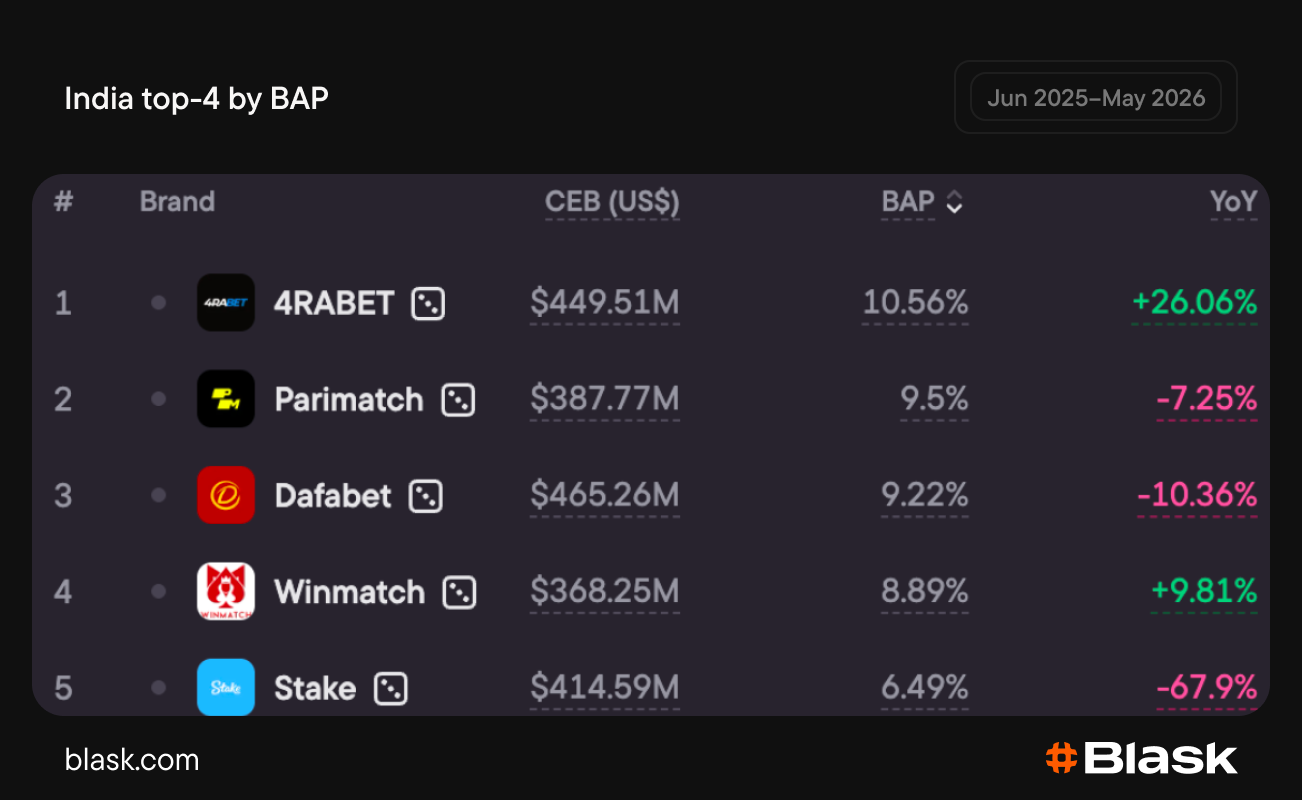
Over the last 12 months, Dafabet sits in third place by BAP, in a tight cluster of operators where the gap between adjacent positions is minimal. Average monthly CEB across the market for that period is $455M.
Why enforcement did not close this gap
Since 1 May 2026, the Promotion and Regulation of Online Gaming Act, 2025 has been in force: a full ban on online money games, with payment channels and advertising blocked.
A CUTS International survey in Delhi NCR showed the opposite: the share of users on offshore platforms rose from 68.3% to 82%, daily activity from 3.4% to 42.3%. Users moved to mirror domains, VPNs, and alternative payments, including UPI and crypto. The Telangana arrests showed how this works in practice: 46 mule accounts routing deposits to brands like Dafabet, and demand did not disappear but changed route.