
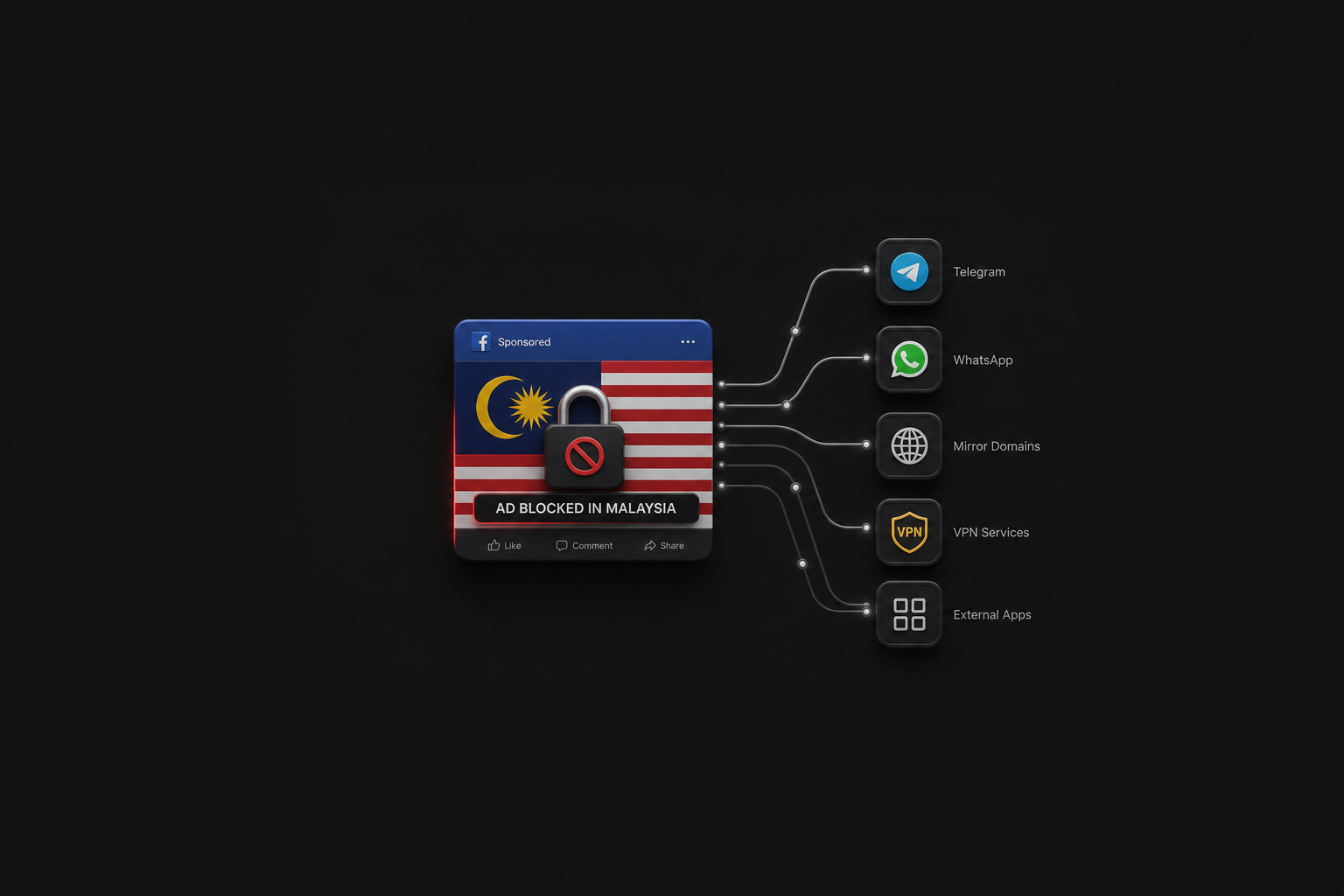
Malaysia’s new ad verification rules target offshore operators’ main acquisition channel, but Blask data shows demand kept growing under pressure.
Starting June 1, Malaysia requires anyone who wants to place paid ads on social media to verify their identity before publication. The measure is set out in the Risk Mitigation Code, part of the Online Safety Act 2025. The requirement applies to platforms with more than 8M users in the country, and verification is carried out using official documents: MyKad (Malaysia’s national identity card), passport or company incorporation papers. Platforms that fail to comply risk fines of up to $2.2M.
Malaysia remains an offshore-only online gambling market
Malaysia bans online gambling, with legal options largely limited to land-based casino gaming at Resorts World Genting and state lotteries.
Authorities have tightened enforcement for several years, blocking more than 5K illegal gambling websites, shortening the domain-blocking cycle from 6–8 weeks to 2–3 weeks and removing hundreds of thousands of gambling-related materials. Yet Blask data shows offshore demand has barely declined.
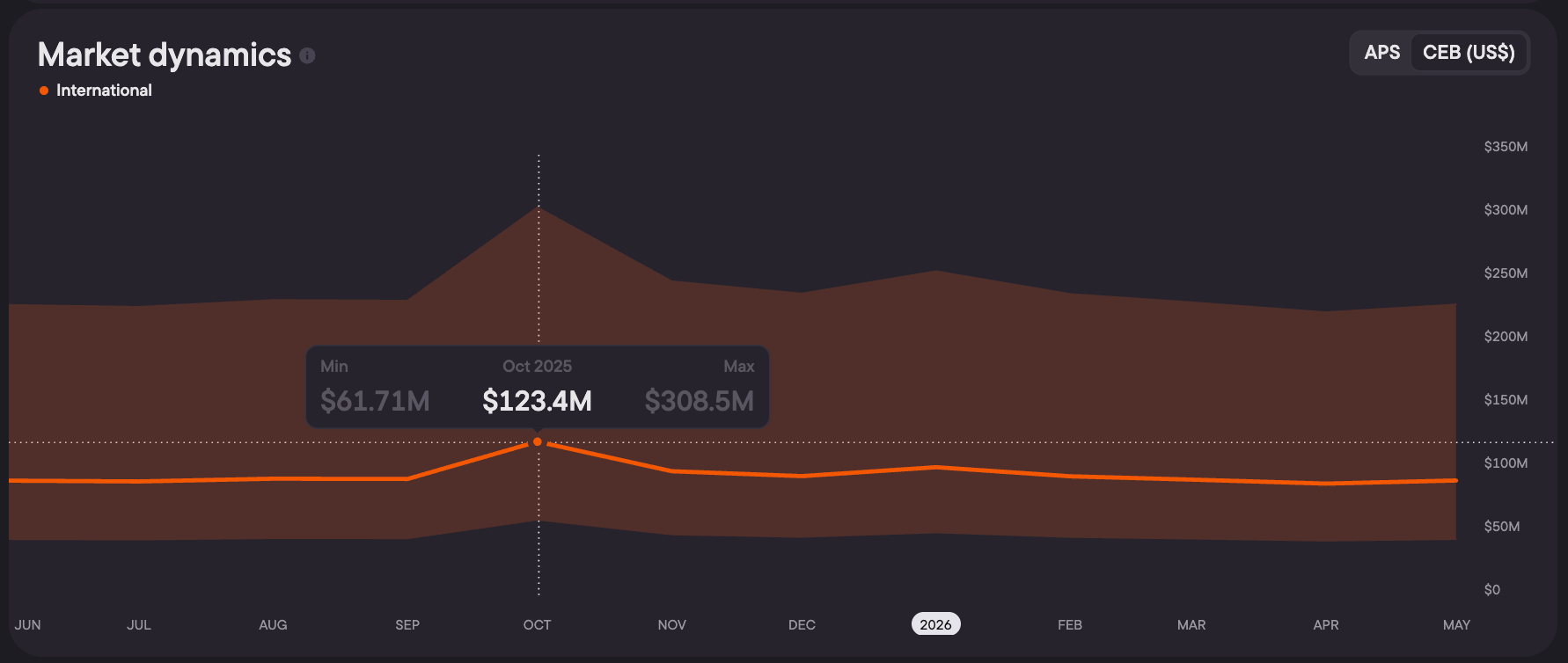
According to Blask estimates, Malaysia’s CEB reached $1.17B on an annualized basis in May 2026. Demand remains concentrated around offshore operators: Mega888 leads the market with $590.74M, followed by BK8, WelWin and 1xBet.
Facebook is the main weapon of illegal acquisition
Malaysia’s illegal online gambling ad ecosystem was built around social media. From 2022 to 2025, authorities removed more than 558K related content items, including 321K tied directly to betting and casino activity. And 93% of all removed advertising content came from Facebook.
The mechanism was simple: an anonymous account, demographic targeting, fast reach. The regulator removed the content, and operators created new accounts. Verification breaks that cycle: without a verified identity, the ad simply does not go live.
In the first 15 days of 2026 alone, Malaysia’s communications regulator removed 15.5K pieces of illegal gambling content. The pace has clearly accelerated, and the new law is meant to shift part of the burden away from removals and onto the platforms themselves.
What happens when the ad channel closes
Illegal gambling in Malaysia runs through Telegram groups, WhatsApp chains, mirror domains, SEO traffic and apps distributed outside the App Store. Facebook was the cheapest and most scalable way to acquire players — the new verification rules close that route.
For established brands, this is not a critical blow. They have already built organic awareness that cannot be switched off by a single advertising measure.
New operators that depend on paid social acquisition will be hit harder. But demand will not disappear. In 2025, 8.7M Malaysians used VPNs, and access to blocked resources remains widespread. If there is no legal offer, players find an illegal one.