

- Updated:
- Published:
Netherlands faces calls for total gambling ad ban as illegal market hits parity
The new legislative package would close the last major channel for legal marketing, just as grey-market demand has already caught up with licensed operators.
On 12 June, State Secretary for Legal Protection Claudia van Bruggen presented a new package of gambling measures that would fully ban online gambling advertising and welcome bonuses, tighten deposit limits, and expand the CRUKS self-exclusion system.
The restrictions have built up in stages — celebrity advertising was banned in 2022, untargeted marketing followed in July 2023, and sports sponsorship was fully phased out by July 2025.
According to KSA, the market grew 6% in 2024 to $1.71B in full-year GGR. In 2025, licensed revenue fell by roughly 18% from that level, implying a decline to around $1.4B. The drop was driven by deposit limits introduced in October 2024 — $813 per month for adults aged 25 and over — and by the rise in gambling tax, from 30.5% to 34.2% in January 2025, with a further increase to 37.8% set for 2026.
High-LTV players, who generate a large share of GGR, have moved to operators outside the local license framework, where these limits do not apply. By early 2025, legal GGR channelization had fallen to 49%. Blask Index shows that the shift has accelerated since then.
Grey-market demand reached licensed parity in three months
Grey-market pressure was already visible before the new package. Blask noted earlier that grey-market demand caught up with licensed operators in early 2026, after rising sharply from February and briefly moving ahead of the regulated segment.
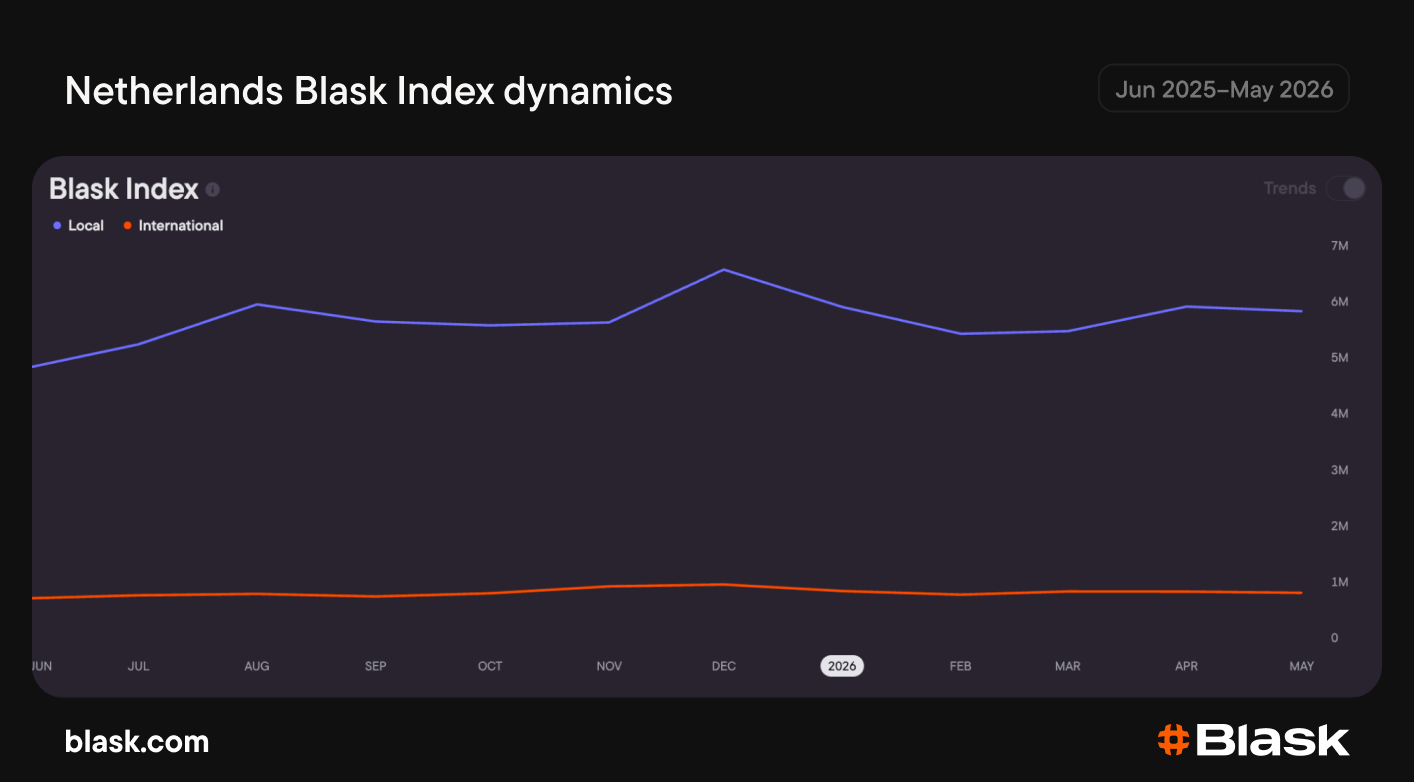
The licensed side is still far from evenly distributed. The Dutch market is better described as top-heavy, with demand anchored around a small group of large incumbents even as growth increasingly comes from brands below them.
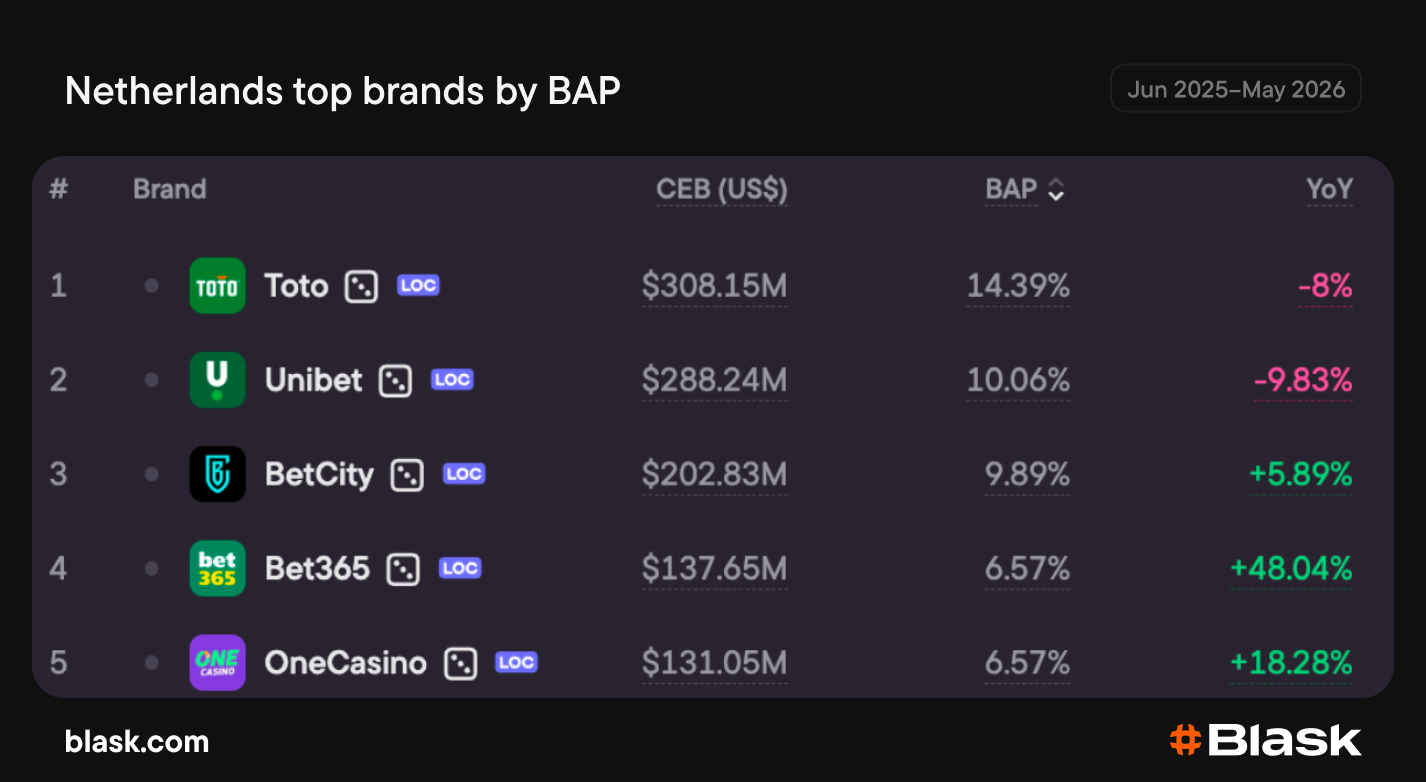
In Q1 2026, Toto and Unibet declined year-on-year, while BetCity, Bet365 and OneCasino all posted growth. Bet365 showed the strongest increase among the top five, while Toto remained the largest brand by both BAP and CEB.
A total marketing ban would widen the grey-market edge
The $813 monthly deposit cap has disproportionately hit high-LTV players, who generate a large share of licensed GGR, and redirected spending toward grey-market platforms that face no Dutch restrictions.
Van Bruggen’s proposed ad ban would remove the last channel licensed operators still have to reach new players — a critical disadvantage against grey-market sites that ignore Dutch rules and face none of the restrictions applied to regulated companies.