Argentina blocks Polymarket as legal gambling market booms
A Buenos Aires court recently ordered telecom providers to shut down Polymarket nationwide, effectively blocking the platform across Argentina. The court explicitly labeled the operation as unauthorized gambling. Many crypto enthusiasts and tech commentators immediately framed this as a massive, alarming signal about the future of prediction markets, cryptocurrencies, and global regulation.
However, a closer look at the actual data tells a completely different story. Argentina did not ban gambling. They simply banned one specific platform that actively chose to skip the required licensing queue.
The move highlights a growing global reality: presenting a platform as a cutting-edge “prediction market” does not grant immunity from fundamental gambling laws.
The trigger: Local complaints and suspicious trading
The regulatory crackdown in Argentina did not happen in a vacuum. It was sparked by formal complaints from legitimate, licensed entities. Both LOTBA (the Buenos Aires City Lottery) and CASCBA (the Argentine Chamber of Casinos) actively petitioned the courts. Prosecutors argued that Polymarket operated without any local licenses. Furthermore, they pointed out that the platform accepted cryptocurrency and credit cards without conducting basic identity or age verification (KYC).
Adding fuel to the regulatory fire was an incident of highly suspicious trading activity. Local media reported unusual movements on a Polymarket contract regarding Argentine inflation data. The market abruptly reversed positions just before the official government data release, raising serious concerns about insider trading and market integrity.
Consequently, Argentina became the 34th country globally to block the platform. They join a growing list of jurisdictions, including France, Germany, Australia, and Colombia, that refuse to let unregulated platforms operate freely.
A thriving market for those who follow the rules
If one only listened to crypto Twitter, they might assume Argentina is fundamentally hostile to the iGaming industry. Data from Blask completely dismantles this narrative.
Right now, Blask actively tracks 157 different gambling brands operating successfully within Argentina. The country boasts a massive, vibrant market with an estimated annual Competitive Earning Baseline (CEB) of around $1.2 billion. The issue isn’t that Argentina hates betting; it’s that they expect operators to play by the rules.
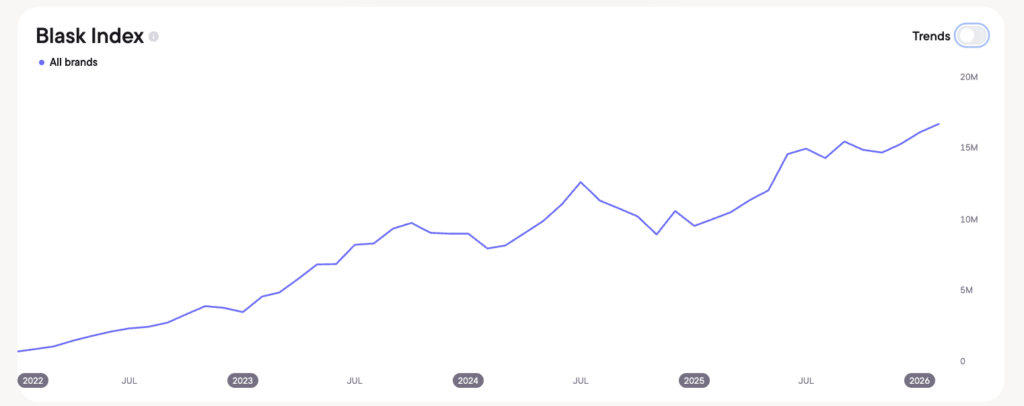
When brands actually secure licenses and operate legally, the growth potential in Argentina is staggering.
- Betsson is currently the #1 brand in the country by Acquisition Power Score (APS), boasting over 182,000 active players and posting a solid 62%YoY growth. As a licensed European operator, they prove that compliance is profitable.
- Betano holds the #2 spot and provides an even more dramatic example. The brand exploded with a massive 5,246% YoY growth in APS, jumping from virtually zero to a major market player in just 12 months.
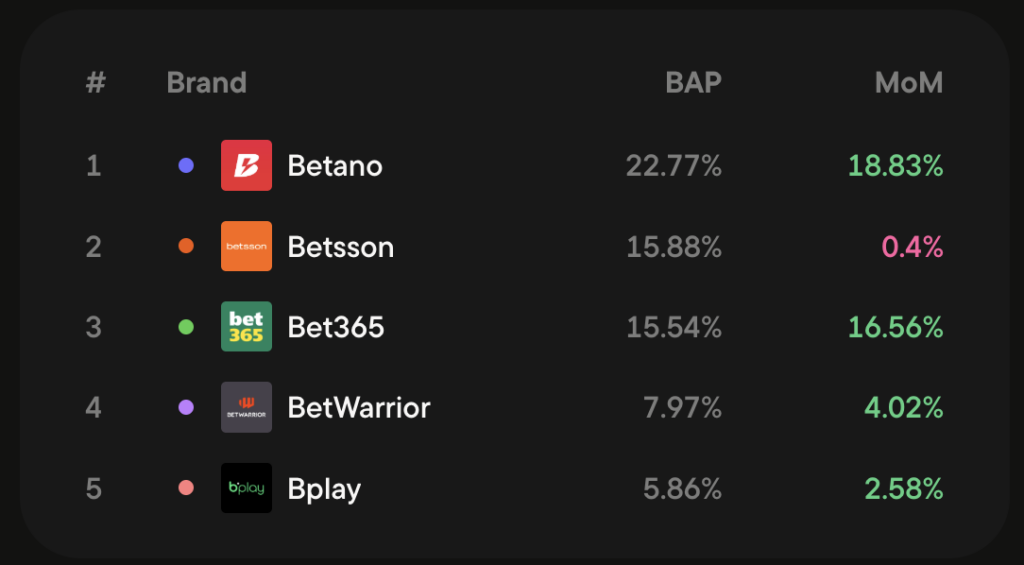
Other brands, like Stake (+668% YoY) and 1win (+380% YoY), also continue to operate and grow rapidly, navigating the market’s complexities while Polymarket faces a nationwide blackout.
Conclusion: The prediction market reality check
The block in Argentina serves as a crucial reality check for the prediction market sector. Categorizing a platform as a decentralized forecasting tool does not magically exempt it from the regulatory frameworks that govern traditional sportsbooks and casinos.
While Polymarket navigates increasing global resistance, the broader Argentine gambling market continues to thrive. The other 157 brands tracked by Blask have figured out how to operate there successfully.
Until prediction platforms accept that they are, fundamentally, regulated financial or gambling entities, they will continue to face the same legal roadblocks in jurisdiction after jurisdiction.