
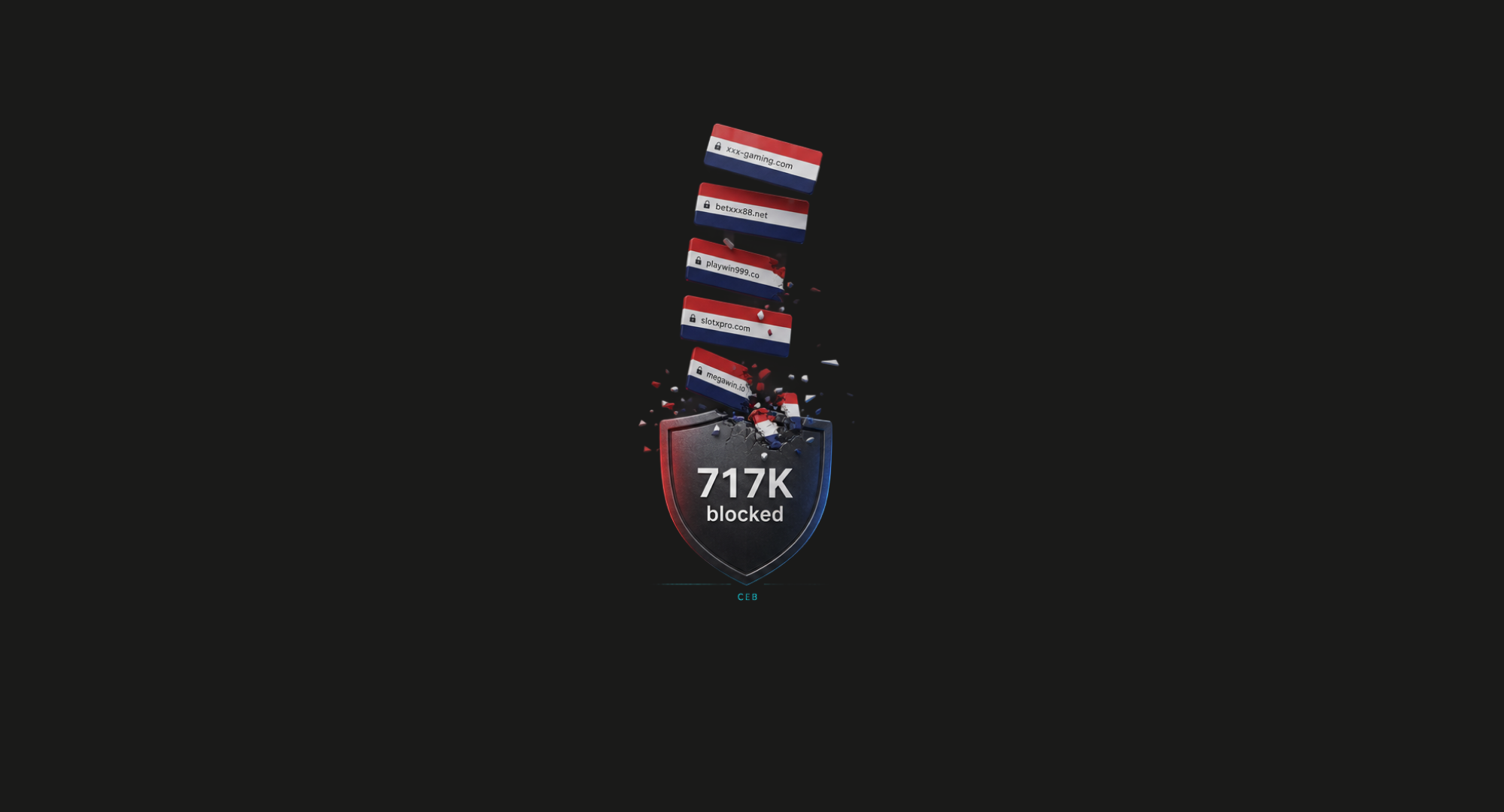
The Royal Thai Police blocked over 717K gambling URLs ahead of the 2026 World Cup, but Blask data shows that the market’s CEB did not decrease throughout the campaign.
On May 31, the Royal Thai Police reported that between October 2025 and May 2026, authorities blocked 717,425 URLs associated with gambling activity. The campaign targeted Facebook, Line, TikTok, and standalone gambling websites. An additional 309 sites remain under active enforcement until the end of June.
The campaign was timed to coincide with the 2026 World Cup: police expect the tournament to boost football betting volumes. Concurrently, authorities began utilizing artificial intelligence to detect gambling content on social media.
Operators have also adapted their infrastructure. According to the Thai police, illegal gambling networks are moving away from mule accounts and are increasingly using corporate structures, PayPal, cross-border intermediaries, and crypto rails. This complicates financial enforcement and makes the market less dependent on individual domains.
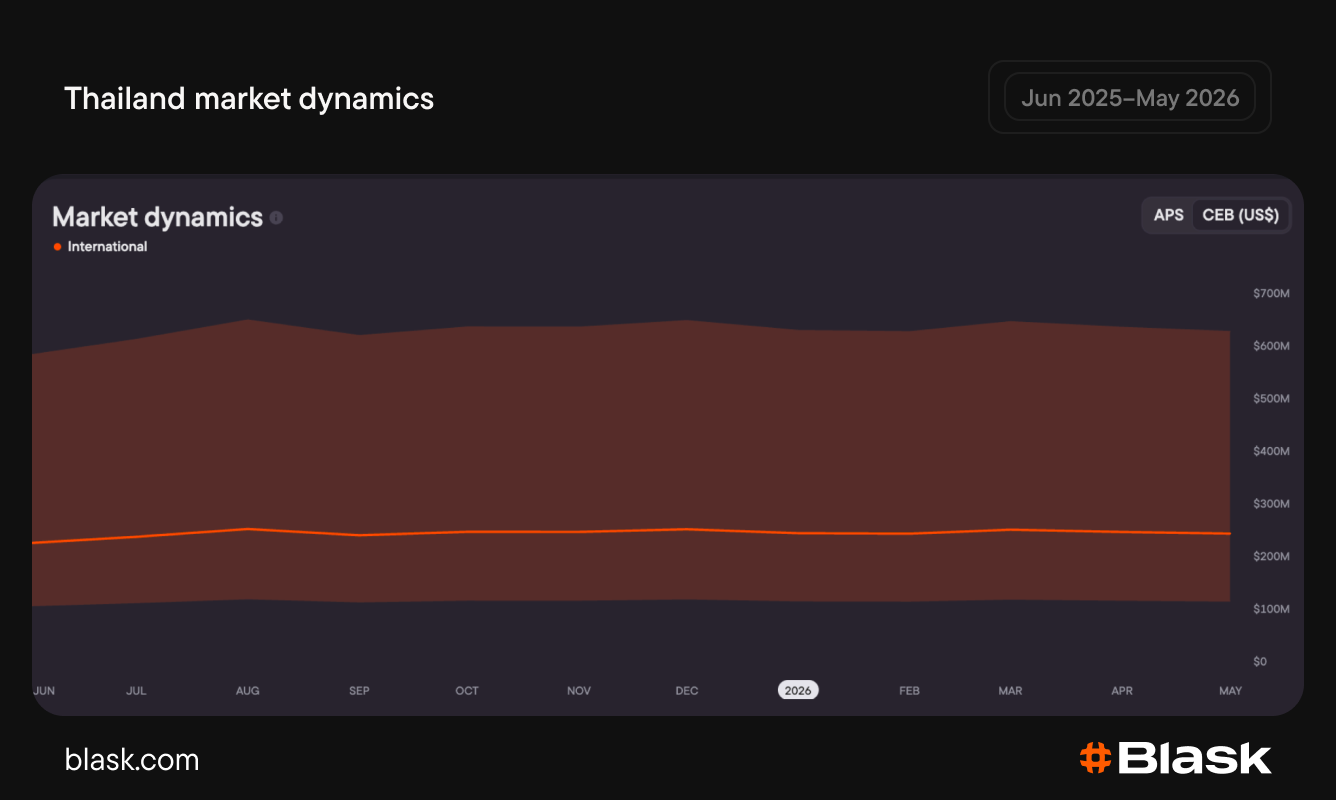
Blockades failed to shift market CEB
Blask data reveals two distinct dynamics: at the overall market level, the blockades barely affected the estimated revenue — from June 2025 to April 2026, Thailand’s CEB remained at around $260M per month. The low point for the period was $238M in June 2025, while the peak reached $265M in August. Following the launch of mass URL blockades in October, the figure remained within the same range.
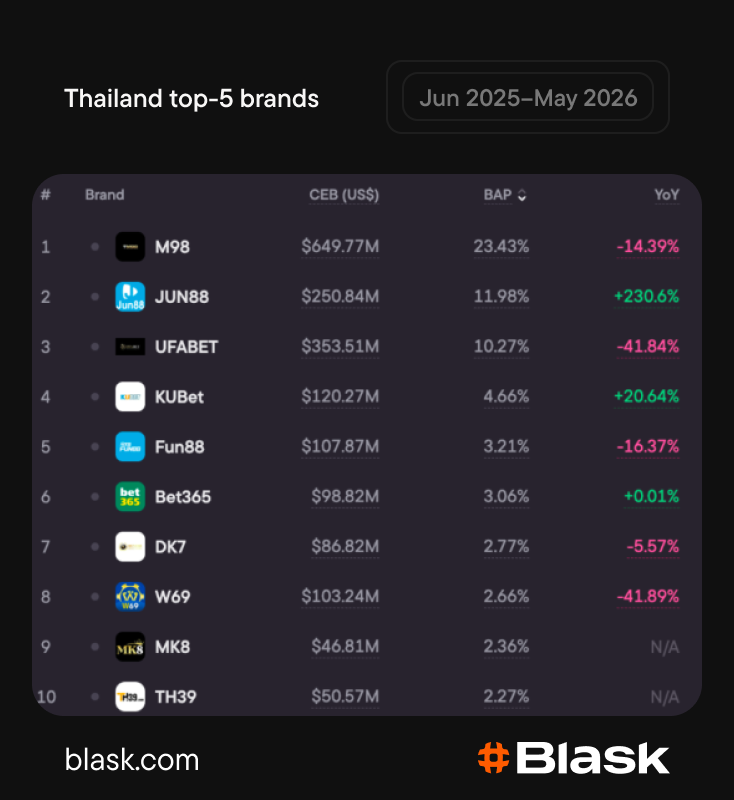
At the individual brand level, the shift was much more pronounced. UFABET, one of the market’s largest operators, dropped by 37% year-on-year in Blask Index by April 2026. Over the same period, JUN88 grew by 308%. New players also rapidly secured positions: MK8 and TH39 entered the top 10, demonstrating month-on-month growth of 2% and 12.7%, respectively.
Regional Context
Thailand is part of a broader enforcement trend across Southeast Asia. Vietnam, Indonesia, and Cambodia are also intensifying campaigns against football betting traffic ahead of the World Cup. Across the region, authorities are deploying AI detection, social media sweeps, and the disruption of financial networks, while operators accelerate rebranding, diversify payment channels, and transition to crypto infrastructure.
In early 2026, Thai authorities reported over 4M new players aged 15–25. Against this backdrop, Thailand’s gambling CEB held steady at around $260M per month by April 2026, despite blocked URLs and 309 priority targets under active enforcement.
Blask data demonstrates that the pressure alters the distribution of demand between brands: while some operators lose ground, others quickly occupy the vacated space. Meanwhile, overall demand remains resilient.