
- Updated:
- Published:
Blind box gambling
Blind box gambling is a paid transaction in which chance decides which item of value the buyer receives, and the payment is made for that chance. A sealed retail box that always delivers a figurine from a published series remains a product sale; the hidden variant is a feature of the goods. A livestream spin, raffle or scratch fee paid for a shot at a rare figurine meets the consideration, chance and prize test that gambling statutes already apply to a licensed game.
What blind box gambling covers
| A blind box is a sealed package from a known collection: the buyer is guaranteed an item, and the specific variant stays hidden until the seal is broken. Mystery box is the usual search synonym. Singapore uses that name for a different product — a package drawn from an unknown range, already disallowed there as a public lottery. |
The gambling label attaches to how the item is sold. Secondary-market resale can still push a physical prize toward “money’s worth” under common-law definitions, which is why sealed collectibles sit closer to a gambling prize than a skin that never leaves the game.
The three-element test
Most gambling statutes collapse classification into three elements that must sit together:
Consideration = payment or an equivalent stake (spin fee, donation, in-app currency)
Chance = an outcome not fully determined by skill
Prize = an item of value, including resale or exchange value
| Product | Consideration | Chance | Prize | Typical reading |
|---|---|---|---|---|
| Happy Meal toy | Yes | Yes | Promotional | Consumer product |
| Retail blind box | Yes | Yes | Yes, if resale exists | Consumer law, with a prize-value grey zone |
| Livestream spin for a figurine | Yes | Yes | Yes | Unlicensed gambling where the Act applies |
| Licensed casino slot | Yes | Yes | Yes | Regulated gambling |
The same Labubu can sit on either side of the line once the sale is rebuilt as a chance mechanic. The table is a planning frame; local counsel still applies the statute.
Blind box against loot box
A loot box is a digital container inside a game. A physical blind box is a retail object that can be sold on again. That difference in liquidity is what moves the prize element.
| Dimension | Blind box | Loot box |
|---|---|---|
| Object | Sealed retail package | In-game container |
| Prize liquidity | Secondary-market resale | Often confined to the game |
| Usual legal home | Consumer law, with gambling exposure where contents trade | Platform rules plus selective gambling law |
| Closest licensed parallel | Influencer prize mechanics, scratch cards | Social casino rewards |
The UK Gambling Commission has said that where items won through a loot box stay inside the game and cannot be cashed out, the mechanic is unlikely to be a licensable gambling activity. Physical contents that already change hands for cash sit on the other side of that cash-out line.
A worked example
Pop Mart priced Labubu boxes at about S$16–S$25 on the shelf in late 2024. Rare pieces later appeared on resale listings at up to S$1 000. The shelf buyer always leaves with a figurine.
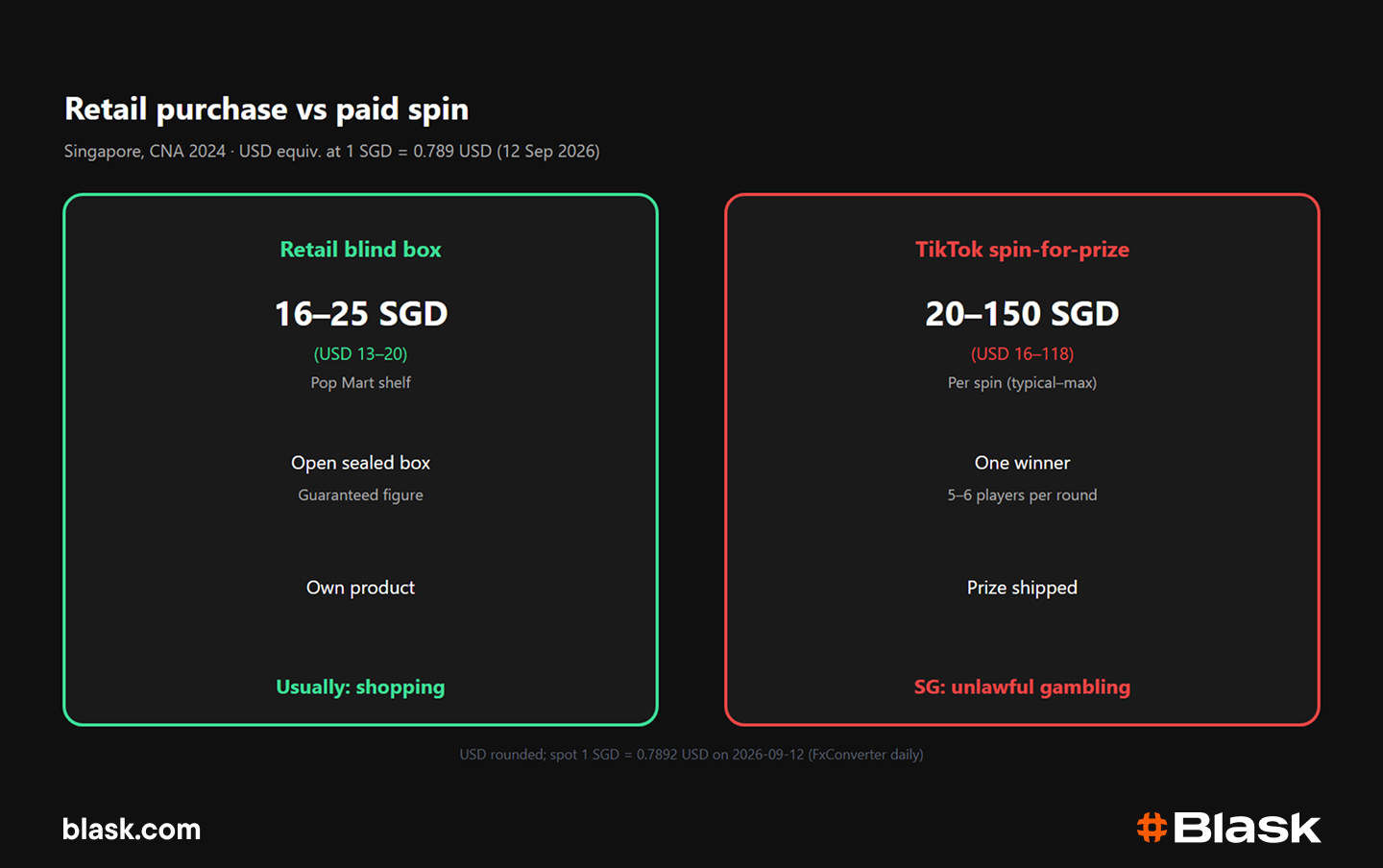
On TikTok Live, Singapore-based sellers charged about S$20 for a single spin, and CNA recorded fees of up to S$150 a round. Sessions that The Straits Times watched put five or six players into a game and paid out one winner, so six stakes of S$20 put S$120 into one round while five of those players left empty-handed. Livestreamers also wrapped the same prize in digital scratch-and-win cards.
The figurine stayed the same while the contract changed: the shelf sale buys a product from a defined set, and the spin buys a chance at that product.
Where the law already draws the line
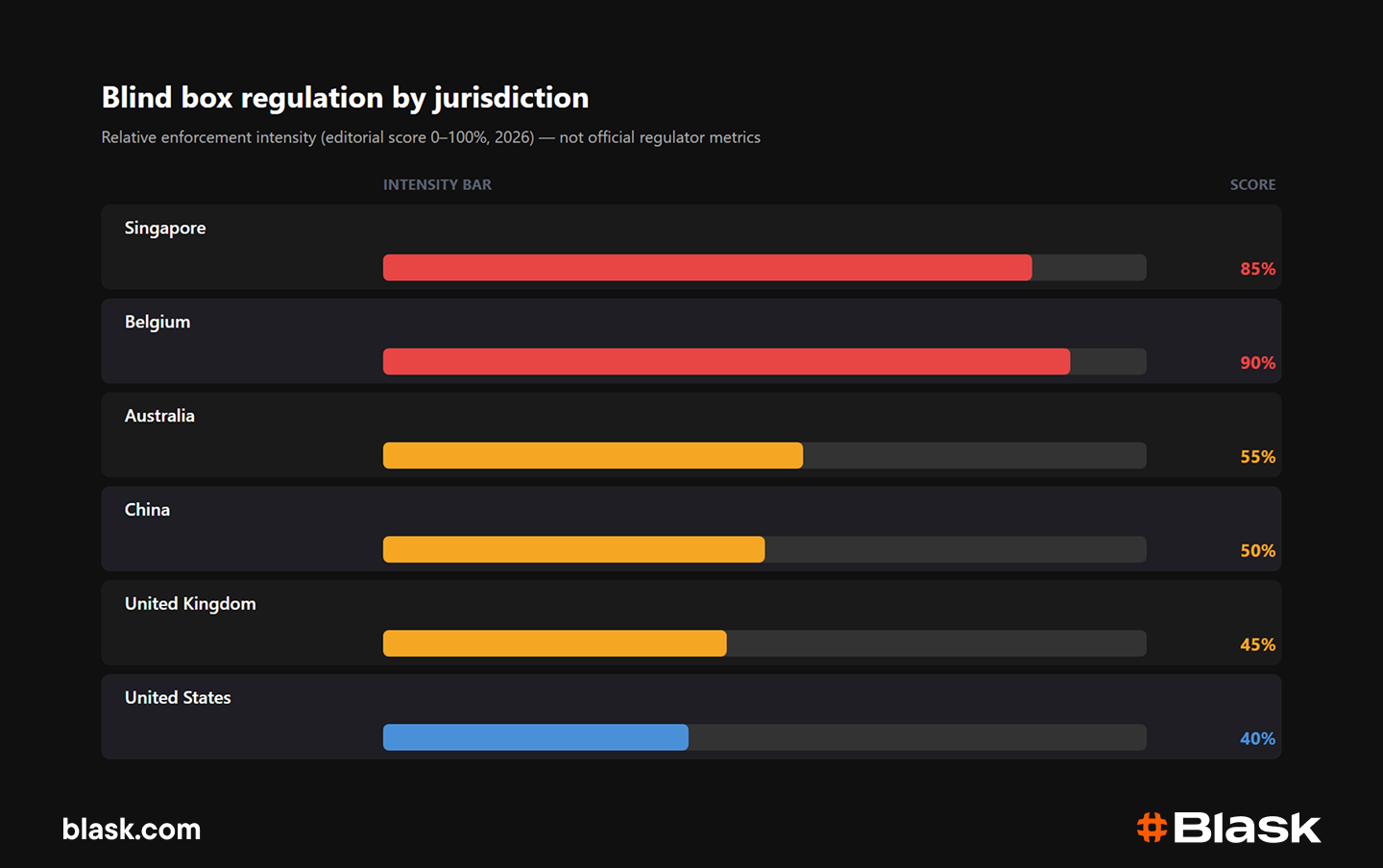
Singapore already prohibits conducting a betting operation, gaming or a lottery without a licence or class licence. A first conviction under section 18 of the Gambling Control Act 2022 carries a fine of up to S$500 000 and imprisonment of up to seven years — the statute CNA’s sources applied to the livestream spins.
Retail boxes sit on a separate track. On 12 February 2026 the Ministry of Home Affairs and the Gambling Regulatory Authority said they would introduce conditions on how blind boxes may be offered, with mandatory odds disclosure among the points under study. Details were due around mid-2026 and trading-card packs sit inside the same draft. On 7 May 2026 the minister said sellers would not be required to open sealed boxes and sell the contents as individual items, because that step would amount to a ban.
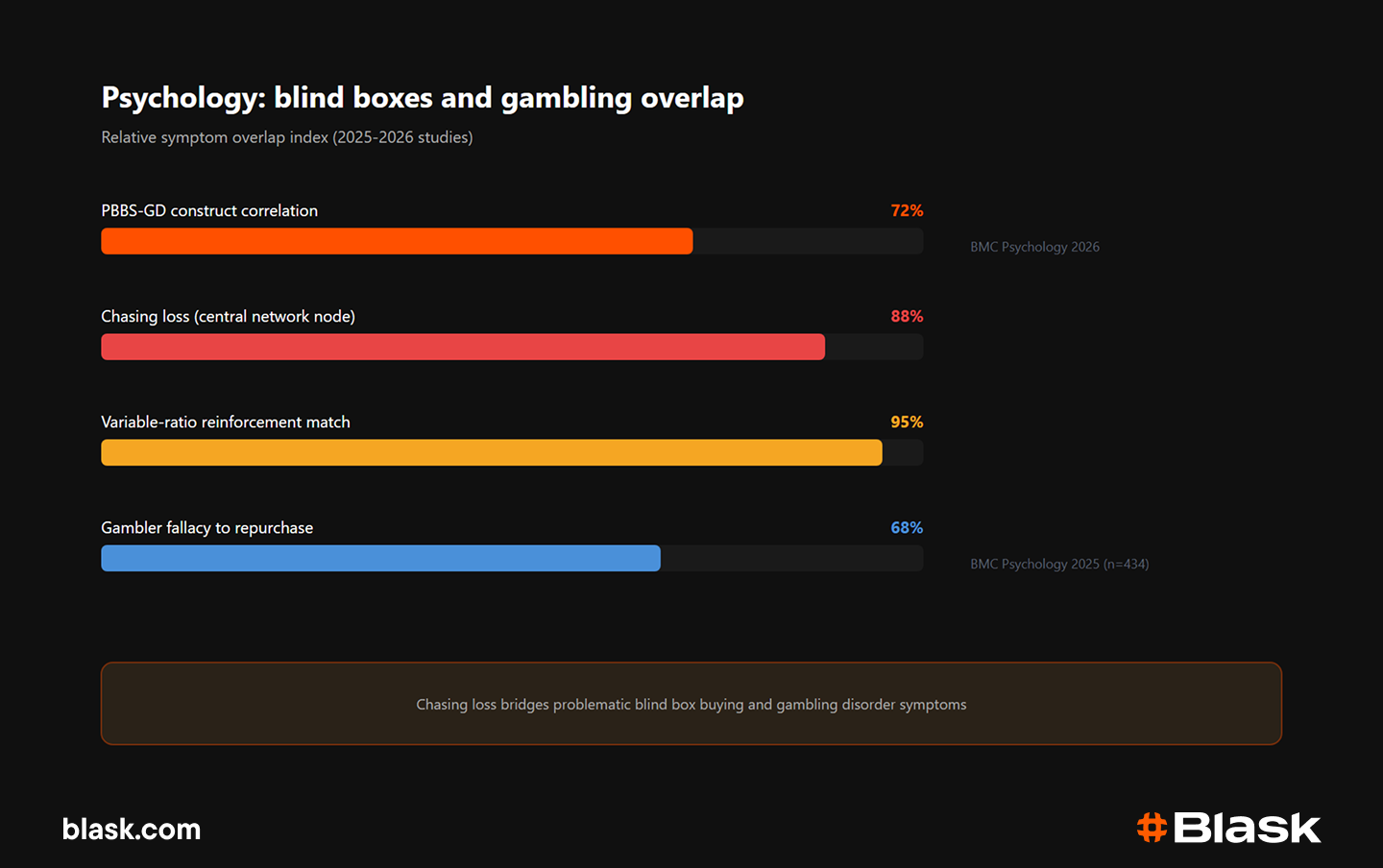
China’s State Administration for Market Regulation issued trial guidelines on 8 June 2023: disclose extraction rules and probabilities before purchase, no sales to children under eight, guardian consent for older minors, and no use of the format to disguise gambling. Belgium’s Gaming Commission, in its 2018 loot-box review, treated paid random-reward mechanics in the titles it examined as games of chance. A 2026 BMC Psychology study later found problematic blind-box buying correlated with gambling-disorder symptoms, with chasing loss at the centre of the network.
The same mechanic inside licensed products
A scratch card is an instant-win ticket whose result exists before the reveal. A mystery bonus or prize wheel inside a licensed casino is the same variable-ratio schedule under a gambling licence. Social casino products keep the loot-style hook and drop cash-out. US sweepstakes casino models keep a chance reward and add an alternate method of entry.
Responsible gambling tools already sit on the licensed side of that split. The unlicensed livestream is the version that never picked them up.
FAQ
Is buying a retail blind box gambling?
A standard shelf purchase that always delivers an item from a defined set is treated as a consumer sale in the jurisdictions mapped above. The gambling reading appears when the buyer pays for a chance at a rare prize, or when resale value is treated as money’s worth.
How does a blind box differ from a loot box?
The physical box can be resold. The digital container often cannot. That liquidity is why a tradeable figurine sits closer to the prize element in gambling law than a skin that never leaves the game.
Are Labubu livestream spins legal in Singapore?
Conducting an unlicensed betting operation, game or lottery is an offence under section 18 of the Gambling Control Act 2022. Legal commentary applied that section to paid spin-the-wheel and scratch mechanics for Labubu prizes.
Bottom line
Blind box gambling is a transaction test. The shelf box buys a hidden variant of a guaranteed product; the spin, raffle or scratch fee buys a chance at the same object. Singapore is already enforcing the second form under the Gambling Control Act, while a separate retail rulebook is still being drafted for later in 2026. How wide that gap stays depends on whether the mid-year text treats the sealed box as a consumer good with disclosure duties, or as a gambling-adjacent product.