

The Commission is charging licensed operators more for the licence itself.
The Gambling Commission confirmed a headline 25% increase on 30 June 2026, after a DCMS consultation that ran from 27 January to 30 March 2026. New rules took effect on 1 October 2026.
DCMS is the Department for Culture, Media and Sport, the UK ministry that ran the consultation and set the Gambling Commission fee rise.
Annual operating fees, applications, personal licences, and most variations rise under that headline. Society lotteries stay frozen. Bookmakers who work at racecourses used to pay by how many days they operated. They now pay by GGY, under a general betting (limited) licence.
The last full review was in 2021. The Commission has been running a deficit of about £4M a year. Even at +25%, it has to find at least £8M of savings over five years. In 2025/26, about a quarter of crime-prevention and consumer-protection assessments ended in significant failings or special measures — the government’s case for holding the compliance programme.
Operators already face Remote Gaming Duty at 40% from April 2026, the statutory levy, and a higher betting duty. The government set no staged introduction. It argued licence fees remain a small share of GGY.
Blask data for Great Britain shows who that fee reaches. Offshore APS share rose from 4.4% in September 2025 to the level on the chart a year later. Across September 2025–September 2026, onshore brands accounted for 94.7% of APS. The spend split is wider: offshore CEB was 14.8% in September 2026.
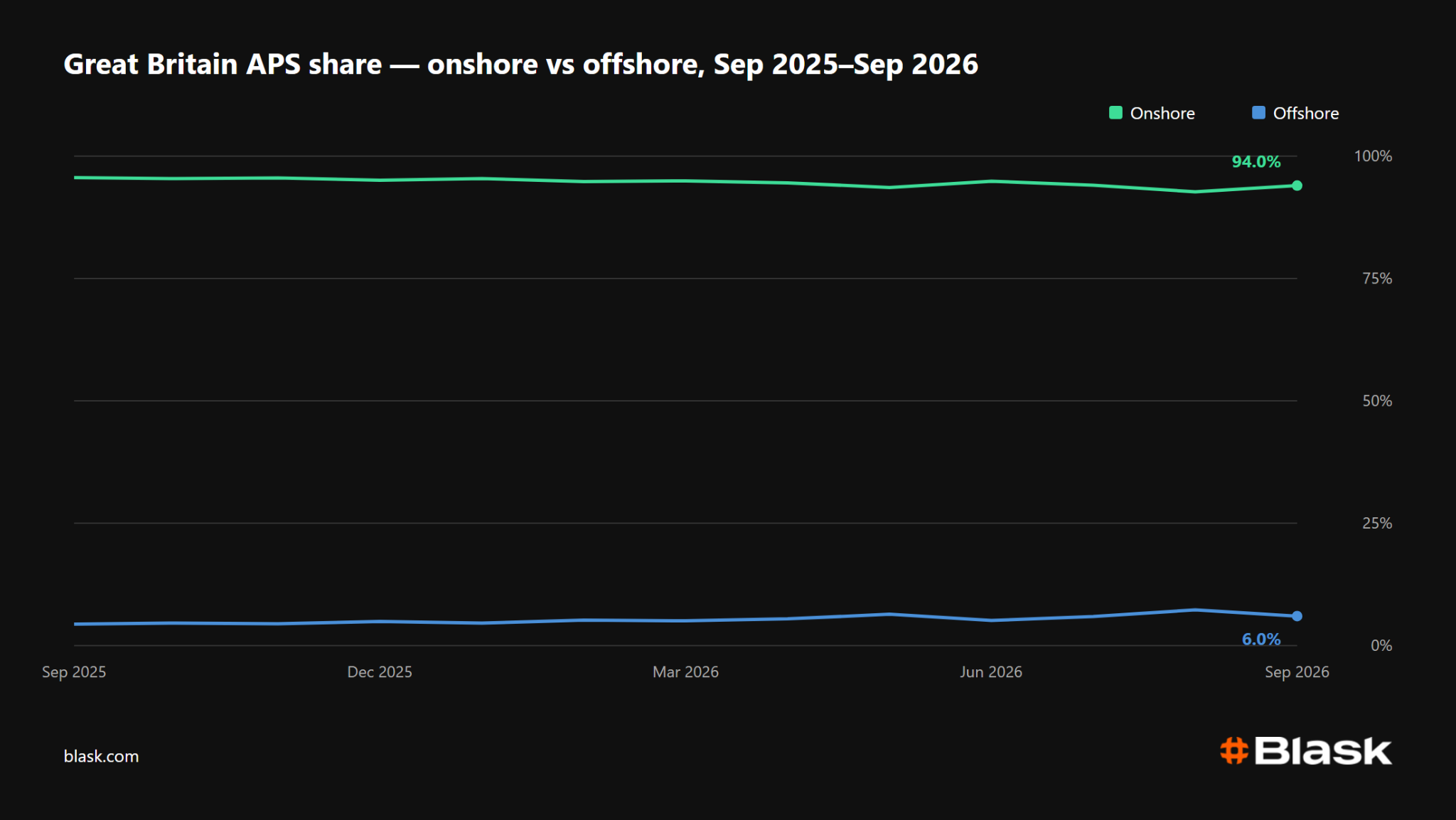
The brands that hold search demand are the ones that pay the new fee. In September 2026, every name in the top 10 by BAP was onshore. No offshore brand entered that list.
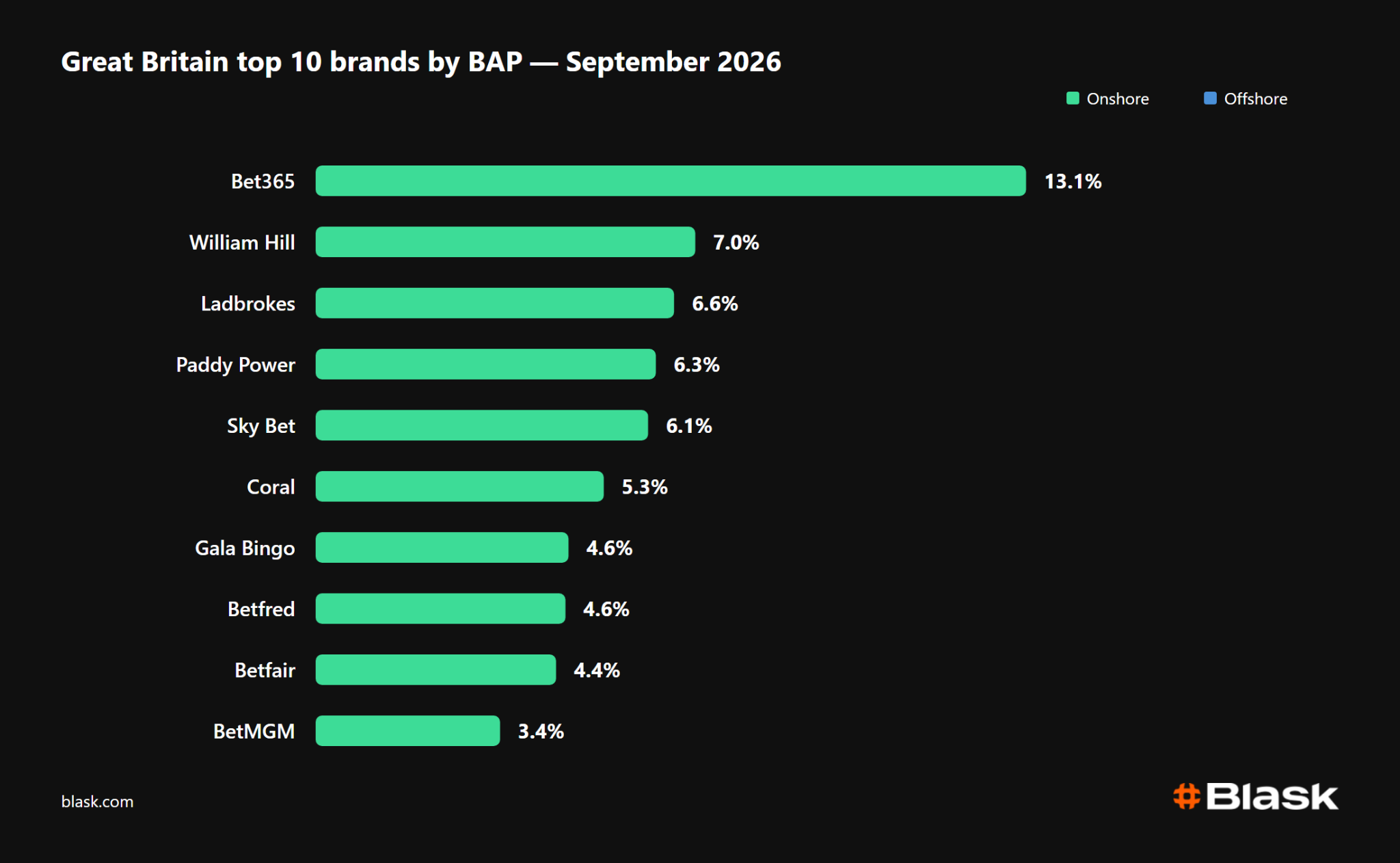
The new tariff prices the licensed perimeter. The offshore CEB remainder sits outside the invoice.