Blask Index measures demand for iGaming brands and markets from filtered, normalized search data. This guide explains what the number means, how Blask calculates it, how to read its movements, and where its limits are.
Every operator sees its own deposits and registrations. Few can see the whole market at the same time: which brands players look for, whether total demand is growing, and how fast a competitor is gaining attention. Blask Index answers those questions with one number per brand and per country, updated hourly.
What Is Blask Index?
💡 Key point: Blask Index is a real-time measure of market demand volume for iGaming brands in a given country, based on normalized search data.
It is the base metric of Blask, the iGaming market intelligence platform. Every other Blask brand metric starts from it.
What Does Blask Index Measure?
A brand index tracks search demand for one operator in one country. The market index is the sum of all tracked brands in that country, so it shows whether demand for online gambling as a whole is growing or shrinking.
The index is built on the Share of Search method. Les Binet and James Hankins showed that a brand’s share of category searches tends to move ahead of its share of the market.
What Does a Blask Index Value Mean?
A higher value means more measured demand. The number is an index, not a count. When Stake’s index in India went from 974K in February 2024 to 10.33M in April, demand for the brand grew about 10.6 times.
It does not mean 10.33M people searched for Stake. The useful readings are relative: change over time, a brand against the market, one brand against another in the same country.
What Blask Index Does Not Measure
Blask Index is not a count of people, visits or searches. It is not GGR, NGR, deposits or reported revenue, and it is not raw Google Trends data.
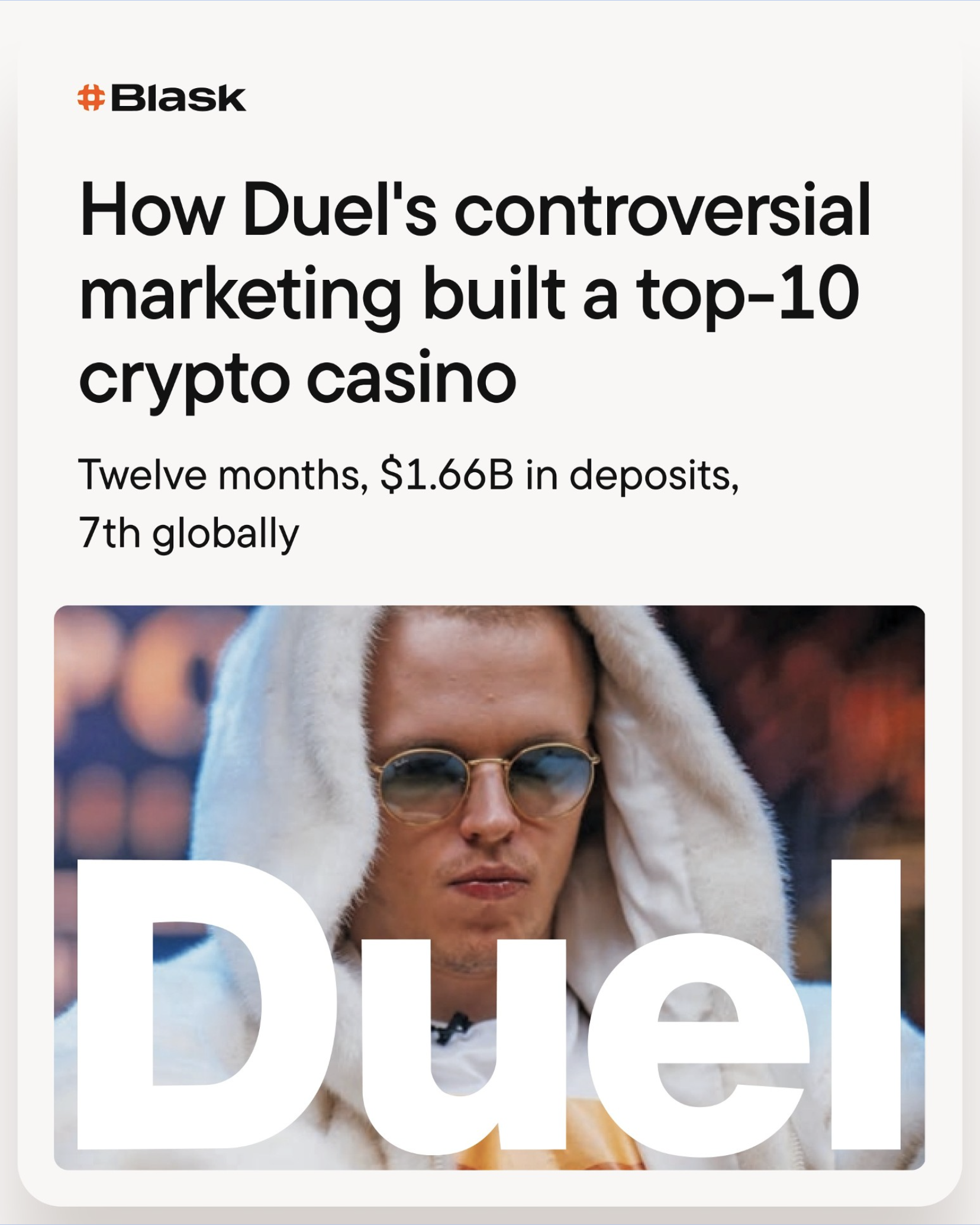
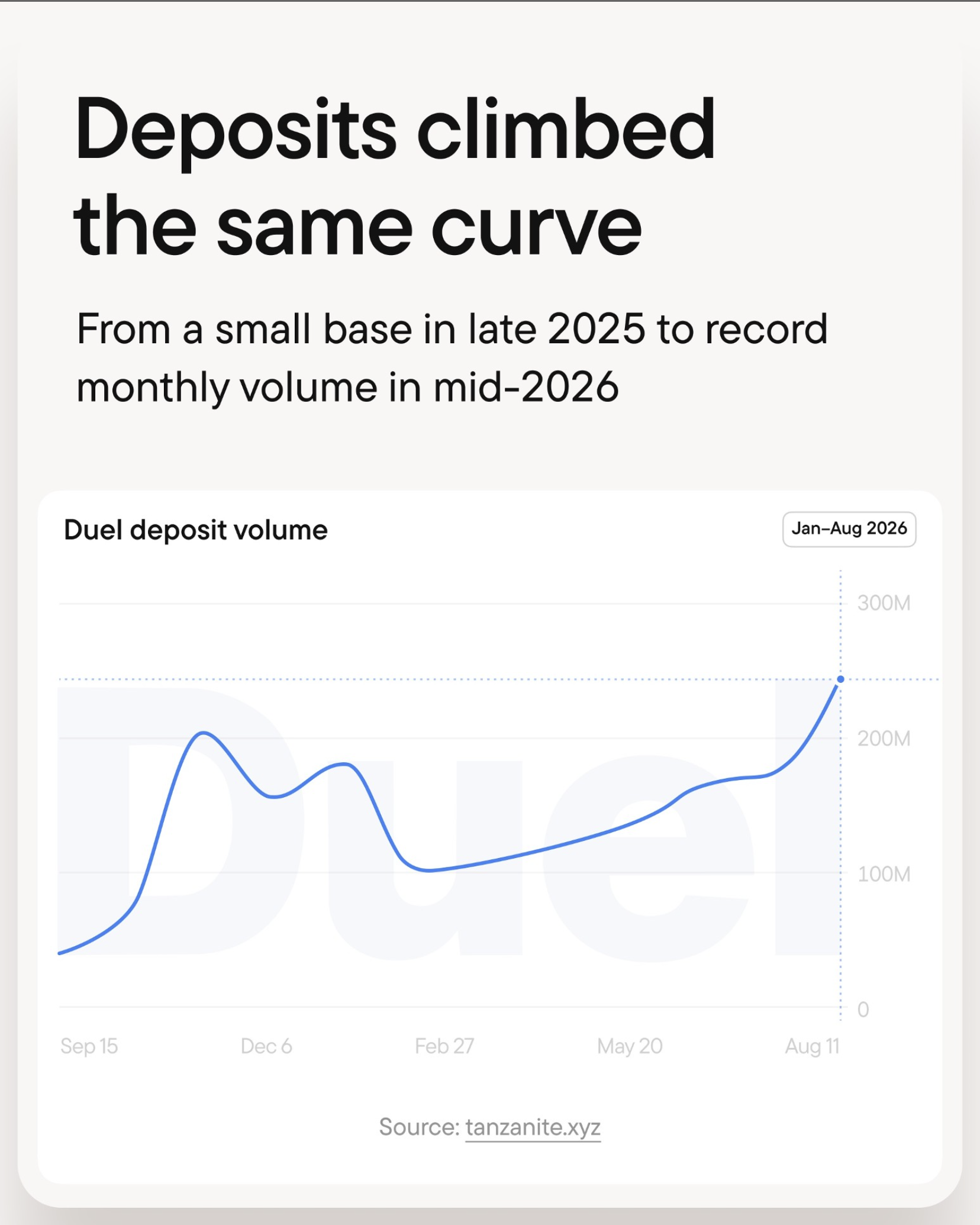
The crypto casino Duel shows why this matters. According to on-chain data from Tanzanite, Duel took $1.66B in deposits in its first year, and 61% of that volume came from deposits between $10K and $1M. A few large depositors can move revenue a lot while generating little search.
In Blask’s June 2026 comparison of leading crypto casinos, Duel ranked higher by deposits than by Blask Index.
How Does Blask Index Work?
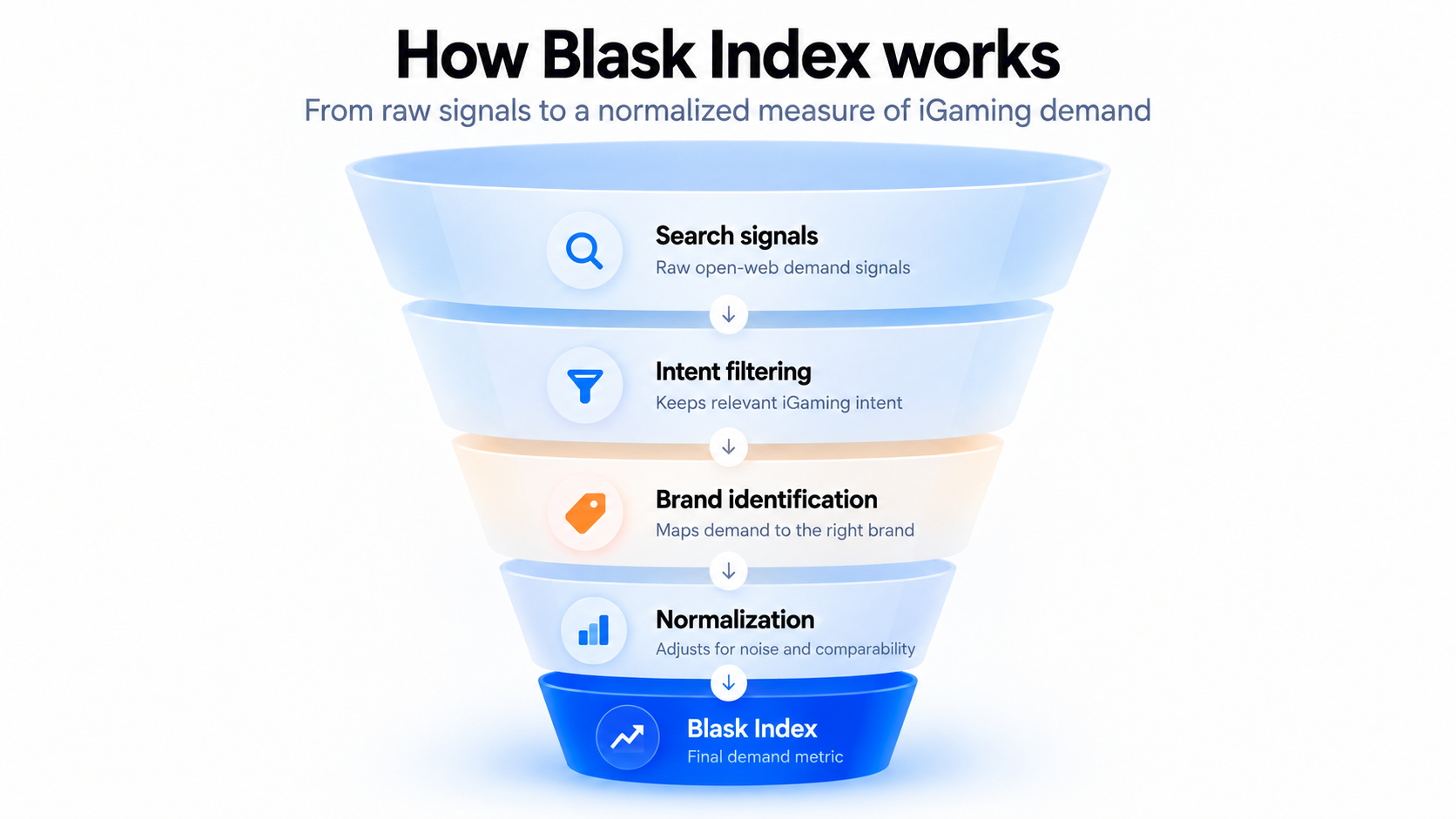
The calculation has four stages: collect search signals, filter them by intent, attach them to the right brand, and normalize the result. The processing and weights are proprietary, so the steps below describe the method rather than a formula. The full pipeline is in How Blask measures.
Search Data and Player Intent
Blask processes billions of geo-tagged search queries. It keeps queries like “brand_name betting” and removes queries like “brand_name scam” or “brand_name payout problems”. The result reflects intent to use a brand, not complaints or news about it.
Brand Identification and Query Filtering
An automated scan finds candidate sites through local-language queries such as “online casino”. A computer-vision model checks homepages for signs of a real gambling product, a language model removes affiliates and review sites, and analysts confirm the list. In Brazil alone, the process mapped more than 500+ active brands. Spelling variants such as “merrybet” and “merry bet” then merge into one brand.
Normalization and Seasonality Adjustments
Blask re-weights the cleaned volumes against total search activity in the country, which removes the effect of general growth in internet use. Google can revise its historical data, so Blask collects the same periods more than once and corrects for revisions. A seasonal adjustment accounts for regular yearly patterns.
How Brand-Level Demand Becomes a Market Index
Brand indexes are calculated every hour, and their sum is the country’s Blask Index. Daily and monthly values are available for longer analysis. Game-level demand uses a separate monthly metric, Share of Interest, and should not be confused with the brand and market index.
Checking the Index Against an Independent Source
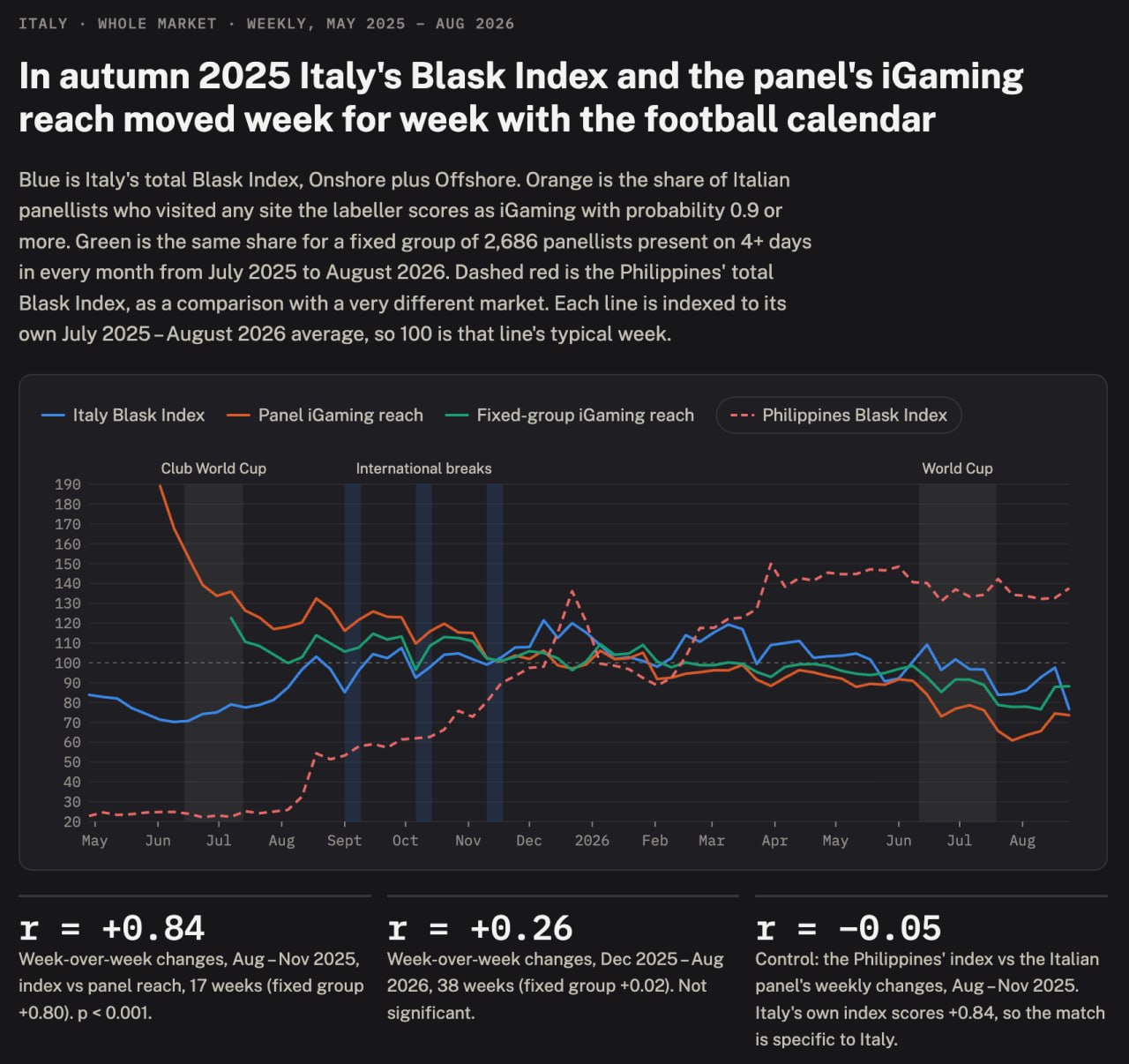
In 2026 Blask compared Italy’s Blask Index with a behavioural panel of Italian internet users, a source with no connection to search.
“Blask Index runs on Share of Search under the hood. We compared it with a source that has nothing to do with search: a behavioural panel of Italian users. A model labels iGaming hosts, tens of thousands out of tens of millions, with confidence of 0.9 or higher. The metric is the weekly share of the panel that visited at least one such host. So that the overall trend wouldn’t inflate the match, we correlated week-over-week changes, not levels,” said Max Tesla, CEO and Co-founder of Blask.
From August to November 2025, weekly changes in the index and the panel’s iGaming reach correlated at r = 0.84 over 17 weeks (p < 0.001).
“As a control, I swapped Italy for the Philippines, a different market with a different audience. The Philippines doesn’t match the Italian panel at all, and the correlation is around zero. So the panel isn’t catching general industry noise. It sees Italy specifically, and it sees it very close to how Blask Index does,”
Max Tesla
Italy’s Blask Index, the panel’s iGaming reach, a fixed panel group, and the Philippines’ index as a control, weekly, May 2025 – August 2026. Each line is indexed to its own July 2025 – August 2026 average.
The match has limits. From December 2025 to August 2026 the correlation fell to r = 0.26 over 38 weeks, which is not statistically significant. The strong result holds in autumn, when football moves both series.
“In autumn both series react to the football calendar in sync: they dip during international breaks and recover together with Serie A,” Tesla said. “In markets with a large enough panel, the next step is to use it as one more independent signal. It will raise the accuracy of Blask Index 2.0 and let us calculate it down to individual brands.”
Max Tesla
How to Interpret Blask Index
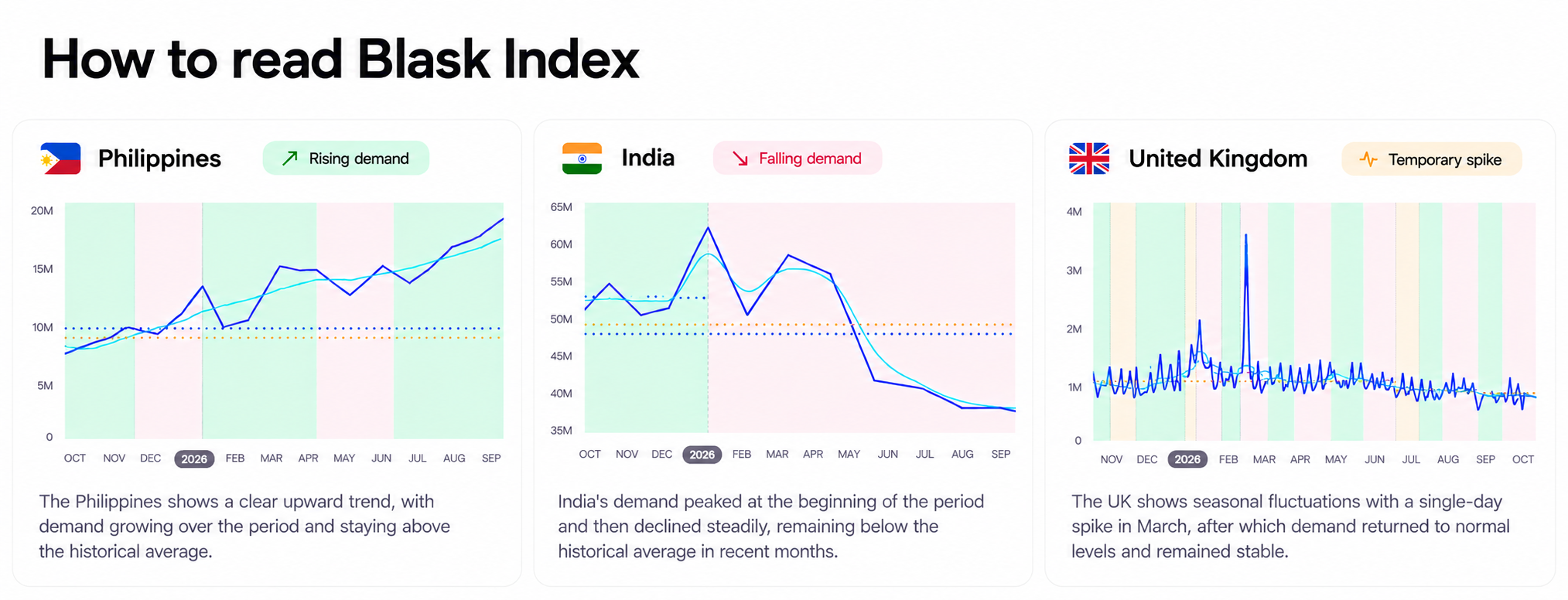
Read the index as a direction first and a level second. One day rarely tells you much. A month against the previous month, or against the same month a year earlier, tells you more. Blask expresses these comparisons as YoY and MoM growth.
Blask Index tracks changes in measured iGaming demand. Short-term spikes should be interpreted alongside longer-term trends and external events.
What a Rising Blask Index Means
A rising market index means more people in the country search for gambling brands. The cause can be a sports season, a new brand, a large campaign or legalization. A rising brand index means more attention for the brand. It does not show by itself whether that attention turns into deposits.
What a Declining Blask Index Means
A falling index means less measured demand: the end of a season, a payment or regulatory change, or a brand losing visibility. When Brazil banned betting in September 2026, demand for licensed brands fell 87% within two weeks.
Why Demand Spikes Do Not Always Mean Long-Term Growth
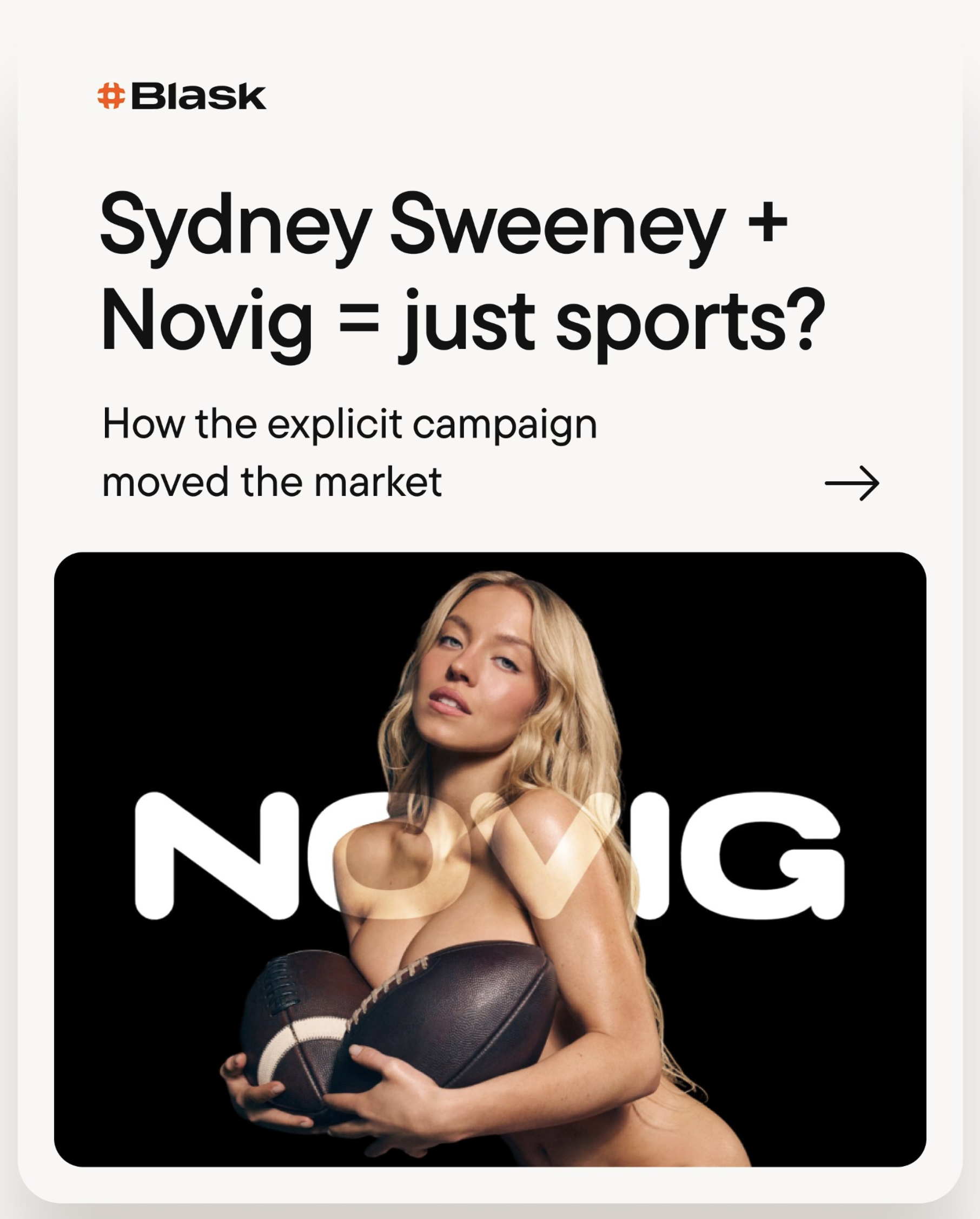
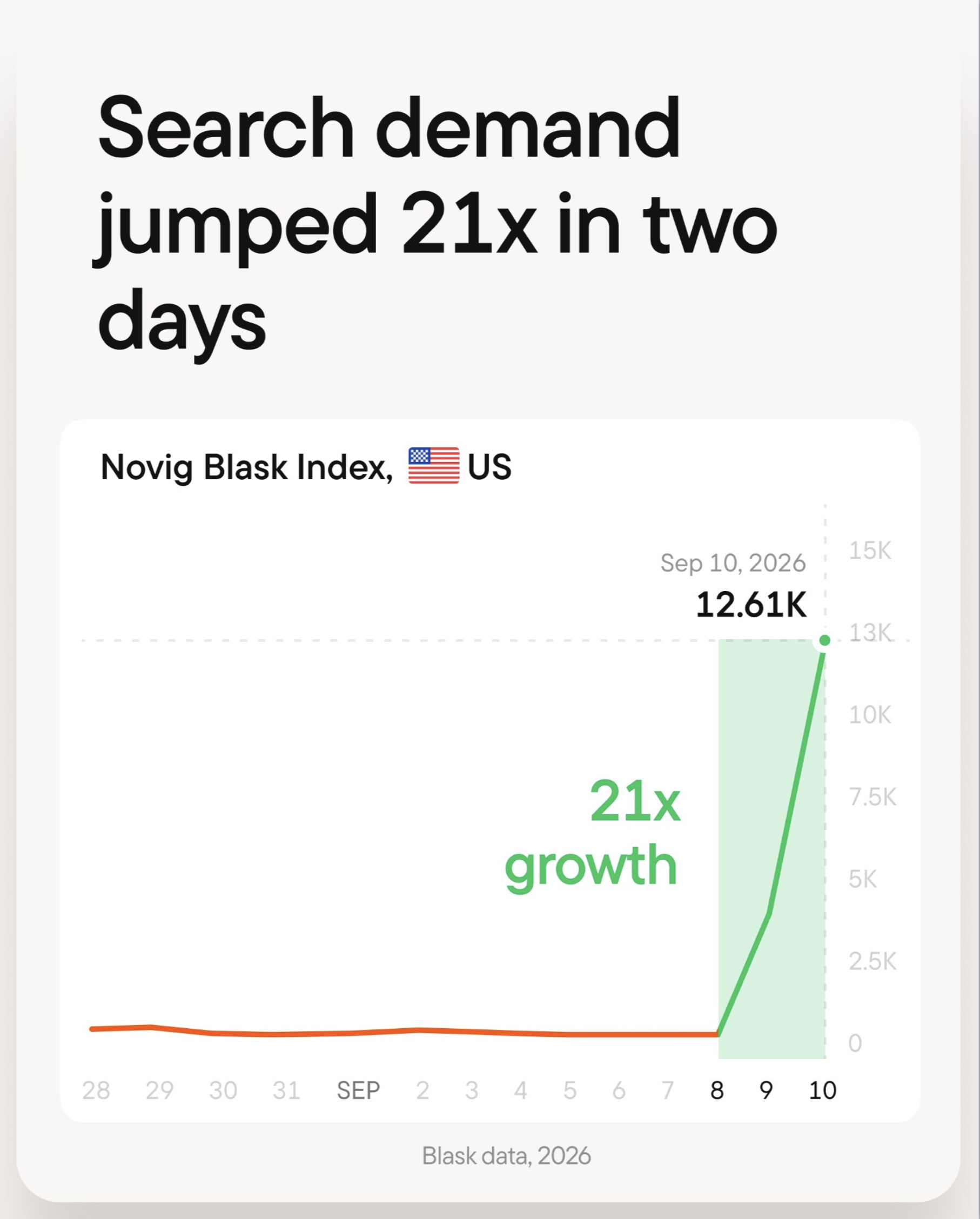
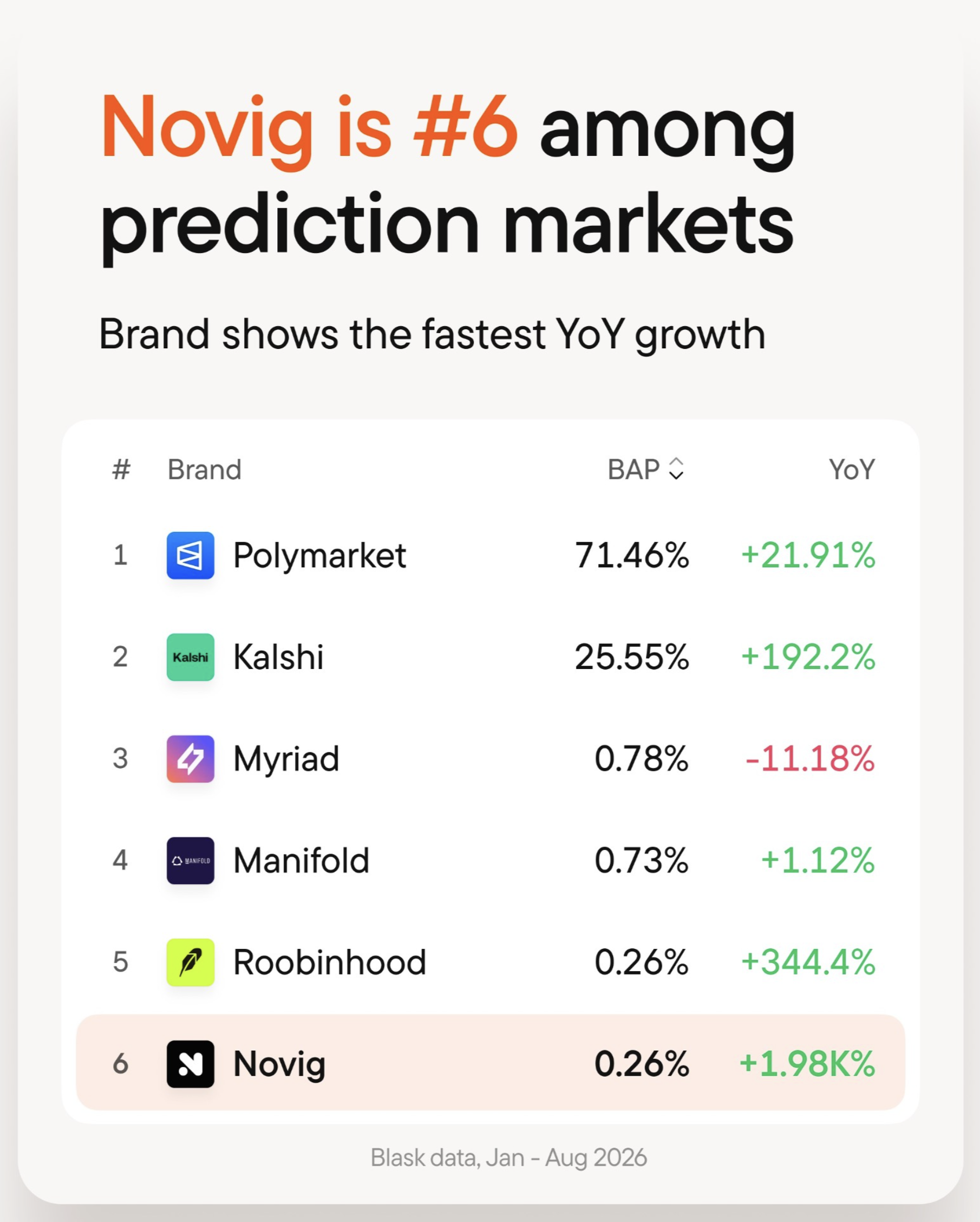
In September 2026 the prediction market brand Novig released its “Just Sports” campaign with actress Sydney Sweeney. Its Blask Index in the US grew 21 times in two days, reaching 12.61K on 10 September. Year over year, Novig grew 1,980%, the fastest among US prediction markets.
Even so, Novig’s BAP was 0.26%, sixth among prediction markets, against 71.46% for Polymarket and 25.55% for Kalshi. A spike shows attention. Whether it becomes growth shows in the level that remains weeks later, and in whether the brand’s share moves.
Within one country, brand indexes share the same normalization and can be compared directly. Across countries, compare the direction and size of change. A 40% drop in two markets is comparable. Index values of 50M in two countries are not.
Blask Index vs Other iGaming Metrics
Metric
What it counts
Question it answers
Blask Index
Filtered, normalized search demand for iGaming brands
How much demand does a brand or market have, and where is it moving?
Google Trends
Relative interest in one search term, scaled 0–100
Is interest in this exact term rising or falling?
Raw search volume
Number of searches for a keyword
How many times did people search for it?
Website traffic
Visits to a site
How many people reached the site?
BAP
A brand’s share of total measured demand in a market
What share of demand does the brand hold?
GGR / NGR
Money operators keep from players
How much did the operator or market earn?
Blask Index vs Google Trends
Google Trends rescales every term to its own 0–100 range and reports spelling variants separately. Blask Index merges variants into one brand, removes negative-intent queries, sums all brands into a market total and corrects for Google’s later revisions.
Blask Index vs Website Traffic
Traffic counts visits that already happened, including returning players, affiliates and bots. Blask Index measures the demand that comes before a visit.
Blask Index vs Share of Search
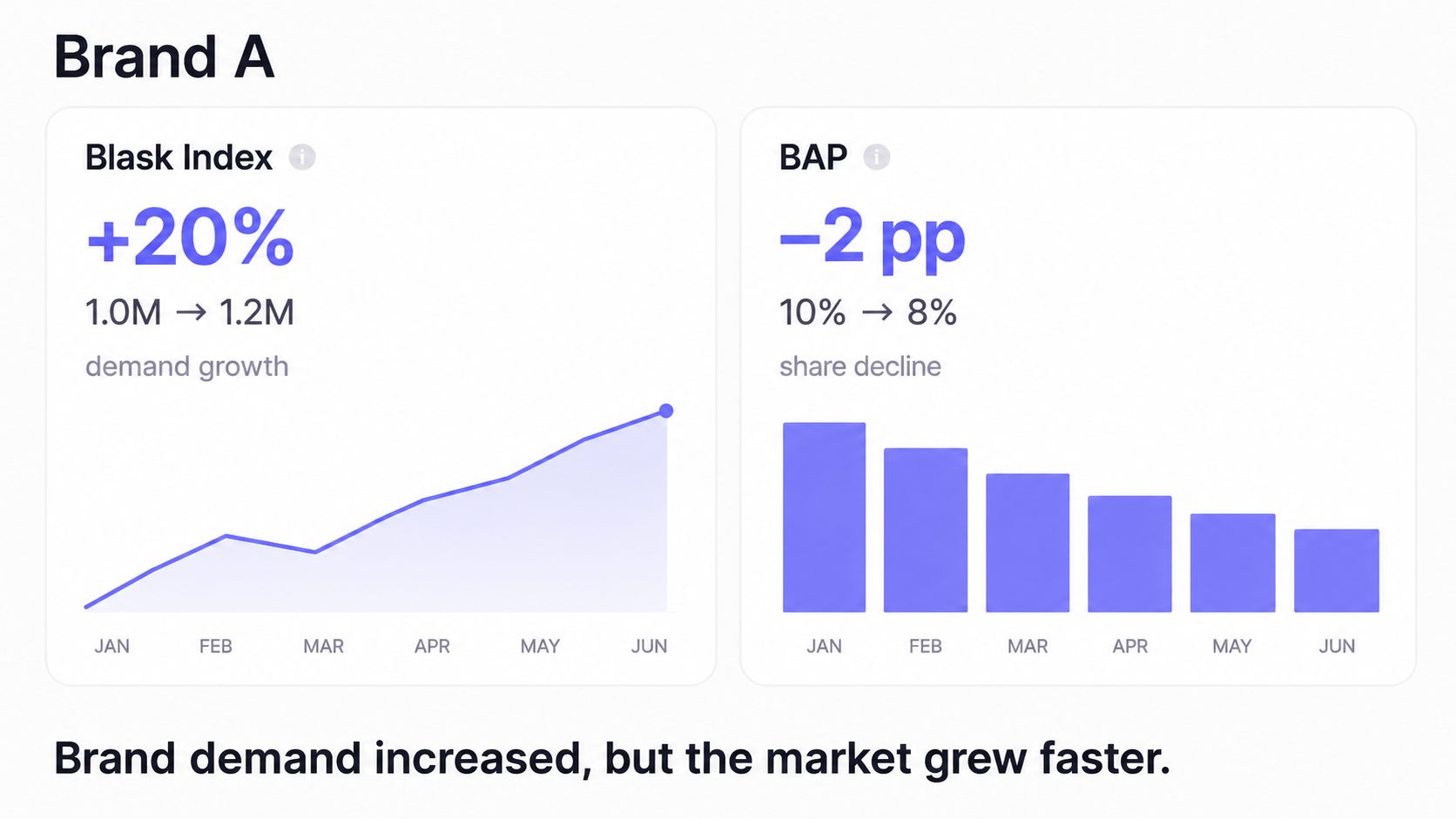
Share of Search is the method. Blask Index is the demand measure built on it. The share itself is Brand’s Accumulated Power (BAP): a brand’s Blask Index divided by the market’s. If a brand’s demand grows 20% while the market grows 50%, its index rises and its share falls.
A brand can gain demand while losing relative market share if total market demand grows faster.
Blask Index vs Revenue and Market Size
Search comes before revenue but does not determine it. Bonus terms, payments, product quality and player value all sit between a search and a deposit. Blask estimates revenue separately, with the Competitive Earning Baseline (CEB), which uses additional data and models.
How Blask Index Reveals iGaming Market Trends
Most large movements trace back to four kinds of events.
Market Growth and Decline
Long-term growth shows as a rising floor between peaks. India’s market index was 39M in February 2024 and 60–64M in the months after that year’s IPL ended.
Seasonality and Sporting Events
Major tournaments raise demand in most betting markets. In Italy, international football breaks had the opposite effect, and both the index and the panel dipped together.
Regulatory Changes and Market Disruptions
Regulation can remove demand, move it between licensed and offshore brands, or both. The Brazil case below shows the first effect much more clearly than the second.
Brand Launches and Marketing Campaigns
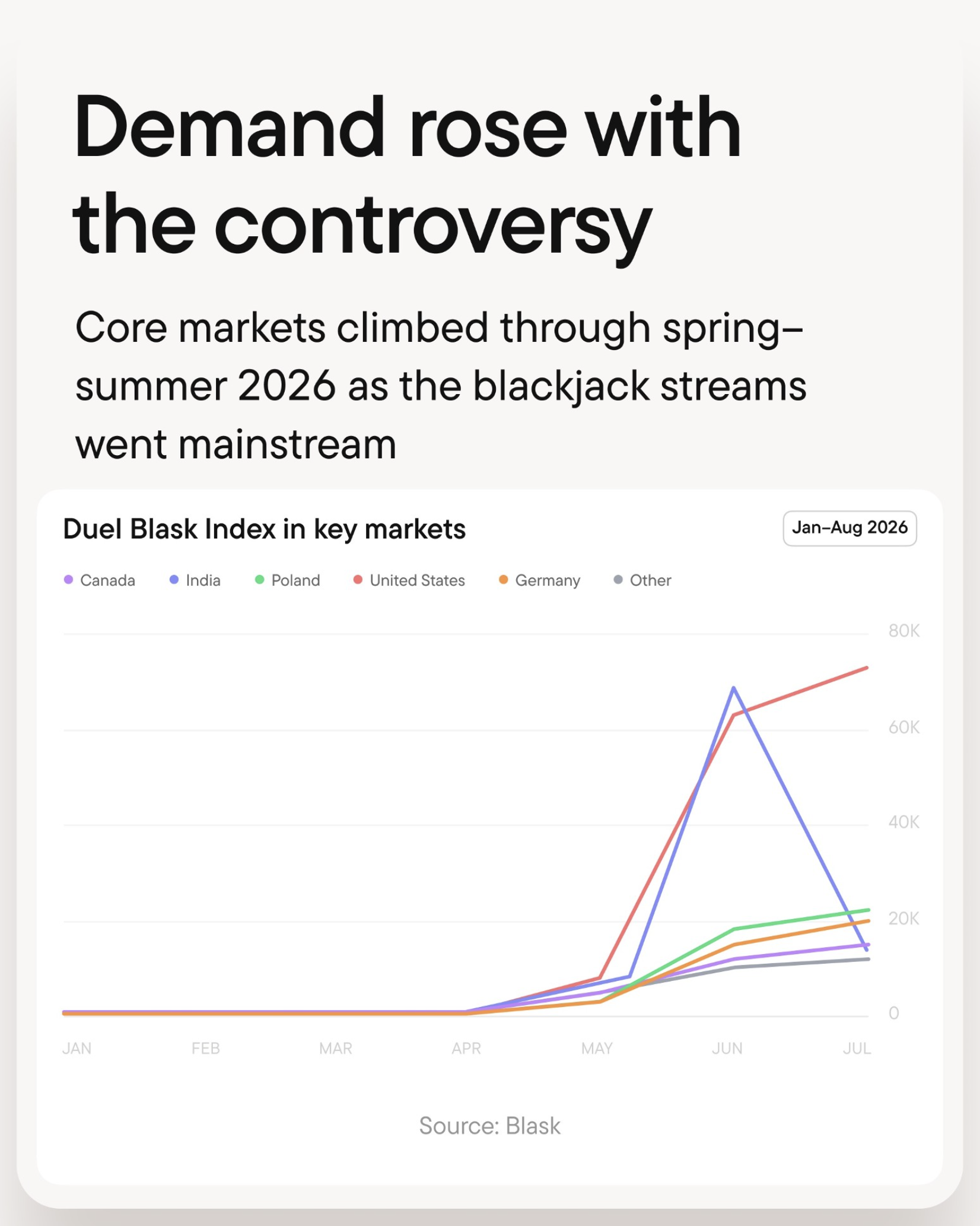
Campaigns move brand indexes fastest. Duel’s global Blask Index grew about 21 times between April and June 2026, during its high-profile streams and an India-focused push, then fell 83% by August.
Real-World Examples of Blask Index
India: How Cricket Seasons Affect Gambling Demand
The Indian Premier League shapes India’s index every spring.
Season
Pre-season month
Peak month
Change
IPL 2023
February: 23.5M
April: 47.4M
×2.0
IPL 2024
February: 39.0M
May: 88.7M
×2.3
IPL 2025
February: 57.8M
March: 82.4M
+42%
In 2025 the index fell to 65.2M in May, the month the league was suspended for a week. Other tournaments, campaigns and payment changes overlap with the season, so the IPL does not explain every peak. More in the IPL 2024 analysis.
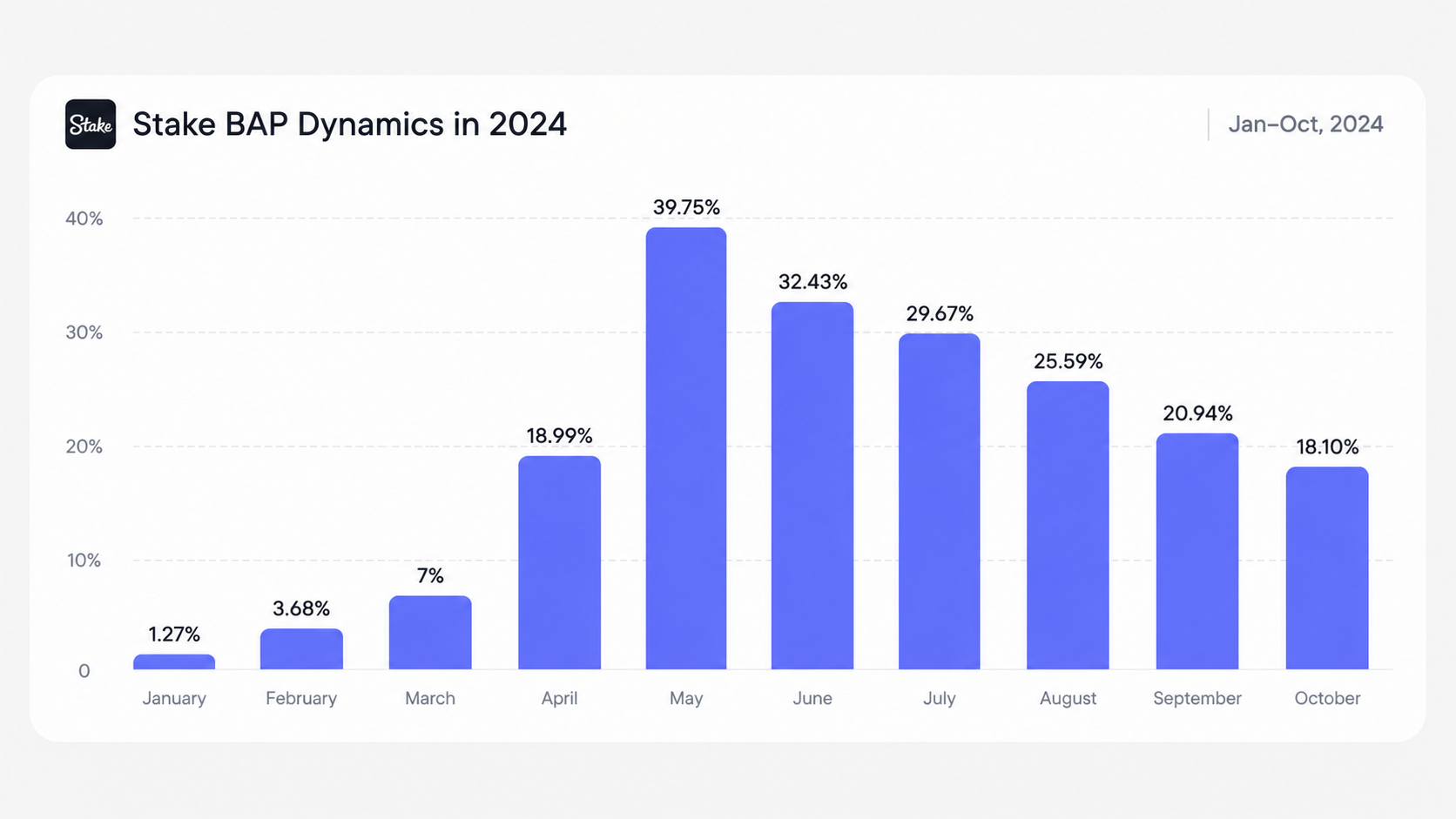
Stake’s index in India grew from 974K in February 2024 to 24.7M in May, about 25 times, while the market roughly doubled. Its BAP rose from 2.5% to 27.86%. The move was visible in March, when the index nearly tripled month over month.
This is the opposite of the illustrative BAP case: the brand grew much faster than the market, so its index and its share rose together.
Brazil: How Regulatory Disruption Changed Market Demand
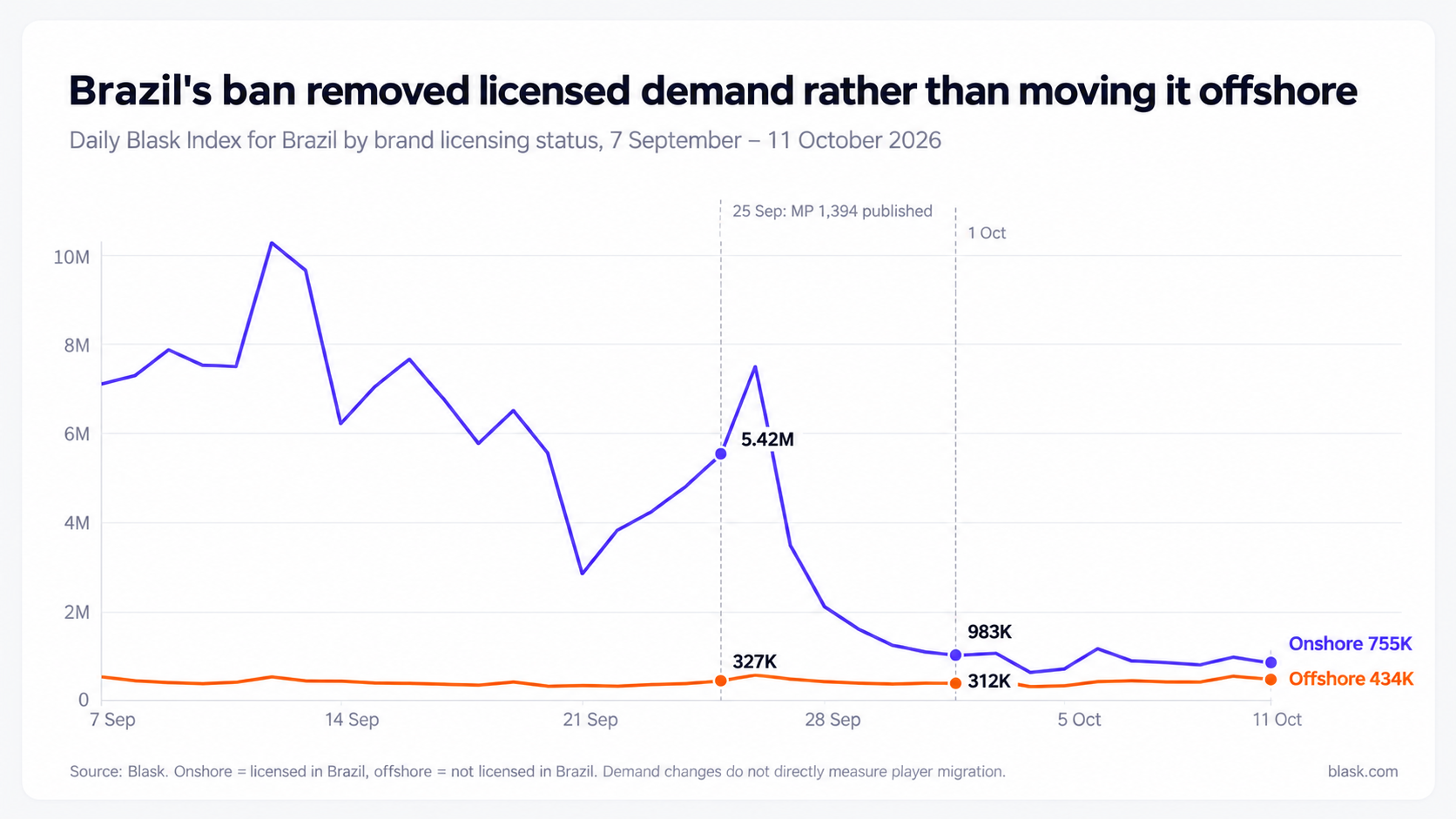
On 25 September 2026, Brazil published Provisional Measure 1,394, which banned fixed-odds betting and online casino games. Deposits stopped the same day.
That day, onshore brands, those licensed in Brazil, had a daily Blask Index of 5.42M and offshore brands 327K. By 1 October onshore demand had fallen 82%, to 983K. Offshore stayed almost flat at 312K.
Between 14–20 September and 5–11 October, onshore demand fell 87% and offshore rose 28%. The offshore share went from 4.2% to 31%, mostly because the onshore part shrank.
Licensed and offshore gambling demand in Brazil following the September 2026 regulatory disruption. Source: Blask. Demand changes do not directly measure player migration.
💡 Key point: In the first two weeks, most of the lost demand did not move offshore. It disappeared from search.
A rising floor across several seasons marks a growing market, whatever its size. Analysts shortlist countries by market index, then check how concentrated demand is among brands.
Monitoring Competitor Momentum
Brand indexes show competitor moves while they happen, as Stake’s March 2024 rise did. For a structured method, see How to measure casino brand performance.
Analyzing Marketing Campaigns
The index shows a campaign’s peak, how fast it fades and the level that remains. The remaining level against the pre-campaign baseline is the fairer test.
Evaluating Market Changes
After regulation, the onshore and offshore split shows whether demand moved or disappeared.
Blask Index Trends and Market Explanation
Blask Trends smooths the index line to show the underlying direction. Market Explanation explains why the line moved. The approach is described in Macro-Dynamics.
Growth, Stagnation, and Decline
Trends assigns each segment of the smoothed line one of three states: Growth, Stagnation or Decline.
Average and Median Demand
Trends shows average (AVG) and median (MED) values for the period. A large gap between them points to a few extreme days distorting the average.
Identifying Drivers Behind Market Movements
Market Explanation, launched in January 2026, is an AI analysis layer on the index chart. Click a trend segment to get a sourced explanation across six driver types: sports calendar, regulation, payments, operator activity, macroeconomics and seasonality. It regenerates four times a day.
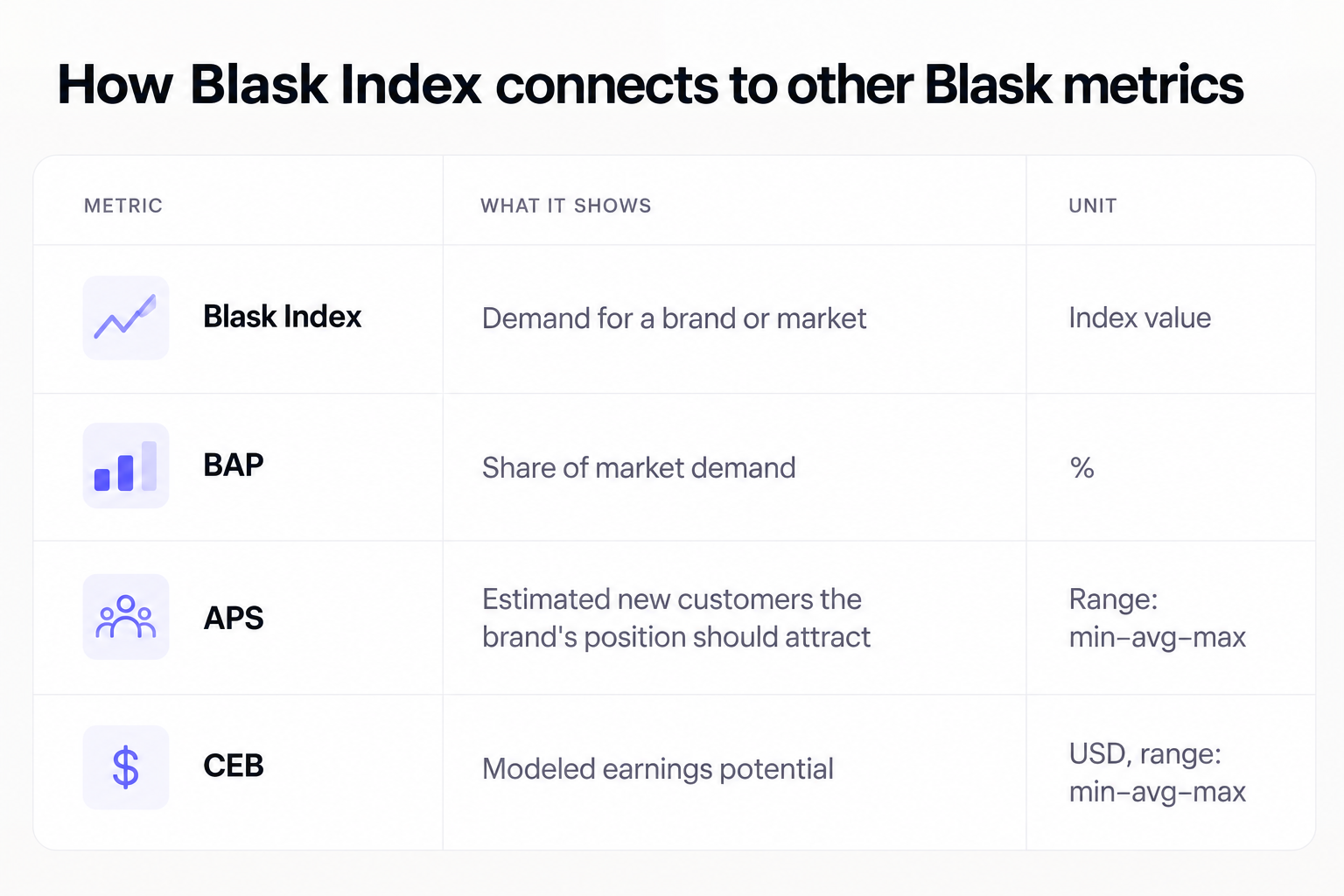
How Blask Index Connects to Other Blask Metrics
Blask combines search-based demand with additional data and models to evaluate competitive positioning, acquisition potential, and revenue opportunities.
BAP: Share of Market Demand
BAP is a brand’s Blask Index divided by the market’s, as a percentage. It is a share of demand, not a revenue-based market share.
APS: Estimated Customer Acquisition
The Acquisition Power Score (APS) estimates how many new customers a brand should attract given its position. It starts from Blask Index and BAP and applies market-specific conversion factors. Blask reports it as a min–avg–max range because acquisition varies with season, competition and campaign timing.
CEB: Modeled Earnings Potential
The Competitive Earning Baseline (CEB) is a revenue benchmark built from BAP, APS and competitive context, calibrated against regulator-reported GGR in regulated markets. It is also a min–avg–max range. Neither APS nor CEB can be calculated from Blask Index alone.
How to Use Blask Index in the Platform
[[ 🖼 ВСТАВИТЬ ИЗОБРАЖЕНИЕ: Visual 8 — Blask Index interface guide / Real screenshot of the Blask Index widget, annotated: country, brand, reporting period, index values, market and brand comparison, Trends overlay, historical dynamics. — caption: “The Blask platform allows users to examine changes in market demand and compare individual brand trends over time.” ]]
Selecting a Market and Reporting Period
Choose a country and a period. For seasonal markets, cover at least one full season so a single tournament does not set your baseline.
Viewing Brand-Level and Market-Level Demand
The market line shows total demand. Brand lines show who holds it.
Comparing Competitors
Select several brands in one country to compare their indexes and BAP. A rising index with a falling BAP means a brand grows slower than the market.
Reading Historical Trends
Turn on the Trends overlay for the smoothed line, its state and AVG and MED values. Click a segment to open Market Explanation.
Common Mistakes When Interpreting Blask Index
Reading the index as players or revenue is the most common mistake, and Duel shows how far deposits can diverge from demand. Comparing raw values across countries is the second: compare percentage changes instead. Treating a spike as a trend is the third.
Reading index growth as share growth is the fourth, since a brand can gain demand and lose BAP. The fifth is reading correlation as cause: Brazil’s offshore share jumped mostly because licensed demand collapsed, not because players were shown to move offshore.
Frequently Asked Questions About Blask Index
What Is Blask Index?
Blask Index is a real-time measure of market demand volume for iGaming brands in a given country, based on normalized search data.
How Is Blask Index Calculated?
Blask collects geo-tagged search data, removes negative or irrelevant queries, merges spelling variants into one brand, normalizes against total search activity in the country and adjusts for seasonality. Brand indexes add up to the market index.
What Does a High Blask Index Mean?
High measured demand compared with other brands in the same country or with earlier periods. It is not a number of players or a revenue level.
Is Blask Index the Same as Search Volume?
No. Search volume counts every search. Blask Index filters intent, merges brand variants, corrects revisions and normalizes against the country’s search activity.
How Is Blask Index Different From Google Trends?
Google Trends scales each term separately from 0 to 100. Blask Index measures brands rather than terms and makes brands in one country comparable.
Does Blask Index Measure Gambling Revenue?
No. It measures demand. Revenue potential is estimated by CEB, a separate metric.
Can Blask Index Predict Market Growth?
It is an early signal, not a forecast. Demand usually shows in search before it shows in reported results, but other factors decide whether it becomes revenue.
How Often Is Blask Index Updated?
Brand and market indexes are calculated hourly, with daily and monthly values also available. Other modules, such as game metrics, update on their own schedules.
Can Blask Index Be Compared Across Countries?
Compare direction and percentage change, not raw values. Each country is normalized against its own search base.
What Is the Difference Between Blask Index and BAP?
Blask Index is the level of demand. BAP is a brand’s percentage share of total demand in a market.
Blind box gambling is a paid transaction in which chance decides which item of value the buyer receives, and the payment is made for that chance. A sealed retail box that always delivers a figurine from a published series remains a product sale; the hidden variant is a feature of the goods. A livestream spin, […]
Walk through any Japanese city and you will hear it before you see it: the metallic rain of steel balls, amplified jackpots, and LCD reels selling the latest anime tie-in. Neon facades say pachinko in katakana, foreigners call it pinball. Neither label captures the economics. This is Japan’s largest commercial gambling category, a vertical that […]
A retention manager is the operator employee who owns what happens after a player’s first qualifying deposit: who stays active, who is offered what, and how those cohorts are reported. The job sits with the player base, not with media buying and not with B2B account management at a supplier. The commercial reason the role […]