
India ranks #2 globally among markets monitored by Blask, with 482 offshore operators visible before the RMG ban took effect on 1 May.
India’s federal ban on real-money gaming enters live enforcement on 1 May 2026, with the Online Gaming Authority of India becoming the sector’s central regulator. The authority can classify games, investigate violations and direct banks to block prohibited transactions.
The new framework covers online games where users deposit money or stakes in expectation of monetary gain, regardless of whether the game is based on skill, chance or both. That removes the old distinction that had protected parts of India’s fantasy sports, rummy and skill-gaming sector.
The first market signal will not appear immediately. With enforcement only starting, Blask data provides the baseline: how demand in India was structured before the new rules began affecting traffic, payments and brand rankings.
India’s ban starts where offshore already leads
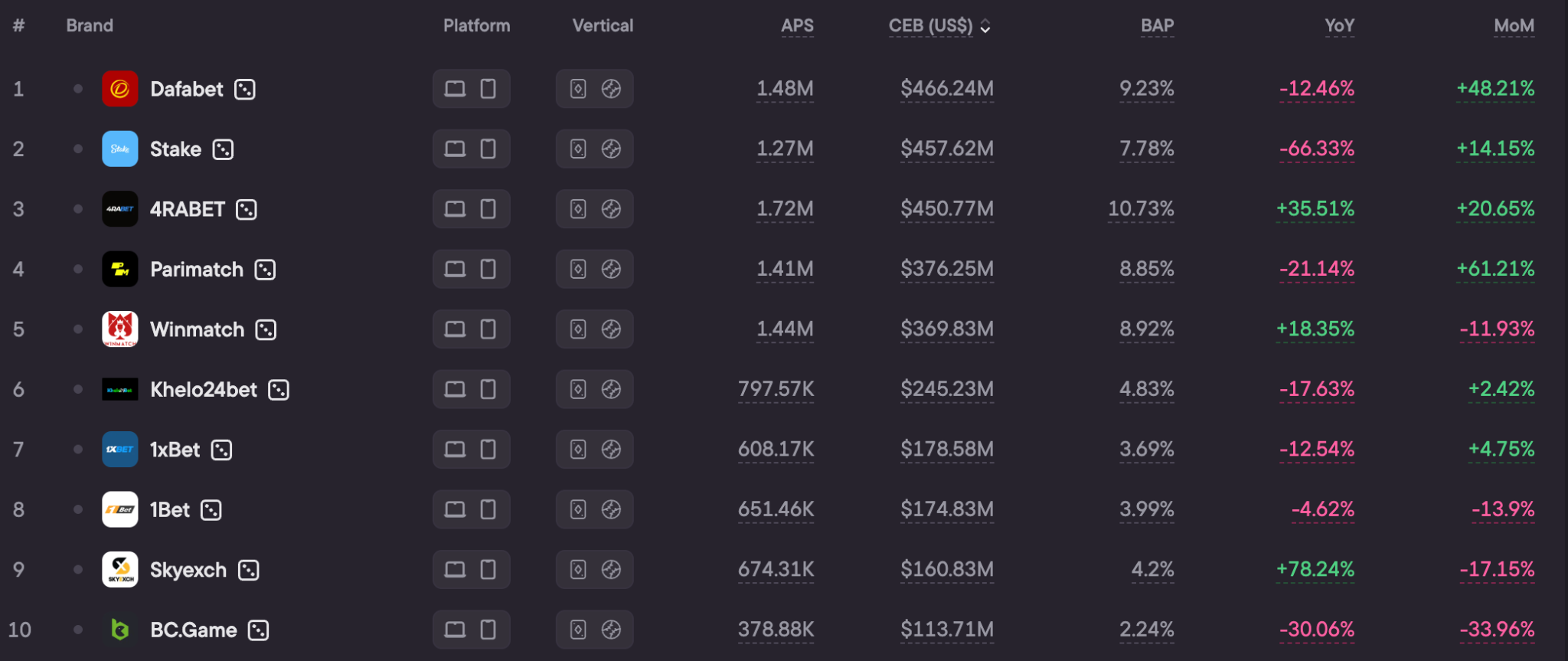
In the current ranking, the market is led by 4RABET, Dafabet, Winmatch, Parimatch and Stake. The top group is not moving in one direction: Stake shows a sharp year-on-year decline, while Skyexchange is gaining strongly.
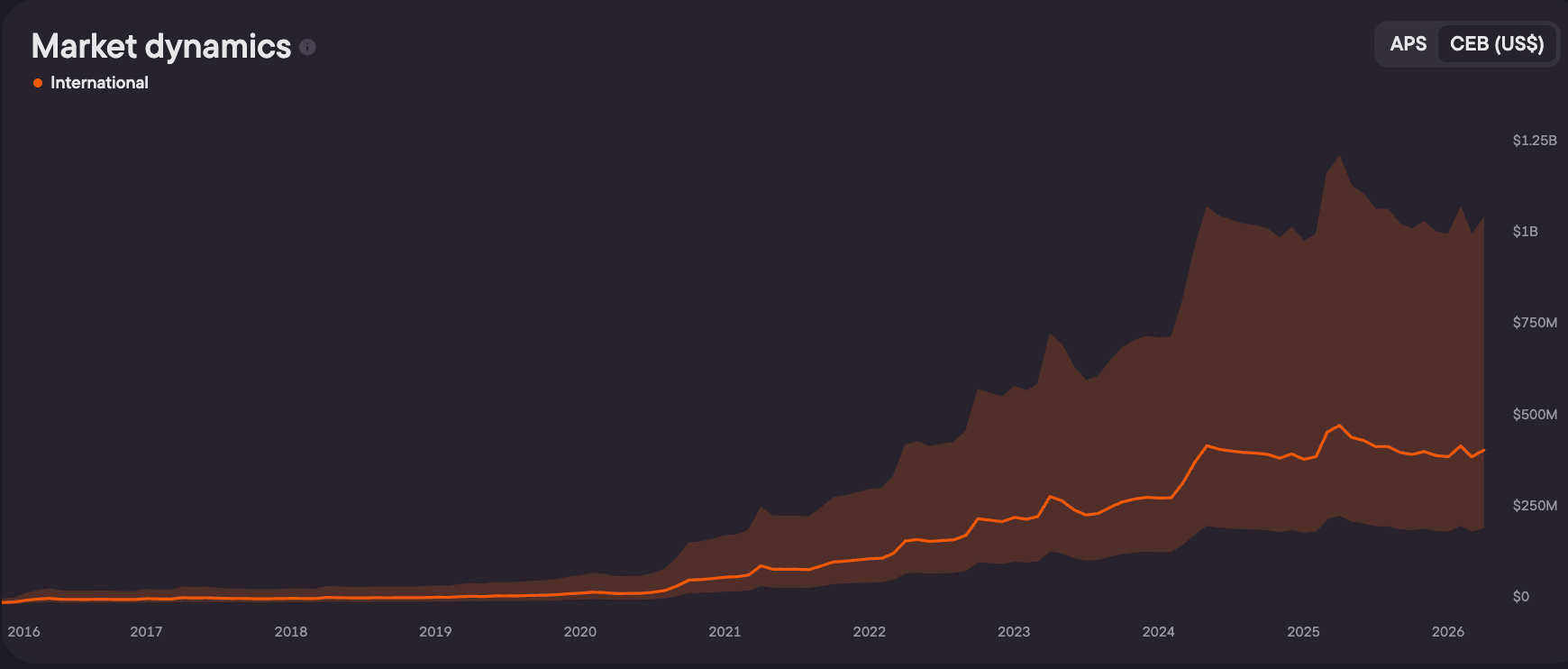
Blask data shows India’s iGaming CEB has grown by roughly 370% since 2021, moving demand into a much higher range and holding there before enforcement began. That makes 1 May a real test point: the ban starts in a market where demand is already developed, not emerging from zero.
The market response comes next
The next question is how India’s online gaming market reacts to the new enforcement framework. Blask data gives the pre-ban baseline: a large market, hundreds of tracked brands and demand already led by international operators. The post-1 May data will show whether the new rules change that structure.