
- Updated:
- Published:
What Is Bonus Buy in Slots
What bonus buy in slots is, how the feature works, how much it usually costs, how it compares with free spins and ante bet, how it affects RTP, where it is legal, and which games and providers define the market in 2026.
What Is Bonus Buy
Let’s learn what is bonus buy in simple terms. It is a paid shortcut to a bonus round that would usually require special symbols or a rare trigger sequence. The purchase is non-refundable, the outcome stays random, and the feature usually follows the same rules as if it had been triggered naturally.
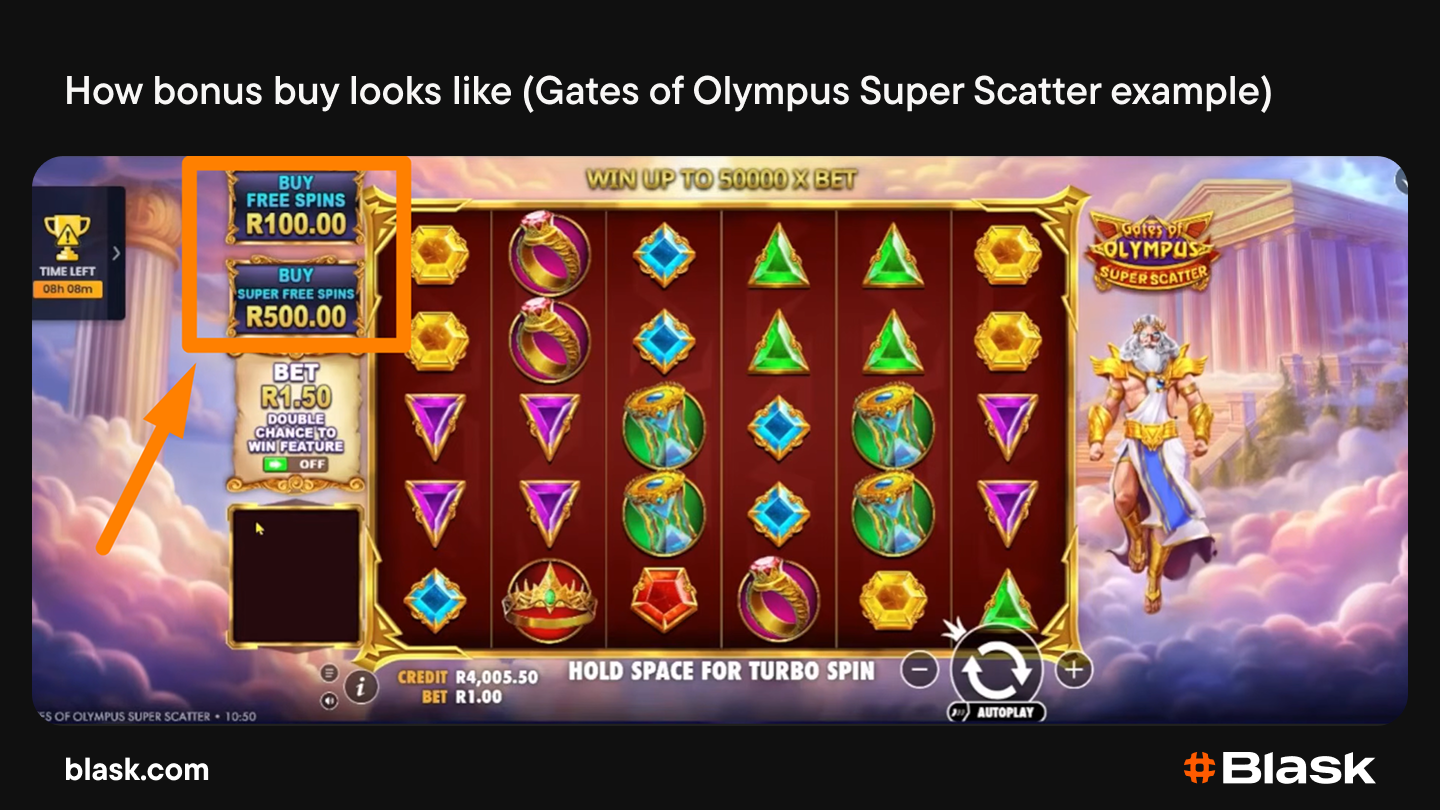
Screenshot source: G-Kal777.
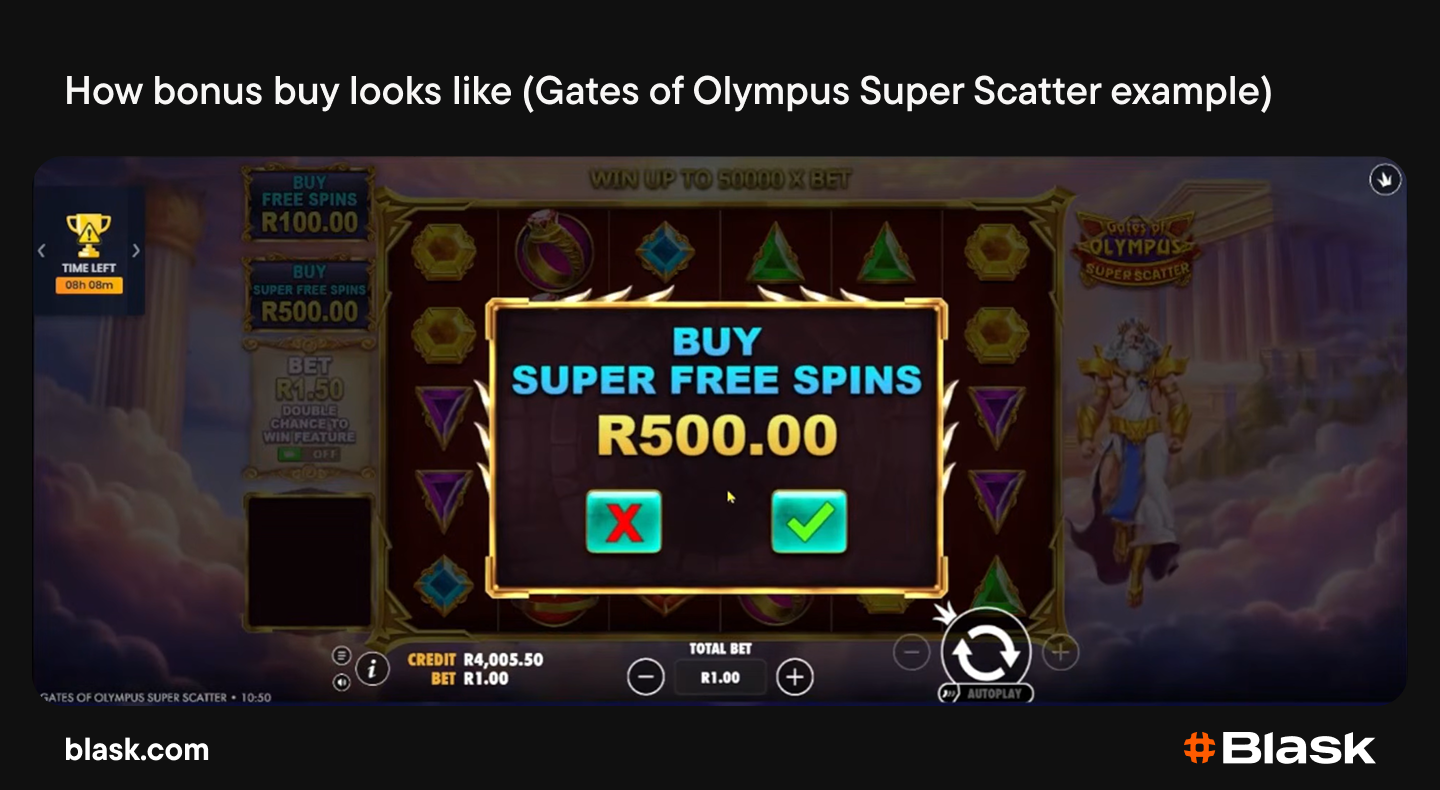
Screenshot source: G-Kal777.
The key point is simple: the player is buying access, not a win. The cost can be high, and the results still depend on volatility, which is why this mechanic is most common in high-risk, feature-focused slots.
It is also different from a gambling feature. A gamble option appears after a win and lets that amount be risked for a bigger payout, while a purchased round activates bonus play before the next result is decided.
How Bonus Buy Works
At interface level, the process is usually simple. A button marked Buy Bonus, Buy Feature, or similar appears near the spin controls.
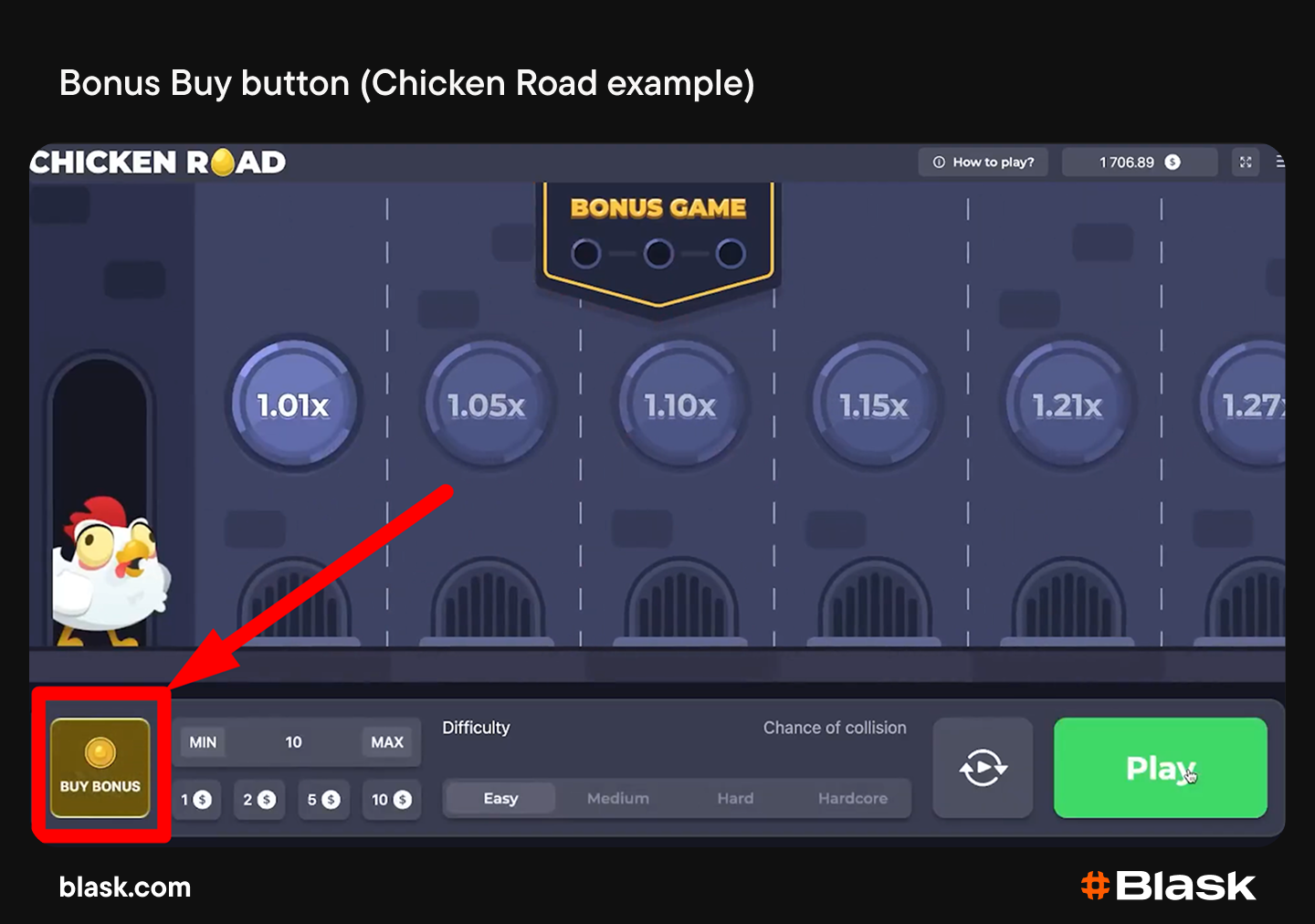
Screenshot source: SpinRush.
Once selected, the game displays the cost as a multiple of the current base wager, confirms the purchase, and then launches the selected round without any need to land scatters first. That straightforward flow is one reason feature buy slots became so popular with players who care more about access to action than long stretches of ordinary spinning.
Cost as a Multiplier of Base Bet (50x–500x)
Cost is usually shown as a multiplier of the base stake rather than as a fixed cash amount. In many games, the most common range sits around 50x to 200x, though some standard options start lower and some premium entries go much higher. In short, the price is not just a visual detail. It reflects the level of volatility built into the feature.
At the upper end, the cost can become very aggressive. Some games offer feature entries from around 20x, while others push premium options into the hundreds or even thousands of times the base bet. Once the multiplier climbs that high, the purchase stops feeling like a normal spin and starts acting more like a high-intensity event, with a large share of session risk concentrated in a single click.
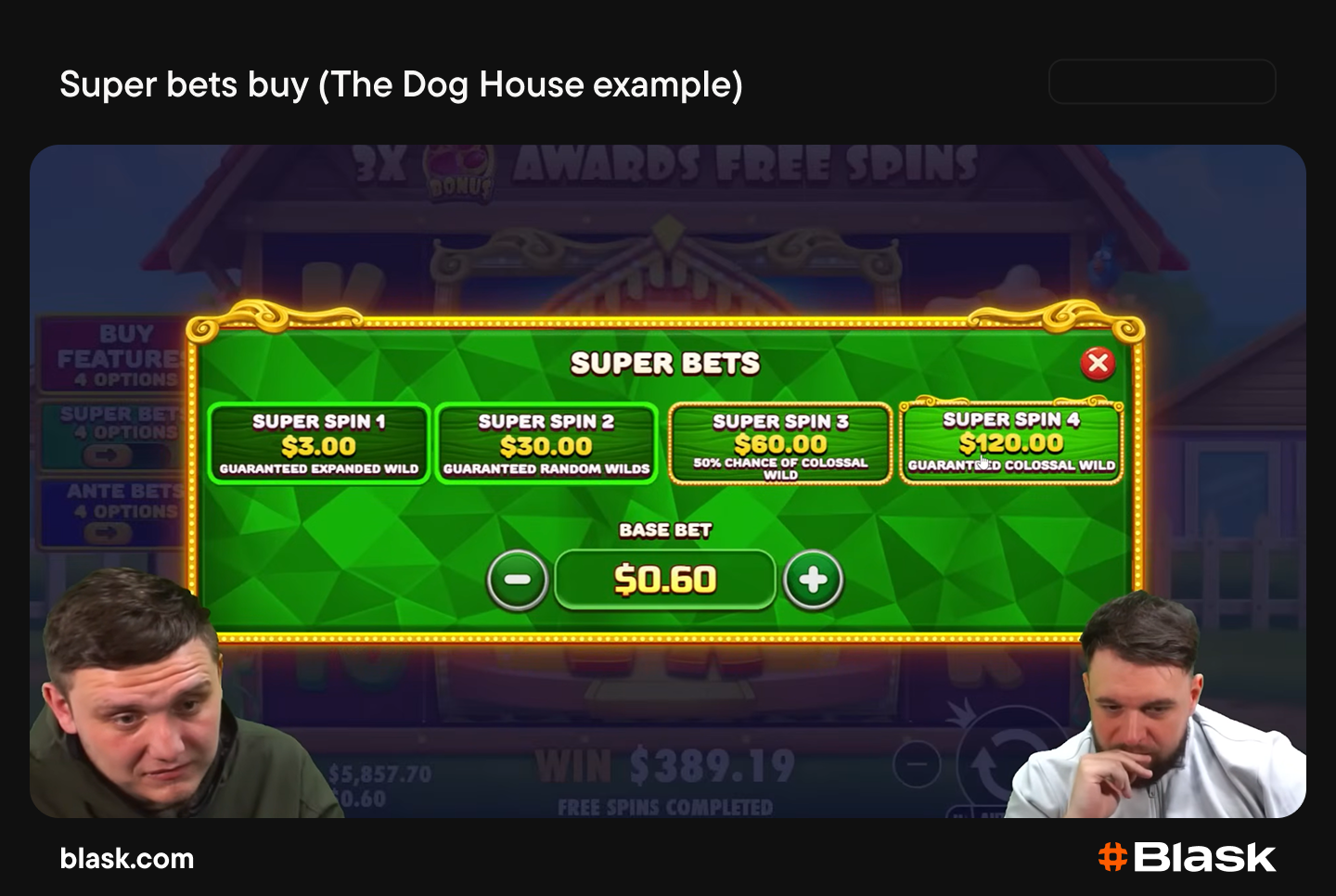
Screenshot source: MoneyRush.
What Feature You Trigger
The bought round depends on the game. In many cases it is a free spins package, but other possibilities include pick rounds, expanding reel states, enhanced symbol sets, extra wild layers, collector modes, or instant prize drops. No single feature type defines this category. The common element is direct access to the bonus round rather than the visual form that feature takes.
That point matters because a player evaluating feature buy slots is not really shopping by theme alone. The real question is which internal state gets unlocked. In some titles the purchased mode is simply the normal free spins round. In others it is a stronger package with more spins, better symbol distribution, or added multipliers. Good help files make that difference visible, and poor ones hide it behind flashy naming.
Different Buy Options in One Slot
Many games no longer stop at one purchase route. Some slots offer several bonus buy options side by side, each with its own cost, RTP, and win ceiling. That trend turned the old single-button mechanic into a product ladder: cheap entry, upgraded entry, and premium entry, all wrapped inside one title.
That multi-tier structure is one reason to buy bonus slots can feel more strategic than they first appear. The player is still facing a random result, but the risk profile changes depending on whether the purchase targets a standard feature, a boosted bonus, or a premium package with stronger modifiers. In commercial terms, that design also helps studios sell several levels of excitement inside one screen.
Bonus Buy vs Free Spins vs Ante Bet
The mechanic makes the most sense when compared with two nearby concepts: naturally triggered features and ante bet systems. All three aim at the same emotional payoff, but they get there through very different cost structures and pacing models.
| Mechanic | Cost Structure | Feature Access |
| Natural Trigger | Spread across many base spins — can be cheap or extremely expensive depending on variance | Unpredictable; the feature may arrive on spin 10 or spin 500 |
| Ante Bet | Raised stake on every spin in exchange for a higher trigger chance | Faster than standard play, but no guaranteed or immediate access |
| Bonus Buy | Fixed upfront purchase, typically 50x–500x the base bet | Immediate; the feature launches on the next screen with no waiting |
vs Triggering Free Spins Naturally
Natural triggering spreads risk across many ordinary spins. A player may hit the feature cheaply after a short run, or may miss it for hundreds of rounds. Purchased entry replaces that uncertainty with immediate access, but the price is paid up front regardless of outcome. The bought round does not improve the odds inside that feature. It merely skips the waiting line.
vs Ante Bet (Increased Trigger Chance)
Ante bet works differently. Instead of opening the feature immediately, it raises the stake on each spin in exchange for a better chance of hitting the bonus naturally. In the UK context, direct purchase is banned but trigger-boosting alternatives remain common. That makes ante bet a middle ground between patience and instant access.
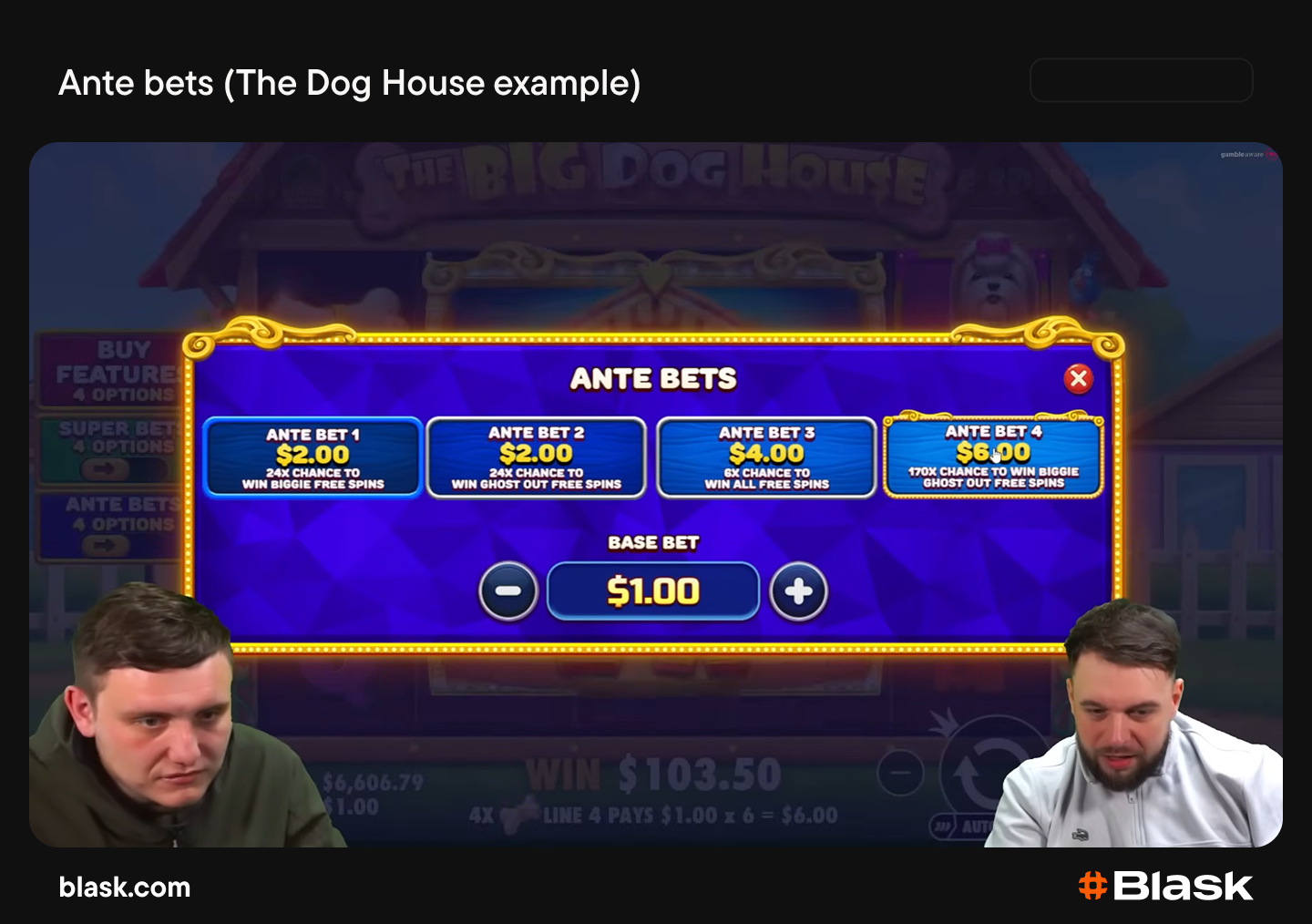
Screenshot source: MoneyRush.
vs Bonus Hunting
Bonus hunting is not a formal game mechanic at all. It is a style of play built around moving through titles in search of triggers, often with strict session control and attention to volatility. A paid entry removes that hunt entirely, which is why some players love the speed and others dislike the loss of buildup. In practical terms, bonus hunting values process, while a feature buy compresses the whole experience into a fast, expensive event.
RTP When Using Bonus Buy
RTP is where the conversation gets more technical and more interesting. A bought feature can have the same RTP as the main game, a higher RTP, or a variable RTP depending on which option gets selected.
How Buy-Feature RTP Differs from Base Game
Sometimes the bought round has a visibly different RTP from normal play. Bought bonuses can have a slightly higher RTP than base play, as seen in Gates of Olympus and White Rabbit Megaways. That difference exists because the purchased mode concentrates the portion of RTP assigned to feature play rather than forcing the player to fund long base-game sequences first.
| Game | Base Game RTP | Bonus Buy RTP |
| Gates of Olympus | 96.00% | 96.50% |
| Sweet Bonanza | ~96.00% | 96.51% |
| White Rabbit Megaways | ~97.00% | 97.72% |
Why Some Buys Increase RTP (and Some Don’t)
There is no universal rule. Some games offer a bought round that improves theoretical return a little, while others keep the same value or vary it by purchase tier. Money Train 4 is a good example because different buys carry different RTP windows. The important lesson is simple: the button price alone says nothing about expected value. Only the paytable or help sheet can confirm whether the bought feature actually returns more on paper.
Best Bonus Buy Slots in 2026
The 2026 market still revolves around a handful of studios that know how to turn feature pacing into a product line.
| Game | Buy Range | Max Win |
| Wanted Dead or a Wild | 80x–400x | 12,500x |
| Mental (Nolimit City) | 80x–1,000x | 66,666x |
| San Quentin xWays | 100x–2,000x | 150,000x |
| Gates of Olympus | 100x | 5,000x |
| Sweet Bonanza | 100x | 21,100x |
| White Rabbit Megaways | 100x | — |
Hacksaw Gaming Titles (Wanted Dead or a Wild, Cubes)
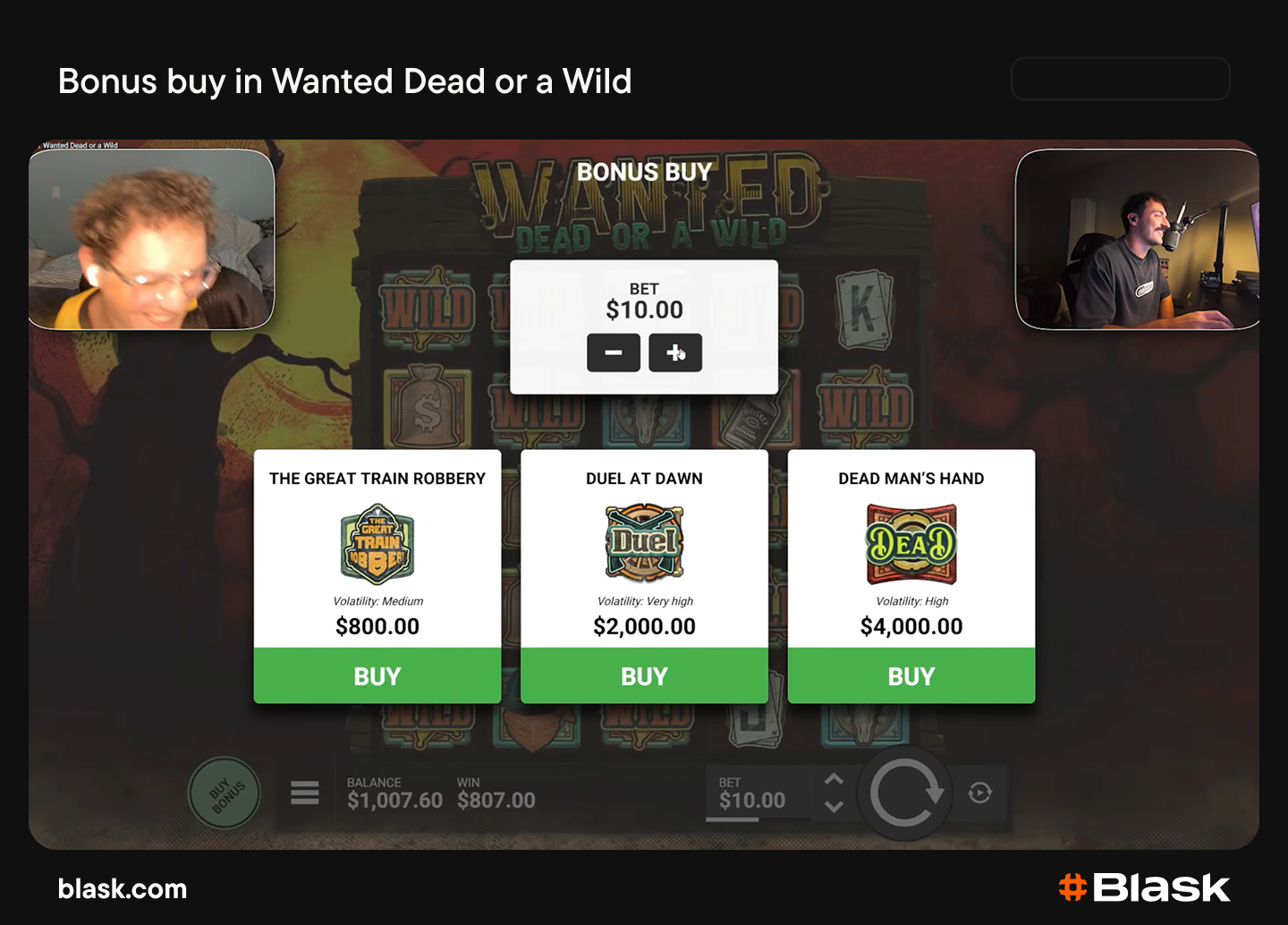
Screenshot source: Peak Slots.
Wanted Dead or a Wild remains one of the most recognizable high-volatility references in the category, with listing buy prices from 80x to 400x and a top win of 12500x. Cubes belongs to an earlier Hacksaw generation, but third-party rankings still cite it for strong volatility, 96.35 percent RTP, and a 3000x cap, which helps explain why the studio stays central to conversations about feature-first design even when not every title follows the same template.
Nolimit City Titles (Mental, San Quentin)
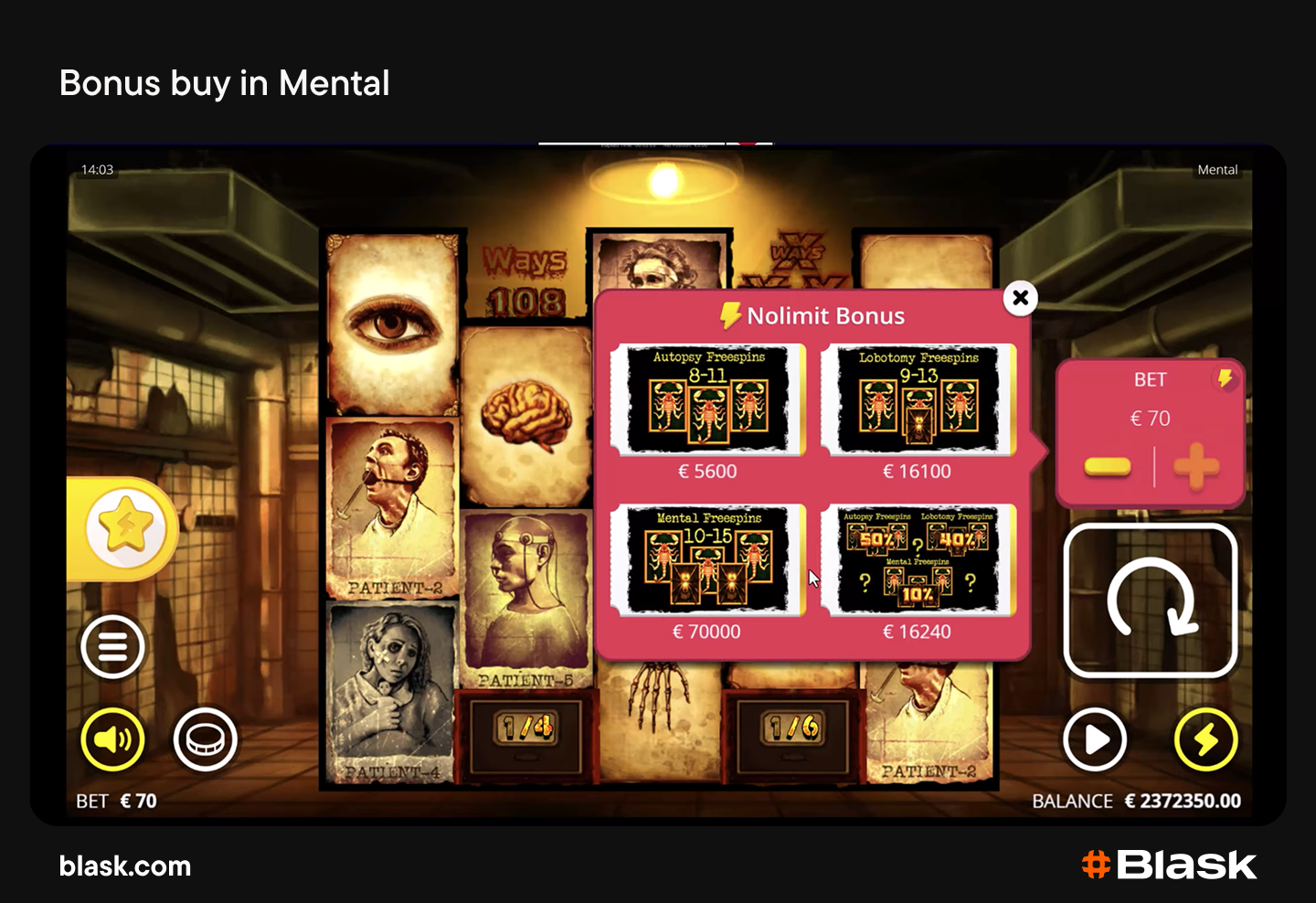
Nolimit City built its reputation on punishing variance and layered purchase ladders. Mental ranges from 80x to 1000x with a 66666x top win, while San Quentin xWays runs from 100x to 2000x and carries a 150000x ceiling. Those numbers explain why the studio still defines the upper extreme of the market in 2026.
Big Time Gaming (BTG) White Rabbit Megaways
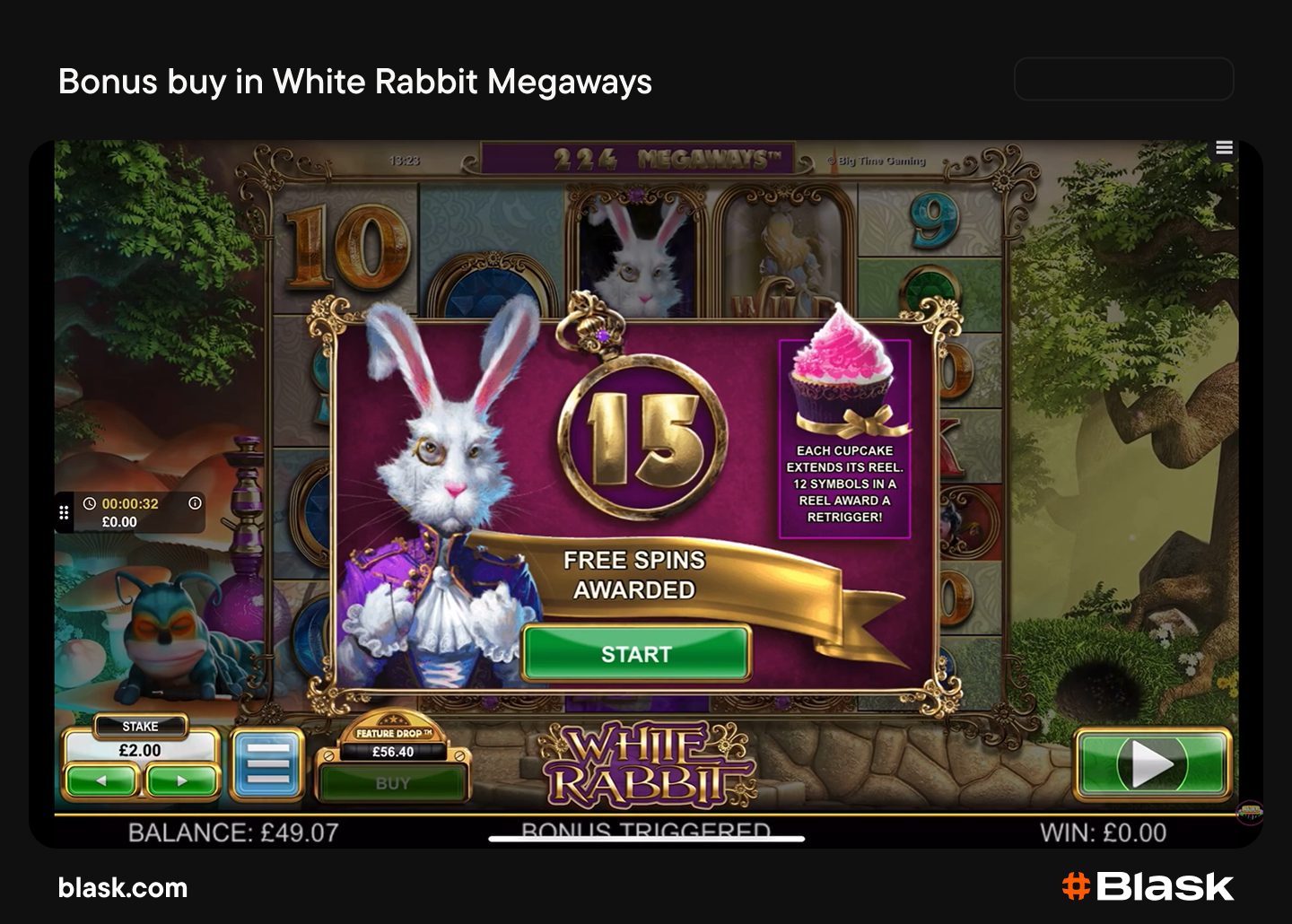
Screenshot source: Slot mate.
For BTG, White Rabbit Megaways is still the clearest reference point, with a 100x purchase route and a 97.72 percent feature RTP, while other reviews continue to treat it as one of the most mathematically attractive Megaways buys on the market. BTG is no longer the freshest brand in the field, but the Megaways format still matters whenever discussion turns to volatility wrapped inside extra reel complexity.
Pragmatic Play Bonus Buys
Pragmatic Play remains impossible to ignore because Gates of Olympus and Sweet Bonanza continue to dominate visibility. Gates of Olympus uses a 100x purchase option with a 96.5 percent bonus RTP and a 5000x cap, while Sweet Bonanza also runs at 100x, with 96.51 percent RTP and a 21100x max win. Those games are not subtle, but they are efficient, recognizable, and still among the most searched bonus buy slots on the market.
Push Gaming Titles
Push Gaming sits a little differently in this conversation. Official pages for Jammin Jars, Jammin Jars 2, and Razor Ways emphasize feature depth, cascades, modifiers, and strong volatility identity, but direct purchase availability can vary by market and title version. That makes Push more of a feature-led brand than a pure purchase-button specialist, yet it remains relevant because modern buy mechanics borrow heavily from the kind of bonus concentration that Push helped popularize.
Top Game Providers Offering Bonus Buy
Across the current market, a few names stand out for frequency, range, and recognizability.
| Provider | Typical Buy Range | Known For |
| Pragmatic Play | ~100x | Mainstream reach; Gates of Olympus, Sweet Bonanza |
| Nolimit City | 80x–2,000x | Extreme variance; multi-tier purchase ladders |
| Hacksaw Gaming | 80x–400x | Compact interfaces; aggressive upside |
| Big Time Gaming | ~100x | Megaways format; feature-heavy math |
| Relax Gaming | Varies | Money Train line; tiered RTP models |
A separate point matters here. Not every studio treats the bonus buy feature the same way. Some use it as a simple skip button. Others turn it into a menu of feature states with different RTP profiles and price tiers. That difference is one reason provider reputation matters almost as much as the individual title.
Bonus Buy Strategy
A useful bonus buy strategy starts with one boring truth: a paid entry is still a gamble, only compressed. The practical value lies in time saved and feature access, not in any hidden promise of superior results.
Bankroll Sizing for Bonus Buys
Bankroll pressure rises fast because each click can equal dozens or hundreds of ordinary spins. Conservative session control is essential, since these purchases can burn through funds much faster than normal reel play. In plain terms, a player using large feature entries without a hard stop can destroy a session in minutes.
Volatility Considerations
Most games with this option sit on the high or very high end of the variance spectrum. The mechanic is closely tied to volatile design, which means long dry stretches, sharp swings, and occasional oversized wins rather than a steady flow of smaller returns.
When Bonus Buy Is Worth It
The feature buy makes the most sense when the goal is controlled access to a known feature package and the price is acceptable relative to session budget. It also makes sense when the help file confirms that the bought round has stronger theoretical return than base play. Outside those cases, ordinary spins or ante bet may offer a better balance between pace and exposure.
Common Bonus Buy Mistakes
The usual errors are predictable:
- treating the purchase as a guaranteed payout,
- ignoring the actual RTP of the bought round,
- chasing losses with repeated entries,
- skipping the help file,
- confusing fast action with good value.
Pros and Cons of Bonus Buy Slots
The mechanic has obvious strengths and obvious traps.
| Pros | Cons |
| Instant access to the most exciting part of a game | Sharply higher cost per decision |
| Clearer session pacing | Faster bankroll depletion |
| Less time spent grinding dead base spins | Stronger volatility exposure |
| Easier comparison of feature packages across titles | No automatic improvement in win chance |
Legal Status of Bonus Buy by Region
Regulation is fragmented, and the mechanic is not treated the same way everywhere. Some markets allow it freely, some trim it heavily, and some ban it outright. That regulatory gap is one reason the same title may appear with different buttons, or no button at all, depending on jurisdiction.
| Region | Bonus Buy Status | Key Restriction |
| United Kingdom | Banned | UKGC ban in effect since 2020; direct purchase removed from licensed sites |
| Germany | Restricted | €1 stake cap, 5-second minimum spin, autoplay ban; hostile to high-intensity design |
| United States | Depends on the state | Limited to 7 states with live real-money online casinos as of June 2026 |
UK Ban on Bonus Buy
In the UK, the feature is effectively off the table on licensed sites. The UK Gambling Commission ban from 2019 removed direct purchase access because of concerns around impulsive spending and loss chasing. Games may still exist in the same catalogues, but the shortcut itself is stripped out for the regulated British market.
Germany Restrictions
Germany is more nuanced. The ICLG summary does not mention purchased features by name, but it does confirm a one euro stake cap, a five-second minimum spin, a ban on autoplay, and a prohibition on jackpots in licensed virtual slots. Even without naming the mechanic directly, that framework is clearly hostile to the kind of high-intensity design that made the category famous elsewhere.
US and Other Markets
In the United States, availability depends on state-level regulation. Seven states had live real-money online casinos as of June 2026:
- New Jersey.
- Pennsylvania.
- Michigan.
- West Virginia.
- Connecticut.
- Delaware.
- Rhode Island.
Feature purchases are generally available only through licensed operators in regulated states, while other jurisdictions often route players toward sweepstakes-style alternatives instead of standard real-money models.
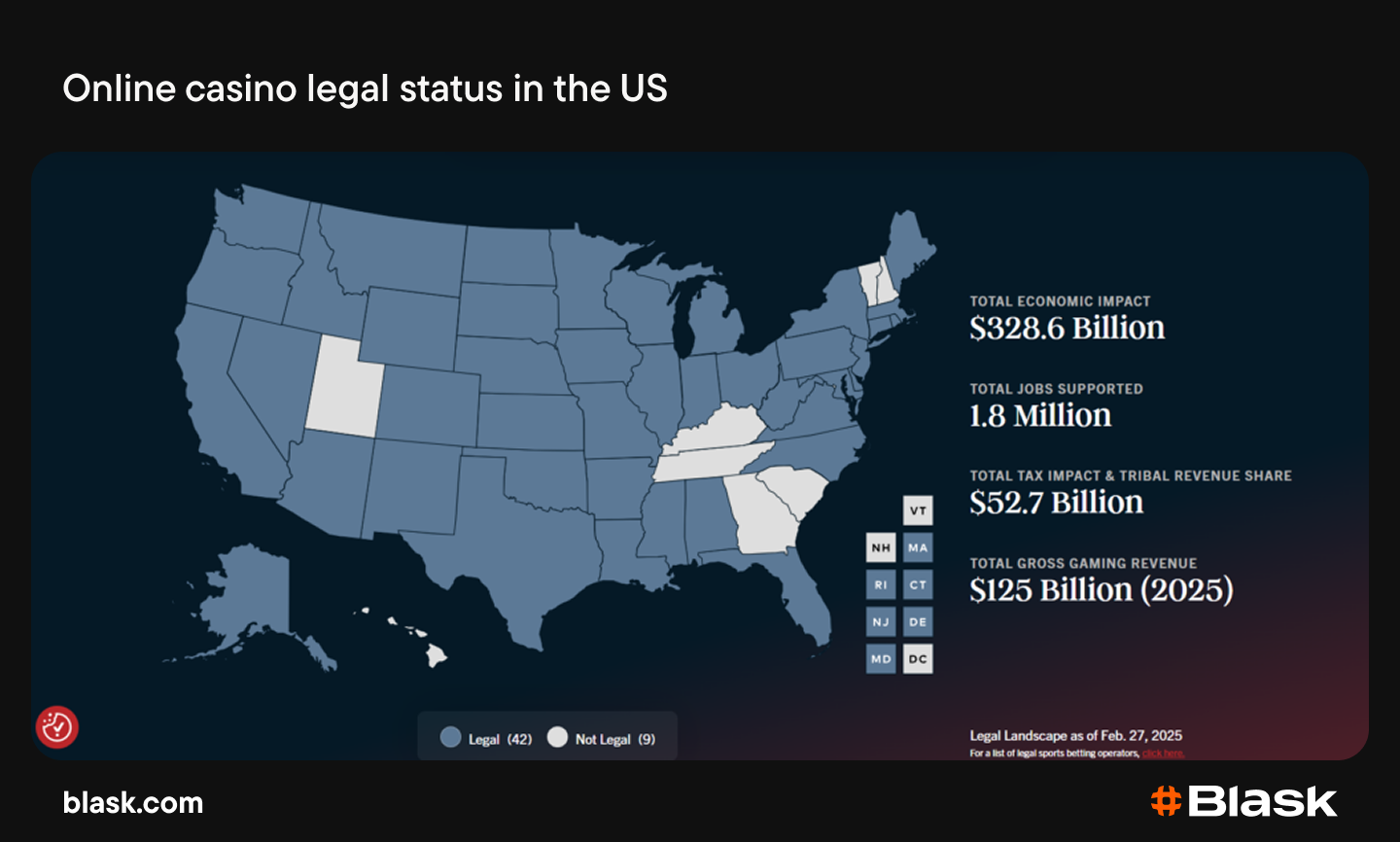
AGA provides an interactive map on its website about the gambling status in all states. Online gambling is legal in 7 states.
Why Operators Like (and Limit) Bonus Buy
Operators like this mechanic because it is easy to market and keeps attention on high-value content, while also separating lower- and higher-cost play paths within one game. From a product angle, that makes it highly effective.
They restrict it for the same reason. Large one-click spends, sharper volatility, and loss-chasing risks concern regulators and lead to tighter controls. The UK ban is the clearest example, while Germany reduces speed and intensity across slot design more broadly.
Future Trends in Bonus Buy for 2026
The clearest 2026 trend is not just more buy buttons, but more layered purchase options, segmented RTP models, and closer blending of ante bet systems with direct feature access. Developers are moving from single buys to feature menus that package different volatility levels inside one game.
Regulation is shaping the next step. Where direct purchase faces pressure, studios are leaning into trigger boosts, enhanced bet options, and feature ladders that recreate similar speed without using the same label. In 2026, bonus buy is less a single button and more a design model built around fast access to volatility.