
- Updated:
- Published:
Peru iGaming market 2026: betting demand jumped 50% in June — and stayed regulated

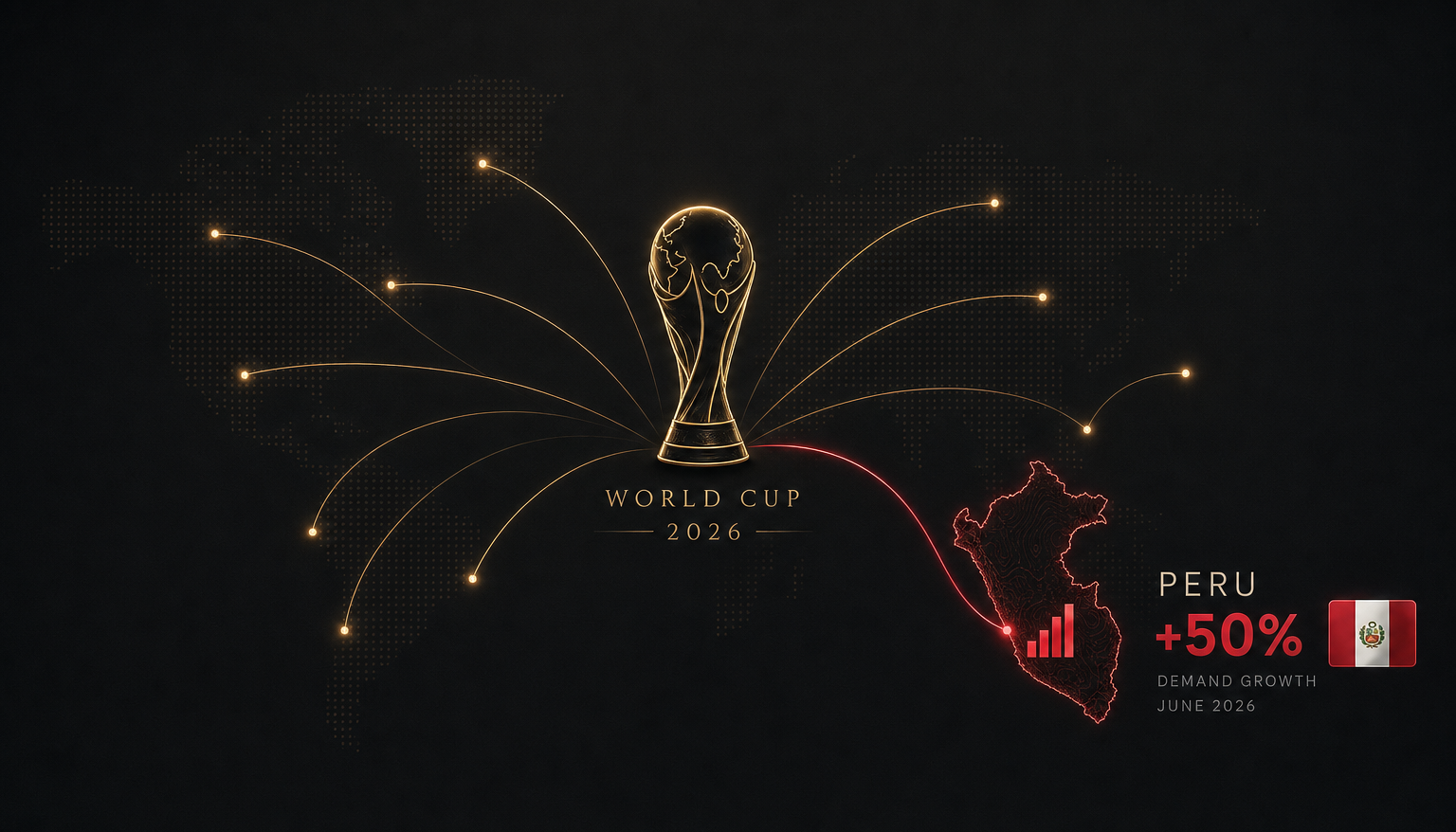
Peru’s iGaming demand rose 50.38% in June 2026, its sharpest monthly spike on record, even though the national team missed the World Cup entirely. Licensed brands captured $60.63M of the $61.5M in CEB generated that month, leaving offshore operators with just a 1.4% share.
Peru’s iGaming demand rose 50% in June — the country’s sharpest monthly spike on record, according to Blask. The national team missed the 2026 World Cup entirely, finishing ninth in qualifying, but that didn’t stop the market.
According to Blask, iGaming demand in Peru rose 50% in June compared with May — the country’s sharpest monthly spike. The driver was not Peruvian success but the World Cup itself, along with two friendly matches the national team played days before the tournament kicked off.
World Cup lifted demand even without Peru’s national team
Blask Index in Peru rose 50.38% in June, more than three times faster than CEB‘s 14.5% increase. The gap points to an influx of new and less active users: the World Cup sharply boosted search interest and registrations but did not drive a comparable rise in CEB.
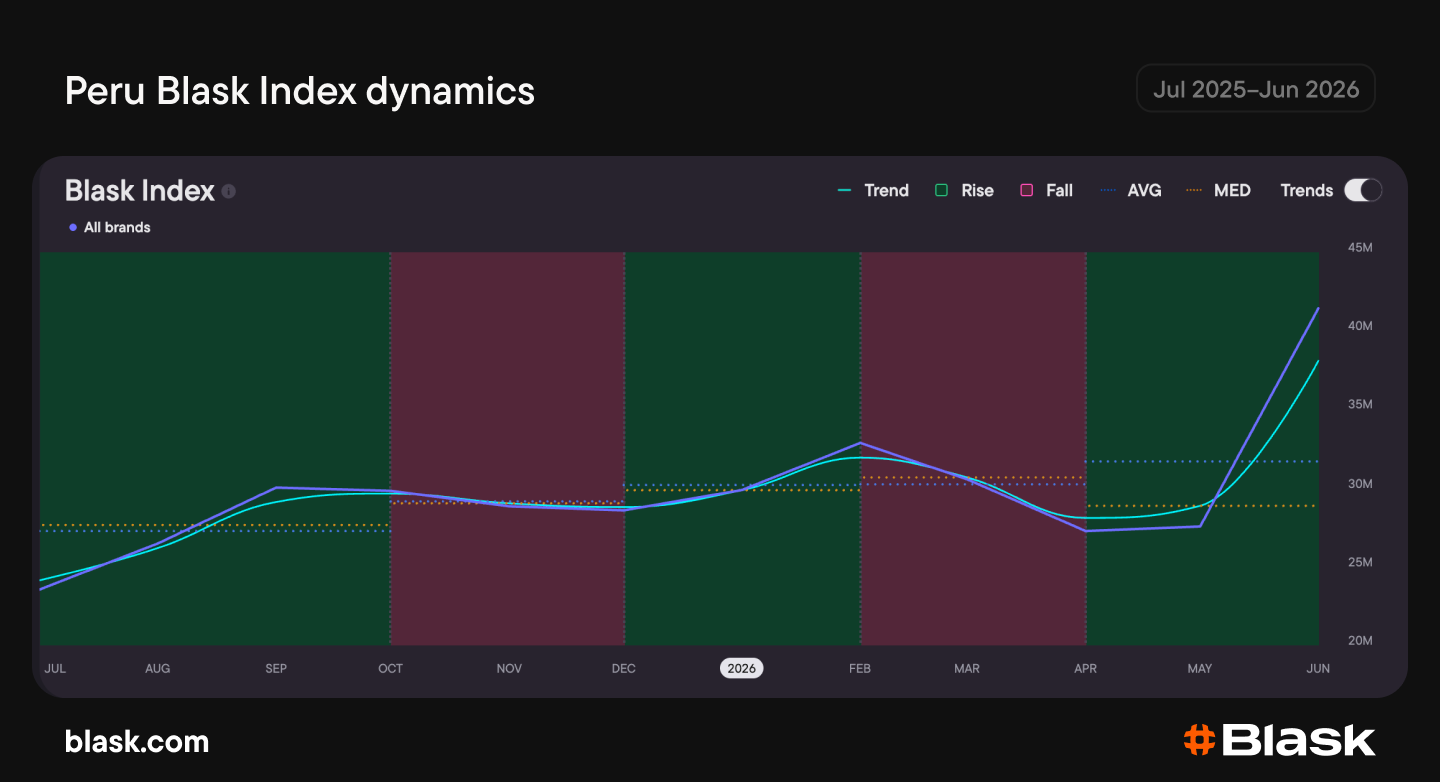
The buildup started before the tournament itself. On June 5 and 8, Peru’s national team played friendlies against Haiti and Spain, both broadcast on national television, and the World Cup kicked off on June 11 with 104 matches across the US, Canada and Mexico running through the July 19 final. Even without their own team in the tournament, Peruvian audiences engaged with it heavily.
May had already primed the market for this growth, with the Champions League final, the close of the Copa Libertadores group stage and Alianza Lima’s Apertura title keeping demand elevated. By June, though, the domestic football calendar had quieted down, leaving the World Cup as the main driver of activity.
Why the World Cup did not boost offshore betting in Peru
In most loosely regulated Latin American markets, a demand spike like this would have spread across both the legal and offshore segments. In Peru, almost all of the growth stayed within the regulated market: licensed brands accounted for $60.63M of June’s $61.5M CEB, leaving offshore with a share of just 1.4%.
That concentration is the result of Law No. 31557, in force since February 2024 under MINCETUR’s oversight. DNS blocking cut the available illegal supply by roughly 40% by the end of 2025, and in April 2026 a new anti-money-laundering regulation from SBS, No. 01015-2026, took effect, tightening compliance requirements for licensed operators. As a result, June’s demand surge stayed almost entirely within the regulated market instead of spilling over to offshore brands.
Growth spread across nearly the entire top of the market
Apuesta Total retains a clear lead, controlling more than half of Peru’s BAP. Betano ranks second with a 13.72% share but is growing far faster — brand demand rose 63% month-on-month and 131% YoY. The acceleration coincided with Betano’s June World Cup campaign and its promotion as a Champions League sponsor.
Rushbet, which had operated in Peru since 2022 before obtaining a local licence, grew 216% YoY after a sharp acceleration over the past 12 months. Bet4, launched in August 2024, rose even faster at 239% YoY, while Play UZU posted the strongest annual growth in this part of the ranking at 501%. Their monthly paths diverged, however: Rushbet gained 55.6% in June, while Bet4 and Play UZU declined by 11.7% and 0.7%, respectively.
The market’s real test starts after the World Cup final
The World Cup runs through July 19, so July’s data will show whether Peru’s June pace of demand growth held.
The key question is what happens once the tournament ends. In June, the regulated segment held onto nearly all of the demand growth without ceding additional share to offshore brands. If that ratio holds once tournament-driven activity fades, it would offer a stronger confirmation of how effective Peru’s regulatory model really is.
Live iGaming brand rankings for Peru → blask.com/market/peru/
FAQ
Which brand has the most demand in the US iGaming market?
Bovada ranks first by BAP in Blask’s US ranking for H1 2026, with $3.9B in CEB, ahead of FanDuel’s $3.7B and DraftKings’ $3.5B. Three of the top four spots by BAP belong to offshore brands.
How much of the US iGaming market is offshore according to Blask?
Blask estimated offshore brands’ CEB at $4.6B in March 2026, versus $2.1B for licensed operators, meaning 69% of the tracked earnings base belonged to a segment that doesn’t appear in official state gaming statistics.
Which new brand grew fastest in the US iGaming market in 2026?
Rainbet was the standout of H1 2026, entering the US market in fall 2025 and climbing to fifth place by BAP, with annual growth of 297.16%, though much of that reflects a very low starting base.
What happened to ESPN Bet?
Penn Entertainment shut down ESPN Bet in December 2025 and relaunched the platform as theScore Bet, ending its ESPN partnership ahead of schedule. ESPN then signed an exclusive odds and sportsbook integration deal with DraftKings.