
- Updated:
- Published:
AI predictive models are changing sports betting — here’s how

Artificial intelligence has slipped from back-office maths labs onto the front line of sportsbooks, lifting predictive accuracy by double-digit margins, according to recent market forecasts.
And if you think that edge is reserved for Vegas super-traders and hedge-fund quants, think again: tools like Blask Index, Customer Profile and the new Games dashboard put the same fire-power in every operator’s browser.
From poisson to GPUs: a 70-year sprint.
Half a century ago bookmakers relied on Poisson goals-models and cigarette-smoke hunches. Today machine-learning frameworks such as XGBoost and CatBoost beat those baselines by 12-18 percent against test sets for soccer, basketball and tennis.
A systematic review of 89 peer-reviewed papers confirms that neural nets push the edge still further, particularly when fed event-stream data.
Data is the new handicapper.
Live optical-tracking rigs capture every player’s x-y-z at 25 Hz; weather APIs, injury tickers and even TikTok sentiment flow straight into the feature lake.
DeepMind’s TacticAI prototype for Liverpool FC underscored the payoff, sketching optimal corner-kick patterns faster than a full analyst unit.
Blask overlays a public-domain layer on top of that private telemetry. The Blask Index metric scrapes hourly search intent from millions of Google queries and lights up the dashboard the moment demand surges.
✨ Read more: What is Blask Index and how it quantifies the iGaming industry
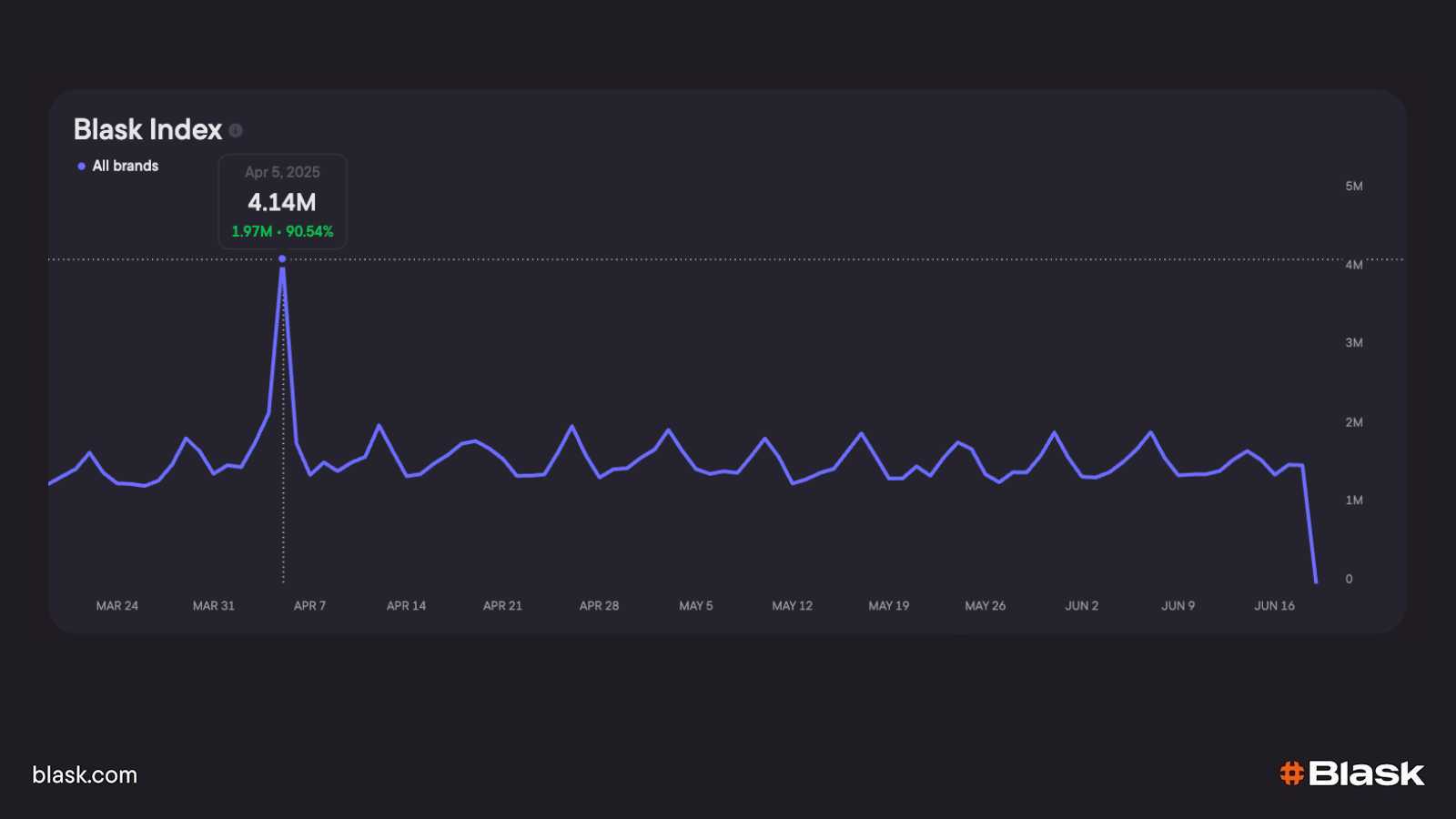
📊 A recent example: on 5 April 2025 UK traffic rocketed to 4.12 million — a 69% jump on the daily mean and almost twice the previous record — as the Grand National collided with a packed Premier League slate.
Germany mirrored the spike, climbing to 0.93 million, its highest reading in half a year.
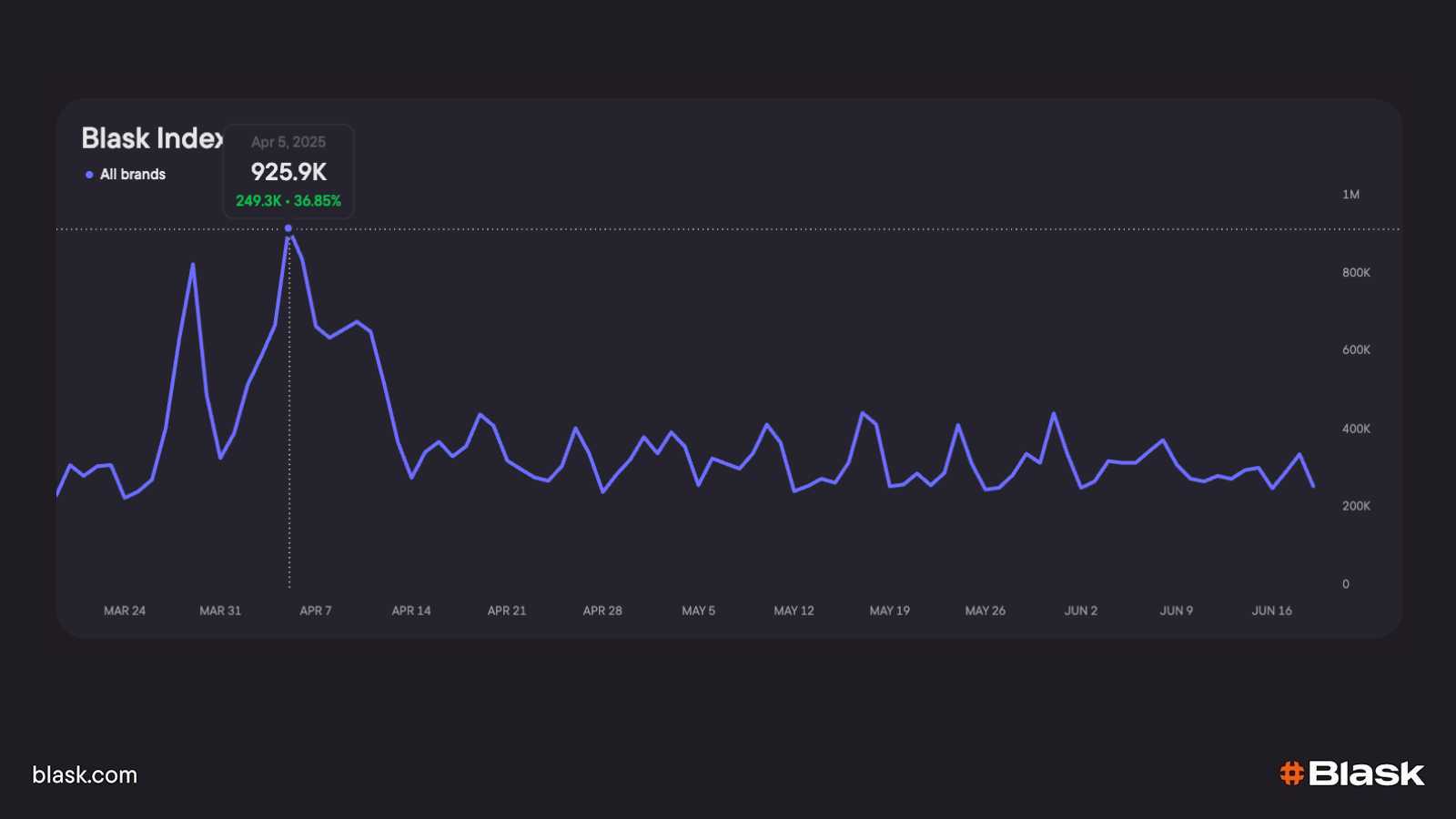
Those twin peaks instantly toppled the European leaderboard, proving how quickly multi-sport weekends can reshape the betting landscape long before handle reports drop.
Inside the modern odds engine.
DraftKings quant desks now deploy reinforcement agents that self-tune hundreds of micro-markets during NFL drives, while Bet365’s London hub ingests 120 million price points per matchday to keep spreads two seconds ahead of broadcast latency. Blask slots beside those private stacks:
- APS (Acquisition Power Score) tells marketers, in three-tier ranges, how many new users they should be winning at current brand visibility; fall below worse — and personalised promos need a reset.
- CEB (Competitive Earning Baseline), updated monthly, benchmarks sustainable revenue; if internal GGR lags the baseline, trading risk or product depth is off-kilter.
✨ Read more: Leading the shift: ushering in APS & CEB for a new era of brand performance

APS in India
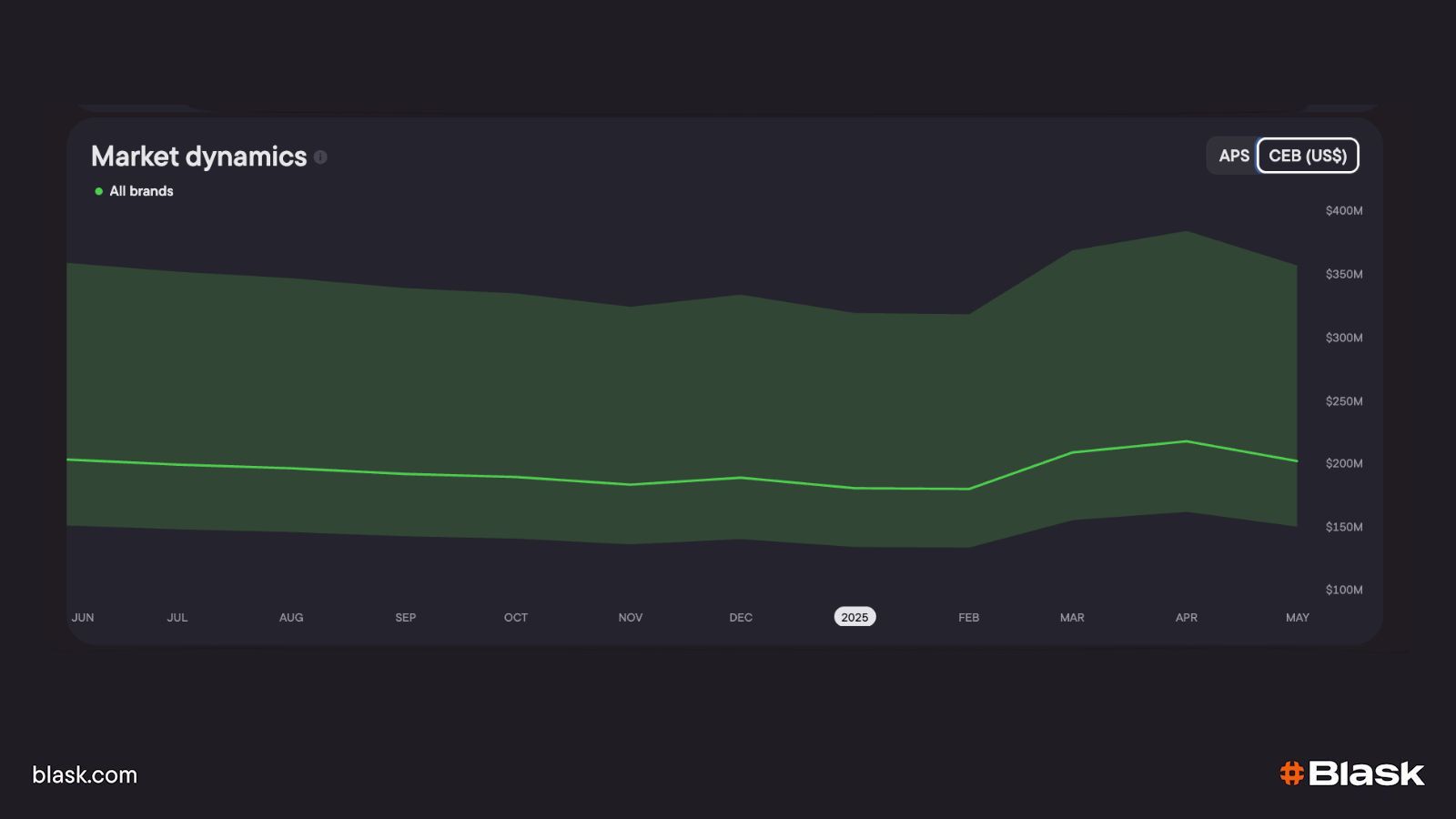
CEB in India
Fraud, fixes and deepfakes.
AI-forged IDs are now the fastest-growing threat in iGaming: Sumsub’s 2024 report shows deep-fake applicant fraud soaring 10-fold year-on-year, with Bangladesh leading at 8.5% of all sign-ups flagged as bogus.
Meanwhile, harm data pull the same direction — 50% of slot players exhibit gambling problems and prevalence peaks at 7.1% among 18- to 24-year-olds — reminding operators that shoring up KYC and safer-gambling triage isn’t optional, it’s survival.
Keeping players safe.
Half of slot-machine players display some level of gambling harm, according to public-health meta-studies, and three-quarters of those problem gamblers cite slots as their primary game of choice.
Danish start-up Mindway AI, whose software blends neuroscience with pattern recognition, is now installed at operators in 21 jurisdictions as a real-time trip-wire for harmful play.
CRM giant Optimove, meanwhile, embeds risk scores inside its customer-lifecycle engine so promotions throttle down automatically for players showing early signs of loss-chasing.
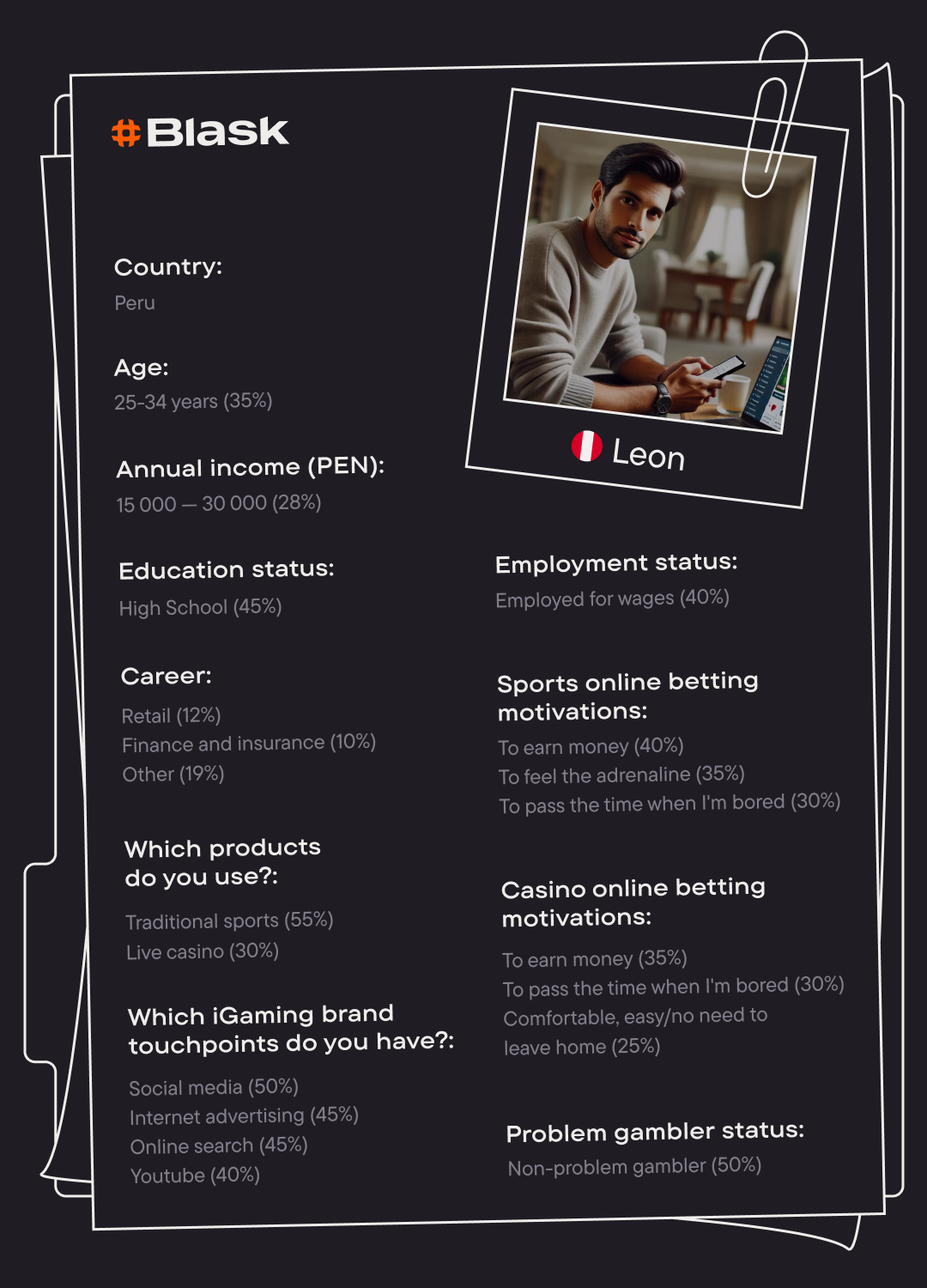
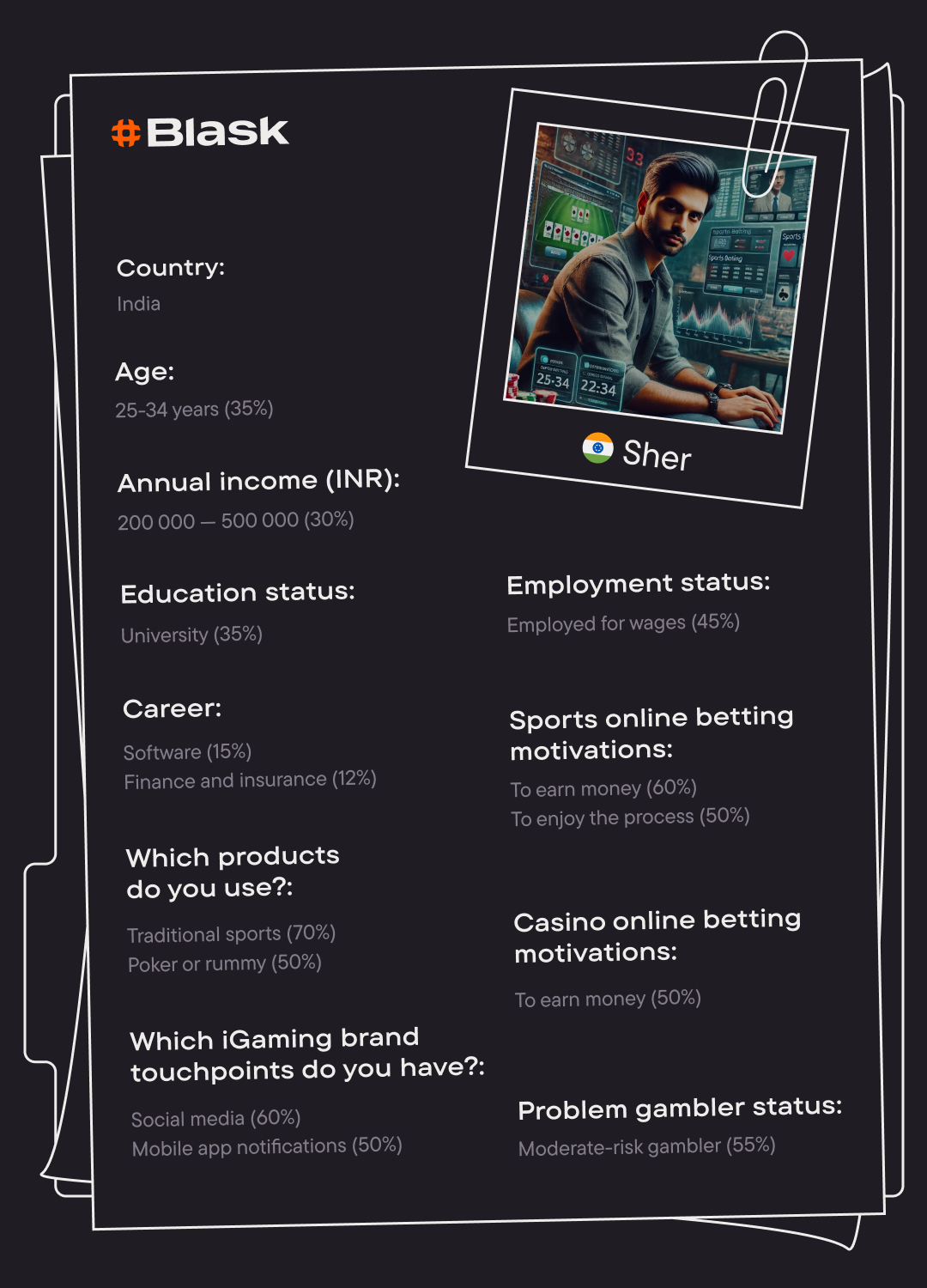
Blask’s Customer Profile feature goes one step upstream, using 80,000 proprietary survey responses and a Retrieval-Augmented Generation model to forecast motivations — age, income, even preferred bet type — before an operator spends a cent on acquisition.
The next overlays.
Augmented-reality bet slips hovering over 5G player-cams, quantum-tuned hedge portfolios, generative simulators stress-testing tail events — these are no longer deck slides.
FT reports bookmakers already modelling full-match counterfactuals to sanity-check exotic props.
The take-away.
AI has crossed the threshold from marginal edge to existential differentiator. Whether it is DraftKings shaving prediction error, Sportradar unmasking a fix, or Blask telling you that your APS is sagging under “worse”, the new house edge is measured in data-points, not luck.
Schedule a Blask demo and watch real-time market signals translate into the only three numbers — Blask Index, APS, CEB — that now decide who wins the next betting cycle.