
- Updated:
- Published:
Sweepstakes casinos US 2026: a $7.2B market that grew despite six state bans

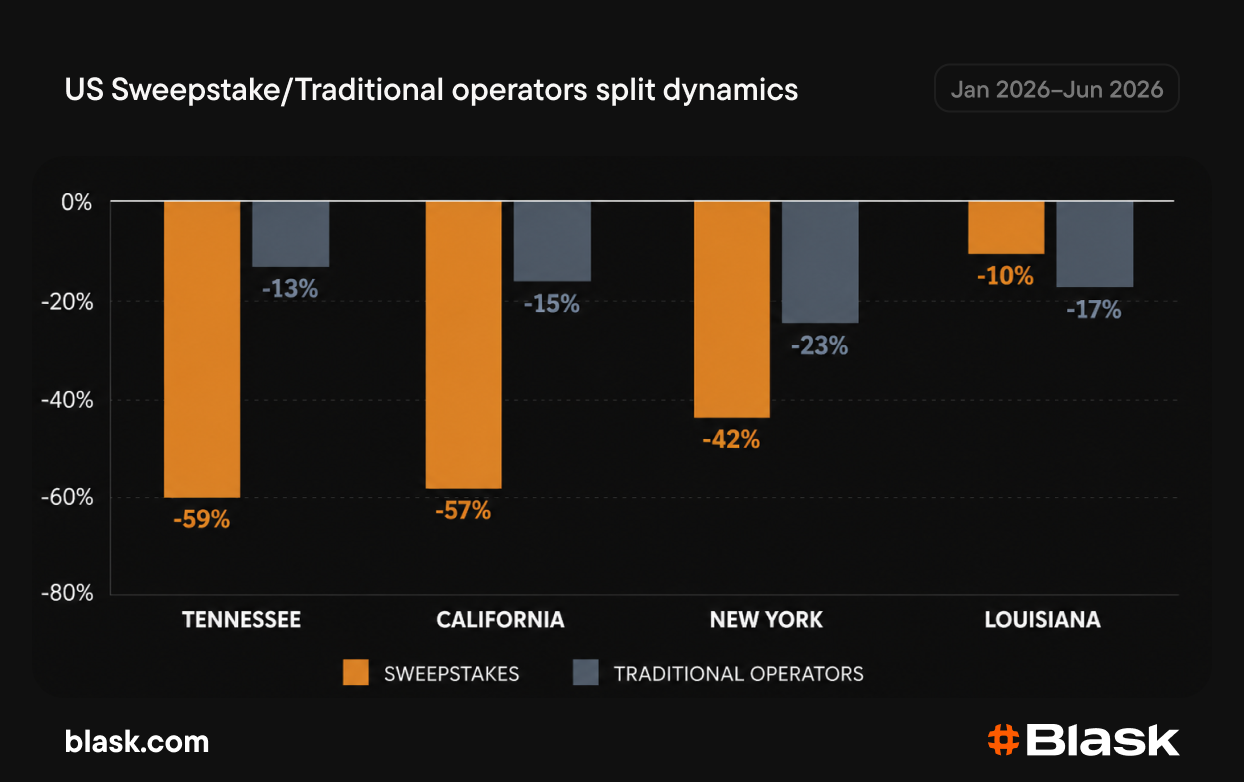
Sweepstakes casino demand collapsed by more than half in each of the four states Blask tracks that banned the model in 2026, with Tennessee hit hardest at 59%. But nationally the segment grew: Blask Index for US sweepstakes rose nearly 20% across the remaining 44 states in H1 2026.
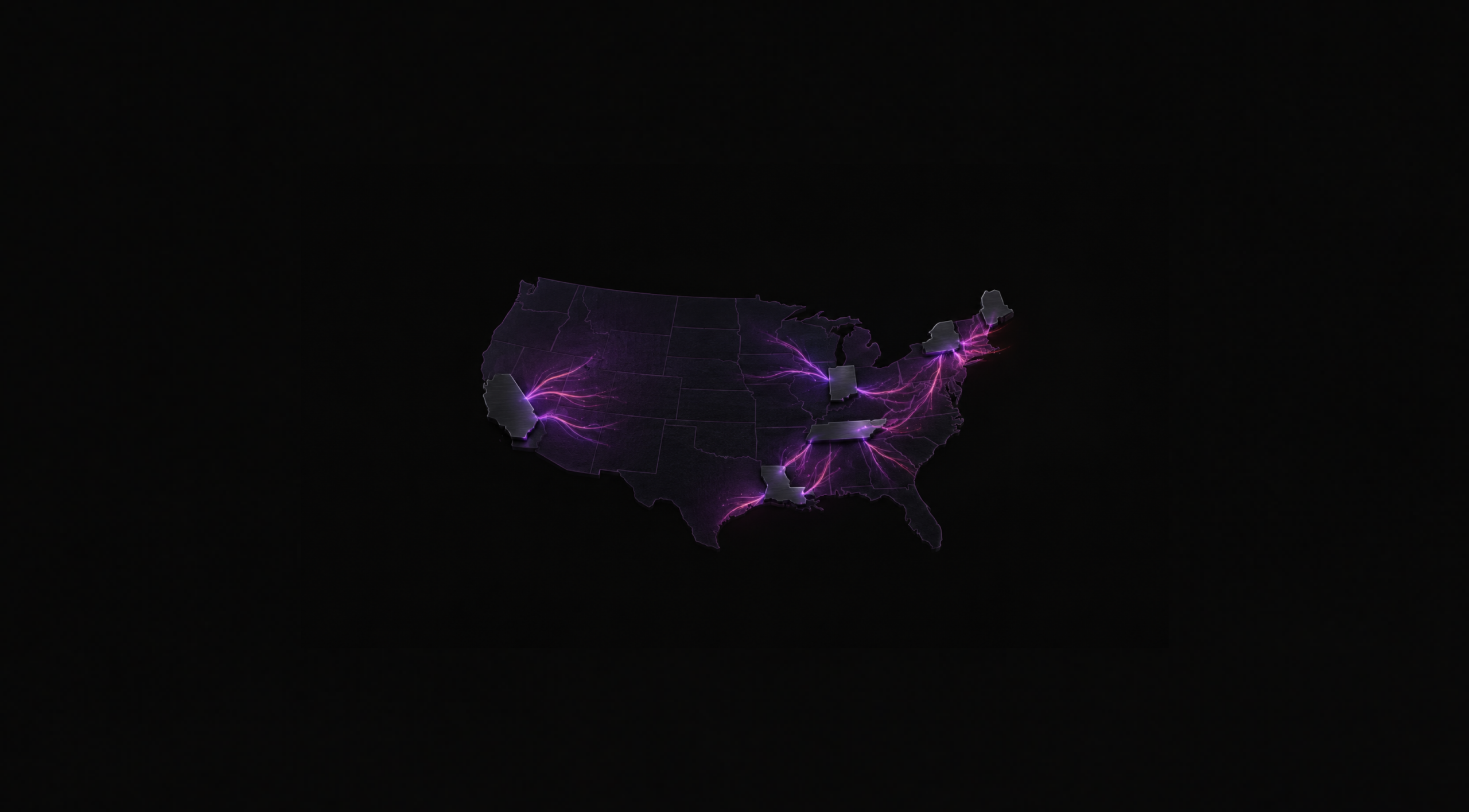
In 2026, pressure on the sweepstakes casino market rose sharply. Six states banned the model, and California — the segment’s largest market — closed to operators on January 1. Yet even losing a key state failed to stop the market.
Blask data shows that demand for sweepstakes brands in the US is now higher than before the bans. The audience did not disappear, nor did it move to licensed operators: demand shifted to states where the model is still available.
The 2026 regulatory wave — six states act
In 2026, six states banned sweepstakes casinos: California, Indiana, Maine, New York, Louisiana and Tennessee. California came first, banning the model from the start of the year through Assembly Bill 831. Before that, the state accounted for about 17–20% of the entire US sweepstakes market, according to Eilers & Krejcik Gaming.
The American Gaming Association backed the bans, arguing that sweepstakes offer a product comparable to licensed online casinos but pay no gaming tax and do not undergo the same checks.
Demand moved next door
Where the bans began to bite, demand for sweepstakes collapsed. In all four states tracked by Blask the drop exceeded half, with Tennessee hit hardest at 59% — the rest are on the chart.
Blask Index did not move to traditional operators. Over the same period, demand for casinos and bookmakers in these four states fell by about 18%. The audience leaving sweepstakes was not matched by comparable growth in other segments.
In the other 44 states, sweepstakes Blask Index rose by almost 20% in H1. Florida led the rebound with a 49% gain, and the growth was broad-based across the remaining states. The restrictions cut demand in individual markets but did not stop the segment’s growth at the national level.
Chumba still leads, but Crown Coins is closing the gap
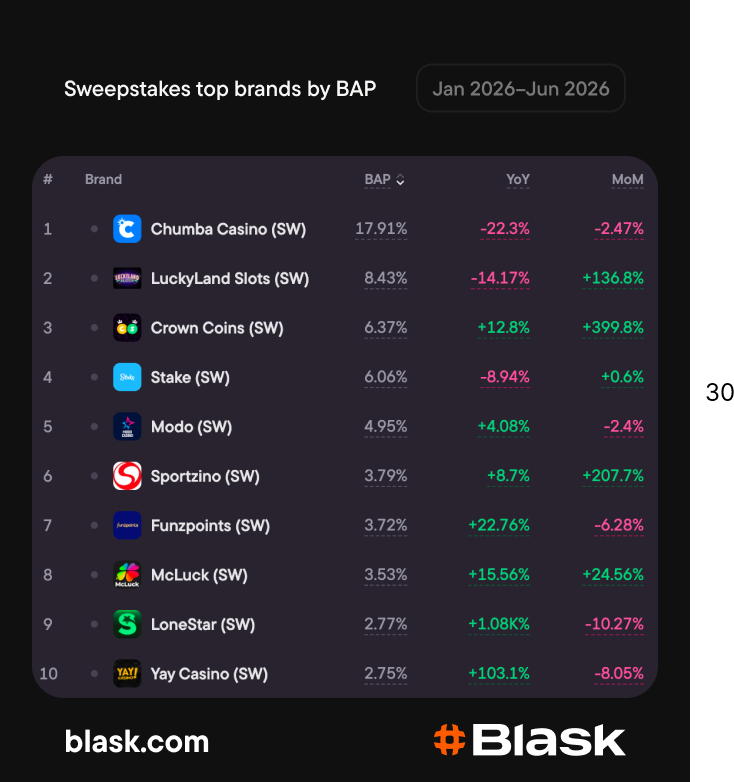
Even without the six banning states, the market leaders barely changed. Chumba Casino still holds first place with a 17.9% BAP share, well ahead of the rest of the top five. The bans redistributed the geography of demand but did not change the top of the ranking.
Competition inside the top is intensifying. Blask has already noted that in June, Crown Coins overtook Chumba Casino in monthly Blask Index for the first time. For the half-year, Chumba still leads, but the gap is narrowing.
Sweeps vs traditional demand
The headline comparison looks clear-cut: by mid-2026, sweepstakes were outpacing licensed and offshore operators combined in 35 of 50 states. Traditional brands kept the edge only where a strong regulated offering combined with real enforcement, as Blask has already shown in its previous analysis of the sweepstakes segment. In the remaining states, sweepstakes formed the bulk of demand.
What’s next: the states to watch in H2 2026
The next test for the market is how quickly bans translate into real enforcement. Oklahoma is due to halt sweepstakes operators in November 2026, and individual brands are already leaving Arizona, Illinois and Iowa amid expected restrictions. In 2027, large regulated states capable of repeating California’s scenario will come under watch.
The 2026 experience shows that a ban in one state more often redistributes demand than removes it. As long as neighbouring markets act separately, sweepstakes casinos retain room to grow.
FAQ
How big is the US sweepstakes casino market in 2026?
The US sweepstakes casino segment reached $7.2B, according to Blask, even after six states banned the model in 2026. Demand simply redistributed to the 44 states where sweepstakes remain legal rather than shrinking overall.
Which states banned sweepstakes casinos in 2026?
California, Indiana, Maine, New York, Louisiana and Tennessee banned sweepstakes casinos in 2026. California, the largest single sweepstakes market at roughly 17-20% of the segment, banned the model first, effective January 1 via Assembly Bill 831.
Which brand leads the US sweepstakes casino market?
Chumba Casino still leads with a 17.9% BAP share for H1 2026, but Crown Coins overtook it in monthly Blask Index for the first time in June 2026, boosted by a live bingo launch and a Terence Crawford sponsorship campaign.
Did players move from sweepstakes to licensed casinos after the bans?
No. In the four banned states Blask tracks, demand for traditional casinos and bookmakers fell about 18% over the same period sweepstakes demand collapsed, showing players did not simply switch to licensed operators.