
- Updated:
- Published:
What Is Rake in Poker
What rake in poker is, how it works, how rake is calculated, and why it matters is exactly what this article covers: from the pot rake and tournament fees to rakeback programs and smart strategies to minimize players’ costs.
| iGaming market worldwide power ranking provides poker operators with clear information about the online gambling landscape in different jurisdictions. This ranking displays Blask Index, the total number of active brands, and BI dynamics. |
What Is Rake in Poker
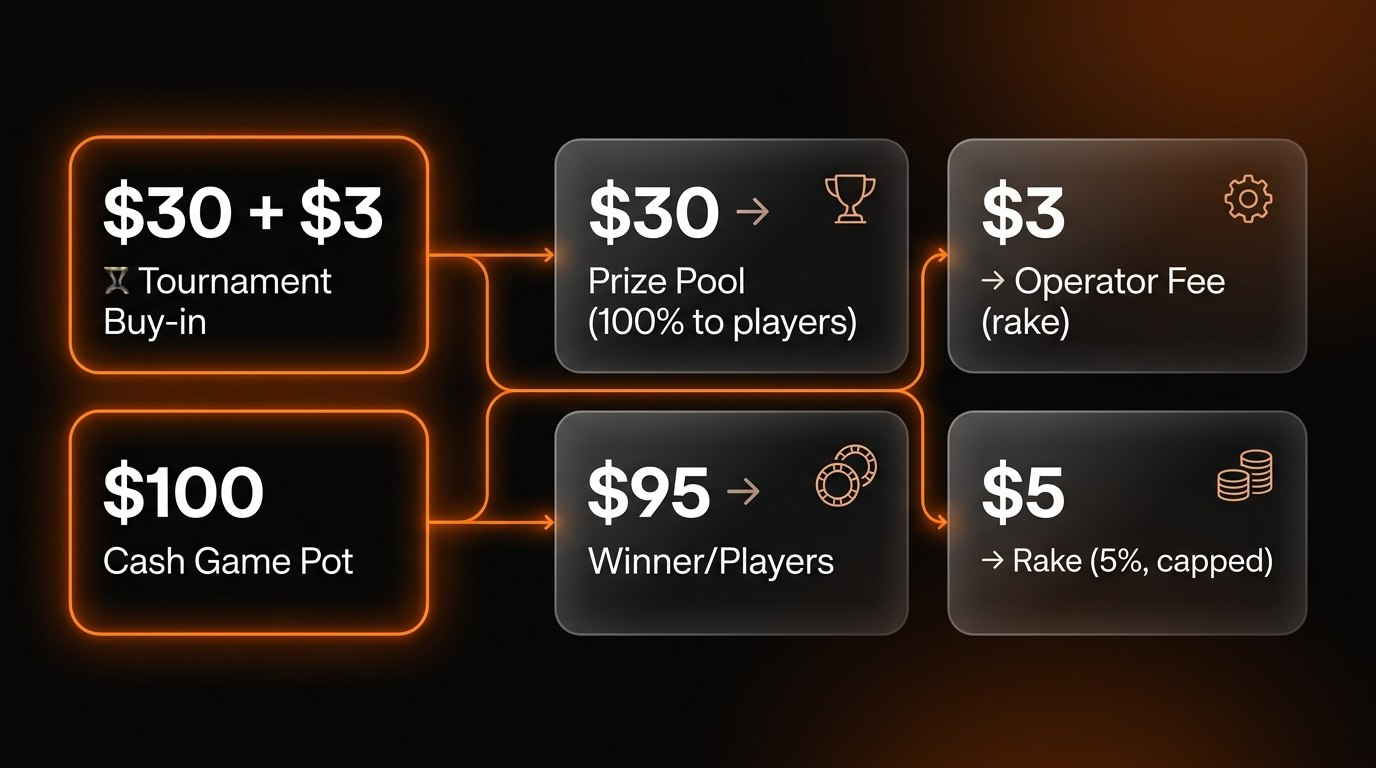
In simple terms, what is poker rake comes down to the fee a room takes for hosting games. In cash games, it usually comes from the pot. In tournaments, it usually sits inside the buy-in as a separate fee.
How Poker Rake Works
The basic poker rake model changes by format, stake, and operator. Most rooms still rely on pot collection, buy-in fees, or timed charges. It works differently across cash games, tournaments, and live rooms, but the idea stays the same: the operator takes a small fee for running the game.
In cash formats, the fee usually comes from eligible pots and stops at a fixed cap. In tournaments, it is built into the buy-in from the start. Live venues may also use timed charges or dealer drops, which makes the real cost of playing vary sharply by format, stakes, and player count. That is why rake must be tracked, not guessed, over time.
Cash Game Rake
In cash games, rake in poker is usually taken only after the hand reaches a qualifying point. Many rooms use no flop, no drop, so no fee applies before the flop.
Tournament Fees
Tournament entry usually splits into prize pool money and operator fee. That fee is the tournament rake, and it is paid once at registration.
Live vs Online Rake
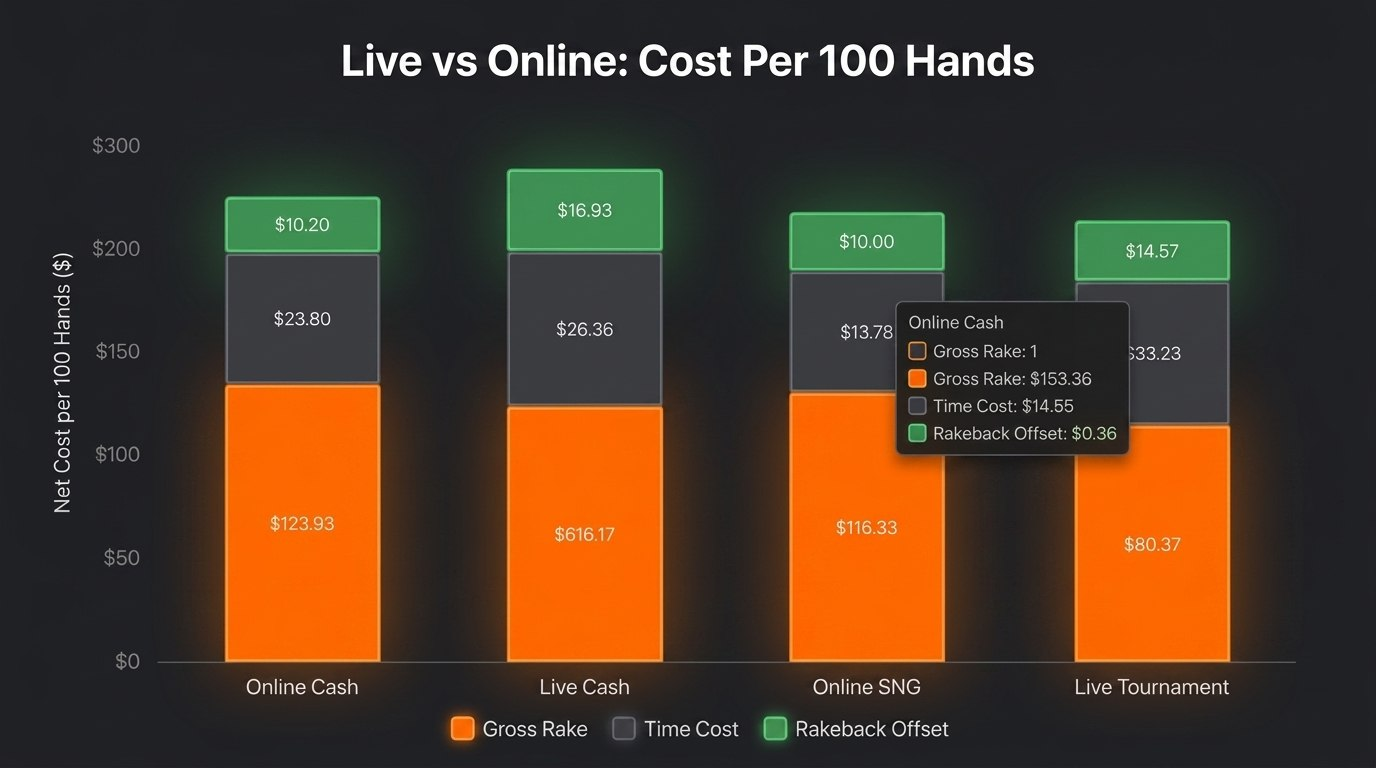
The cost of playing live poker is higher as physical rooms incur expenses like paying dealers, the floor, and other overheads. Online rooms have strict and less frictional rule automation:
- Cash games typically take a cut from the pot,
- Tournaments divide the buy-in and fee among players,
- Live rooms charge for time and dealer’s drop,
- Online rooms automate all the calculations.
Types of Poker Rake
Poker rooms do not use one universal fee model, which is why this part matters. The term covers several charging methods, and each one affects cost in a different way. Some formats take a share from every qualifying pot, while others charge a fixed amount by time or build the fee into the buy-in. Once these types are separated, it becomes much easier to compare games, track real expenses, and understand why the same stakes can feel very different from one room to another.
Across poker rooms, rake poker rules usually fall into a few repeatable buckets. The names differ, but the charging logic is familiar.
| Rake Type | Where & How Used | Fee Structure |
| Pot Rake | Online & live cash games; % taken from qualifying pots | 5–10% of pot, capped per hand; “no flop, no drop” rule |
| Time Charge / Dead Drop | Live rooms; fixed fee per hour or posted by button | Flat rate per period/hand; no cap; favors tight players |
| Tournament Fee | MTTs, SNGs; built into buy-in (e.g., $30 + $3) | 5–15% of buy-in; paid upfront; fully transparent |
| Spin & Go / Fast-Fold Rake | Lottery SNGs, Zoom/Rush; higher % for speed & small pools | Up to 7–10%; low or no cap; highest cost per hand |
Pot Rake (Percentage of Pot)
This is the conventional cash game setup. A rake is taken from each qualifying pot in an amount proportional to that pot up to a publicly known limit.
Dead Drop / Time Charge
A dead drop refers to a predetermined fee charged prior to dealing cards; often placed by the button. A time charge refers to a fee per set period of time.
Tournament Buy-In Rake
The tournament fee is displayed on a split pricing basis. The tag “30 plus 3” would mean that the 30 goes into the prize pot, while 3 goes to the operator.
Sit-and-Go Rake
The one-table tournaments are likely to have a much higher percentage cost relative to the larger tournaments owing to the small amounts at stake.
Spin-and-Go Rake
In lottery sit-and-gos, the fee is likely to be the highest due to the small number of entrants. The GGPoker’s percentage for spin and gold is 7%.
How Rake Is Calculated
This is where the poker rake explained becomes practical, not theoretical. The final number depends on stake, format, player count, and cap policy.
Percentage Method (Standard 5-10%)
This typically lies between 5 and 10 percent of the pot. Most online poker rooms have caps close to 5 percent, whereas many live games are slightly higher.
Rake Caps and Maximum Rake
The importance of rake cap is that it limits the amount that can be taken from the game. This usually depends on the stakes and on who has been dealt cards.
Live Casino Rake (Dealer Drops)
During in-person poker games, there is the option for the dealer to manually remove chips from the pot. In cases of large games, some casinos opt to use a timer system.
Online Rake (Auto-Calculated)
Online poker rake is automatically taken by computer programming. PokerStars claims that its rake collection is percentage-based and there is no rake until after the first betting round ends:
- Pot amount determines the percentage collected,
- Number of players can alter the maximum cap,
- Certain casinos collect no rake pre-flop,
- Rake in tournaments is taken upfront.
Rake by Poker Variant
When people ask what is rake in poker, the missing detail is usually game selection. Different variants generate different average pots and different fee pressure.
| Game Format | Rake Model | How Cap Affects Cost | Profitability Difficulty |
| NLHE Cash (Micro/Low) | 5% pot, fixed cap | Cap protects in big pots, but % eats small edges fast | High |
| PLO Cash | 5–10%, multiway pots | Cap hits more often due to larger average pots | Medium |
| MTTs | Fixed fee in buy-in | Independent of hand outcomes, but re-entries stack up | Medium/Low |
| SNG / Spin & Go | High % (6–10%) | Minimal cap; fee dominates small prize pools | High |
| Live Cash | Time charge / dealer drop | Fixed hourly cost, unrelated to pot size | Varies by stakes |
No-Limit Hold’em Cash
No-Limit Holdem cash games usually follow the mainstream percentage model. Micro stakes often feel the heaviest because small edges vanish quickly.
Pot-Limit Omaha
PLO tends to build larger pots and see more multiway action. That can make capped fees hit faster and more often.
Tournaments and MTTs
For MTTs, poker rake becomes more transparent because the cost is known before registration occurs. The real pain lies in entering multiple times.
MTT = Multi-Table Tournament. This is the standard term in poker for large-scale tournaments where players from many tables compete simultaneously, and tables gradually merge as players are eliminated until one winner (or final table) remains.
Stud and Mixed Games
Stud and hybrid games may employ different fixed-limit structures. PokerStars notes that in hybrid games, poker rake will occur according to the specific hand being played.
Rakeback Programs
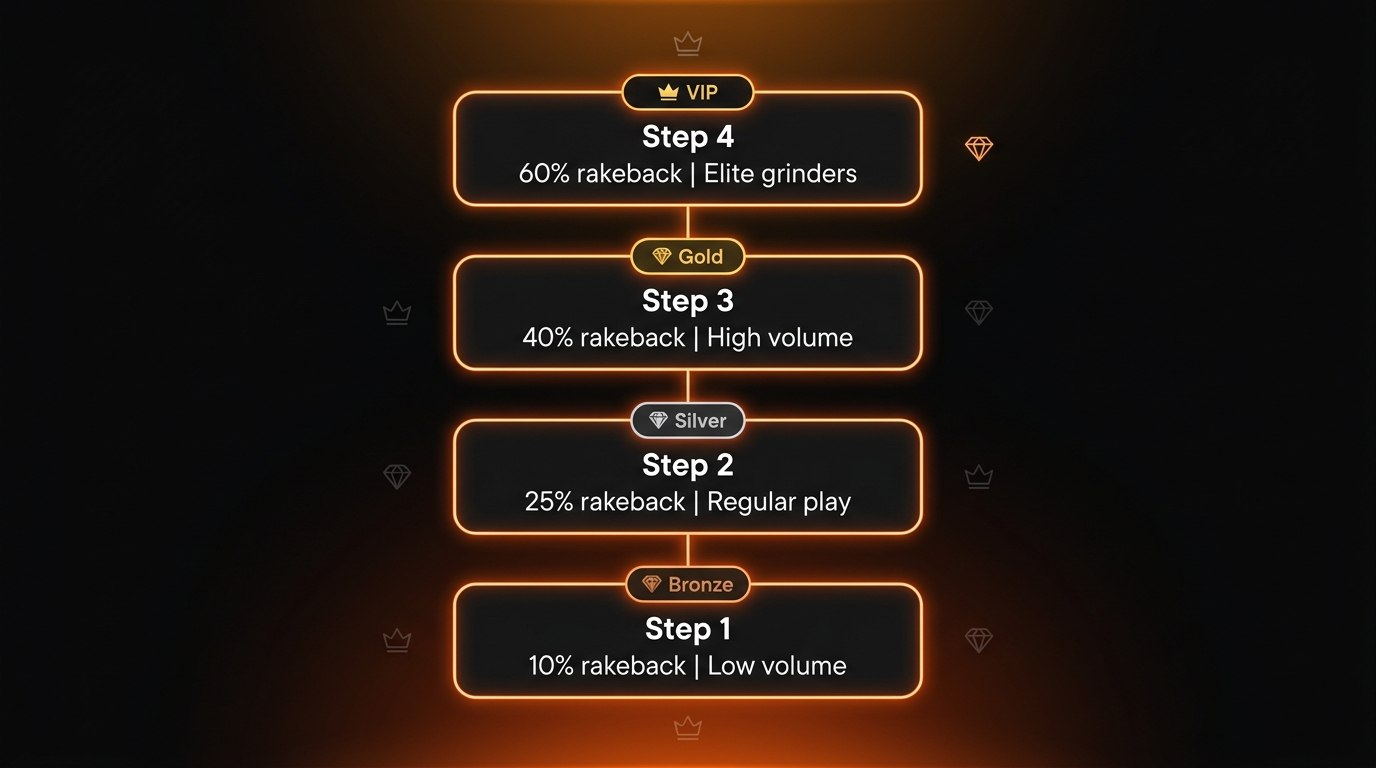
Modern networks soften fees through rewards, cashback, and status systems. In plain terms, rakeback returns part of paid fees to active players.
| Program Type | How It Works & Best For | Key Pros & Cons |
| Flat Rakeback | Fixed % returned (e.g., 20%); weekly/monthly payouts. Best for casual players. | Simple, predictable, butLower max returns |
| VIP Tiered | % increases with volume/points (up to 50–60%). Best for high-volume grinders. | Highest returns, but Requires consistent play |
| Points-Based | Earn points per $1 rake; redeem for cash/bonuses. Best for flexible players. | Customizable rewards, butComplex tracking |
| Cashback Challenges | Complete missions for bonus cashback. Best for recreational players. | Fun, engaging, butTime-limited, inconsistent |
| Hybrid (Chests/Lucky Boxes) | Random rewards based on rake contributions. Best for all players seeking variety. | Gamified, exciting, butUnpredictable value |
What Is Rakeback?
It is a loyalty return based on generated fees. Some rooms pay cash directly, while others use points, chests, or tier systems.
Standard Rakeback (Flat %)
The flat system offers the same payout to all those who meet the criteria. The Partypoker site offers weekly cash back, where the maximum reward can be up to 20 percent.
VIP / Tiered Rakeback
The tiered approach incentivizes volume. For example, the PokerStars Select program offers 50 percent payout, while the PokerStars Select+ offers 60 percent payout on Spin and Go and Zoom.
How Rakeback Is Tracked and Paid
Rooms keep track of fees contributed, points earned, or progress towards rewards using software. In GGPoker Ocean Rewards, you receive 100 Tide Points for every 1-dollar poker rake made:
- Flat cashback offers flat payment amount,
- VIP programs offer higher rewards based on volume,
- The tracking system may utilize points or rake,
- Payments can be made on a daily, weekly basis, or within 48 hours
Why Rake Matters for Your Win Rate
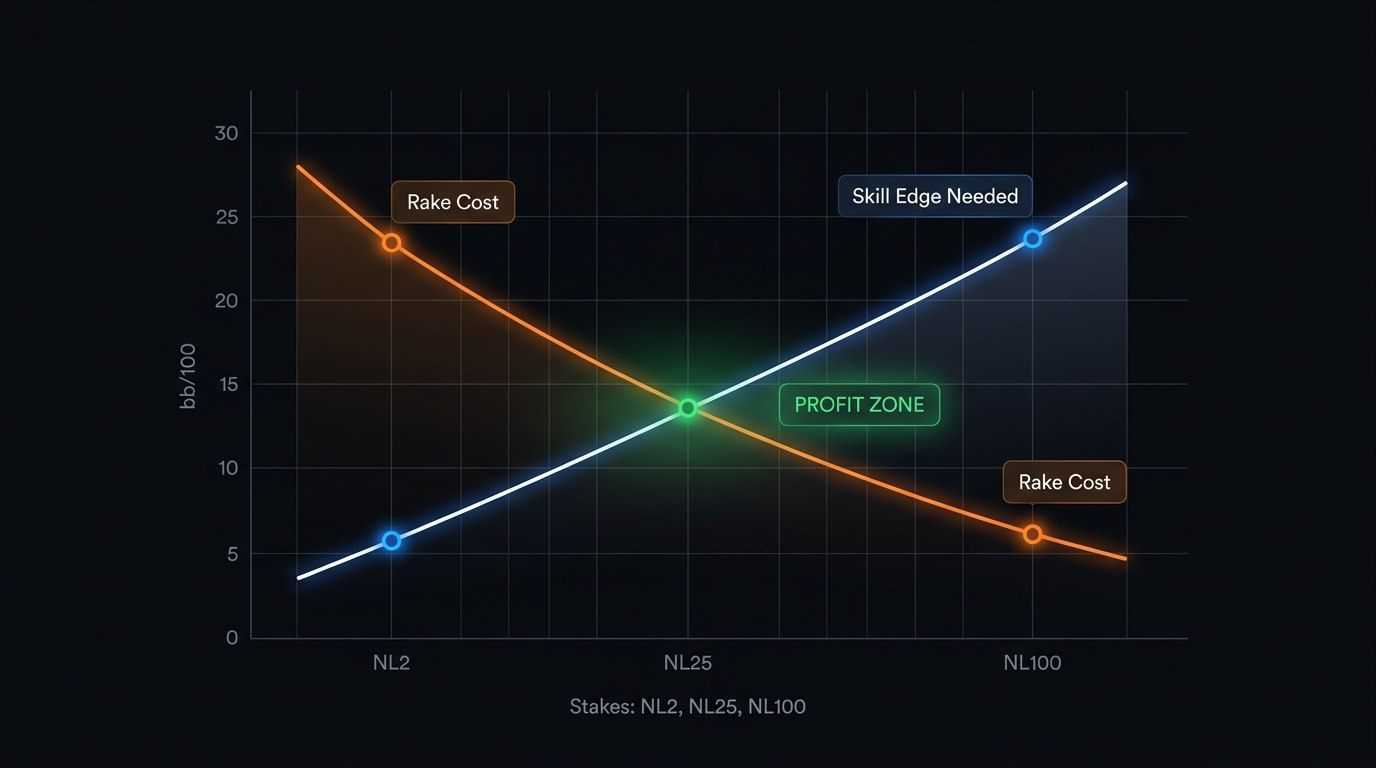
At low and mid stakes, what is rake in poker becomes a win-rate question before anything else. A player must beat opponents and also clear the room fee.
Rake’s Impact on Profitability
Rake cuts every pot and reduces the true edge. While this will probably be acceptable in poor games, it may completely crush weak winners in reg-heavy games.
Beating the Rake at Low Stakes
Low stake play is the most difficult to play profitably since pot sizes remain relatively low, but percentages remain important. Selection is a key at low stakes.
Rake Comparison Across Top Poker Sites
Across major rooms, rake poker math matters more than slogans. The real difference comes from caps, fast formats, and loyalty design.
| Poker Room | Rake Structure | Rakeback Program & Max Return | Tracking, Payout & 2026 Features |
| PokerStars | Elaborate stake/player-based tables | Select (50%) / Select+ (60% on Zoom/Spin) | Volume-based; daily/weekly; no pre-flop rake; direct cash bonuses for high volume |
| GGPoker | Standard % + format-specific rules | Ocean Rewards (Tide Points); tier-dependent | 100 pts per $1 rake; paid within 48h; pre-flop rake on 3-bet+ pots; chest & leaderboard system |
| PartyPoker | Flat 5% on most Hold’em/Omaha tables | Weekly Cashback up to 20% | Flat % of generated rake; weekly payouts; simple structure for regular players |
PokerStars
PokerStars employs rake tables that are very elaborate on stakes, games, and players. The rewards structure also gives players direct cash bonuses for certain high-level volumes.
GGPoker
GGPoker utilizes typical room fees but with added gimmicks depending on the format. Its support pages include the mention of pre-flop raking in cases where there is a 3-bet or more.
PartyPoker
There is a 5 percent structure for cash games in many holdem and Omaha poker tables according to PartyPoker.
Live Casino Rake Structures
The live rooms have varying costs depending on the locality and the table type. Some rooms operate percentage drop while others have timed fees that occur after every 30 minutes.
How Casinos and Operators Profit from Rake (Operator Side)
Poker rooms do not make money from their players’ losses in the same manner that sports books do. The majority of their income is generated through volume, rake, and retaining systems.
The income is used to cover operational expenses such as software, payment processing, security, support services, marketing, and live personnel. For the operators, more tables mean steady rake and less table risk.
Rake-Free and Reduced-Rake Promotions
Rake-free and reduced-rake promotions are one of the few ways players can lower the real cost of playing without changing stakes or format. Poker rooms use them to attract traffic, fill specific game pools, or push players toward selected tournaments and fast-fold tables.
In practice, these offers may include fee-free events, temporary rake cuts, cashback boosts, leaderboard races, or short promotional windows where the effective cost of each hand drops. The key detail is that these deals do not remove the standard pricing model forever. They simply reduce it for a limited time, which can make a clear difference to short-term results, volume plans, and overall table selection.
Common Rake Mistakes Players Make
Many players keep track of their performance but neglect the effects of fees. This ends up creating poor formats and false assurance:
- Neglecting fees as a percentage of tournaments,
- Considering cashback as profit only,
- Disregarding the influence of small-stakes fees,
- Comparing poker rooms without considering limits.
Future Trends in Poker Rake for 2026
2026 will see clear reward mechanics and visible fee structures. GGPoker Ocean Rewards and PokerStars Select have already started implementing this strategy.
Next up will be the transparency of fast games and low stakes tables. People are taking note of support page content, and the rooms can see that.