
- Updated:
- Published:
Lifetime value (LTV)
Player lifetime value is the revenue a single acquired player produces over a defined period, measured after the costs of serving them. The definition is settled; the period is not, and that is where two operators quoting an LTV stop describing the same thing.
Most iGaming teams no longer treat LTV as a lifetime figure. They report it as a cohort measure at fixed horizons — 30, 90 and 180 days from first deposit — because a forecast resting on an unknown player lifespan cannot approve a media budget this quarter.
How player LTV is calculated
The textbook formula multiplies average revenue per user by average player lifespan:
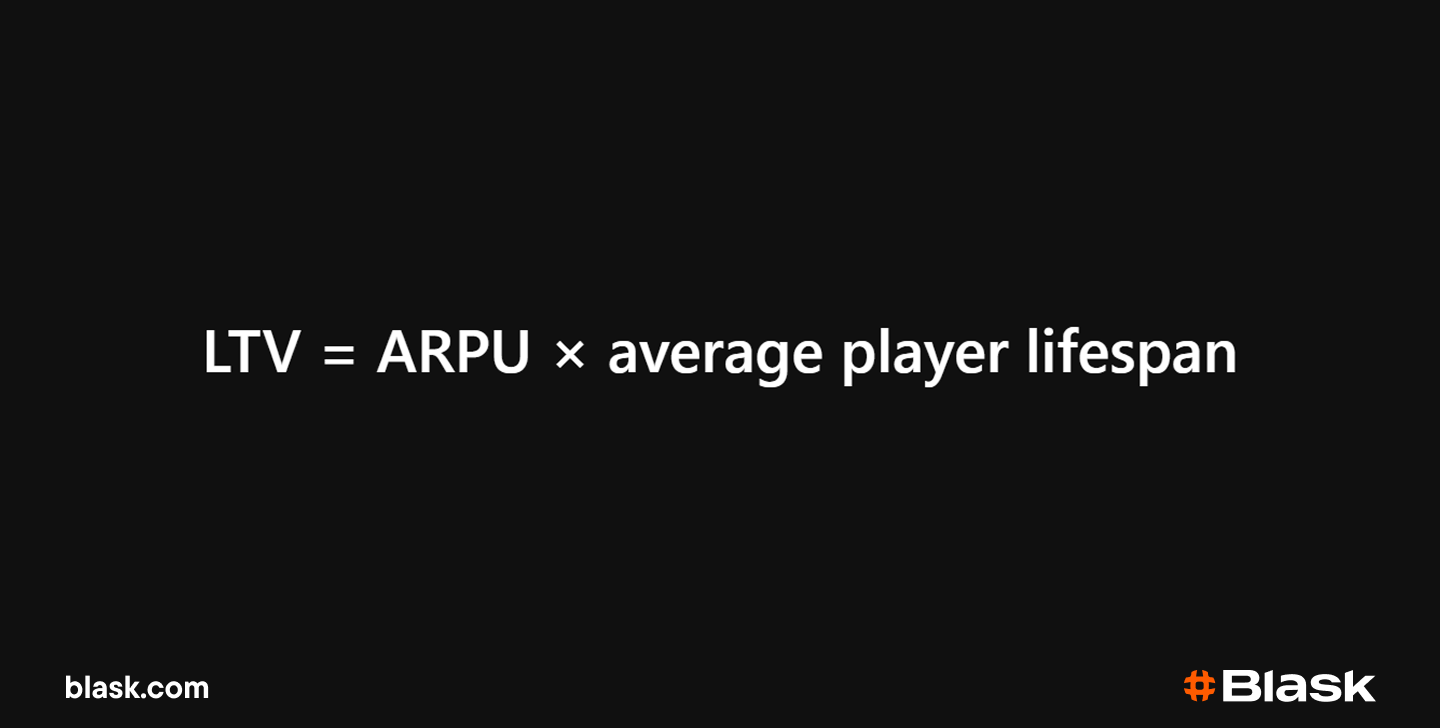
Operators rarely use it in that form. Lifespan is unknown until a player has churned, so a live cohort offers no value to insert, and any figure produced this way is a model output rather than a measurement. The working version fixes the horizon instead:
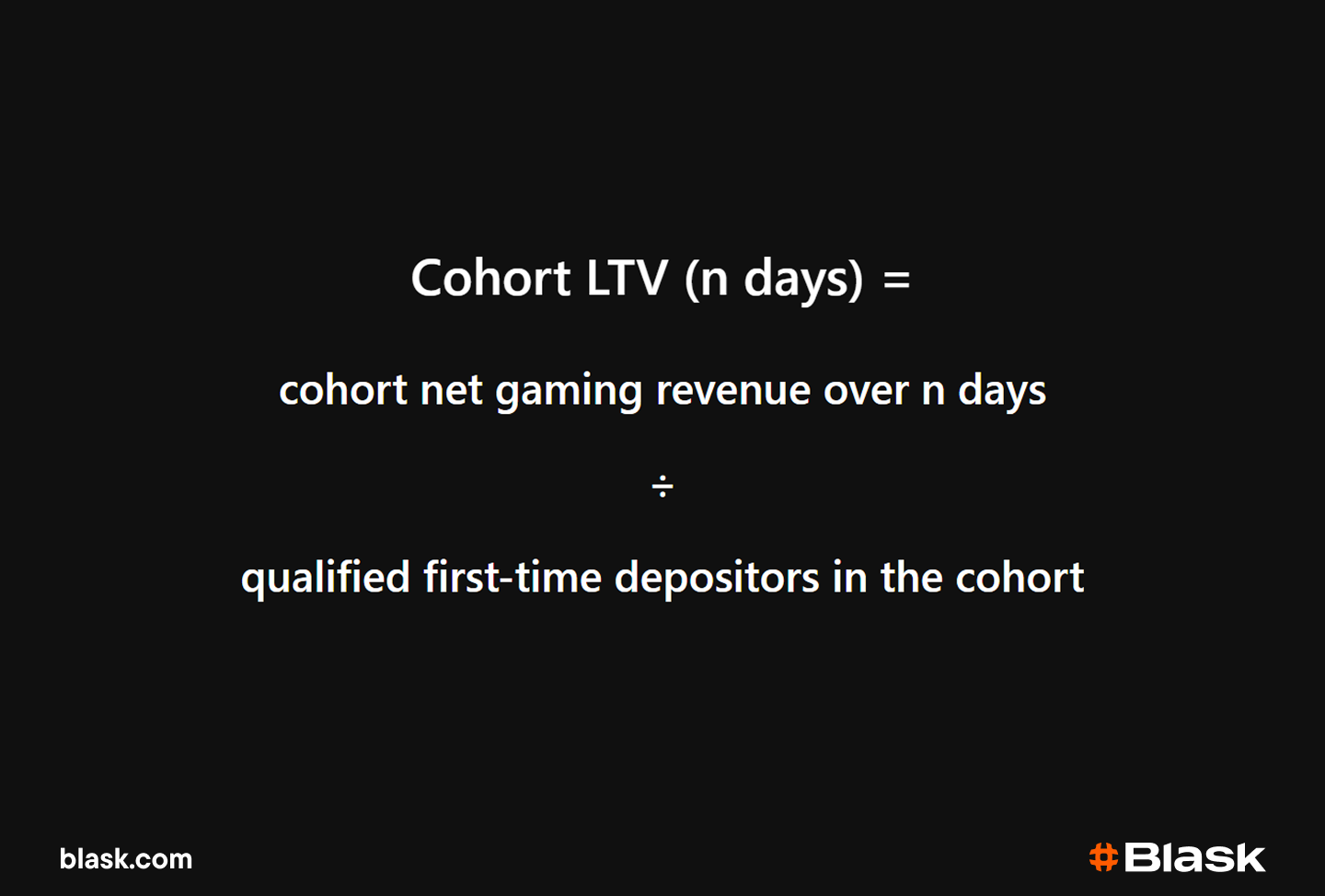
Net gaming revenue is gross gaming revenue after a defined set of deductions, commonly bonus cost and often gaming duty, payment fees and chargebacks. There is no universal deduction list, so the margin definition belongs in the reporting standard before the first cohort closes; changing it mid-year makes earlier cohorts incomparable with later ones.
The 30, 90 and 180-day windows
Three horizons dominate operator reporting, and each answers a different question.
The 30-day window measures onboarding. It captures the welcome offer, early repeat deposits and the first churn wave, making it the fastest of the three cohort reads.
The 90-day window adds more repeat activity and exposes chargebacks or bonus-abuse reversals that a 30-day view can miss. It provides a more mature payback read, though later adjustments can still restate the cohort.
The 180-day window captures a larger share of repeat behaviour after the initial promotional period. It gives the fullest of the three views but arrives too late to describe current acquisition performance.
What moves a cohort between those horizons runs through the operator’s CRM: bonus schedule, reactivation triggers and frequency caps.
A single LTV quoted without its horizon carries no information. A $420 figure at 180 days and a $420 figure at 30 days describe cohorts with entirely different economics, and only one of them is worth paying more to acquire.
Why the qualified FTD sets the number
LTV is a per-depositor average, so the denominator decides it. A denominator built from raw first-time depositors includes accounts that failed verification, bonus-hunting registrations and deposits later reversed by chargeback — players who add nothing to the numerator while still dividing it.
Affiliate agreements already handle this on the cost side by paying on a qualified first-time deposit: a deposit above a minimum value, verification passed, sometimes a turnover requirement, and the account still valid after a review window that usually runs 30 to 90 days. An LTV dividing survivor revenue by the raw count understates the value of the players an operator kept, and the gap widens as traffic quality falls.
Cohorts also need restating once the clawback window closes. One locked at day 30 and never revisited still carries depositors reversed in month two, which flatters both the acquisition report and the LTV that follows.
LTV, ARPU and ARPPU
The three metrics differ in denominator and in time frame, and the confusion between them usually comes from the second.
ARPU divides revenue across all users in a period, depositors and non-depositors alike. ARPPU divides the same revenue across paying users only, which makes it a monetisation read on the active base. Both describe a month or a quarter, not a cohort.
LTV follows one acquisition cohort forward through time. The distinction matters for budgeting: ARPU reports what the existing base produced last month, while LTV reports what the players acquired in March will have produced by June. Rising ARPPU alongside a falling 90-day LTV describes a base monetising its survivors well and acquiring worse ones.
LTV against acquisition cost
LTV is rarely read alone. Set against customer acquisition cost, it produces the payback ratio that governs whether a channel scales — and the ratio moves as much with the cost definition as with player behaviour.
A Blask worked example on a 1 000-FTD UK casino cohort, built from public UK cost ratios rather than operator data, put the ratio at 3.9:1 on headline media and affiliate spend and at 1.9:1 once welcome promo, payment fees, sponsorship share and safer-gambling allocation entered the numerator. The full true CAC breakdown shows which lines load at D0, D7 and D30. Both ratios describe the same cohort; they differ only in what was counted as the cost of getting it.
What Blask measures here, and what it does not
Blask does not publish player-level LTV. That number lives in operator ledgers and depends on definitions no external model can see.
Blask models a separate market-level measure. Competitive Earning Baseline estimates the revenue a brand or market could support at its current position and is published as a range rather than a point. For the United Kingdom in June 2026, Blask put the monthly baseline at $995.8M ($713.9M–$1.84B). CEB cannot be divided by player counts to derive LTV: the two metrics use different populations, sources and purposes.
FAQ
How do betting operators measure player LTV?
Most measure it as cohort net gaming revenue divided by qualified first-time depositors, at fixed horizons of 30, 90 and 180 days from first deposit. The ARPU × lifespan formula is used for modelling rather than reporting, because lifespan is unknown while the cohort is still active.
What is the difference between LTV and ARPU?
ARPU is a period average across all users, and ARPPU is the same average across paying users only. LTV follows a single acquisition cohort forward over a fixed window. A strong ARPU month and a weak 90-day LTV can occur together when an established base monetises well and new cohorts do not.
What is a good LTV:CAC ratio in iGaming?
There is no universal good LTV:CAC ratio in iGaming. A valid threshold depends on the LTV window and on whether CAC includes promo, payment, compliance and clawback lines rather than media and affiliate invoices alone. No reliable industry average player LTV exists because market, vertical and product mix move the figure too far apart for one number to hold.
Bottom line
Player LTV has three moving parts: the revenue definition, the window and the depositor population in the denominator. Where all three are fixed before a campaign runs, LTV:CAC works as a payback gate. Where any of them float, the ratio tends to agree with whoever is presenting it.