

- Updated:
- Published:
Chile fast-tracks iGaming bill as regulated market could launch in June
Chile’s government has moved the online gambling bill into its final fast-track stage after years of regulatory debate, raising the possibility that a regulated iGaming market could launch in June.
The regulatory perimeter of the initiative radically clears the “grey” market: it introduces blocking of offshore websites and payments through providers and banks, a full ban on gambling advertising and footballer sponsorships, as well as social filters that block access to betting for alimony debtors and prisoners.
Under the optimistic scenario, the new rules could enter into force as early as June 2026.
The market is at its peak before change
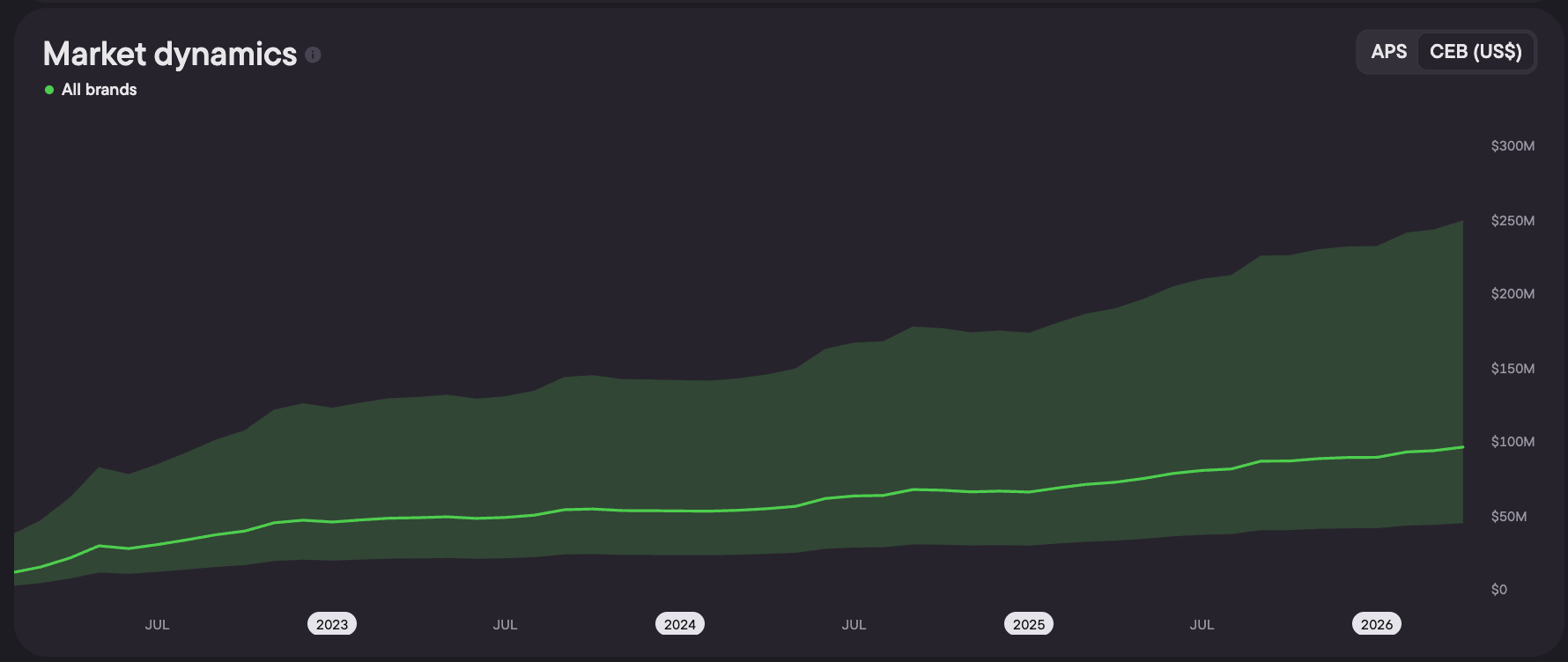
Based on Blask analysis, the market has grown by more than 2.5x since 2022. Against the backdrop of legalization news, the industry appears to be in its strongest shape: in April 2026, CEB, or projected revenue, reached $101.9M, setting a new all-time high.
Chile’s regulatory turn could lock in market concentration
The current structure of Chile’s iGaming market, according to Blask data, points to an environment with high demand concentration. Over the last year Betano set the pace for Chile’s iGaming sector, holding almost half of total BAP at 49.16% and maintaining a large gap over its closest competitors.
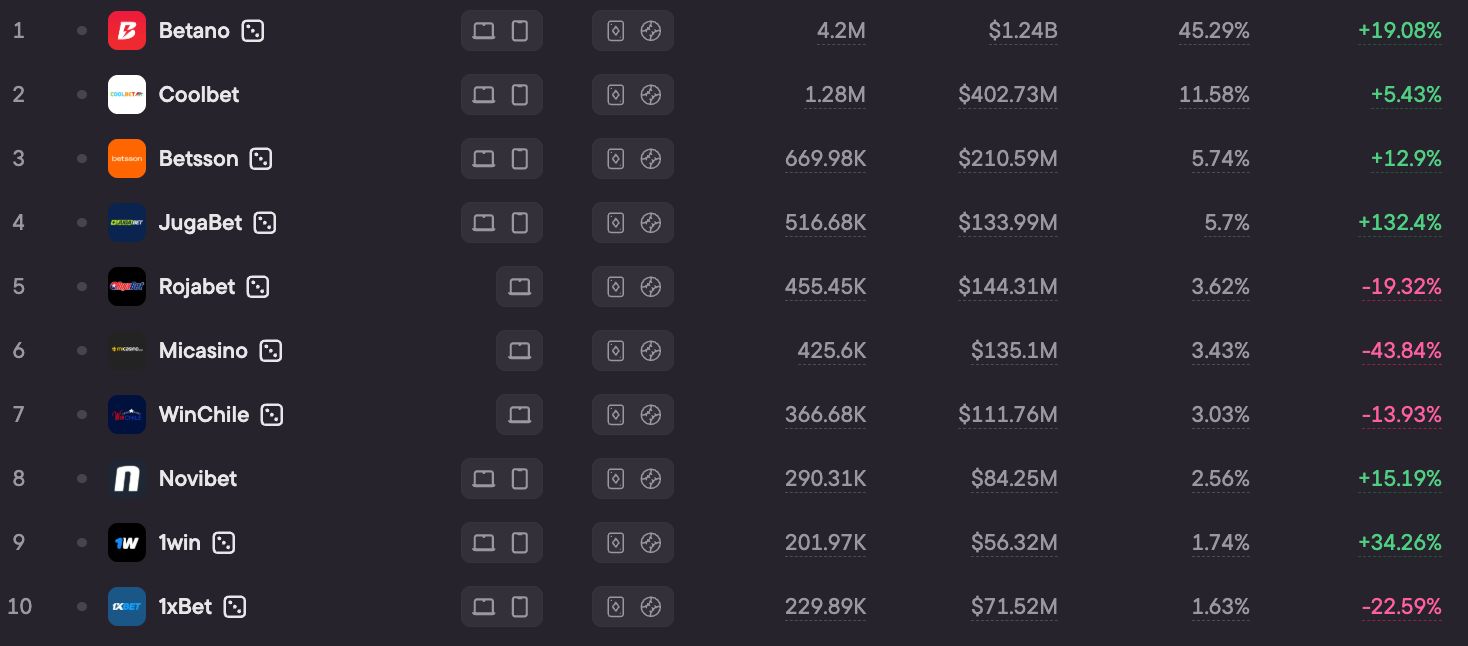
This matters ahead of the first licensing cycle. The proposed framework raises the cost of regulated entry through a 20% GGR tax, 19% VAT, a 1% responsible gambling contribution and an additional 2% charge on sports betting revenue for national sports federations. For brands already active in Chile before applying for a license, the bill also creates a retrospective settlement: a one-off payment equal to 31% of GGR over the previous 36 months.
The end of the “Wild West”
Chile is approaching regulation with already formed demand, record CEB and high concentration around market leaders. The new regime will raise operating costs for operators seeking to enter the licensed market, especially brands that previously relied on offshore operations, aggressive sports marketing and flexible payment infrastructure.
After the rules launch, the key question will be the transition of current demand into the licensed perimeter. The first line of competition will run where the new law increases pressure the most: payments, advertising, apps and user retention.