

- Updated:
- Published:
155.io GVR dynamics: how CCTV games move through casino lobbies

Although CCTV Rush Hour had an influx of population, it didn’t take place in primary lobbies.
155.io has taken live casino content to a genuinely unusual place: betting on footage from closed-circuit cameras. Traffic intersections during rush hour, snowy mountain trails, fishtank, duck ponds. The games are exactly what they sound like, and according to Blask data, casinos across 20 countries are quietly adding them to their lobbies.
What are CCTV games
CCTV games are a format built around real-world camera streams. Rather than animated slots or studio-hosted live tables, the player watches footage from an actual location — for example, a road junction. The user bets on outcomes derived from what happens on the screen: which car passes first, how many vehicles cross in a time window, which duck finishes the race.
The format strips game design down to its essentials: a live feed, a betting mechanic, and a timer. There are no bonus rounds, no free spins, no branded math models. What there is, arguably, is authenticity — and a premise that is genuinely hard to replicate.
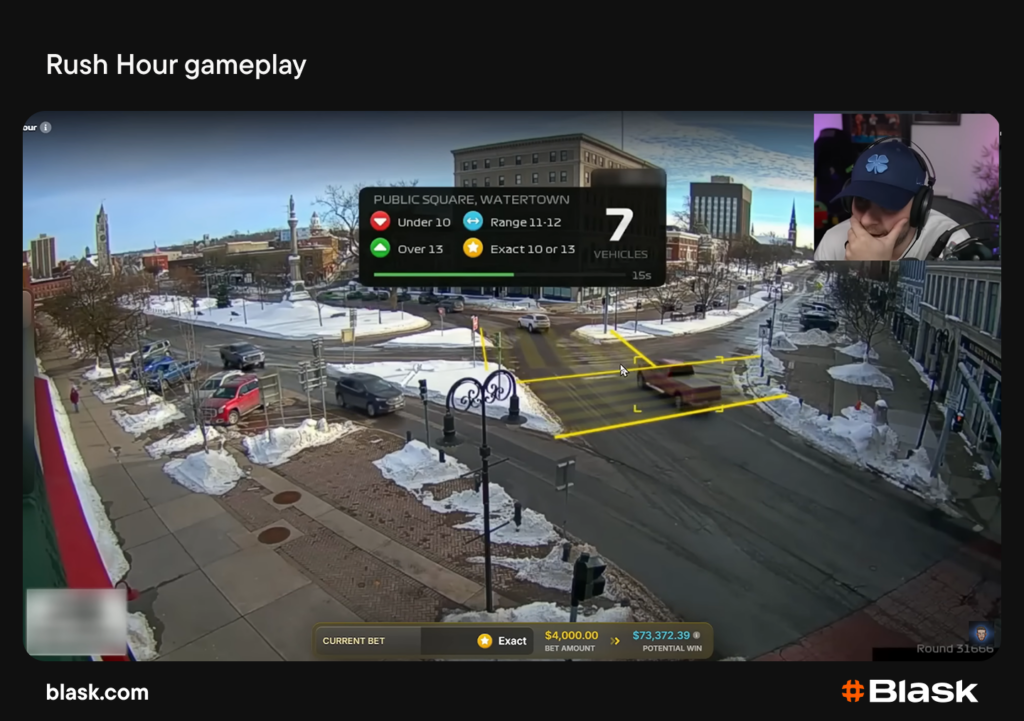
Screenshot source: WatchGamesTV
155.io: provider profile
155.io is the first game provider developing CCTV games. As of June 2026, Blask tracks six titles of this iGaming supplier:
- Rush Hour
- Snow Run
- Fish Tank
- Coin Flip
- Duck Racing
- Duck River
Rush Hour is the most widely distributed title, present in 20 tracked markets, and has the longest recorded history in brand lobbies.
This title became popular among casino streamers and iGaming affiliates who actively worked with TikTok. This social network was full of tiktoks with Rush Hour’s gameplay.
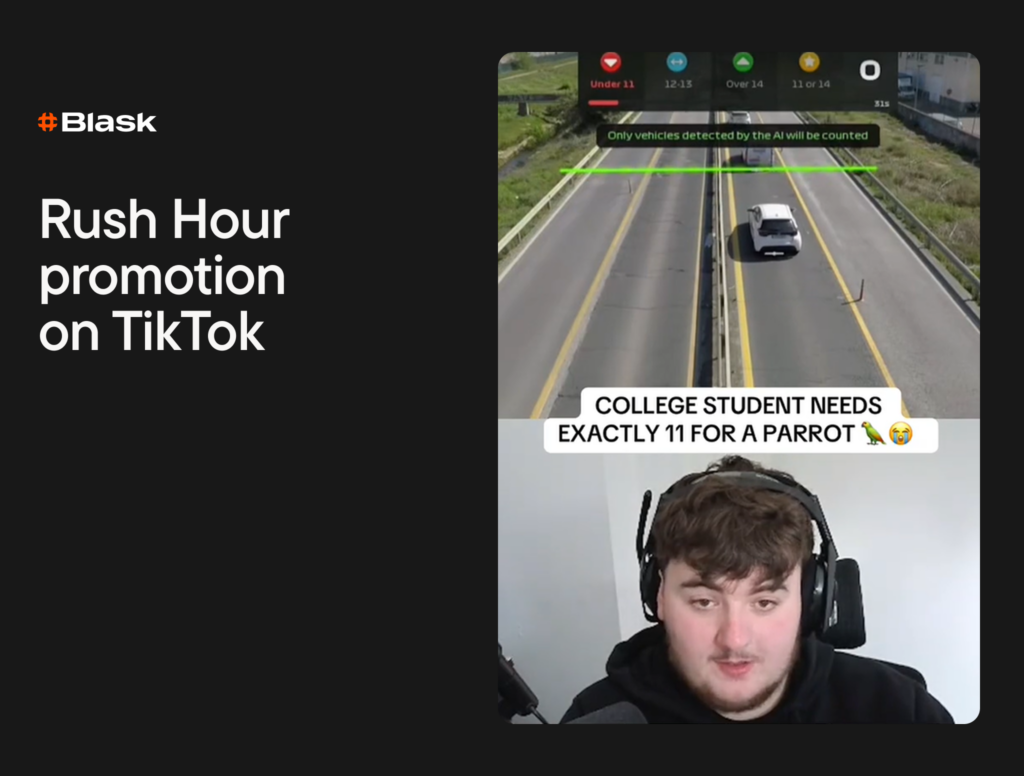
iGaming affiliates and casino streamers posted lots of short videos on TikTok with Rush Hour gameplay.
How many casinos added CCTV games
Since early 2026, casino brands in 20 countries have added at least one 155.io title. This iGaming supplier is tracked across both tier-1 countries (US, UK, Sweden) and emerging markets (South Africa, India).
The geographic spread is broad but uneven. The strongest concentration is in regulated European markets (GB, FR, SE, NL, DK) and jurisdictions with a large population (IN, BR, ZA).
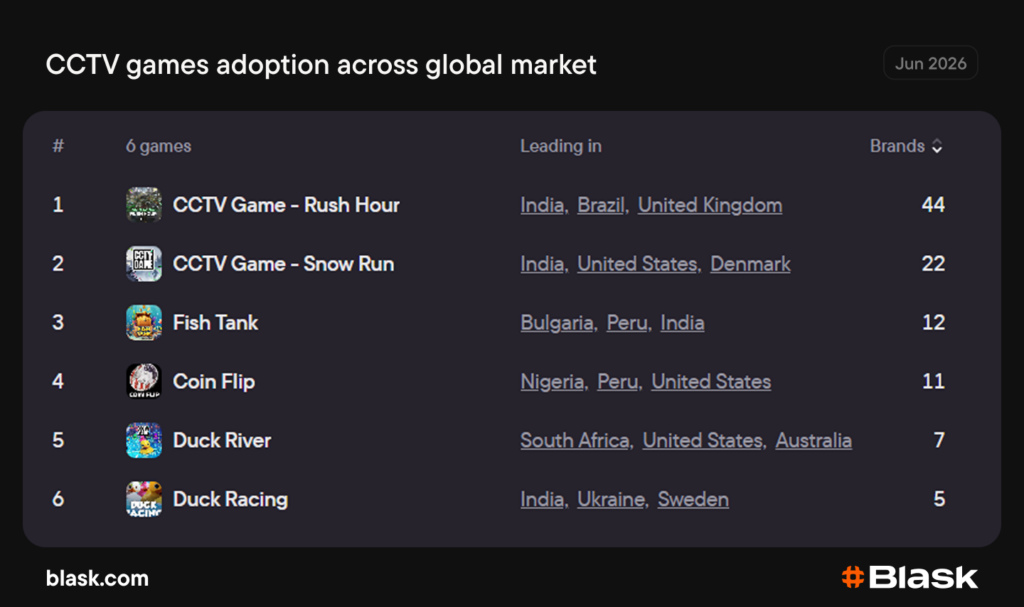
Rush Hour remains the game with the broadest casino distribution. Other titles are less popular among users.
When looking beyond Rush Hour to the full six-title portfolio, the picture becomes more varied. India is the only market carrying all six titles simultaneously. Sweden, Bulgaria, Ukraine, Peru, and the Netherlands each carry five titles. Ghana and Nigeria show a specific pattern: strong presence for Coin Flip and Fish Tank alongside the CCTV titles, suggesting these markets may be responding more to the “live” mechanic than to the CCTV concept specifically.
GVR Dynamics: how visible CCTV cames are
The GVR data for Rush Hour reveals a complex picture — one that differs substantially between markets.
United Kingdom: continued growth in distribution
Rush Hour entered UK lobbies in approximately February–March 2026. The GVR trajectory shows a single notable surge followed by a stable position, with brand count continuing to climb:
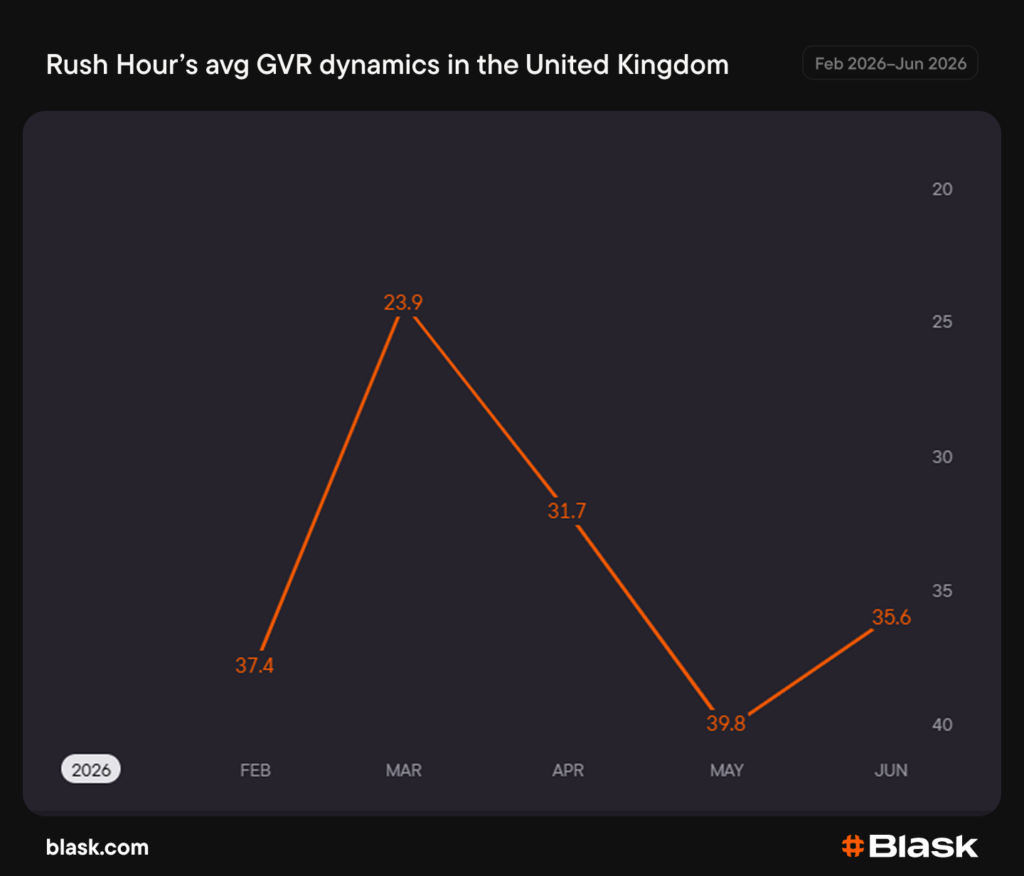
March 2026 was the standout month. With a GVR of 23.9, Rush Hour was positioned in the top 22 slots of UK casino lobbies — prime real estate for a game from an unknown provider. This likely reflects an intentional editorial decision by one or two operators to feature the game prominently, possibly tied to a content launch or a promotional slot.
By May–June, as more brands added the game, the average GVR normalised to ~34. The broader distribution slightly diluted the headline number.
India: peak adoption, cooling retention
India has been the single most active market for Rush Hour across its full lifecycle:
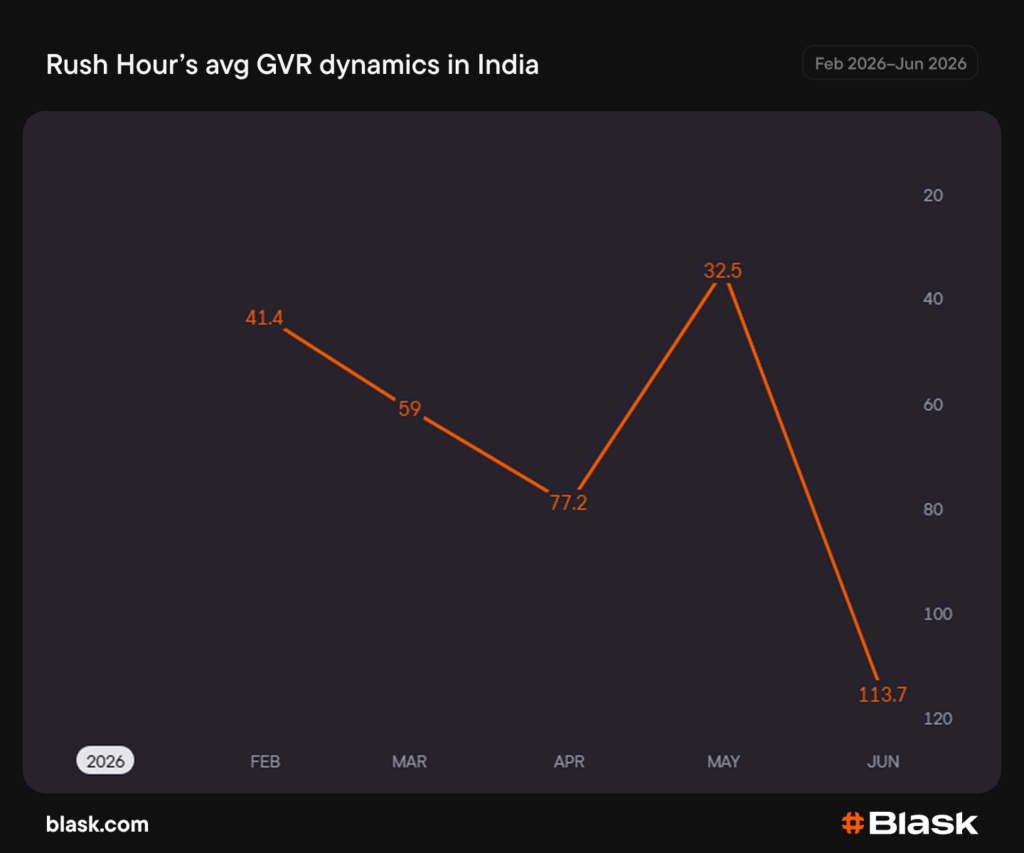
Also, it was the March peak of 10 brands that added the Rush Hour to their libraries. The title spread rapidly through Indian casinos, but as for June, this game appears only in 6 brands. This contraction from 10 to 6 shows that brands are placing Rush Hour deeper in their lobbies. At the same time, Snow Run, Fish Tank, Coin Flip, Duck Racing, and Duck River have all entered the Indian market during May–June, suggesting 155.io is expanding its portfolio presence even as Rush Hour’s individual visibility shifts.
South Africa: strong opening, deep drift
South Africa shows the most dramatic GVR deterioration in the dataset:
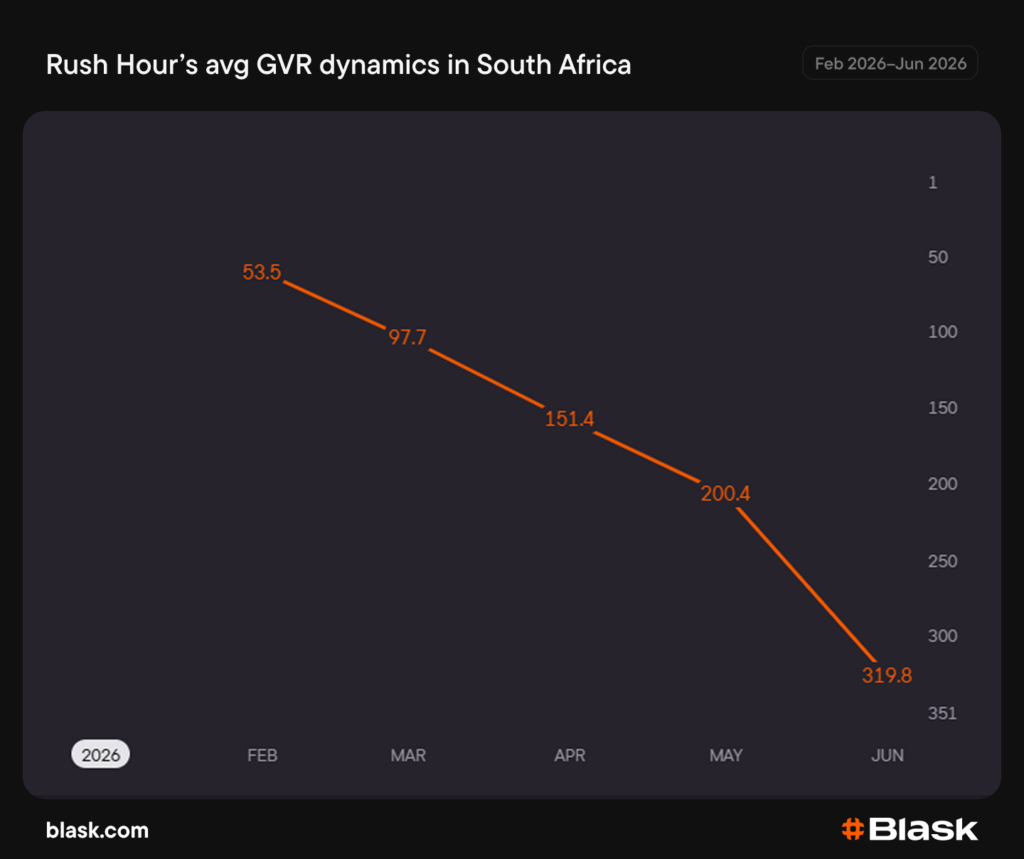
Brand count peaked at 6 in April — the market was the second-largest adopter after India. As for now, this game is sitting in the back catalogue of casino lobbies that added them but chose not to feature them.
The pattern suggests South African operators added Rush Hour during the Q1 wave of distribution, without subsequently integrating it into their lobby curation strategy. Duck River (GVR 142.7) is actually better positioned than Rush Hour in this market, pointing to a possible content-mix preference among South African gamblers.
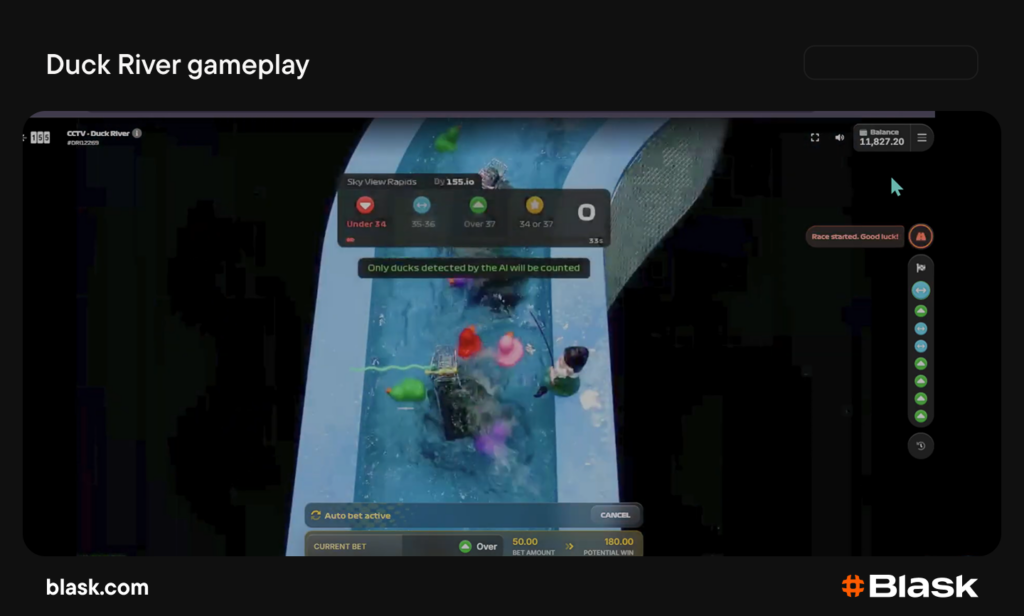
Screenshot source: CarolinaDerby.
Sweden: the strongest visibility signal
Against this backdrop, the Swedish data stands out sharply:
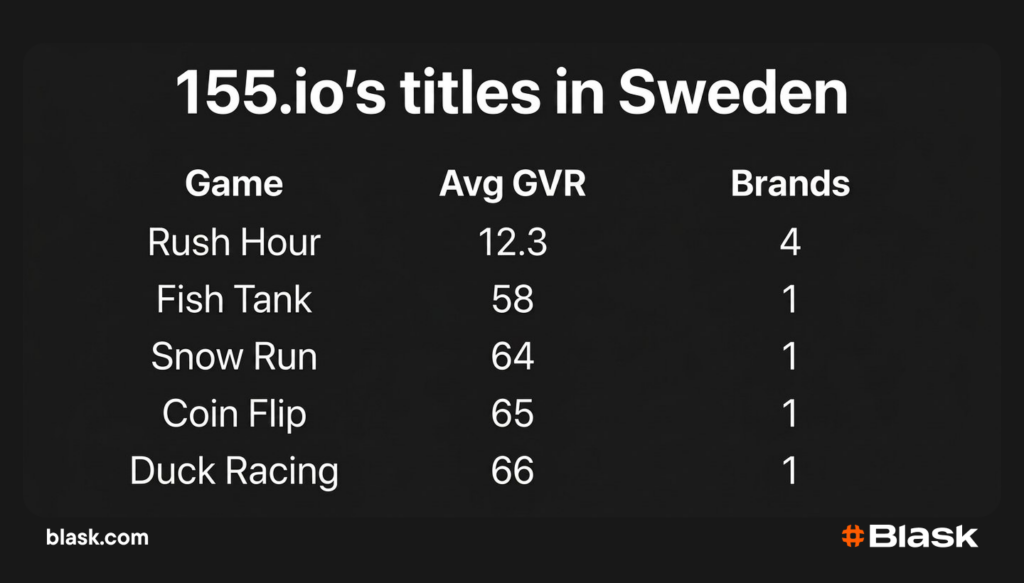
Average GVR 12.3 remains exceptional placement, though it has softened from the 7 reading recorded on June 14 as one brand dropped off.
Competitive context: Rush Hour vs global leaders
Distribution data alone does not answer whether CCTV games are winning shelf space or merely occupying it. Comparing Rush Hour against established catalogue leaders clarifies where 155.io actually stands.
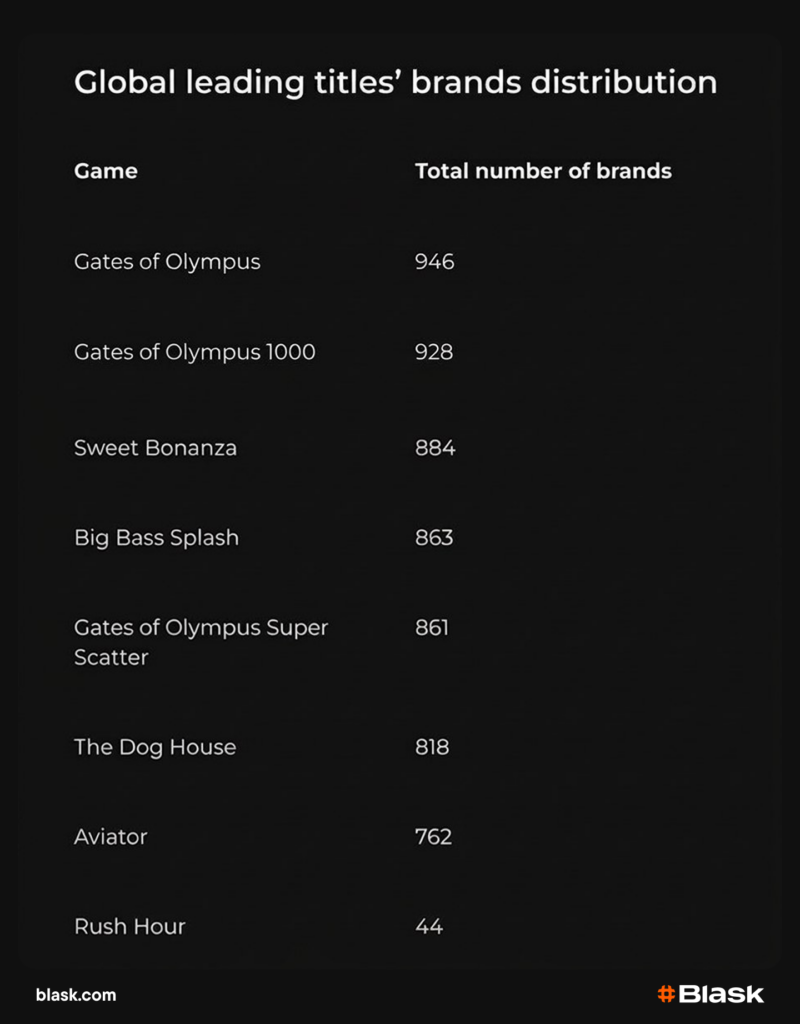
Rush Hour distribution isn’t broad when compared with leading titles. For example, a single-market leader like Aviator reaches 168 brands in Brazil alone. Rush Hour’s global footprint — roughly 50 brand-market pairs across 20 countries, with a single-market peak of 7 brands in the UK.
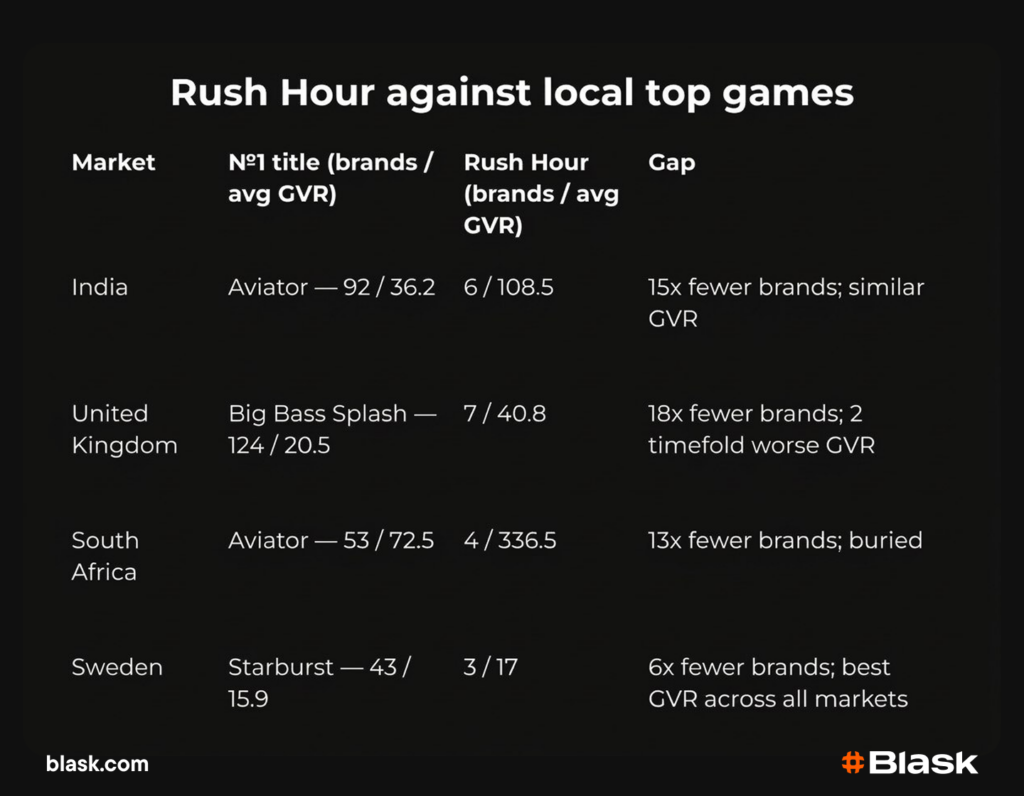
On GVR, the comparison is more nuanced. Rush Hour’s best reading (Sweden GVR 12.3) sits in the same range as globally dominant titles in their home markets — Big Bass Splash in the UK (GVR 20.5), Aviator in India (GVR 36.2), Starburst in Sweden (GVR 15.9). The difference is scale: those titles combine strong visibility with massive brand penetration. Rush Hour rarely achieves this visibility without the scale.
Comparison table: Rush Hour against local top games
There is the same situation when comparing 155.io’s top title with local leading titles. Rush Hour is not competing with local winners on distribution. It is a niche format with selective editorial backing — visible where operators choose to feature it, absent from the mainstream lobby hierarchy.
What the data tells us
Rush Hour loses to leading titles not by casino distribution, but also by lobby positions. As GVR dynamics shows, there is no premise to 155.io’s title growth. Despite active promotion by casino streamers and iGaming affiliates, this title is still niche.