
- Updated:
- Published:
The International is losing its influence

For years, The International (TI) was the cornerstone of esports, not only as the world’s richest tournament, but also as a magnet for online betting. Each edition triggered a spike in wagers, with operators reporting record handle and engagement across their iGaming verticals.
In 2025, however, the picture is shifting.
From record-breaking to shrinking stakes
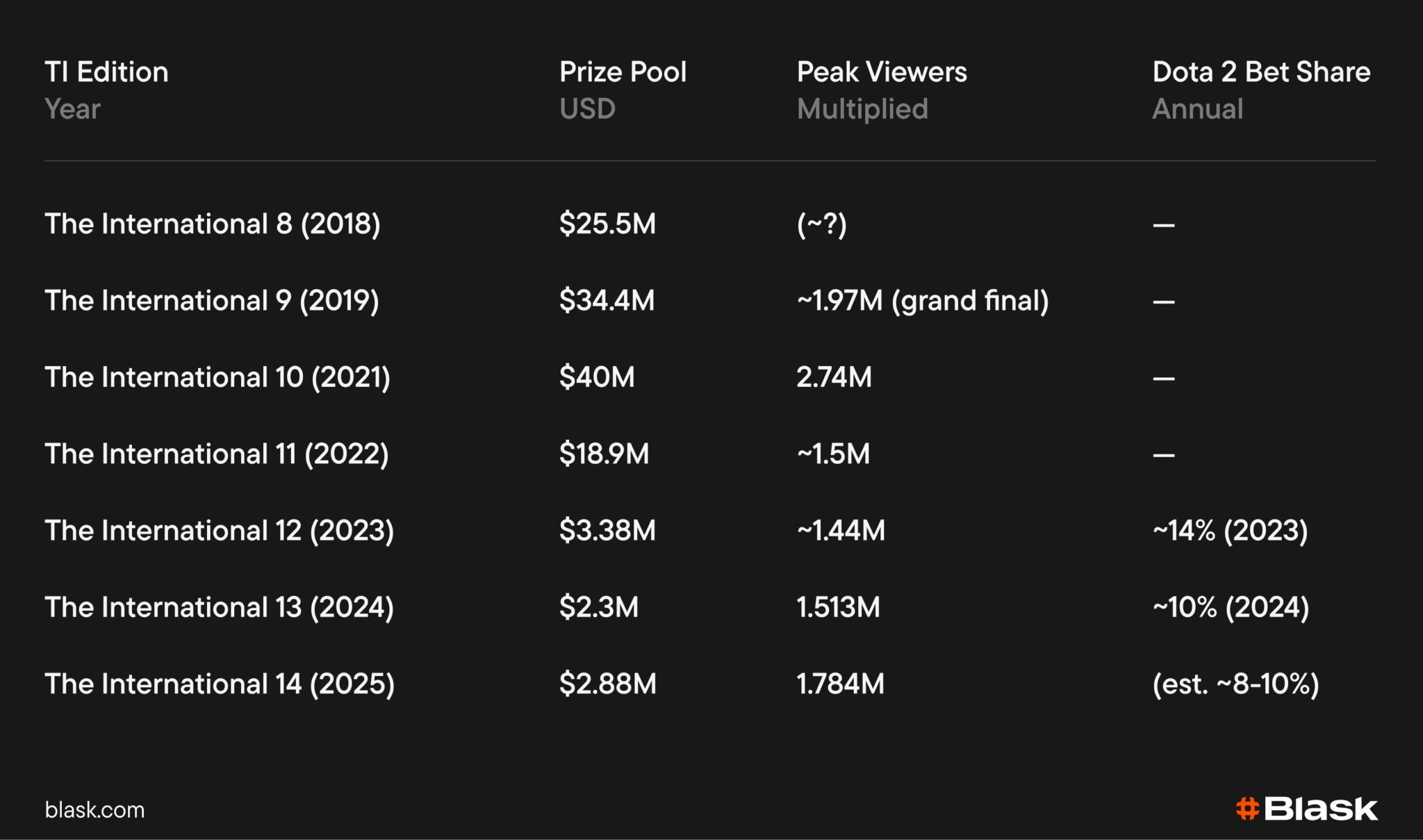
In 2021, TI’s prize pool reached $40 million, the largest in esports history. That year, the tournament wasn’t just a spectacle; it was a driver of global betting activity. Traditional sportsbooks and esports-first platforms alike saw TI wagers rival those placed on Counter-Strike and League of Legends.
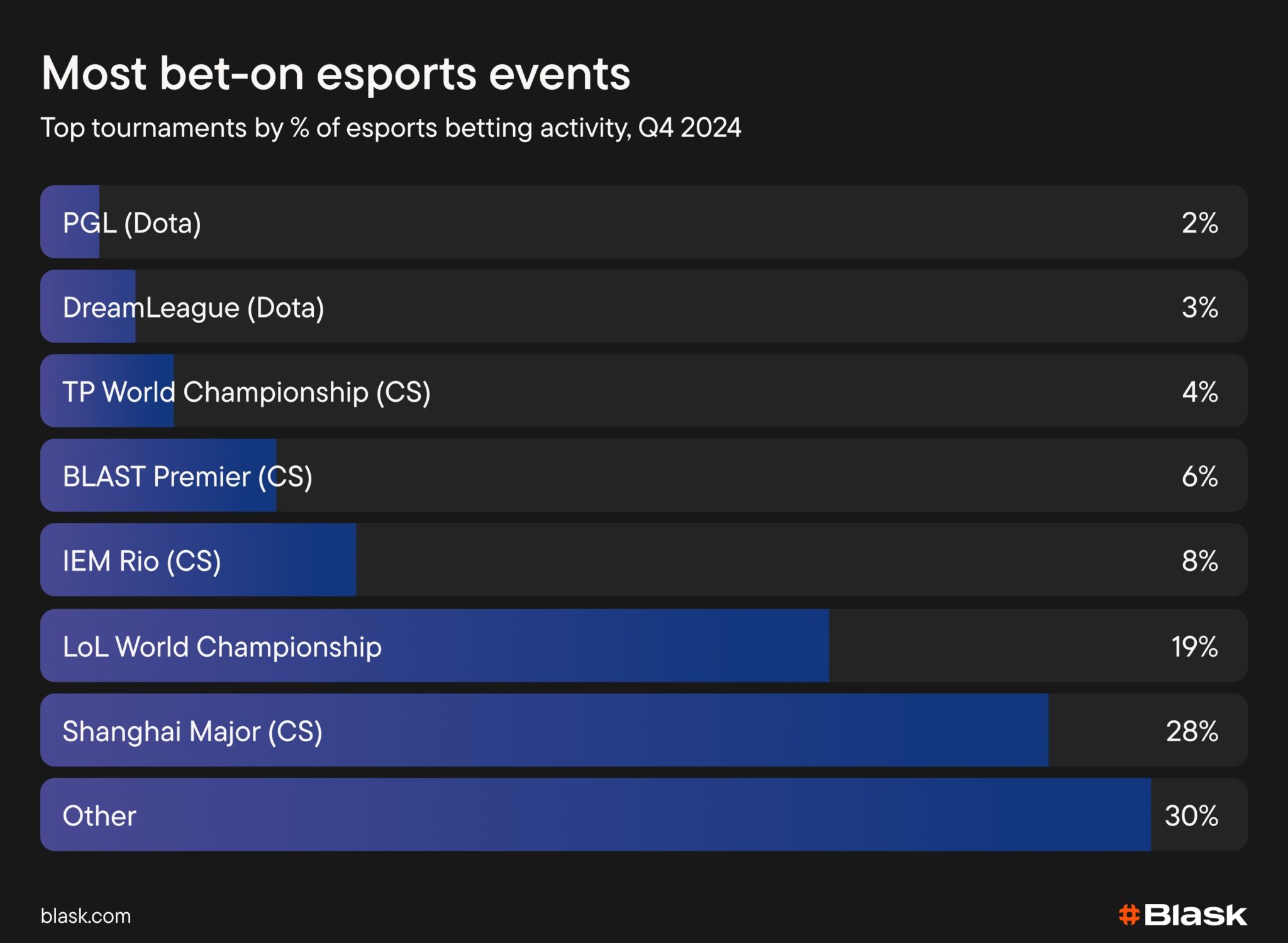
But with Valve’s changes to funding, the prize pools collapsed. TI2023 and TI2024 both stayed under $4 million, while TI2025 rebounded only slightly to $2.88 million. Viewership remains strong (1.78M peak this year, third-best in TI history), but betting metrics tell another story: Dota 2’s share of global esports bets fell from ~14% in 2023 to ~10% in 2024, with The International accounting for just ~3% of total esports betting in Q4 last year.
Online betting shifts elsewhere
While TI still dominates Dota wagering, it no longer shapes the iGaming market as it once did. Online sportsbooks have seen bettors flock instead to Counter-Strike Majors, League of Legends Worlds, and increasingly Valorant. These events offer year-round engagement, larger bettor bases, and steadier turnover.
This shift means that operators no longer view TI as the seasonal “betting anchor” it used to be. Instead, it’s just one of many spikes in a diversified iGaming landscape.
Why the influence faded
Several drivers explain this decline:
Shrinking prize pools: Without the prestige of record-breaking pots, TI lost its aura as the esports event.
Competitive calendar: Dota 2’s thinner tournament schedule limits year-round betting interest compared to LoL or CS2.
iGaming market expansion: As regulated iGaming markets grow, new bettors are opting for games with broader appeal.
Opportunities for sportsbooks and iGaming companies
While The International’s relative influence has declined, it still offers valuable openings for operators:
Deep market specialization: Dota 2 bettors are highly engaged and knowledgeable. Offering niche markets (first Roshan, kill totals, in-play map bets) can capture this audience.
Cross-sell potential: TI continues to attract a loyal community. Sportsbooks can use promotions tied to TI to onboard new users, then cross-sell into more consistent verticals like CS2, LoL, or casino products.
Localized engagement: TI maintains strong regional followings in Eastern Europe, Southeast Asia, and South America. Tailored campaigns in these regions can generate outsized returns.
Event-driven acquisition: Even if TI’s share is smaller, it still provides a seasonal spike perfect for player acquisition campaigns timed to maximize visibility.
🚀 Discover: 30 Ways Blask Games empowers iGaming professionals
Still relevant, but no longer unrivaled
Make no mistake: TI2025 still delivered. Dedicated esports betting platforms offered deep markets, from map outcomes to in-play props, and loyal Dota fans drove meaningful turnover. But in the broader iGaming picture, TI has lost its once-unrivaled pull.
For operators and analysts, the conclusion is clear: online betting has matured, esports iGaming has diversified, and The International is no longer the gravitational center it once was. The opportunity now lies in specialization, cross-selling, and smart regional strategies, not in relying on TI alone.