
- Updated:
- Published:
West Virginia iGaming market cracked under offshore pressure

Blask data shows that demand for unlicensed brands in the state exceeded demand for onshore operators in April 2026.
West Virginia is the first regulated multi-operator online casino state where, according to Blask data, offshore demand overtook onshore user interest. The only other state with a regulated online casino vertical where offshore brands already lead is Rhode Island, but it operates under a monopoly model.
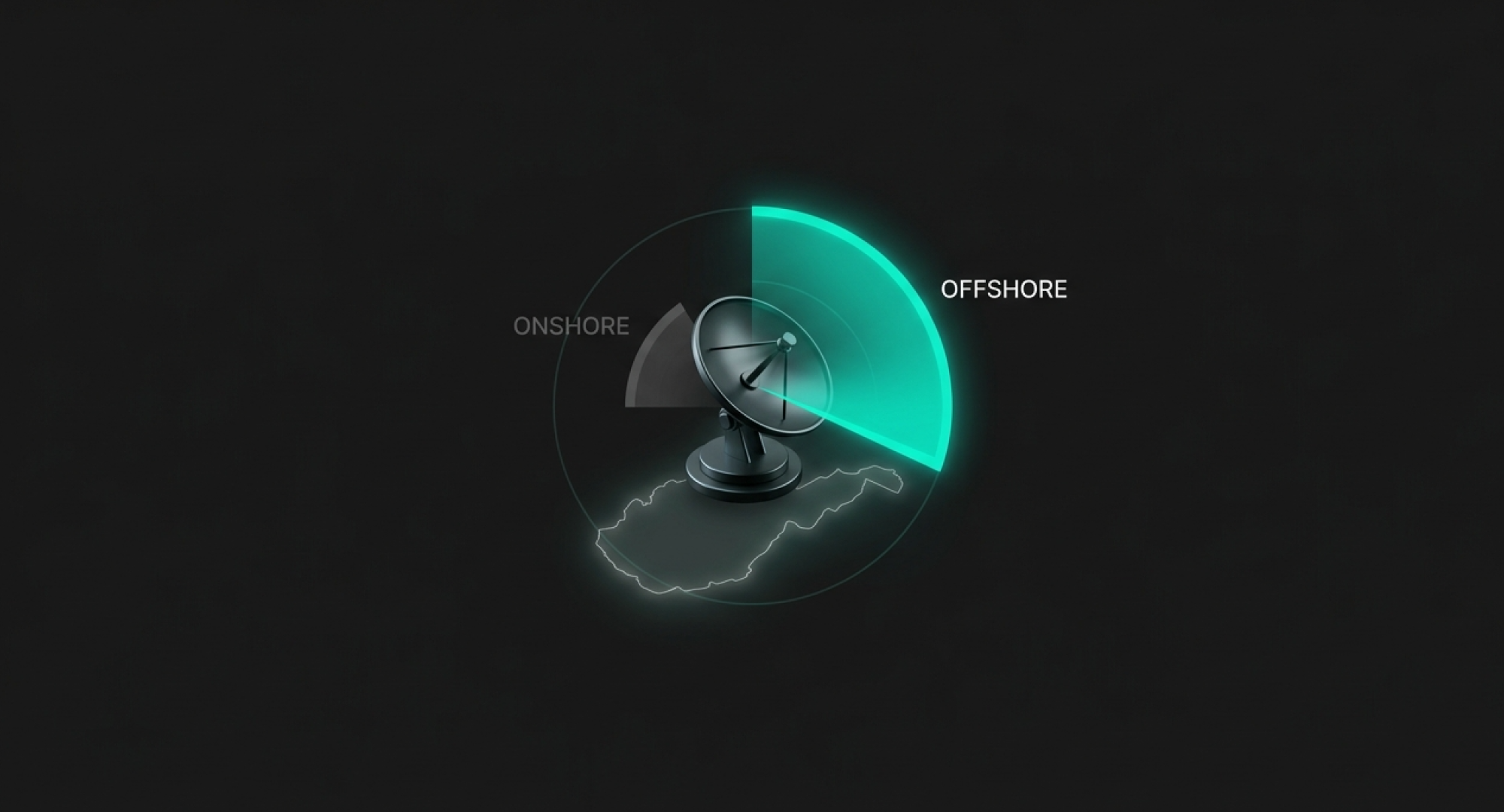
Offshore share crossed 50% for the first time
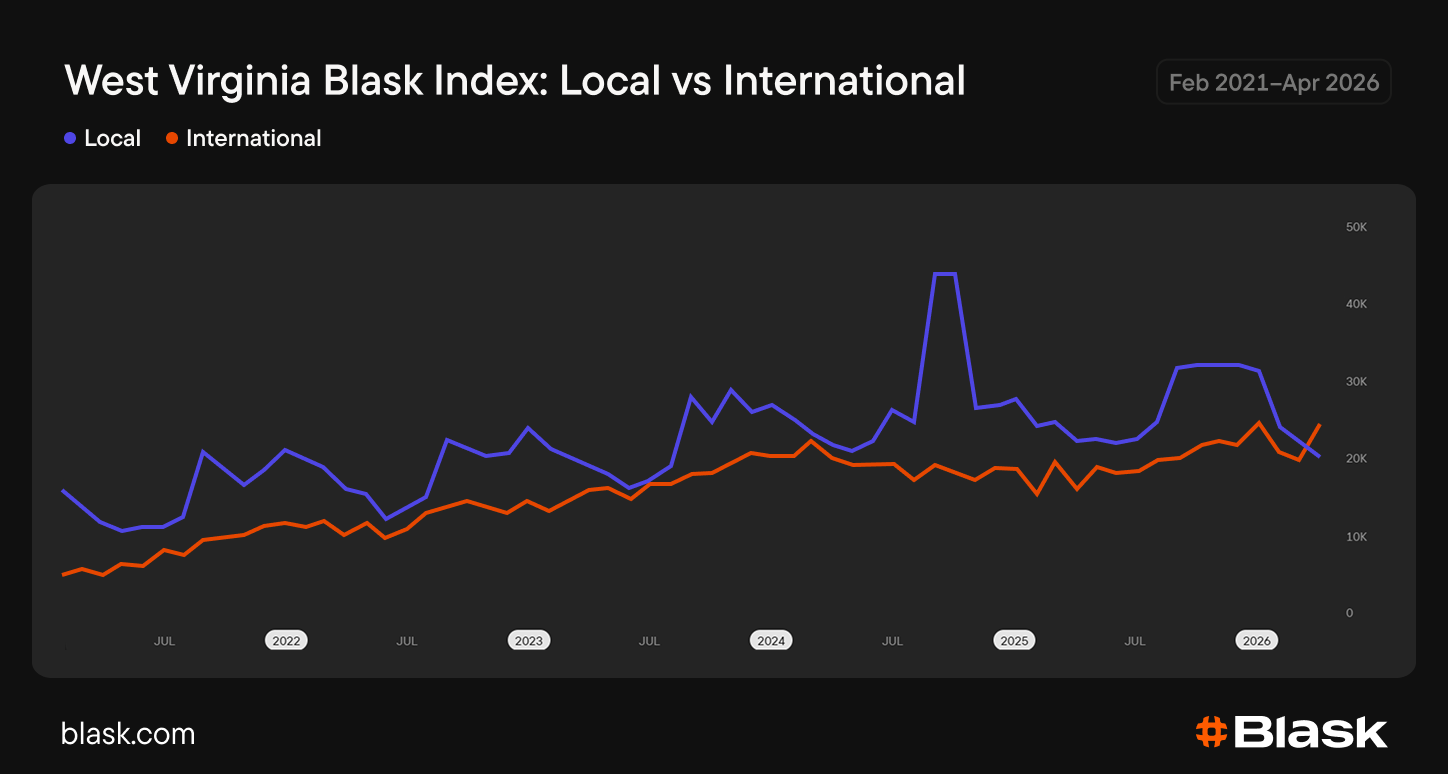
According to Blask data, the demand for offshore iGaming brands (measured by Blask Index) in April 2026 rose 23.5% compared to March 2026. At the same time demand for onshore operators declined by 9.2%. As a result, the offshore share of the state’s Blask Index rose from 46.3% in March 2026 to 54.6% in April.
Blask data for West Virginia is available from February 2021 and this is the first time onshore brands have lost the market to their offshore rivals in terms of demand metric. The previous highest share of the offshore segment in West Virginia was 49.4% in July 2023.
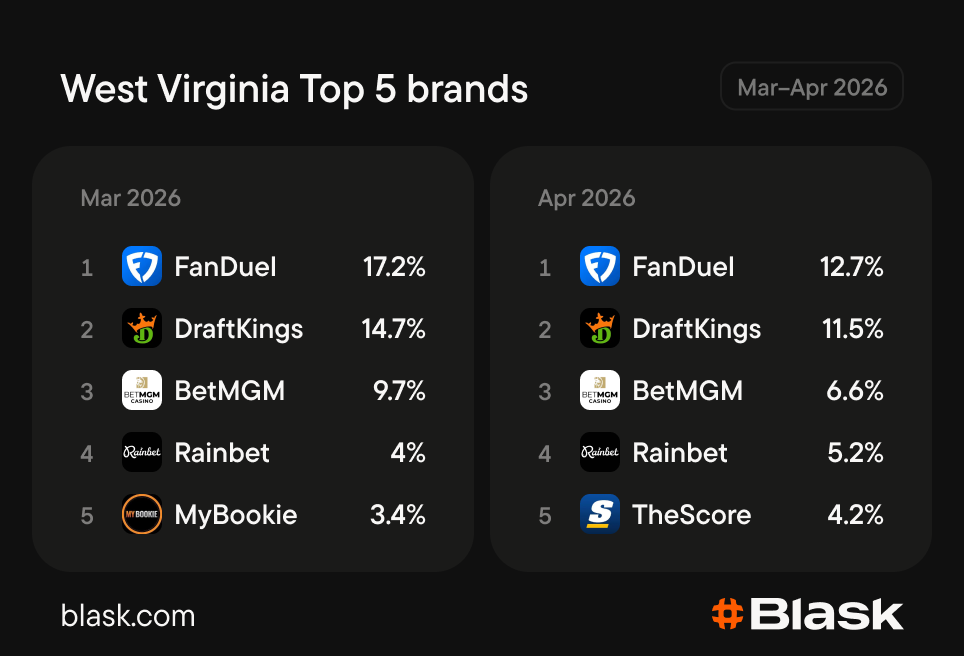
The three market leaders are locally licensed brands — FanDuel, DraftKings and BetMGM. They all lost their share in the state’s Blask Index in April. Their combined share fell from 41.6% to 30.8%.
A limited tethered market
West Virginia was the fourth state to legalize the online casino vertical after Delaware, New Jersey and Pennsylvania. The bill passed in March 2019 and the market went live 16 months later in July 2020. The state adopted a strict skin model, allowing only its five land-based casinos to host up to three online brands each.
A similar restrictive model is used in Michigan and Connecticut, unlike New Jersey and Pennsylvania, which operate an open market, and Delaware and Rhode Island, which run monopolies.
Channelization across regulated states
As of April 2026, Pennsylvania has the highest channelization rate among all seven states where online casino is regulated and already live. The share of onshore brands in Pennsylvania’s iGaming demand sits at 69.1%.
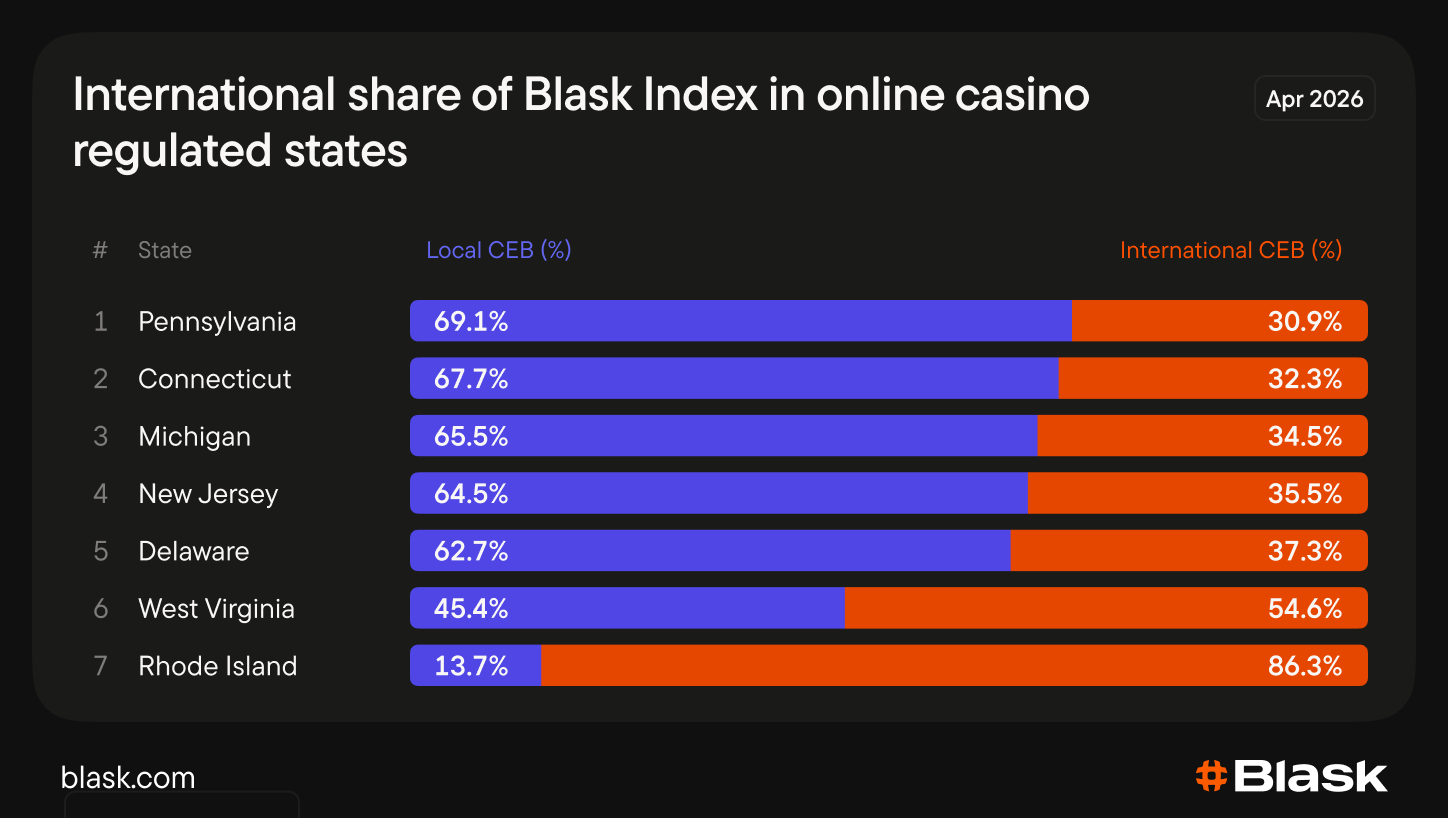
Outside of West Virginia, the only state with a legal online casino vertical where onshore demand is lower than offshore is Rhode Island. It is a state monopoly — but one where sports betting and casino run through different operators. The state is now breaking up its sports betting monopoly, with DraftKings, FanDuel and BetMGM among the license bidders and new operators targeted for November 2026.
Bottom line
West Virginia has become the only regulated multi-operator online casino state where offshore demand exceeds onshore. Rhode Island does not hold an onshore majority either — but its problems are structural and long-standing. West Virginia’s break happened in a single month.