
Stake launched stake.mx on 5 May 2026 under an agent structure with local intermediary Uno Capali. Blask data shows the brand already holds 1.81% BAP in Mexico, built entirely as an offshore operator.
Stake went live in Mexico on 5 May through Uno Capali, a local license holder. The structure gives Stake a legal route into the market without holding the permit directly. The operator framed the launch around Mexico’s market growth, describing the country as one of LatAm’s fastest-growing regulated markets.
The launch makes Mexico Stake’s fourth LatAm market, after Colombia in 2023, Peru in 2024 and Brazil, where the brand holds a local license. The timing is deliberate: Mexico co-hosts the 2026 FIFA World Cup alongside the US and Canada, with 13 matches on Mexican soil.
Stake’s position in Mexico
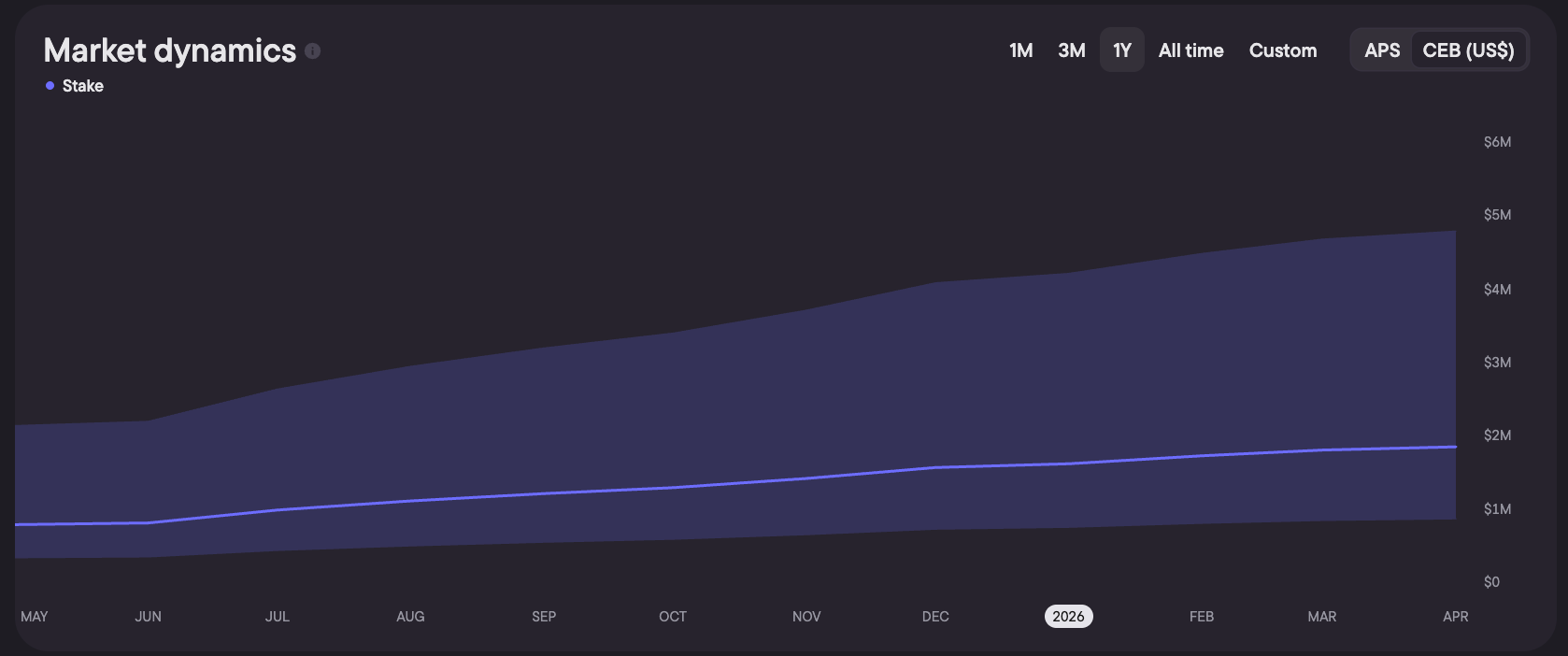
Stake’s CEB shows the brand already had a measurable base in Mexico before entering the licensed market. Over the last 12 months, the brand’s monthly CEB rose from $899K in May 2025 to $1.96M in April 2026, a 2.2x increase before the formal stake.mx launch. The launch through Uno Capali gives Stake its first attempt to convert that pre-launch revenue potential inside the regulated perimeter.
The market Stake is entering
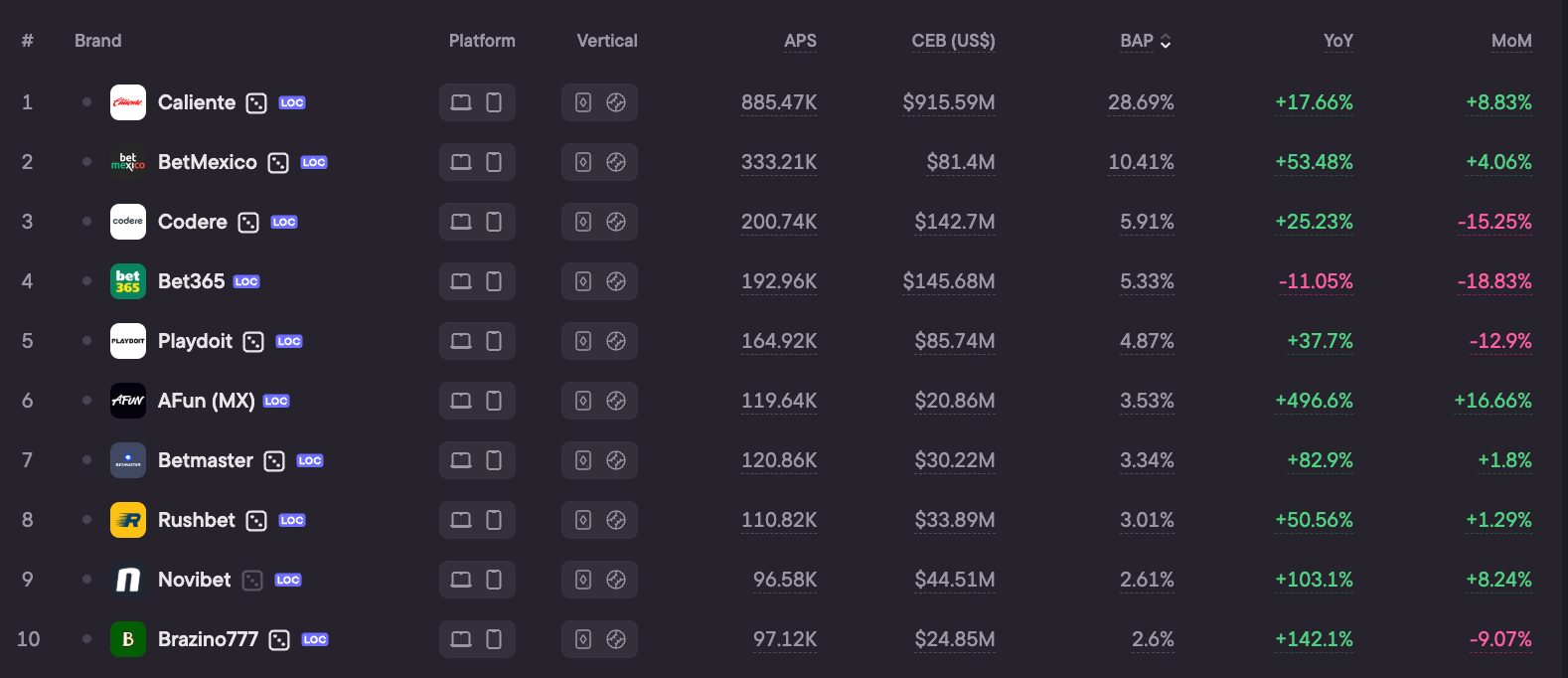
Mexico’s iGaming market gives Stake scale, but not an easy route to share. As Blask previously reported, measured demand more than tripled between 2022 and 2025, before the January 2026 tax increase reversed the trend. The market’s 12-month CEB to April 2026 stands at $2.01B, with 146 active brands competing for demand.
For Stake, the practical point is simpler: the brand is entering through a partnership with Uno Capali, a company already authorised by Mexico’s regulator, bringing stake.mx into the regulated market.
A World Cup window, a regulatory question
The World Cup gives Stake a clear demand window. Mexico hosts 13 matches from 11 June, and Stake has tied the launch to that tournament cycle. The brand enters with 1.81% BAP built before a regulated product push, giving it more pre-launch recognition than it had in Brazil. The question after the tournament is whether that visibility becomes a durable licensed position, or whether Mexico remains a lighter intermediary-led entry rather than a Denmark-style local buildout.