

Mexico’s iGaming market grew for four years without a dedicated regulatory framework, until a tax decision showed what happens when policy doesn’t follow the data.
Mexico’s Federal Law on Games and Raffles was published on December 31, 1947 — before online gambling, digital payments, or cross-border operator activity existed. The online segment, now the fastest-growing part of Mexico’s gambling market, inherited a legal framework built for a different industry.
AIEJA, the trade association for Mexico’s licensed operators and suppliers, has described the market as “insufficiently regulated” online. Working groups on a replacement law ran through early 2025 and have since stalled.
A tax hike came instead.
Four years of growth, one policy move to reverse it
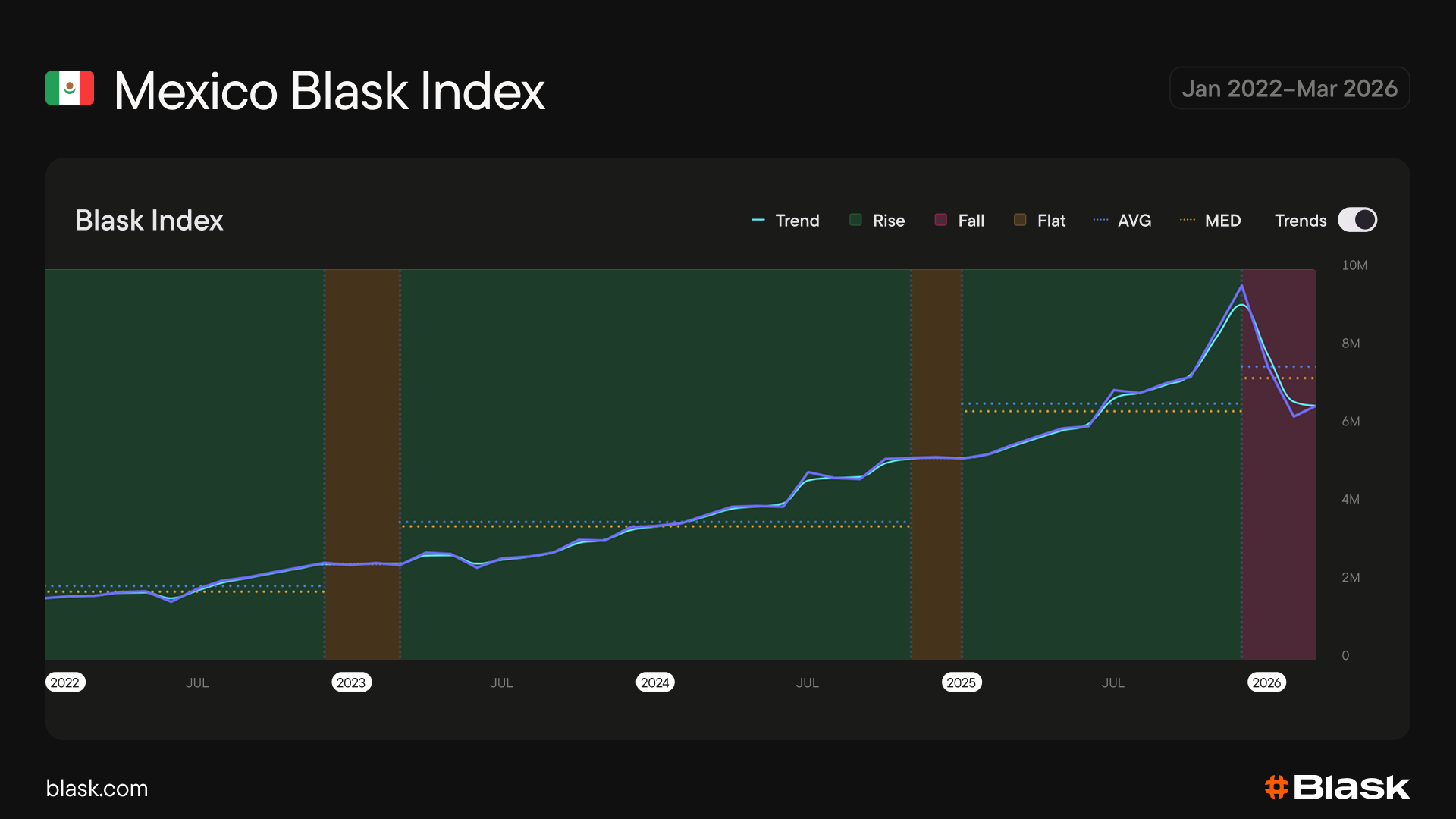
Player demand in Mexico, as measured by Blask Index, grew consistently from 2022 to 2025, with the market more than tripling over that period.
On January 1, 2026, Mexico’s fiscal reform package raised the gambling GGR tax from 30% to 50%. Within two months, demand dropped by 35% from its late-2025 peak, directly following the tax increase.
Top 5 brands and market size
Caliente holds more than a quarter of all market search demand and the largest CEB by a wide margin.
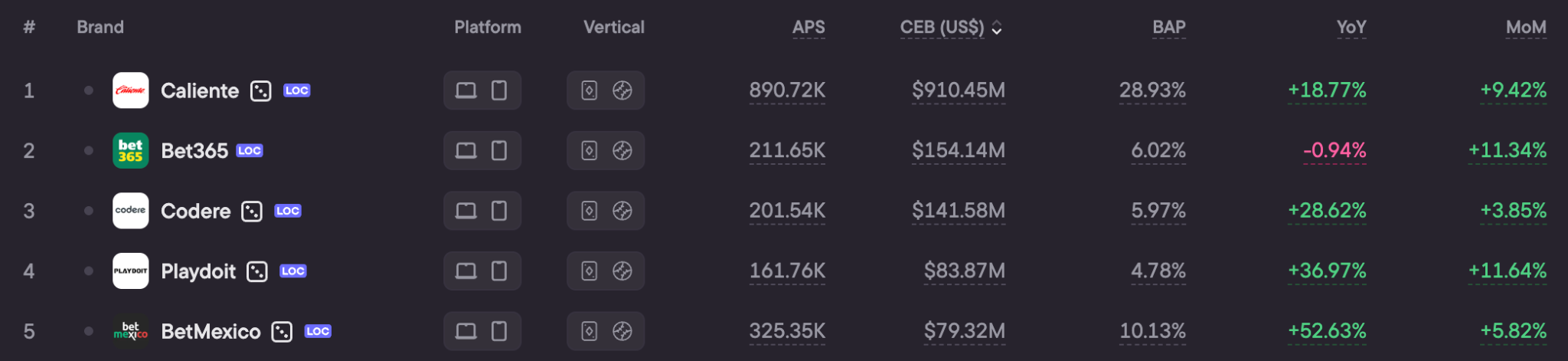
All five brands in the group hold local permits, with BetMexico the fastest-growing at +52.6% year-over-year. Bet365 is the only brand declining year-over-year, though the drop is minimal, at less than 1%.
Before January 2026, demand in Mexico grew steadily; however, following the tax increase, it dropped by 35% within two months, reflecting a rapid shift in market dynamics. Monthly CEB data points in the same direction, with overall market distribution adjusting between December 2025 and March 2026. Within the top 20, only two brands operate without local permits.
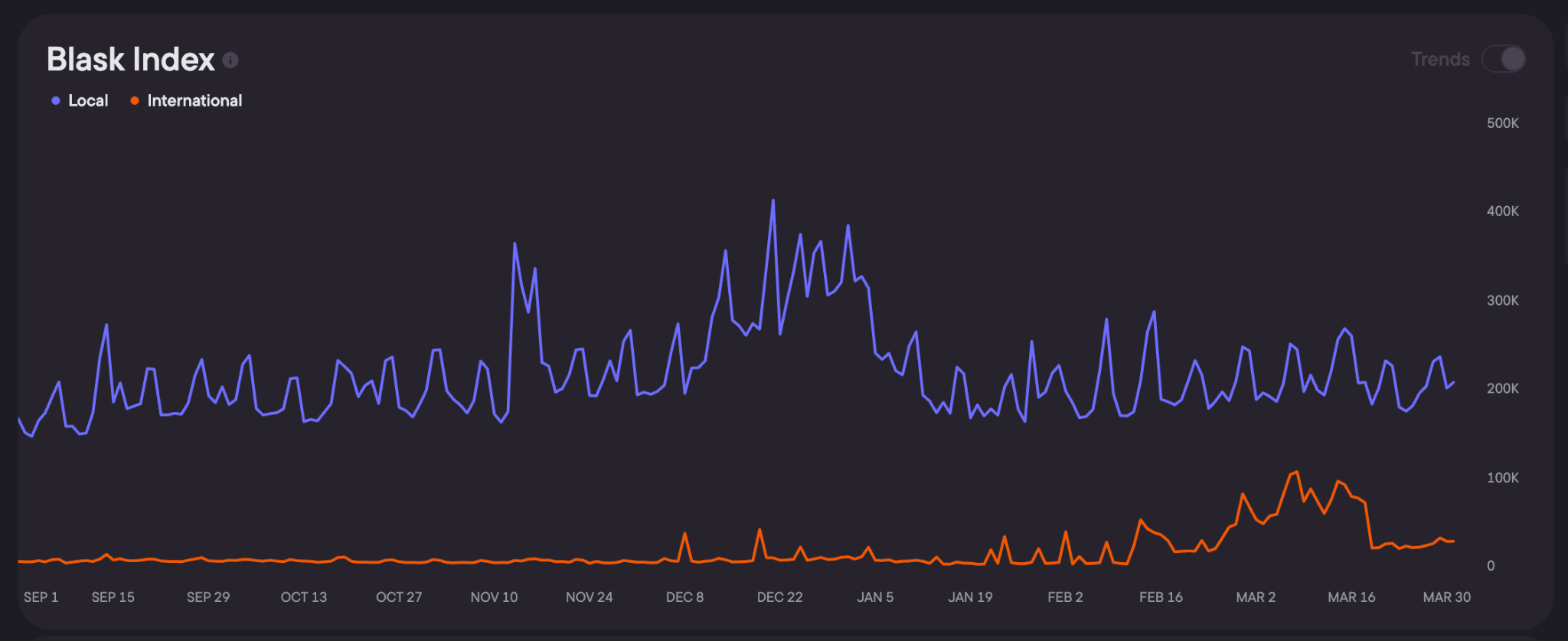
What the data says about reform
The 35% demand drop didn’t come from the absence of a regulatory framework. For four years, the market had grown without one. It came from a 20-point GGR tax increase imposed on an industry already carrying corporate income tax, state levies, and other fees, with no corresponding regulatory update.
The case for reform was clear even before recent changes. The tax increase and subsequent drop in demand highlight a key sequencing lesson: fiscal policy without a supporting regulatory framework can have immediate market impact.