

- Updated:
- Published:
AFCON’s football month failed to boost iGaming demand

Blask data demonstrates standard patterns persisted even in finalist countries.
The AFCON 2025 tournament concluded on 18 January. The competition, with Morocco as host nation, kicked off on 21 December and featured 52 matches across 19 match days. Such an intensive schedule theoretically should have influenced iGaming metrics, especially in markets where favorites competed. However, Blask information indicates the tournament had negligible effect.
Senegal, Morocco, Nigeria and Egypt, which advanced to the final weekend, were listed among primary title contenders according to bookmaker forecasts before the competition. Even in these countries, iGaming demand demonstrated only sporadic deviations from the norm.
Locked to the weekly cycle
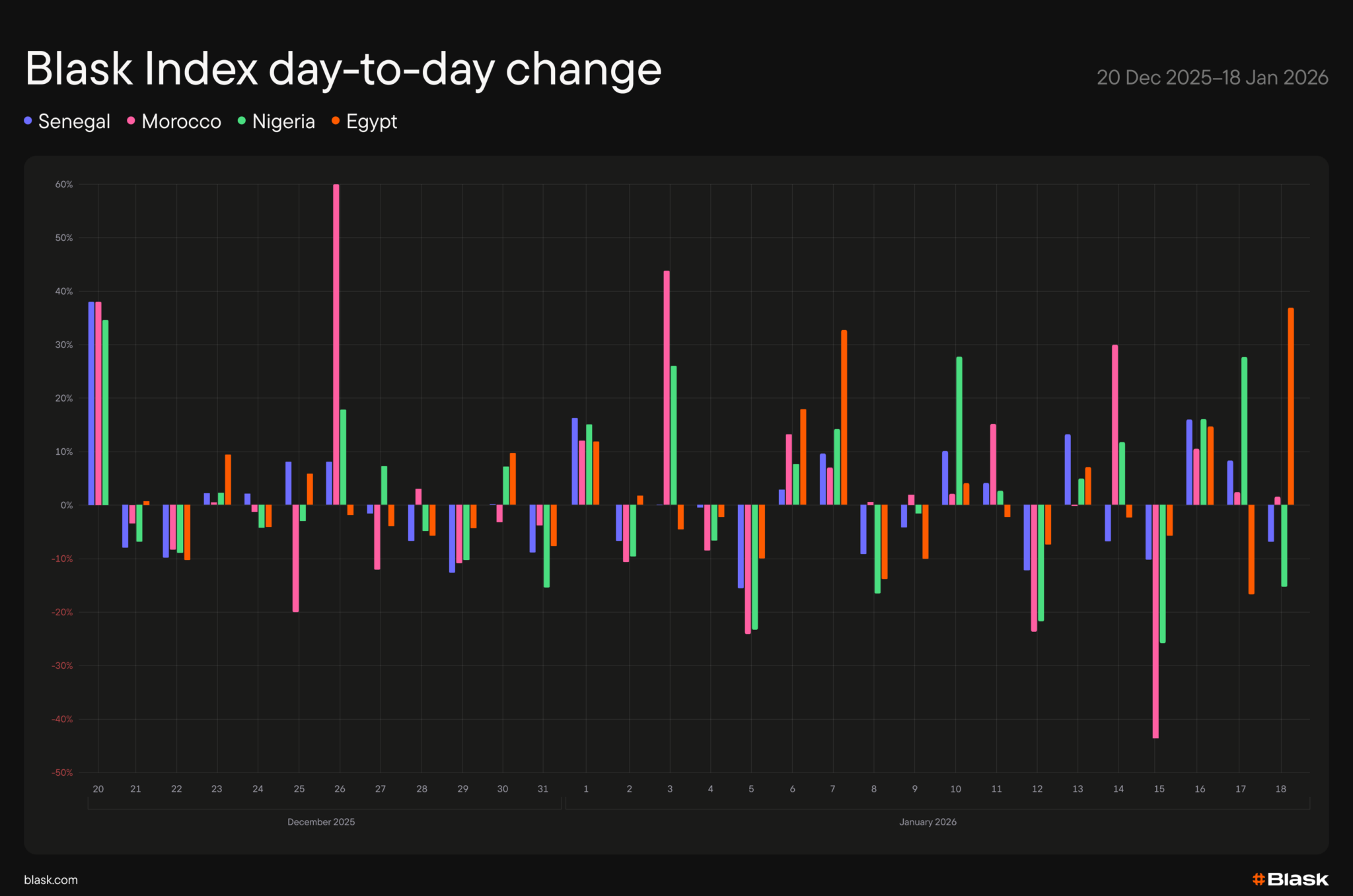
Blask data demonstrates that the tournament calendar failed to disrupt familiar calendar regularities. Surges rarely correlated with national team matchdays in respective countries.
With few exceptions, daily fluctuations in Blask Index appear similar across the majority of markets. Morocco — tournament host — secured more viewer-convenient time slots: five out of seven kickoffs landed on Sundays or Friday evenings. This may account for Morocco’s peak daily Blask Index movement on 26 December, when the group stage encounter against Mali commenced at 21:00 local time.
Casino competition
The comparatively weak iGaming demand during major football tournaments is also explained by competition among different verticals. Watching an engaging match can motivate users to make live wagers, but simultaneously diverts their focus from casino products.
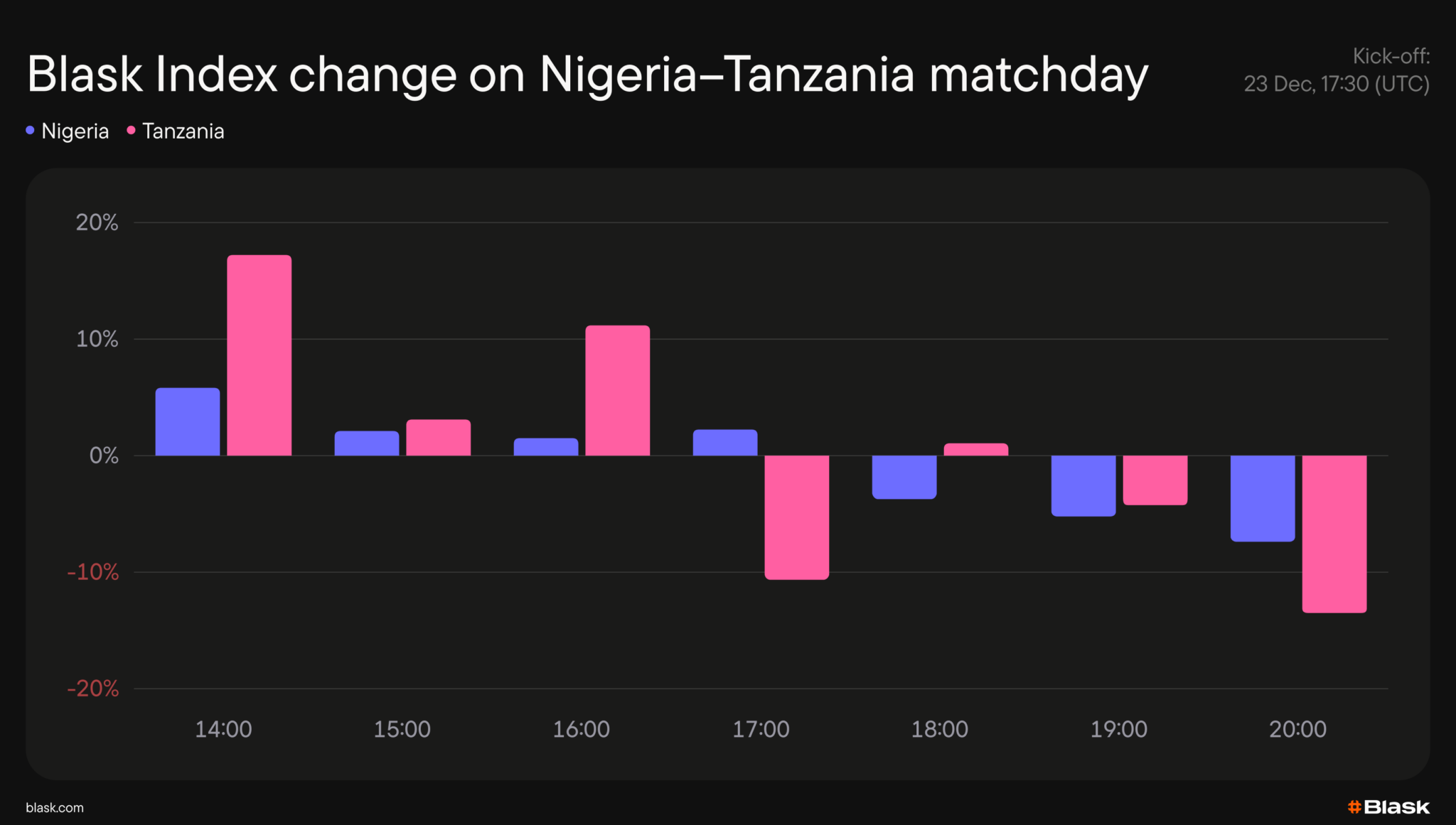
This pattern is validated by hourly Blask Index information. It clearly demonstrates that iGaming demand in a specific market frequently declined or, at minimum, failed to increase during that nation’s national team fixtures.
Due to extremely high dominance of 1-4 brands across most African markets, they compete for attention by shifting emphasis among verticals. Blask information demonstrates that AFCON did not substantially alter daily market shares of leaders.
Nigeria proved an exception, where two brands controlling over 70% of audience attention constantly exchange positions. Bet9ja held the lead in 2025. But throughout AFCON its competitor, SportyBet, claimed first place most days, including all Nigeria team match dates.
The calendar reigns supreme
AFCON represents a significant tournament, drawing substantial attention across the continent. Yet Blask’s daily information suggests this does not convert into broad iGaming elevation. The calendar continues to govern the market, while football primarily redistributes attention.