
- Updated:
- Published:
How do iGaming SEO specialists use Blask

Blask brings brand-level market intelligence into SEO planning: where to focus, when to move, and which games and providers are getting storefront attention.
Blask addresses two practical limits for iGaming SEO: brands often span multiple domains and mirrors, plus market demand shifts faster than quarterly reporting cycles. It adds a market layer on top of domain-level data, built around GEOs, seasonality, and storefront visibility.
How Blask fits into SEO workflows
Blask keeps four signals in one workflow:
- Brand visibility: Blask Index and BAP (interest trend)
- Financial context: APS and CEB (modelled benchmarks)
- Time: trend + seasonality (including short time ranges)
- Storefront reality: games and lobby tracking
💡 Blask Index
An AI-driven metric for the iGaming industry that tracks real-time market volume and brand share. Read more
💡 BAP
Brand’s Accumulated Power measures a brand’s overall strength and real-time market position. Read more
💡 APS
Acquisition Power Score measures a brand’s ability to convert market presence and user interest into new customer sign-ups. Read more
💡 CEB
Competitive Earning Baseline projects a brand’s realistic revenue potential. Read more
A simple SEO workflow in Blask
Here’s the full path from GEO selection to storefront analysis, shown on the example of Spain.
Markets
The first step is narrowing down to a manageable GEO shortlist.
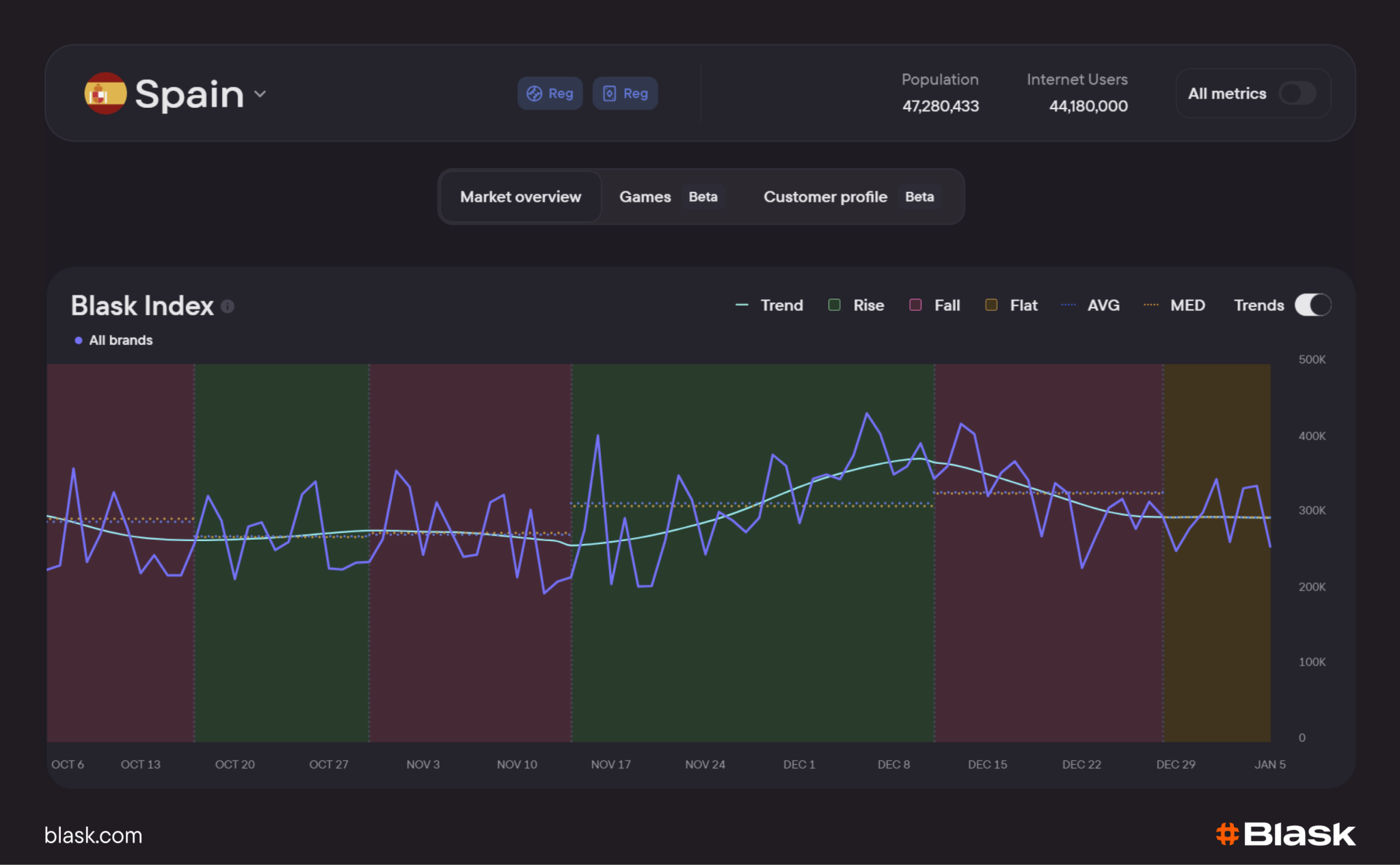
Start with Market Overview — a GEO scan that labels markets as rising / flat / falling, with regulation status, customer profile, and country demographics on the side for context.
Use case: building a GEO shortlist
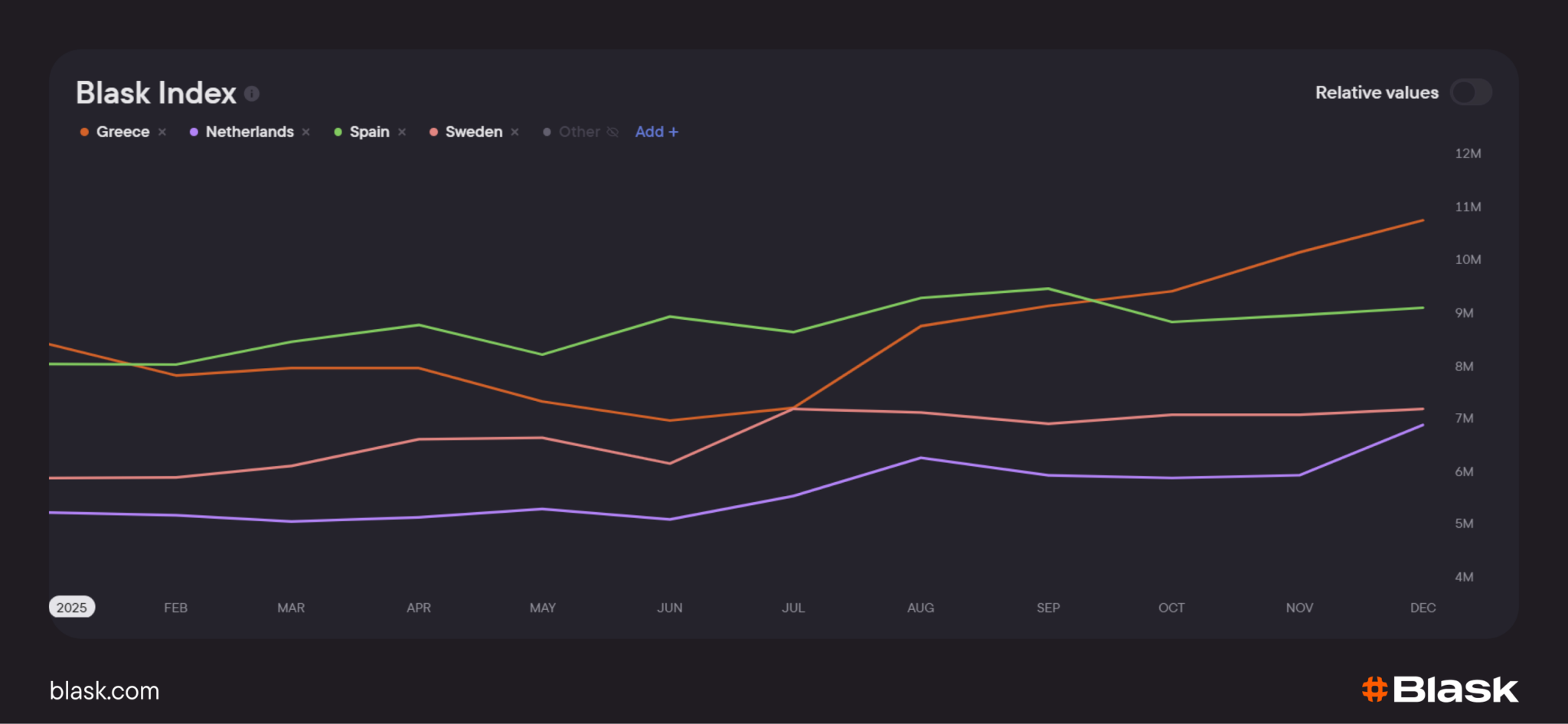
Use Blask Index as a trend line, not a snapshot. If the market looks rising over a stable window, it goes into the active shortlist. If it’s flat, it stays in maintenance. If it’s falling or noisy, it stays in monitoring until the signal becomes clearer.
Timing
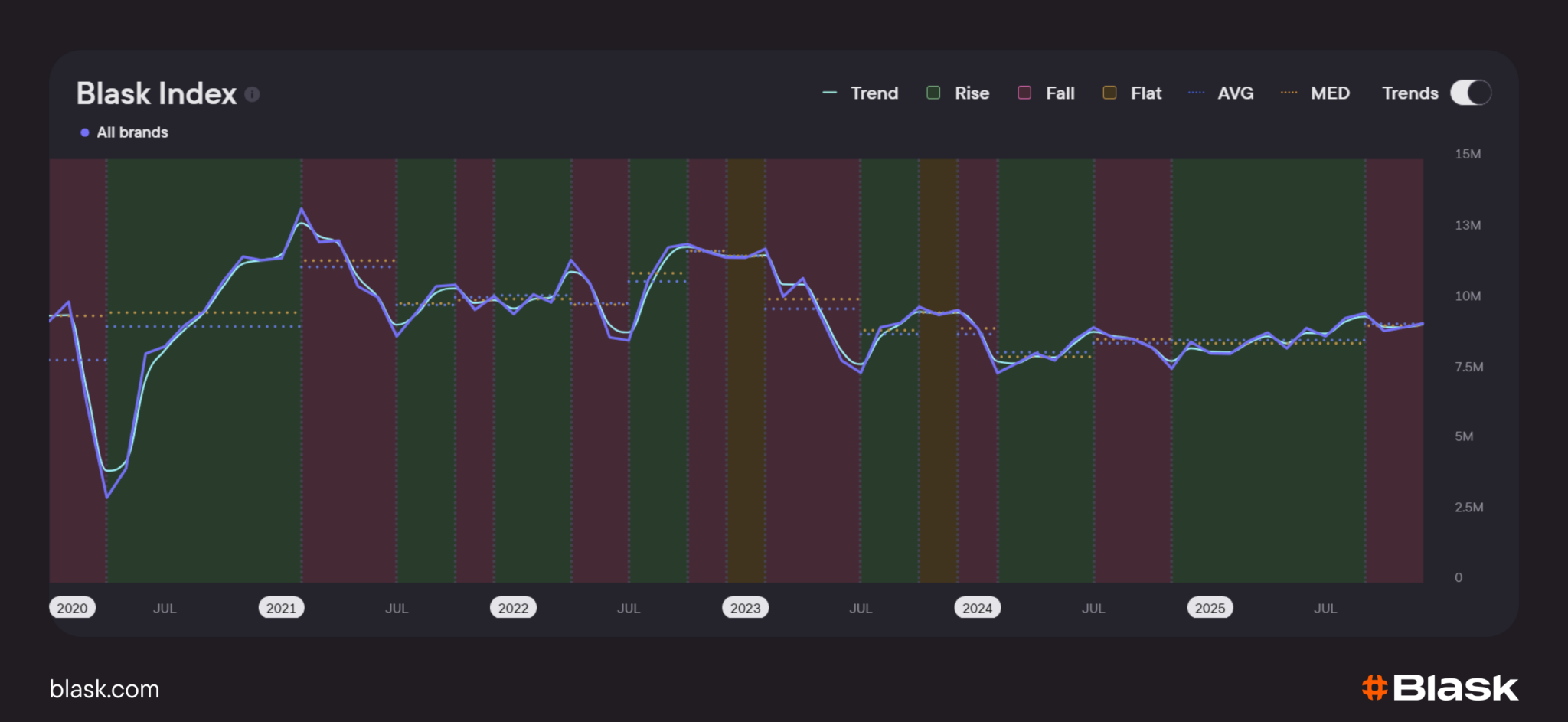
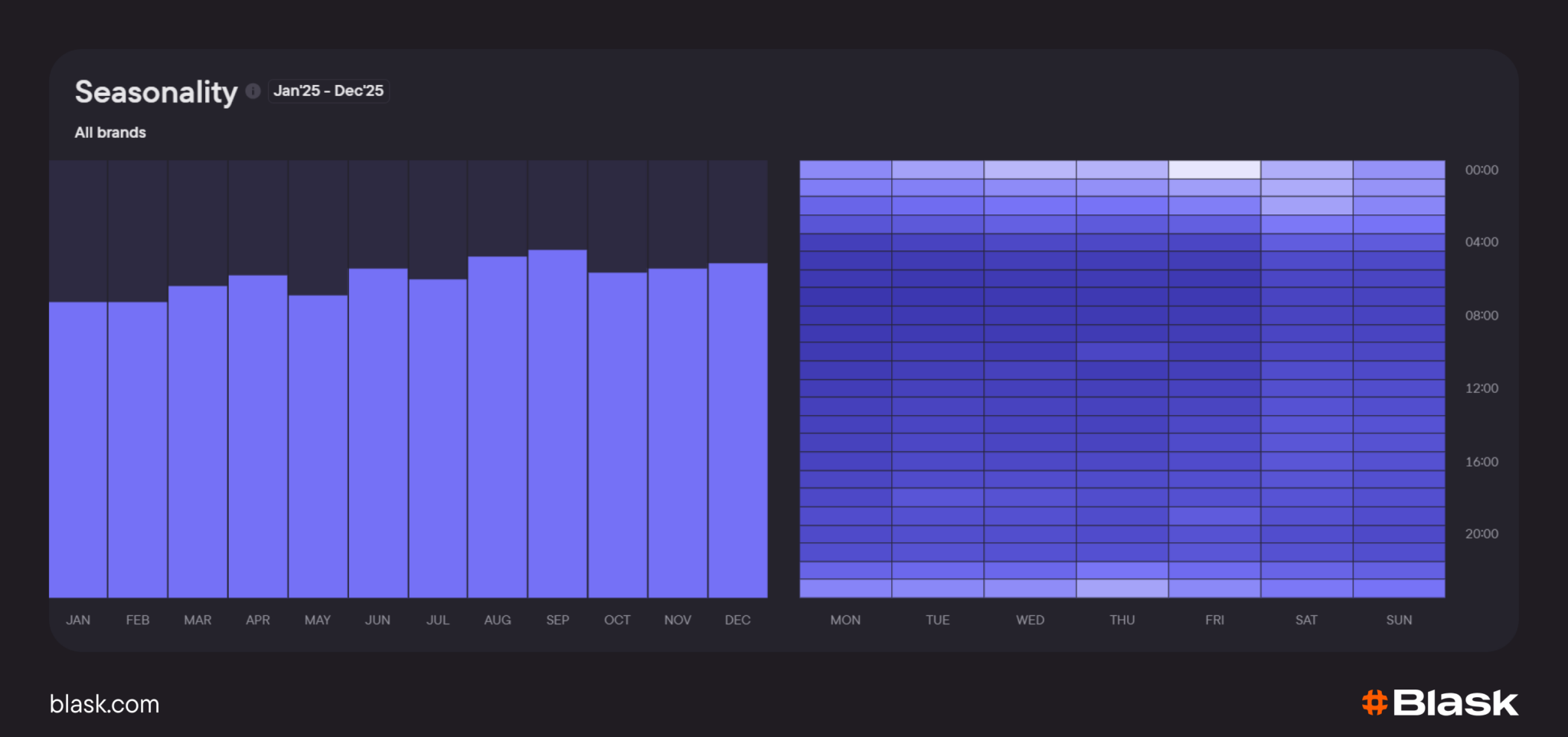
The next step is figuring out when to move. Blask shows seasonality alongside the market trend, so you can see where each GEO is in its cycle.
Use case: timing a market push
Use a longer time range to spot the market’s seasonal pattern — recurring peaks and troughs. Then compare where the market is now against that pattern. This gives a simple timing label for the GEO (build-up / peak / post-peak / low season), so it’s clear when to push localisation and content updates.
Market leaders
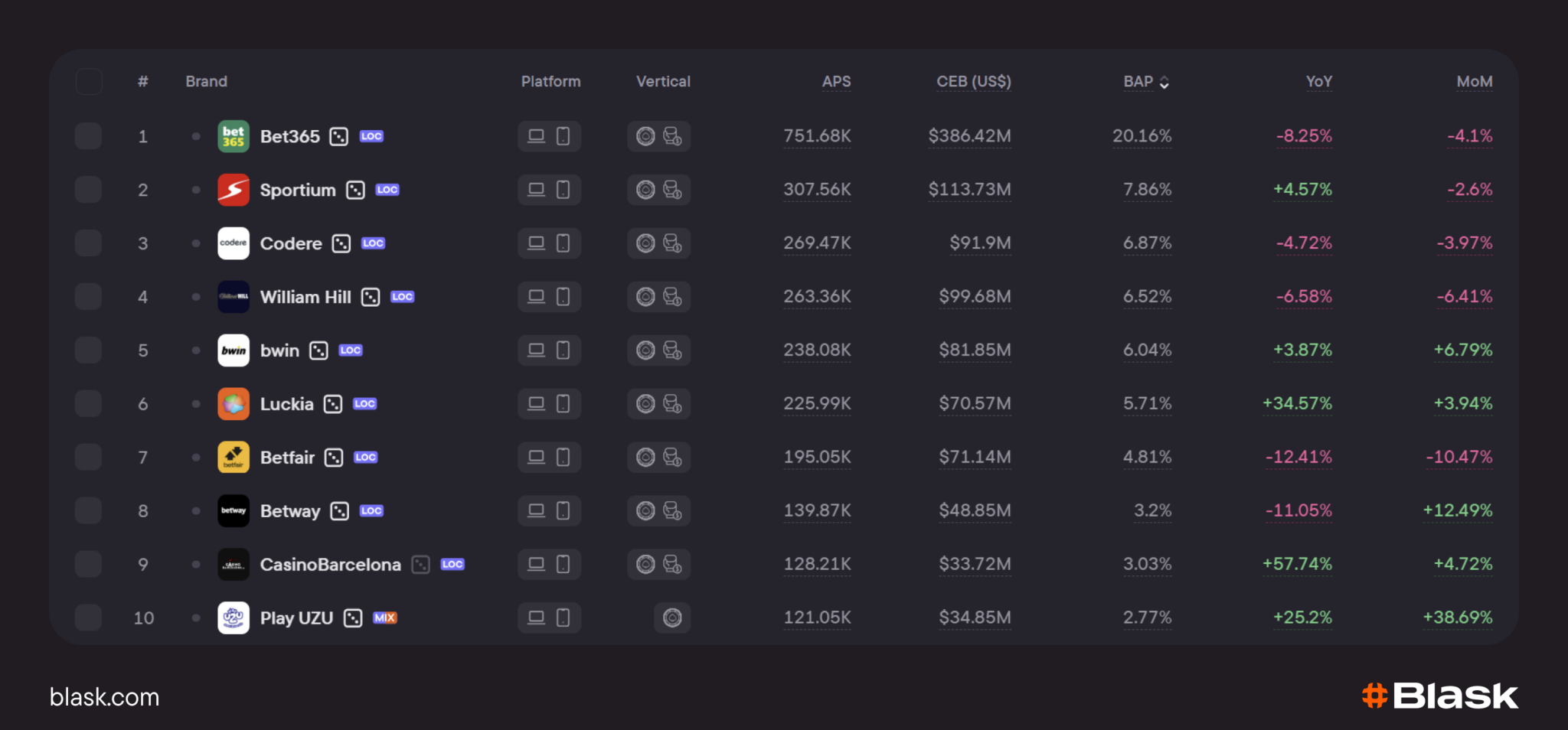
This step sets a reference frame for each GEO — a quick look at which brands are capturing attention in that market right now.
Use case: setting a consistent market frame
Review the GEO and note the market leaders — they become your reference frame for that market. Reuse the same frame in follow-up reviews — this keeps your analysis consistent instead of shifting with every new keyword export.
Games & lobbies
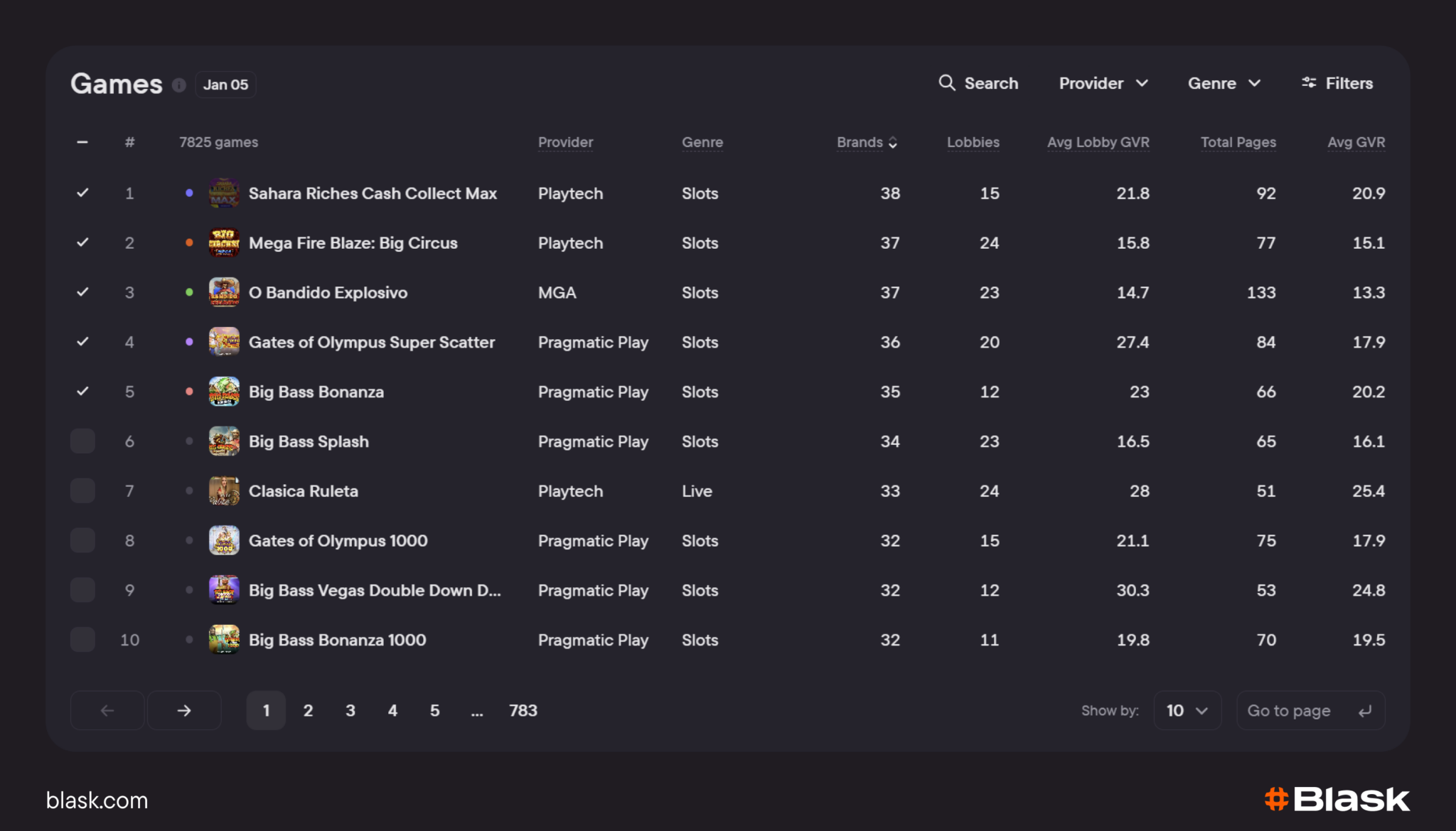
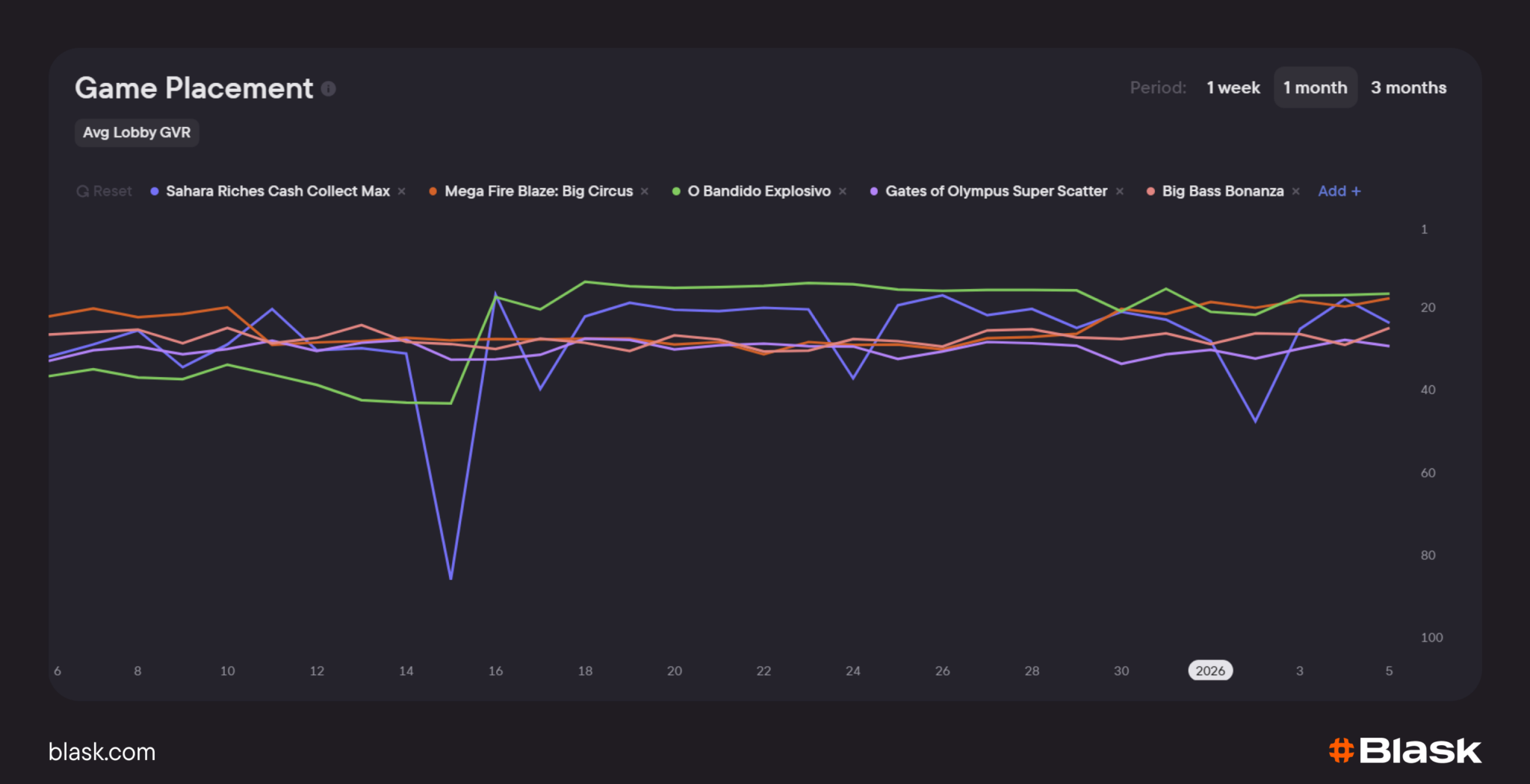
Lobby placement is a different signal from SERPs, and Blask tracks which games and categories casinos are surfacing — and how it shifts over time.
Use case: prioritizing games and providers
Review the GEO in the Games section with lobby tracking. Capture the titles and themes being surfaced as context for content priorities. When storefront exposure shifts, update the GEO backlog: what needs new coverage now, what needs updates, what can wait.
Read more: iGaming SEO Strategies You Need: A Practical Guide
Video: Max Tesla, CEO and co-founder of Blask, about SEO usecase on Nazahid online-conference
Source: NaZahid 27 (conference stream)