
- Updated:
- Published:
GGR vs CEB: why reported revenue and Blask’s baseline diverge

A regulator can report record gaming revenue while a large share of player demand remains outside its reporting perimeter. GGR and CEB can both be valid because they measure different populations.
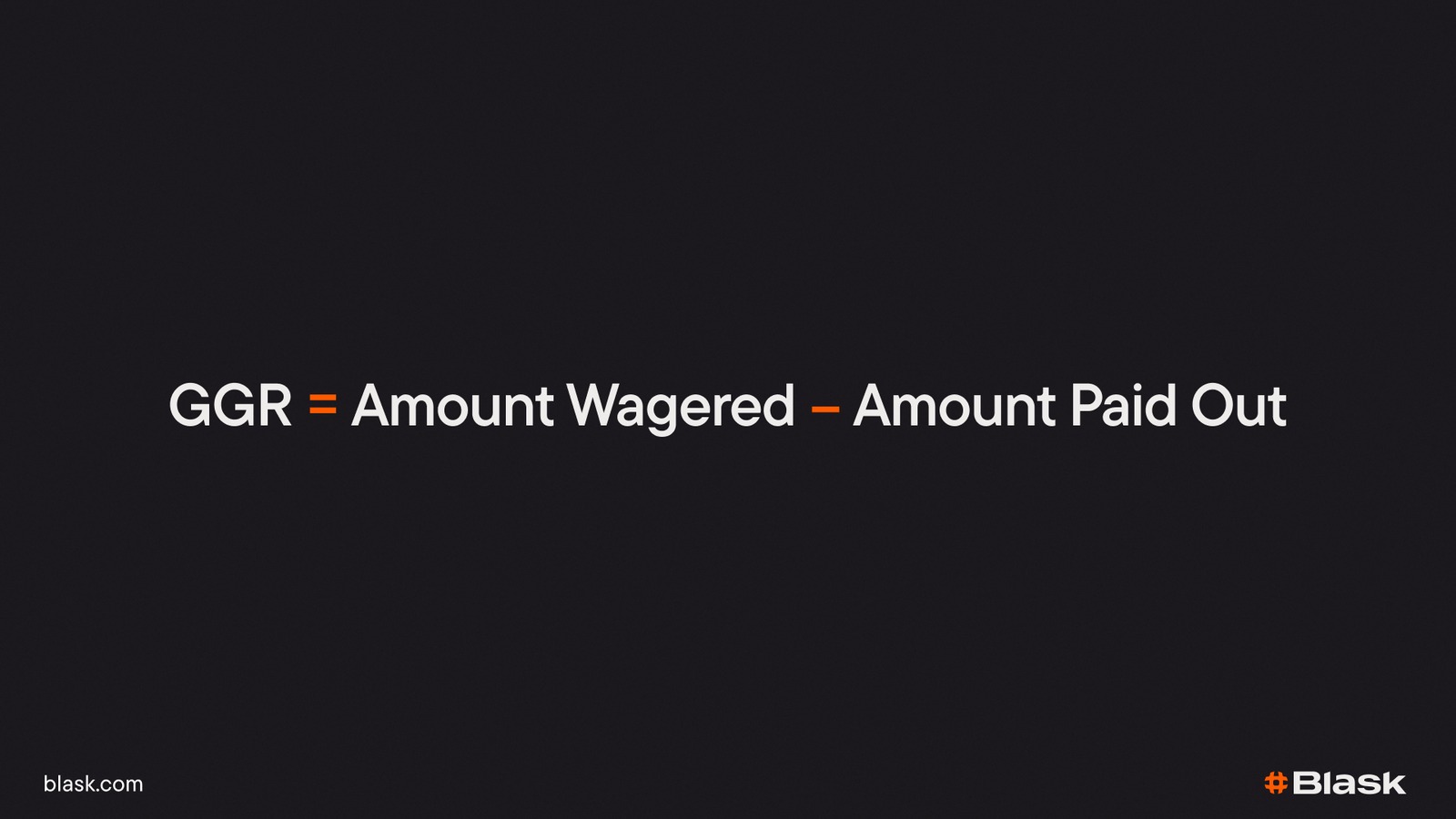
Gross Gaming Revenue records the amount retained from stakes after player winnings under a stated accounting or regulatory definition. Competitive Earning Baseline (CEB) estimates the revenue range a brand could realistically capture at its position in a market.
The first measure closes the books. The second supplies an external benchmark across competitors, including brands whose results are unavailable in local reports.
GGR vs CEB starts with the reporting boundary
GGR belongs to a defined reporting entity. Its scope may cover one operator, one licence, one product or an entire regulated jurisdiction. The value can be audited because it comes from completed gambling activity.
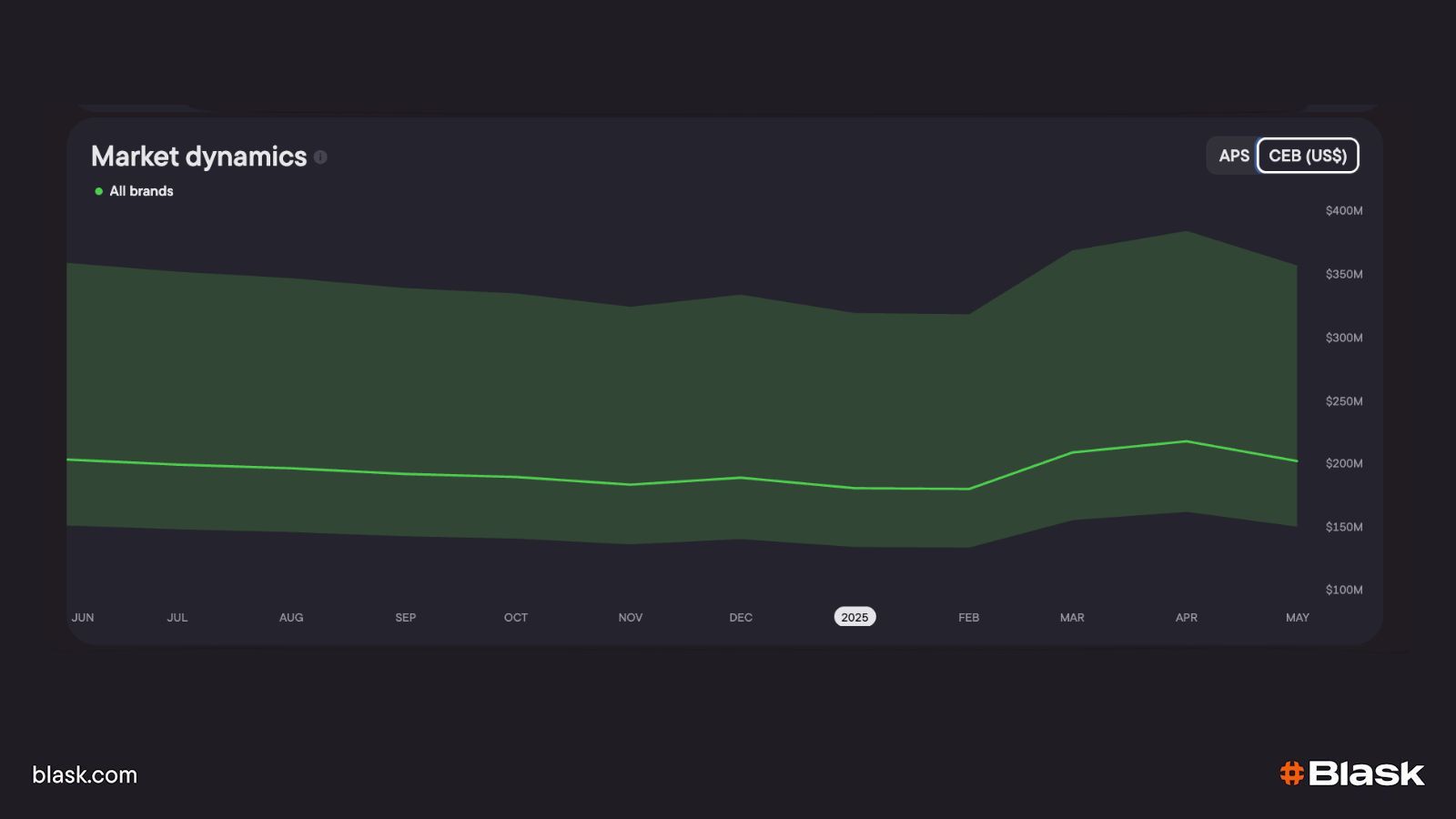
CEB belongs to a competitive market view. Blask calculates it monthly in US dollars as a minimum, average and maximum range. It builds on brand demand, Brand’s Accumulated Power, Acquisition Power Score and the surrounding market context.
Net Gaming Revenue sits elsewhere in the chain. NGR starts from GGR and removes defined deductions, which may include bonuses, gaming taxes, payment fees, chargebacks or supplier costs. There is no universal deduction list.
| Metric | Core calculation | Primary source | Output | Main reason it diverges |
|---|---|---|---|---|
| GGR | Stakes minus player winnings, subject to reporting rules | Operator or regulator | Reported value | Entity, licence, product and recognition scope |
| NGR | GGR minus defined deductions | Operator, contract or filing | Reported value under a stated formula | Deduction policies differ |
| CEB | Modeled from demand, acquisition potential and competitive context | Blask model with public calibration inputs | Minimum, average and maximum USD range | Includes a market baseline beyond disclosed revenue |
None of the three is profit. GGR precedes most costs, NGR removes only its stated deductions, and CEB is not an accounting result.
How Blask calculates CEB across licence types
CEB uses different inputs where the available evidence changes. A uniform formula would hide the distinction between disclosed local activity and an offshore segment with no equivalent filing.
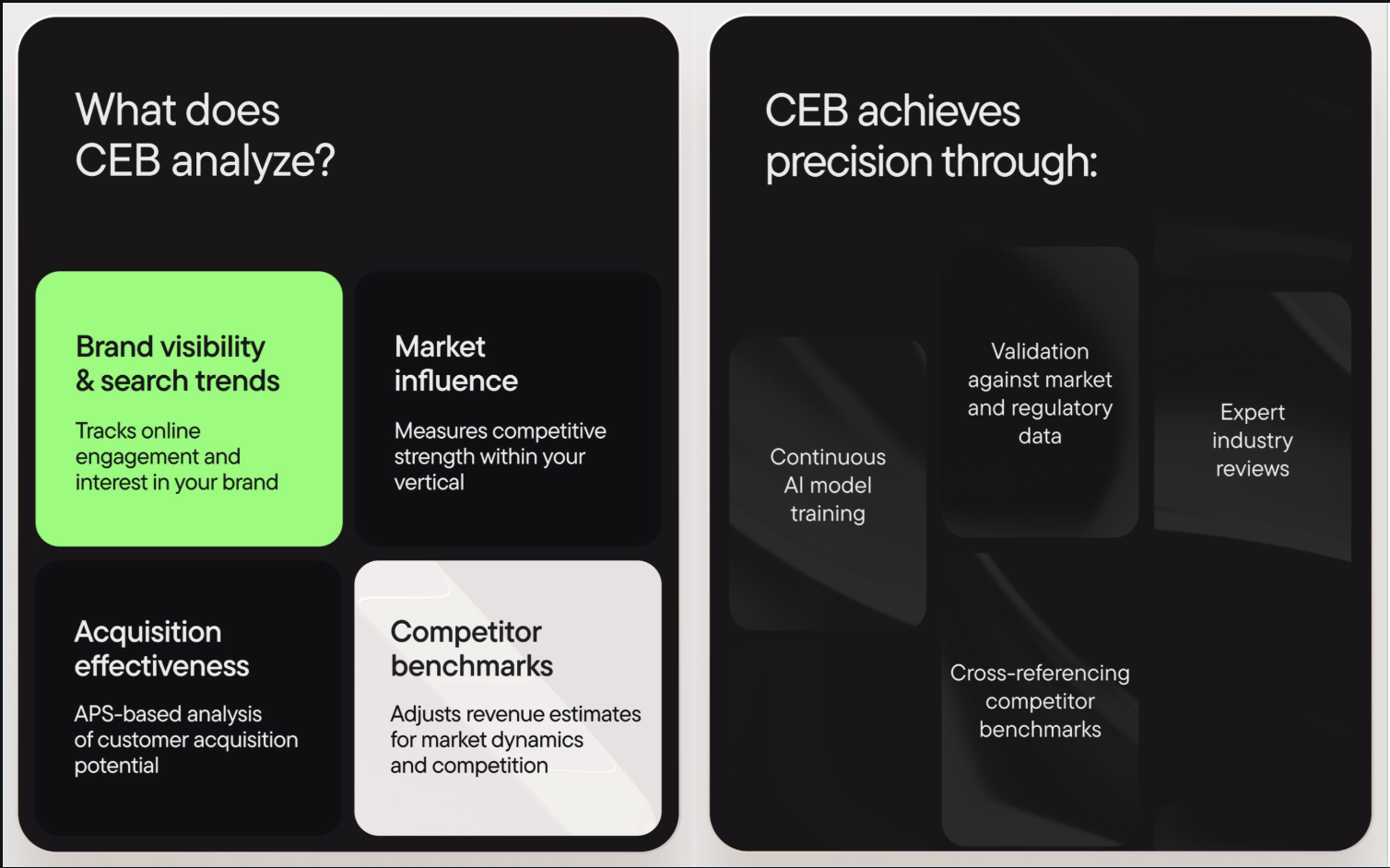
For local brands in regulated markets, Blask anchors the baseline to verified regulator GGR and uses public operator results as additional calibration where available. The model still returns a range rather than reproducing the regulatory total.
For international brands, public financial data is usually missing. Blask uses search-based demand, APS and regional revenue-per-user benchmarks to estimate a comparable baseline. In unregulated markets, demand and benchmarks from similar economies provide the market frame.
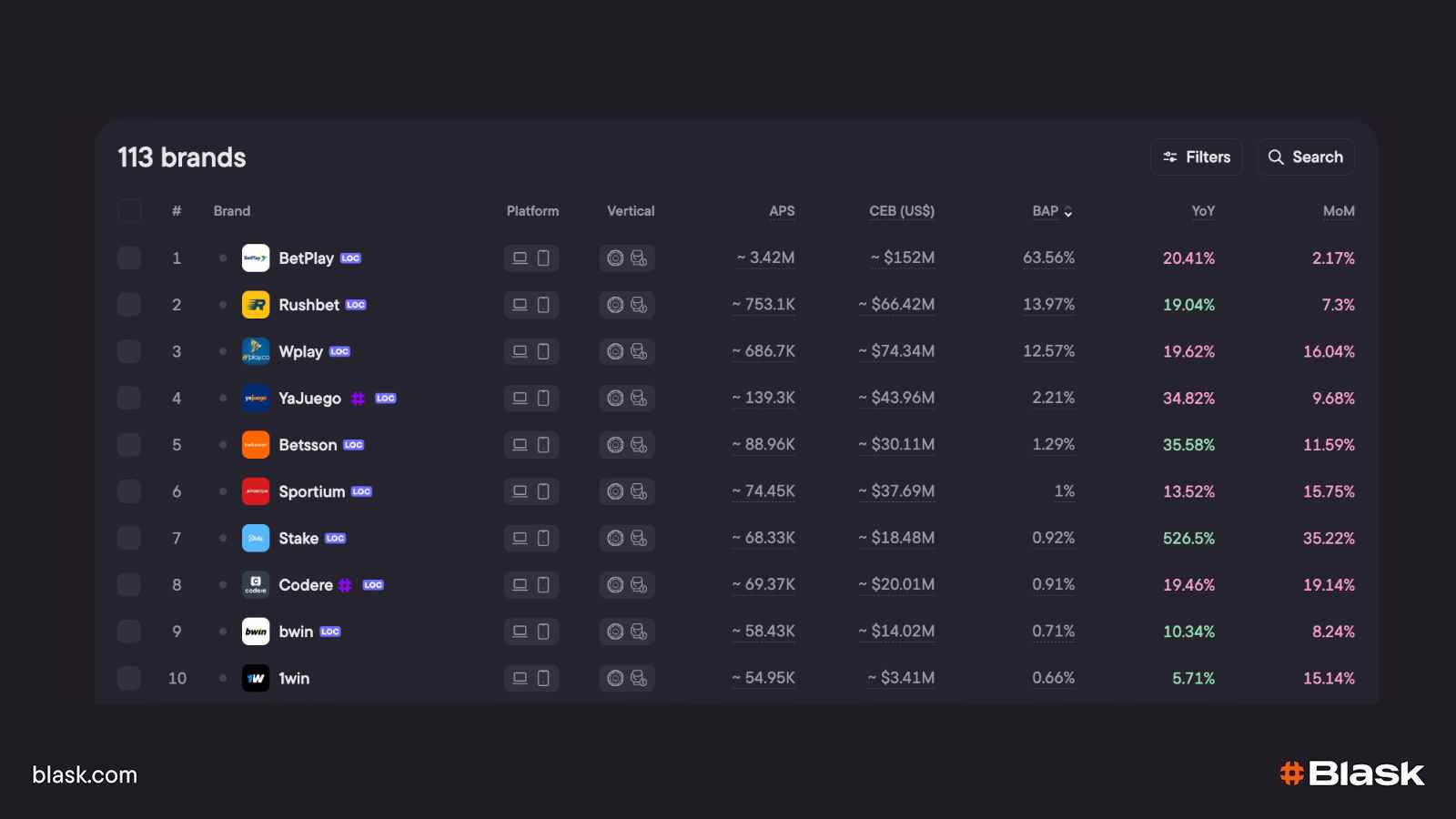
| The full APS and CEB methodology therefore treats regulatory revenue as one input for the licensed segment, not as a substitute for the total market. |
The US offshore gap make the difference visible
US regulatory data covers licensed activity reported through state systems. The American Gaming Association compiled those disclosures and reported $10.74B in state-regulated iGaming GGR for 2025, up 27.6% year over year, in its 2025 Commercial Gaming Revenue Tracker.
That figure cannot describe operators outside the state-regulated perimeter. Blask’s completed H1 2026 data puts average monthly US CEB at $6.78B ($3.94B–$15.28B range). Offshore brands account for $4.56B of the monthly average, compared with $2.21B for onshore brands.
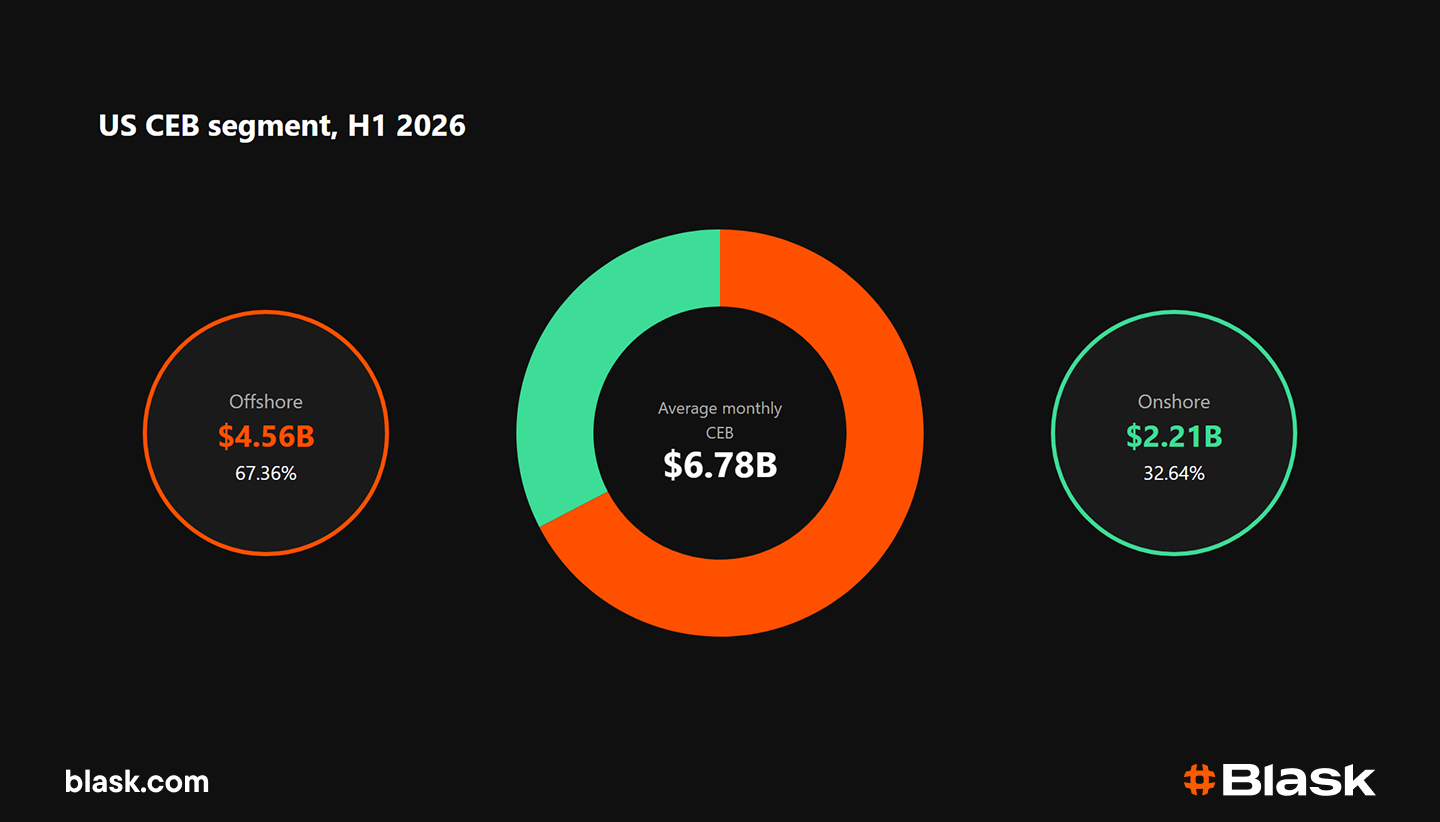
The AGA and Blask figures use different periods, products and methods, so dividing one by the other would produce a false comparison. Their scopes explain the apparent tension: regulated GGR can grow while offshore brands retain most of the modeled competitive baseline.
| The demand data provides a separate view of the same reporting boundary. The full US demand analysis separates the movement by licence and state without treating search interest as revenue. |
Why reported GGR and CEB diverge
Several boundaries can move the two measures apart even when both are calculated correctly.
- Coverage. GGR reports entities inside a filing perimeter; CEB can include international competitors with no domestic disclosure.
- Purpose. GGR records completed gross win; CEB estimates a realistic revenue range for a competitive position.
- Inputs. GGR comes from wagers and winnings; CEB combines demand, acquisition potential, public calibration data and market context.
- Output. GGR is a point value under one reporting definition; CEB is a range that reflects market volatility.
- Timing. GGR follows the operator’s recognition calendar; CEB updates monthly for completed periods.
Currency, product mix and geography add further variation. A sportsbook-only GGR figure cannot be matched to a CEB view that includes casino demand, and a state filing cannot represent a national market without an explicit aggregation.
What a valid comparison can establish
A direct brand-level comparison requires the same entity, market, product, currency and period. Once those boundaries match, actual GGR can sit below, inside or above the CEB range.
A result below the range shows that reported monetisation trails the external baseline. A value inside it aligns with the modeled competitive position, while a result above the range indicates stronger monetisation than the benchmark. None of those positions identifies a cause by itself.
At market level, the comparison answers a different question. Regulatory GGR describes how much activity the licensed system recorded. CEB estimates how much value the broader competitive field could support. The US offshore split shows why those totals should remain separate rather than being merged into a synthetic “market revenue” number.
Bottom line
GGR is strongest where the reporting boundary is clear; CEB matters where that boundary leaves competitors out. The US market exposes both truths at once: licensed revenue can set records while most of the competitive baseline remains offshore.
Overlay GGR and CEB — then layer in APS and BAP — and you gain a four-panel dashboard that pinpoints exactly where awareness, acquisition, or monetisation is leaking… or outperforming.
Operators who run this two-lens playbook fix problems mid-quarter, not post-mortem — and turn future revenue into a controllable KPI.
Download the checklist “How Blask helps iGaming operators”