• Updated:
  • Published:

What is a social casino

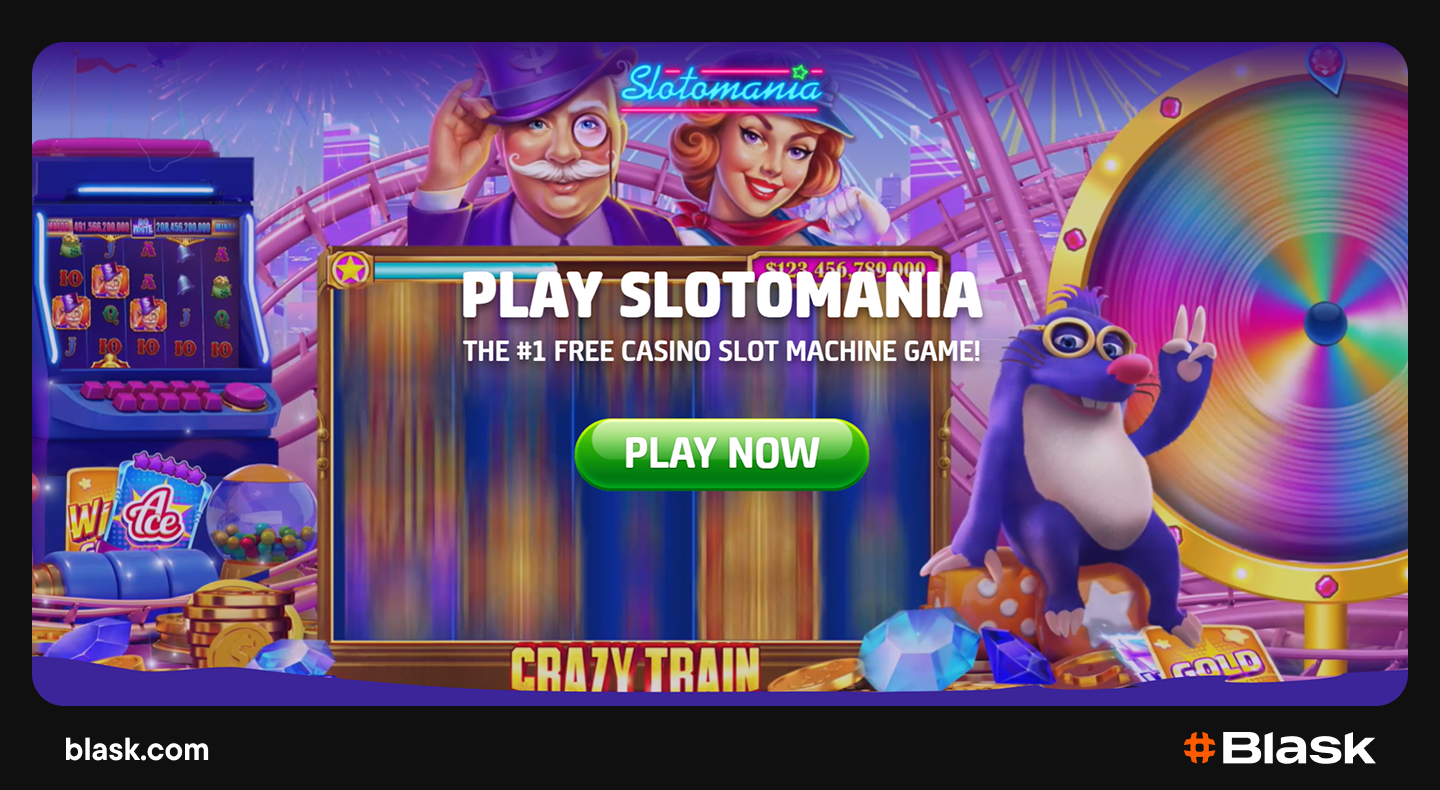
The concept emerged in the late 2000s on Facebook, where titles like Slotomania (launched by Playtika in 2011) and DoubleDown Casino proved that millions of players would happily spin slot reels without the prospect of a cash jackpot. Today, social casino games have migrated to iOS, Android, and web browsers, building a global audience that cuts across demographics. 

What is a social casino

Players receive a starting supply of virtual chips, coins, or credits and use them to spin reels or place bets. When coins run out, they can wait for a free daily refill, accept gifts from friends, or purchase additional coin packages with real money through in-app transactions. The key distinction is that nothing won inside the game has monetary value or can be exchanged for cash. It is the biggest difference from sweepstake casinos.

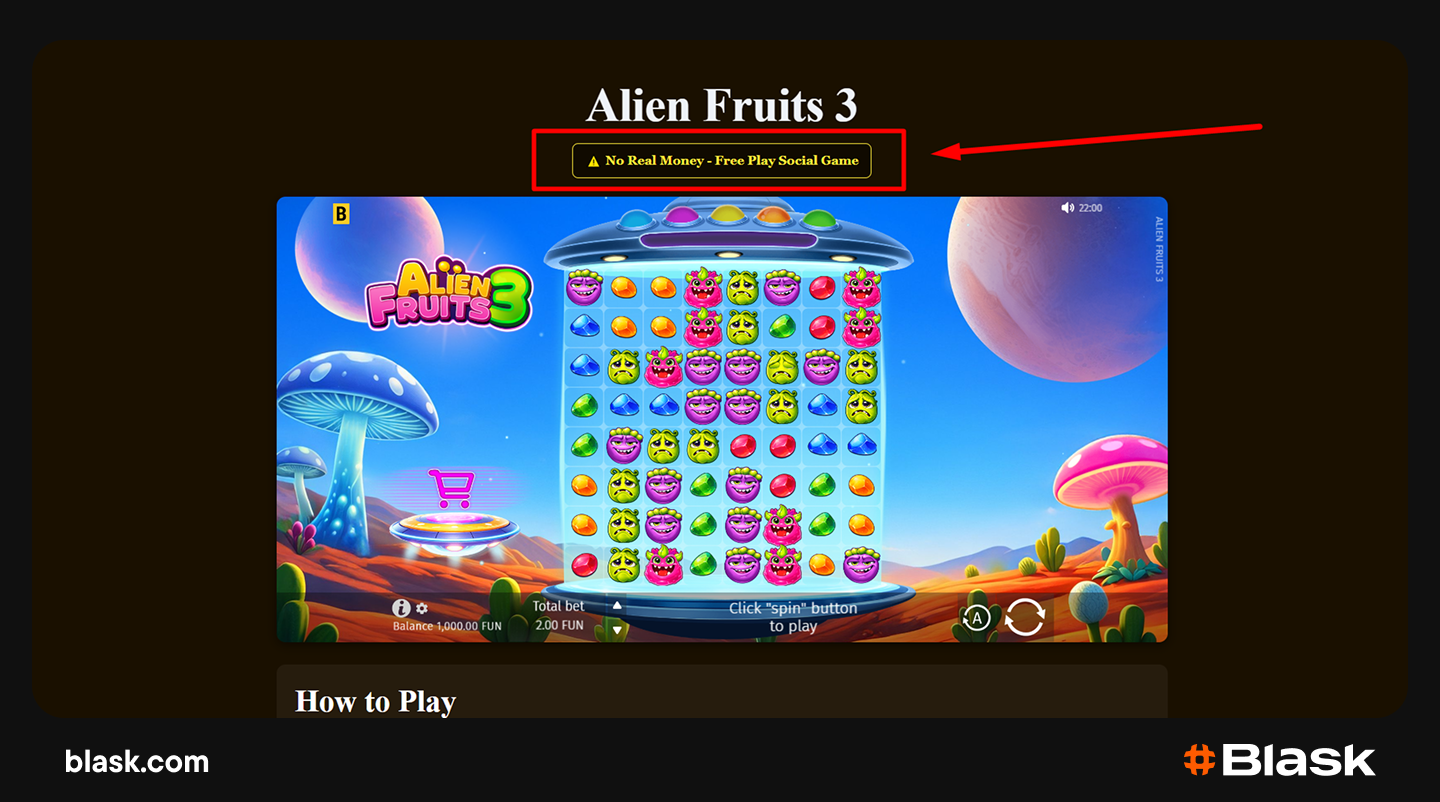
Social casino interface example. It could be a website or an app which people download from Play Market

What makes social casinos distinct from other casual mobile games is the deliberate simulation of gambling: probability-based outcomes, near-miss mechanics, flashing win animations, progressive jackpot countdowns, and a currency that depletes and refills on a schedule designed to create habitual return. The experience is engineered for engagement, and the business model is built on converting a small fraction of the player base into coin buyers — an approach known as the freemium model.

This is how AI sees social casinos. A hand tries to reach for something that looks real but is made entirely of smoke and light — the slot machine exists as a form, but there’s nothing solid to grasp.

How social casinos work

The mechanics are deliberately simple on the surface but carefully engineered underneath to maximize session length and repeat engagement.

Virtual currency (Gold Coins) only

Every social casino operates on one or more virtual currencies. The most common label is Gold Coins, but platforms also use Chips, Credits, Coins, Fun Cash, or branded names. This currency has no monetary value: it cannot be withdrawn, transferred to a bank account, or exchanged for prizes of any kind. Its only function is to enable gameplay within the platform.

Players receive an initial supply of virtual currency when they register — amounts vary but are typically generous enough to allow several hours of play. From that point, currency flows in and out through:

  • Daily bonuses. Free coin packages delivered every 24 hours, sometimes every few hours. The size of daily bonuses typically scales with account level or VIP tier, creating an incentive to return frequently.
  • Hourly bonuses and login streaks. Many platforms award additional coins for consecutive days of play, reinforcing daily habits.
  • Level-up rewards. Progressing through XP levels (earned by playing, not winning) unlocks larger coin grants.
  • Friend gifts. Social features allow players to send and receive coin gifts from in-game contacts, adding a peer-engagement dimension.
  • In-app purchases. Players who run out of coins and do not want to wait can buy coin packages with real money. Package sizes typically range from small ($1.99 for a few thousand coins) to large ($99.99 or more for tens of millions of coins).

The coin economy is calibrated so that free coins are sufficient for casual play but not for sustained high-stakes play. The gap between the free allotment and the desired playtime creates purchasing pressure without making the game feel inaccessible.

No real money wagers

The fundamental legal and commercial architecture of social casino games rests on the absence of real-money wagering. When a player presses “spin” on a social slot, no money changes hands. Wins and losses are denominated entirely in virtual currency. No matter how large the in-game jackpot, the winner cannot convert it to cash.

This single design decision — separating the in-game economy from real-world currency — is what allows social casinos to operate legally in jurisdictions that prohibit online gambling. Regulators in the United States, the European Union, Australia, and elsewhere have generally agreed that if no real money can be lost or won, a game does not constitute gambling under their definitions. The notable exception is Washington State, which we cover in the legal section below.

The no-wagering structure also affects game mathematics. Social casino slots can be tuned to different return-to-player (RTP) percentages than their real-money counterparts, and platform operators are not subject to RTP audit requirements that apply in licensed gambling markets. The mathematics is proprietary and not disclosed.

Free-to-play with optional in-app purchases

Social casino games follow the freemium model, one of the most commercially successful structures in mobile gaming. The game is free to download and free to play, but optional purchases accelerate or enhance the experience. The essential version — free coins, free spins on basic games — is available to every player at no cost.

In-app purchases in social casinos are not bets. A player who buys a $19.99 coin package is purchasing a consumable digital good, not placing a wager. The regulatory and marketing significance of this distinction is substantial. It means:

  • Purchases are subject to consumer protection laws applicable to digital goods, not gambling regulations.
  • Refund policies are governed by app store rules (Apple App Store, Google Play Store) or the platform’s own terms of service, not gambling commission requirements.
  • Purchase decisions are voluntary and unrelated to any specific outcome; the player is not paying to win — they are paying for the chance to play longer.

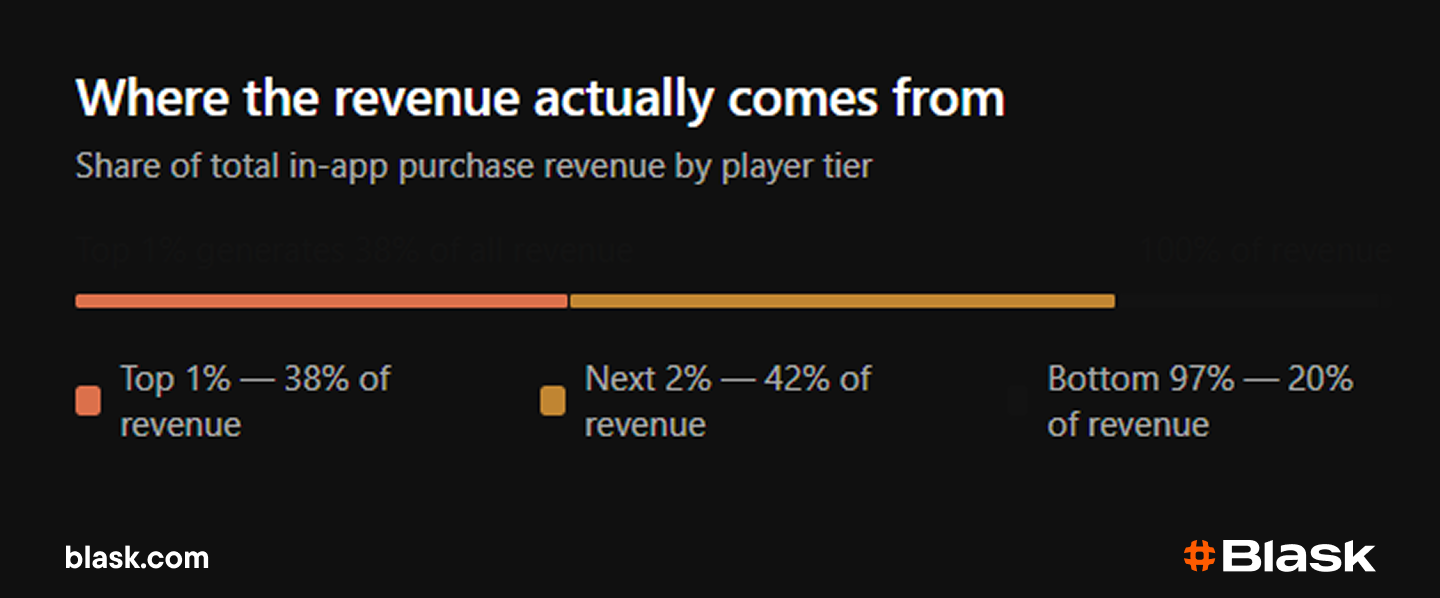
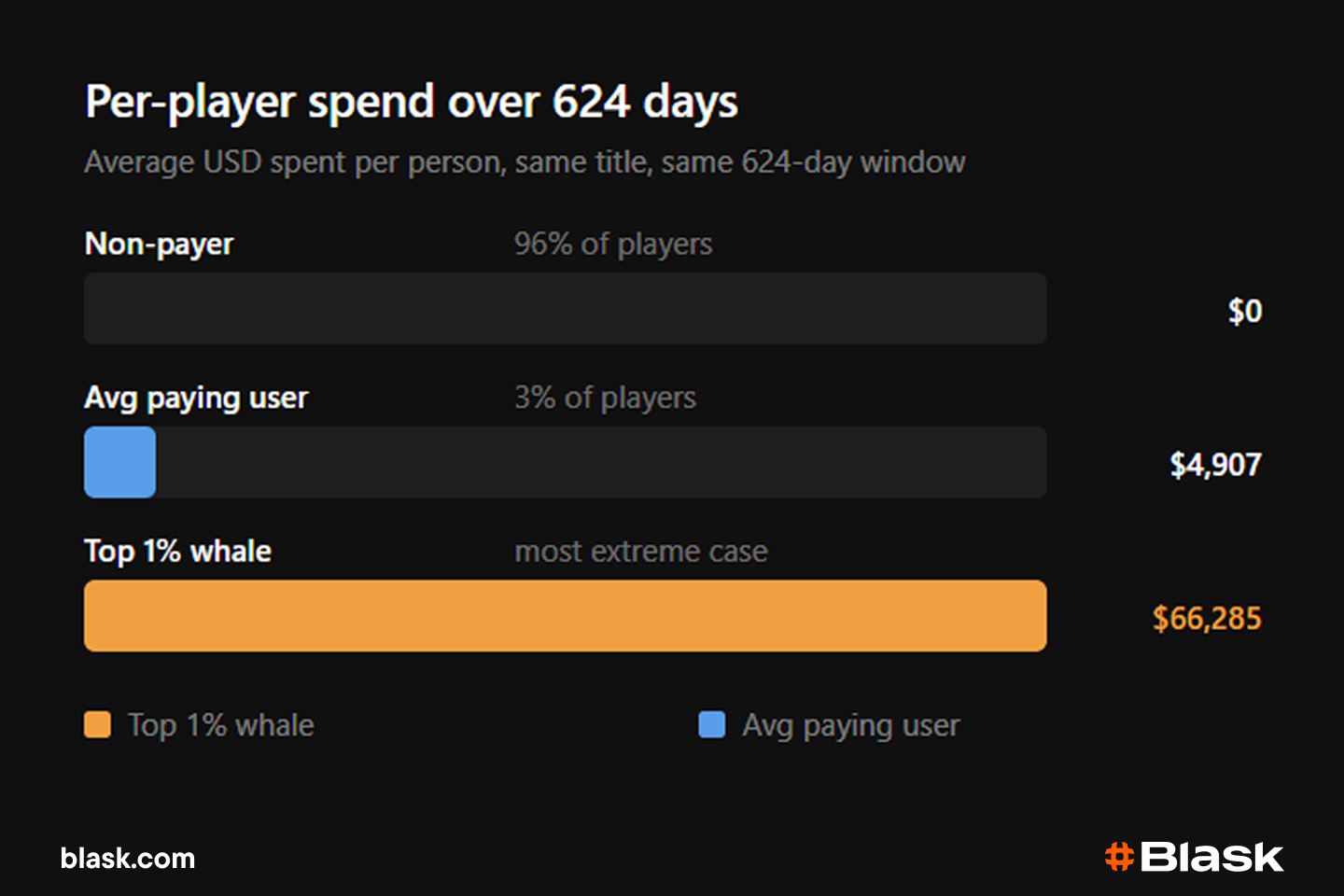
Despite this legal framing, the economic reality for committed players can resemble gambling expenditure. Research published in the journal Games: Research and Practice by Zendle et al. (2023) analyzed $4.7 billion in in-game spending across 144 mobile games and found that social casino products sit at the extreme end of spending concentration: in the most skewed case, the top 1% of spenders in a single social casino title averaged $66,285 each over 624 days.
Social features (friends, leaderboards)

Platform designers draw from social network architecture to embed community within gameplay:

  • Friend lists and gifting. Players can connect via Facebook, email, or platform accounts, add friends, and exchange daily coin gifts. Gifts are typically limited to one per friend per day, creating a network externality — the more friends you have, the more free coins you receive.
  • Leaderboards. Weekly or seasonal ranking tables display players by the number of coins wagered, jackpots won, or XP earned. Top players receive bonus coins, exclusive avatar frames, or VIP status upgrades. Leaderboards leverage social comparison and competitive drive to increase session frequency.
  • Clubs and teams. Some platforms, including Slotomania and DoubleDown Casino, feature club or team mechanics where players pool activity to unlock shared rewards. Club challenges create scheduled engagement obligations — players feel accountable to teammates.
  • Live events and tournaments. Time-limited slot tournaments or challenge events generate urgency and create natural checkpoints for re-engagement. Push notifications (“The tournament ends in 2 hours!”) drive day-parted sessions.

Social casino vs real money casino

Key differences affect every aspect of the product, from how users fund play to whether you can withdraw your winnings.

Currency: virtual vs real

FeatureSocial casinoReal money casino
CurrencyVirtual coins, chips, creditsReal money (USD, EUR, etc.)
Deposit methodIn-app purchase or free bonusCredit card, bank transfer, crypto
Win valueNo cash equivalentRedeemable for real money

Withdrawals: not allowed vs cash payouts

This is perhaps the most consequential difference. Social casinos categorically prohibit withdrawals. Terms of service explicitly state that virtual currency “has no real-world value and may not be redeemed, exchanged, or transferred for money or anything else of value” (language consistent across DoubleDown, Slotomania, and similar platforms). Any player who attempts to sell coins or accounts on secondary markets (which does happen on eBay and Discord) is violating platform terms and risks permanent account closure.

Real-money casinos are built around the withdrawal function. Regulated operators in markets like New Jersey, Pennsylvania, Michigan (US), the UK, Malta, and Sweden are required by their licenses to process withdrawals promptly, report large transactions, and maintain segregated player funds to guarantee payout capacity.

Legal status by region

JurisdictionSocial vasinoReal money online casino
Most US statesLegal (no gambling license required)Regulated in NJ, PA, MI, CT, DE, WV, RI
Washington StateConsidered illegal (Kater v. Churchill Downs)No regulated online casino
United KingdomLegal; not regulated by UKGCFully regulated by UKGC
AustraliaLegal to play; operators need local approvalRegulated in some states

Game variety

Both product types offer similar surface-level game libraries — slots, blackjack, roulette, video poker, bingo. 

The meaningful differences lie beneath the surface. Real-money casinos are required by license conditions to use independently audited random number generators and to publish verified RTP percentages. Social casinos are subject to no equivalent requirement; their game mathematics are proprietary.

Player demographics

The player demographics of social and real-money casinos overlap but diverge in meaningful ways. Social casino audiences skew older than stereotypical “gamers”: industry analysis consistently places the core demographic in the 35–54 age bracket. A significant portion of players are women — Playtika has noted that Slotomania’s audience is majority female. Players are often motivated by entertainment, nostalgia, or stress relief rather than profit-seeking.

Real-money casino demographics are broader but tend to include a higher proportion of male players aged 25–44 (for example, in Europe). The regulatory apparatus around real-money casinos is partly designed to protect vulnerable individuals from financial harm — a protection that has no direct equivalent in social casino environments.

Social casino vs sweepstakes casino

The difference between a social casino and a sweepstakes casino is less obvious than the difference between social and real-money, but commercially and legally it is crucial.

Sweeps coins and cash redemption (sweepstakes only)

Sweepstakes casinos (sometimes called sweeps casinos) operate under US promotional sweepstakes law. They offer two currencies: 

  1. A no-value Gold Coin equivalent (for entertainment play).
  2. Sweeps Coins, which are awarded for free (by mail request, social media entry, or as a bonus with Gold Coin purchases) and can be redeemed for real cash prizes or gift cards after accumulating a minimum balance.

The sweepstakes legal framework based on the principle that no purchase is necessary to enter is what allows these platforms to award real prizes without obtaining a gambling license. Players can request Sweeps Coins for free, which means no consideration is technically exchanged for the chance to win.

The sweepstakes casino market has grown dramatically: Eilers & Krejcik Gaming (EKG) estimated the US sweepstakes casino market at over $10.6 billion in gross purchases in 2024, with approximately $3.4 billion in net gaming revenue after prize redemptions — placing it on par with the entire US regulated iCasino market in a single year.

Pure social: no real prizes

A pure social casino, by contrast, never awards prizes with monetary value. Winning a million-coin jackpot on DoubleDown Casino yields exactly one million virtual coins and nothing more. There is no redemption path, no sweeps currency, no mail-in option.

FeatureSocial CasinoSweepstakes Casino
Virtual fun currencyYes (Gold Coins or equivalent)Yes (Gold Coins)
Redeemable currencyNoYes (Sweeps Coins)
Cash prizes possibleNoYes
Purchase requiredNo (free coins daily)No (Sweeps Coins available free)

Legal frameworks compared

The legal foundation of each model is different. Pure social casinos rely on the argument that because no real money is wagered and no real prizes are awarded, the activity does not meet any jurisdiction’s definition of gambling. This has been largely upheld in courts — with the significant Washington State exception.

Sweepstakes casinos rely on promotional sweepstakes law: because free entry is available, no consideration exists, and therefore no illegal lottery or gambling is present. This model has come under increasing regulatory pressure. As of 2025, sweepstakes casinos are explicitly banned in Montana, Connecticut, and Washington State. California has active regulatory proceedings, and KPMG’s 2025 Focus on Sweepstakes report notes that “regulatory uncertainty and the number of new market entrants from 2023–early 2025” may lead to slower growth post-2025.

Top social casinos in 2026

The social casino market is dominated by a handful of large operators with established brands, deep libraries, and sophisticated live-ops infrastructures. Below are the leading platforms as of mid-2026.

PlatformOwnerFlagship game
SlotomaniaPlaytikaSlotomania
DoubleDown CasinoDoubleDown InteractiveDoubleDown Casino
House of FunPlaytikaHouse of Fun Slots
Jackpot Party CasinoSciPlay (Light & Wonder)Jackpot Party
Caesars Casino SocialCaesars EntertainmentCaesars Slots
Big Fish CasinoAristocratBig Fish Casino

DoubleDown Casino

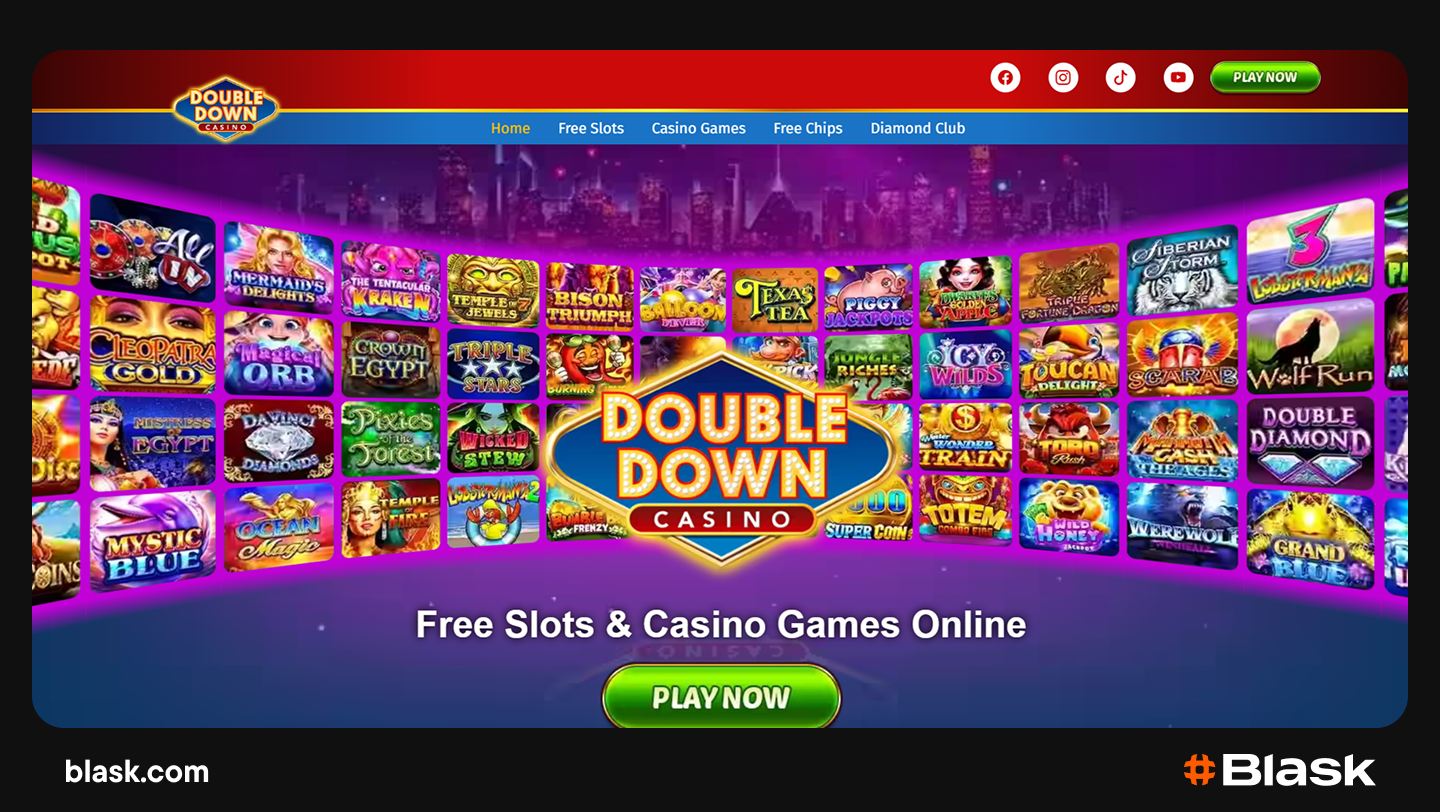
DoubleDown Casino website

DoubleDown Casino is the flagship product of DoubleDown Interactive Co., a publicly traded company headquartered in Seoul, South Korea, with operations worldwide. The game launched on Facebook in 2012 and has sustained top-tier engagement for over a decade.

Slotomania

Slotomania website

Slotomania, operated by Playtika (NASDAQ: PLTK), is widely cited as the world’s most downloaded social slots game. Playtika launched Slotomania in 2010 as one of the first Facebook casino games, and the title has remained in the top tier of the social casino market for fifteen years. Slotomania features over 200 slot games organized around a persistent progression system that levels players up through named tiers, unlocking new games and bonuses at each stage.

House of Fun

House of Fun website

House of Fun is another Playtika property, focused on an Halloween/occult aesthetic with over 200 themed slot machines. The platform distinguishes itself with its strong female audience and consistent content release cadence — Playtika typically adds several new slot titles per month to all major platforms. House of Fun is available as a Facebook game, iOS app, Android app, and web browser experience.

Jackpot Party Casino

Jackpot Party Casino website

Jackpot Party Casino is operated by SciPlay Corporation, a subsidiary of Light & Wonder. SciPlay went public in 2019 and operates a portfolio of social casino and casual gaming apps. Jackpot Party features real licensed slot titles from WMS, Bally, and other Scientific Games brands — the same games that appear on physical casino floors in Las Vegas and Atlantic City. This real-casino content licensing gives Jackpot Party a distinctive authenticity that appeals to traditional casino players looking for the familiar experience in a free-to-play format.

Caesars Casino (Social)

Caesars social casino website

Caesars Casino is Caesars Entertainment’s branded social casino app, allowing the company to extend its iconic Las Vegas brand into a free-to-play mobile format. 

The app features slot games branded with Caesars Palace imagery and table game simulations. Caesars uses its social casino app as a cross-promotion and loyalty funnel: players can earn Caesars Rewards points within the social app that are redeemable at Caesars physical properties and on Caesars’ regulated real-money casino platforms in licensed US states. This cross-channel integration makes Caesars Casino Social a strategically important acquisition tool for Caesars’ broader gambling ecosystem.

Big Fish Casino

Big Fish Casino website

Big Fish Casino, developed by Big Fish Games (now owned by Aristocrat Leisure), is best known for being the subject of the landmark Kater v. Churchill Downs Ninth Circuit ruling in 2018, which found the game’s virtual chips constituted a “thing of value” under Washington State law, making the game illegal gambling in Washington. 

Big Fish Casino was subsequently withdrawn from sale to Washington residents and settled a class action for a reported $155 million. The game remains available in most other US states and internationally.

Games available at social casinos

Social casino platforms offer a range of game types, almost all adapted from the casino floor or online gambling industry.

Social slots

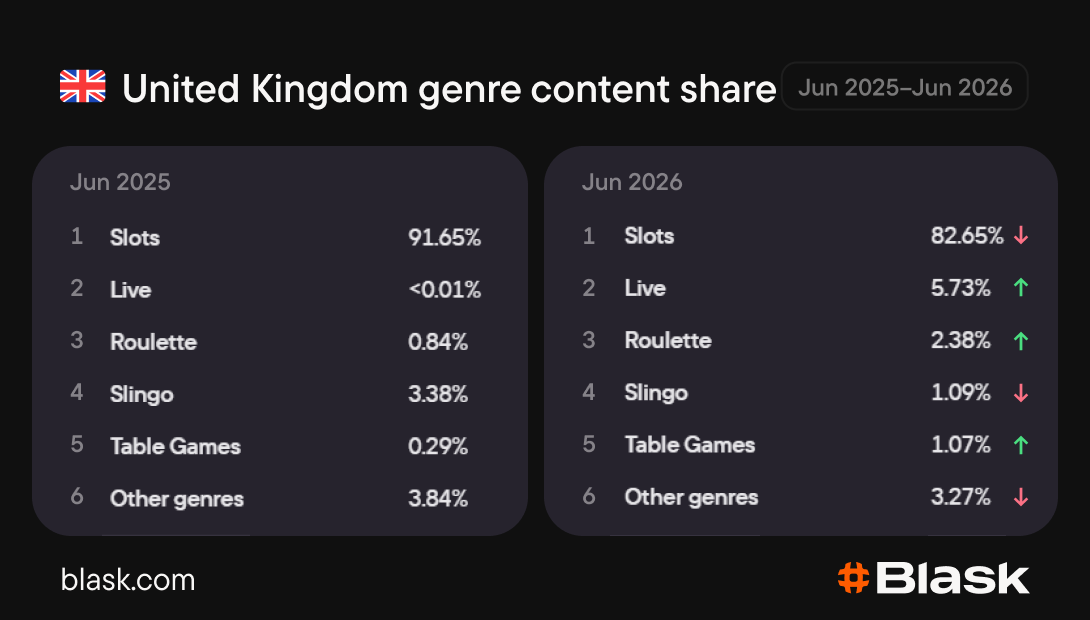
Slot machines are the dominant product category in social casinos, typically accounting for 80–90% of play volume. Social slots range from simple three-reel fruit machines to complex video slots with cascading reels, expanding wilds, free spin bonus rounds, and progressive jackpot counters. The best social casino platforms license branded slot content from real casino software providers — IGT, WMS, Bally, Konami — giving players access to titles they may have encountered in physical casinos.

This is a clear example from the real-money gambling world. Slots are heavily dominating the market. This data is related to the UK, but, according to Blask data, the picture is the same across the whole world. 

The screenshot is from the article about popular content genres in Europe and live casino content expansion there. 

Social slots differ from their real-money equivalents in several key ways: 

  • they cannot be audited for RTP by independent labs;
  • their volatility profiles are set by the developer and not disclosed;
  • they are deliberately tuned to deliver frequent small wins (keeping the experience entertaining) and occasional large virtual jackpots (maintaining excitement and aspirational engagement).

Video poker

Video poker is a popular secondary category in best social casino platforms. Variants commonly available include Jacks or Better, Deuces Wild, Double Double Bonus, and multi-hand options. 

Video poker is valued by players who prefer a skill element: the correct hold decision meaningfully affects expected return, giving analytically minded players a way to engage their decision-making. 

Blackjack and roulette

Table game simulations are available on most major social casino platforms. Blackjack implementations typically offer standard Atlantic City or Vegas rules, with some platforms including side bets, multi-hand play, and streak bonus mechanics. 

Roulette is usually offered in European (single zero) and American (double zero) variants. These games attract players who enjoy the strategic dimension of casino table play, even in a consequence-free environment. Payout structures mirror real-money equivalents (blackjack pays 3:2, roulette pays 35:1), maintaining recognizable gameplay without the financial stakes.

Bingo

Bingo represents a significant sub-category within social casino gaming. Social bingo games combine traditional bingo mechanics (75-ball, 90-ball) with progressive city-themed collection quests, power-ups, and friend-based team challenges, creating a deeply social experience. The game appeals strongly to the 45+ female demographic that makes up a substantial part of the social casino audience.

Live dealer (limited)

Live dealer is the real-time, camera-streamed dealer product that has become central to regulated online casinos. However, it’s largely absent from social casinos in its authentic form. The economics don’t align: live dealer content requires expensive camera studio infrastructure and human dealers, which only makes sense when real-money wagers justify the cost. 

How social casinos make money (monetization model)

Social casinos generate substantial revenue from players who never gamble a cent of real money in the traditional sense. Understanding how the business works demystifies why these platforms can fund publicly traded companies generating billions in annual revenue.

In-App coin purchases

In-app purchases (IAP) are the primary revenue driver for most social casino platforms. When a player’s coin supply runs low and they choose not to wait for the next free refill, they can tap a “Buy Coins” button and purchase a package with a credit card, Apple Pay, Google Pay, or PayPal.

Coin packages are engineered with psychological pricing in mind. Typical offerings include:

  • Entry packages (~$1.99–$4.99). Low barrier, aimed at first-time converters.
  • Mid-tier packages (~$19.99–$49.99). The “best value” tier, prominently promoted.
  • High-tier packages (~$99.99+). For committed players, often with exclusive bonus content.

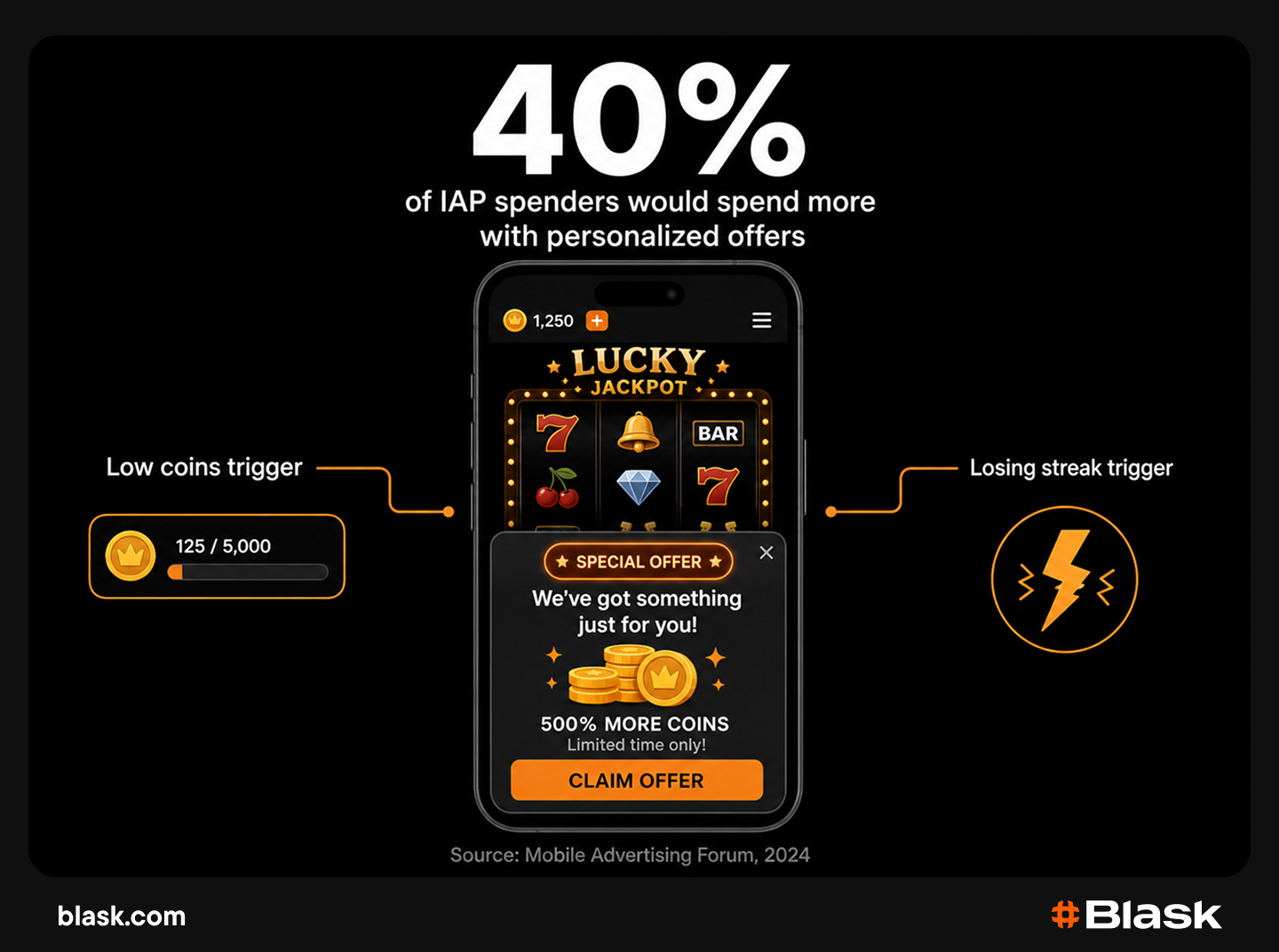
First-purchase offers — heavily discounted, time-limited bundles — are routinely deployed to convert non-paying players. Personalized offers, triggered when a player runs low on coins or exits a losing streak, are a major growth area: a 2024 Mobile Advertising Forum report found that over 40% of IAP spenders in casino games would spend more if they encountered personalized offers.
Ad revenue

For non-paying players — the vast majority of users — advertising is the alternative revenue source. Social casino platforms integrate:

  • banner ads;
  • interstitial ads;
  • rewarded video ads.

Rewarded video is particularly effective in social casinos because the value exchange is clear to the player — watch an ad to get coins.

VIP subscriptions

VIP subscription programs have become a significant monetization layer across the industry. Players pay a monthly or annual subscription fee — typically $9.99–$29.99/month — to unlock a package of daily coin bonuses, exclusive game access, reduced cooldown timers, priority customer support, and cosmetic rewards (avatar frames, special chip designs). 

Average revenue per user (ARPU) benchmarks

Social casino leads all mobile game genres on monetization metrics, according to Juego Studio’s analysis of 2024 industry data:

MetricSocial casinoMid-core RPGHyper-casual
ARPDAU (avg)$0.20–$0.80+$0.10–$0.35$0.01–$0.05
Payer conversion (avg)4–5%3–6%<1%
Top performer ARPDAU$1.34 (DoubleDown)~$0.50~$0.15

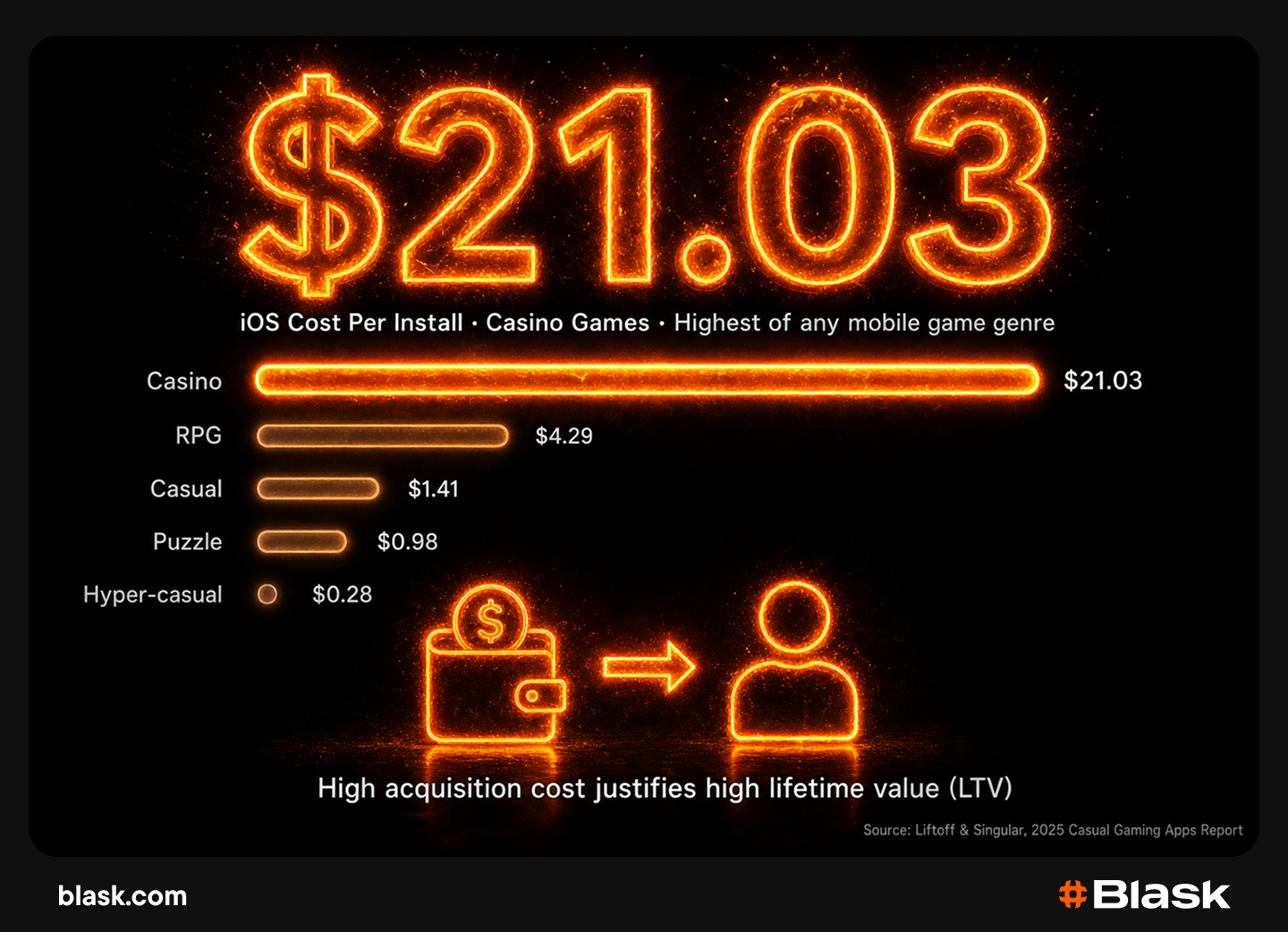
These benchmarks explain why social casino remains attractive to investors despite relatively flat user growth: the revenue-per-user ceiling is exceptionally high. They also explain the aggressive user acquisition spending — iOS CPI (cost per install) for casino games reached $21.03 in 2025 according to Liftoff and Singular’s Casual Games Report, the highest of any mobile game genre, justified by the high expected lifetime value of each acquired user.

There’s nothing tricky in legal section because social casinos are allowed in most states and countries.

Why social casinos are legal in most states

In the United States, gambling law is primarily a matter of state regulation. Federal law addresses the processing of funds for illegal gambling bets. Since social casino games involve no bets (no real money is wagered) and award no real money prizes, they generally fall outside these statutes. At the state level, most gambling laws define illegal gambling as wagering something of value on an uncertain outcome for the chance to win something of value. Social casinos pass this test in most states because virtual coins are deemed to have no value.

This analysis has held up through multiple court challenges outside Washington State. Social casino operators routinely cite the following features as ensuring legality:

  1. Virtual currency has no monetary value and cannot be redeemed for cash.
  2. The game can be played without any purchase (free daily coins are available).
  3. Players are explicitly prohibited from selling or transferring virtual currency for real money.
  4. No prize with monetary value is awarded.

The result is that social casino games are available, without any gambling license, to players in the approximately 48 US states where they are not explicitly restricted.

Recent lawsuits and class actions

Despite the general legal protection the virtual-currency model provides, social casino operators have faced significant litigation:

Kater v. Churchill Downs Inc. (9th Cir. 2018). The foundational case in this area. Cheryl Kater sued Churchill Downs over Big Fish Casino, alleging its virtual chips constituted illegal gambling under Washington State law. The Ninth Circuit ruled that virtual chips were a “thing of value” under RCW 9.46.0285 because they extended the privilege of playing the game. Big Fish Casino settled the ensuing class action for a reported $155 million.

Larsen v. PTT, LLC (High 5 Games). A follow-on case applying the Kater logic to High 5 Casino and High 5 Vegas. In June 2024, the Western District of Washington granted partial summary judgment finding High 5 Games liable for violating Washington’s gambling laws and Consumer Protection Act. A jury awarded over $24 million in damages to the class of Washington consumers in February 2025.

Washington AG Actions (2025). In early 2025, the Washington Attorney General filed suit against multiple social casino operators — including Playtika and Aristocrat — alleging their apps constitute illegal gambling operations under Washington law.

Restrictions in Washington state and others

Washington State is the primary jurisdiction in the United States where social casino games have been found to be illegal. The Washington State Gambling Commission’s formal guidance (updated January 2025) states clearly that games of chance where players wager virtual currency for the potential of winning more virtual currency “are likely to constitute illegal gambling” under Washington law. 

All gambling in Washington is illegal unless specifically authorized by statute, and no authorization exists for social casino games. As a result, virtually all major social casino operators block Washington IP addresses and list Washington as a restricted state in their terms of service.

Beyond Washington, the social casino legal landscape is generally permissive as of 2026. No other state has enacted legislation specifically targeting social casino games, though the aggressive regulatory activity around sweepstakes casinos in states like Connecticut, Montana, and Michigan may create spillover scrutiny for social casinos that blur the line between the two formats.

Daily bonuses and free coin mechanics

Daily bonuses are the behavioral cornerstone of social casino retention strategy. Unlike real-money casinos — which primarily retain players through deposit bonuses and loyalty rewards tied to wagering — social casinos use a recurring free currency drip to create habitual return visits. The system is borrowed from mobile gaming’s “energy mechanics” and optimized through years of A/B testing.

A typical daily bonus system works as follows: a player logs in and collects a wheel spin, a treasure chest, a slot machine pull, or a simple quantity of coins. The amount increases with consecutive login streaks — miss a day and the streak resets, creating a loss-aversion dynamic (missing today costs you tomorrow’s higher bonus). Many platforms layer multiple bonus types:

  • daily login bonus — coins delivered every 24 hours
  • hourly bonus — smaller coin grants every 1–4 hours, encouraging multiple daily sessions
  • level-up bonus — a large one-time grant when a player reaches a new level
  • special event bonuses — during themed events (holiday seasons, anniversary weeks), bonuses are inflated;
  • referral Bonuses — players who invite friends receive coin rewards, incentivizing organic acquisition.

The free coin system serves two commercial functions simultaneously. 

  1. For casual players, it is genuinely sufficient to maintain a relaxed, no-cost play experience indefinitely.
  2. For engaged players who develop strong play habits, the free allotment creates a floor — an amount they can always play without spending — below which their hunger for more coins is heightened.

The transition from free player to coin purchaser typically happens after an emotionally salient play session: a near-jackpot, a winning streak interrupted by running out of coins, or a competitive leaderboard position slipping away.

Social casino apps: mobile-first experience

The social casino app has become the dominant format for the category. While Facebook’s web platform launched most major titles in 2010–2013, by 2024 the overwhelming majority of play happens on iOS and Android mobile devices. Research and Markets data confirms that North America dominates the social casino market, and mobile is the primary delivery channel, driven by smartphone penetration and mobile internet access.

The transition from desktop to mobile has not been universally smooth. DoubleDown Interactive explicitly noted in its 2025 annual report that its DTC website — accessible on desktop browsers — has become a strategic priority. This is because desktop web monetizes differently from mobile apps, and because bypassing app store fees (30% commission on in-app purchases) at scale is financially significant.
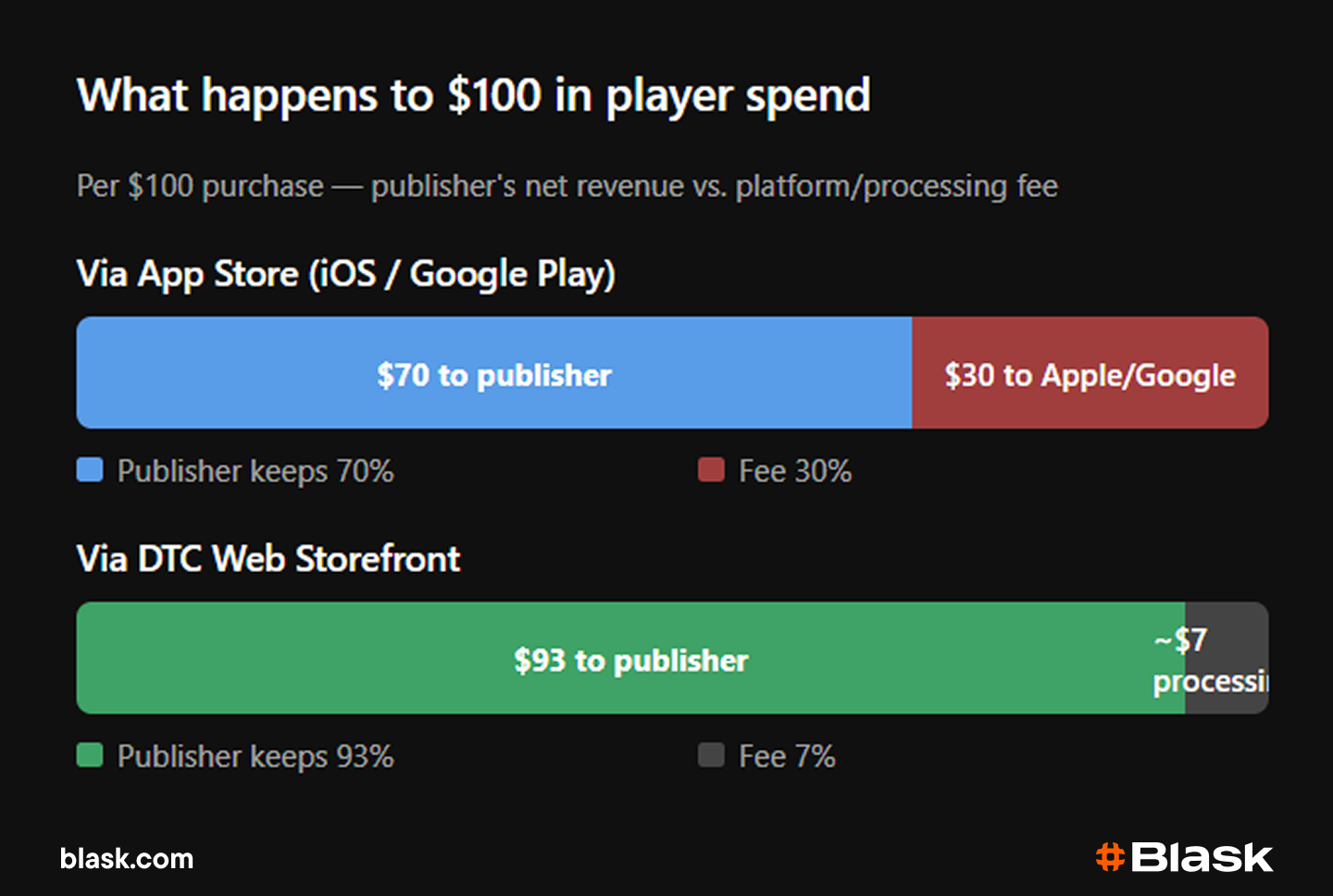
Why players choose social casinos

Understanding player motivation is essential for both operators designing products and researchers studying the societal implications of social casino gaming. Players cite a range of reasons for choosing social casinos over alternatives.

Entertainment without financial risk. The most commonly cited motivation is simple enjoyment without monetary exposure. Many social casino players are aware that they could visit a real-money casino but choose not to — they value the relaxation, visual stimulation, and light excitement of slot spinning without the anxiety of real stakes. This is especially common among older players who may have enjoyed physical casino visits but find the financial commitment less appealing in retirement.

Nostalgia and brand recognition. Many social casino players gravitate toward titles featuring games they recognize from physical casino visits — IGT’s Cleopatra and Da Vinci Diamonds, WMS’s Wizard of Oz, Bally’s Quick Hit series. The social casino format allows them to play beloved titles on demand, anywhere, without the cost of a casino trip.

Social connection. The gifting, club, and leaderboard systems genuinely create social bonds. Players on platforms like Slotomania and Bingo Blitz report long-standing friendships formed through club membership and daily gifting. For isolated individuals — particularly older adults — the social casino community functions as a meaningful peer network.

How operators build social casinos (B2B)

Behind every consumer-facing social casino is a technology stack assembled from proprietary development, licensed game content, and third-party platform services.

Top social casino platforms

The B2B social casino platform sector provides turnkey and white-label solutions for operators who want to launch without building from scratch. Key providers include:

ProviderSpecializationLaunch Time
TecpinionTurnkey & white-label social casinoWeeks
GammaSweepSweepstakes + social dual-currency2–8 weeks
Greentube ProSocial casino with Novomatic contentCustom

Tecpinion offers full-stack turnkey social casino software: a backend platform managing player accounts, coin wallets, and bonus engines; integration with 50+ game providers; Android and iOS native apps; and on-demand customization. GammaSweep focuses on sweepstakes operators, providing the dual-currency (Gold Coin/Sweeps Coin) ledger, compliance gating (GeoComply for state-by-state restrictions), KYC (Sumsub), payment integrations (Paysafe, Finix, Worldpay), and game content (Hacksaw Gaming), all on an AWS infrastructure serving 37 operators and 10 million+ players as of 2026.

Larger operators — Playtika, DoubleDown Interactive, SciPlay — build their platforms in-house, having invested hundreds of millions in proprietary technology over decades. Their competitive moat lies in this technology, plus their game libraries, player data assets, and brand recognition.

Marketing channels (Facebook, TikTok, influencers)

Social casino operators spend heavily on user acquisition (UA), and their channel mix reflects both the demographics of their target audience and the unique media landscape they operate in.

Facebook and Instagram. Meta’s platforms remain critical for social casino UA, both because the category was born on Facebook and because the 35–54 demographic is most reachable there. Facebook’s targeting capabilities — interests, behaviors, lookalike audiences from existing payer segments — make it the highest-ROI paid channel for most operators.

TikTok. As Gen Z and younger millennials age into social casino demographics, TikTok has become an increasingly important acquisition channel. Short-form video showing big virtual jackpot wins, animated game clips, and influencer “free spins” content drives installs.

YouTube and influencer marketing. Social casino operators run affiliate and influencer programs through which content creators post gameplay videos, bonus code distributions, and platform reviews. YouTube’s longer video format is well-suited to demonstrating game mechanics and building platform trust.

Google UAC and Apple Search Ads. Universal App Campaigns (UAC) and Apple Search Ads target players actively searching for casino game apps, capturing high-intent traffic.

Responsible play in social casinos

Social casino games are not regulated as gambling in most jurisdictions, which means mandatory responsible gambling requirements — deposit limits, self-exclusion, problem gambling information, age verification beyond basic terms acceptance — generally do not apply. This creates a protective gap that has attracted growing academic and policy attention.

Research published in Journal of Gambling Studies (2024) found that frequency of microtransaction use in digital games (including social casinos) partially mediates the relationship between extrinsic gambling motivations and problem gambling severity, suggesting that frequent purchasing in social casino environments may reinforce gambling-related cognitions. 

A 2023 study published in the Journal of Behavioral Addictions examined the order of first play and found that while a direct “gateway” pathway from social casino play to real-money gambling appears less likely than previously feared, social casino games “disproportionately attract youth who are vulnerable to gambling problems and harm,” indicating a need for consumer protection measures.

The social casino industry is entering a phase of maturation and diversification. Several trends are reshaping the sector in 2026 and beyond.

AI-driven personalization

Machine learning models are being applied to every aspect of the social casino experience — personalized offer targeting (the right coin bundle at the right moment), adaptive difficulty (tuning win rates to individual player psychology), churn prediction (identifying players at risk of leaving and intervening with bonuses), and fraud detection. Research and Markets identifies “rising integration of AI-driven personalization” as a primary driver of the projected 8.9% CAGR through 2030.

Convergence with casual gaming

Playtika’s pivot toward casual titles (Bingo Blitz, Solitaire Grand Harvest) reflects a broader trend of social casino companies expanding into adjacent casual gaming categories to access new demographics and reduce dependence on the maturing core social slots audience. The boundary between social casino and casual mobile games is blurring.

Regulatory developments

The sweepstakes casino crackdown in multiple US states will likely create collateral attention on social casinos, particularly those that feature near-money mechanics. Industry observers expect increased self-regulation efforts and voluntary standards frameworks from major operators seeking to preempt mandatory regulation.

Emerging markets

While North America dominates current social casino revenue, Asia-Pacific is identified as the fastest-growing region by Research and Markets. Markets including India, Brazil, Southeast Asia, and parts of Africa are seeing rapid smartphone adoption and casual gaming uptake — a pattern that preceded the North American social casino boom. Platforms localizing content, payment methods, and community features for these markets are positioned for the next phase of global growth.