- Updated:
- Published:
Easter iGaming demand: why some markets spike and others don’t

How Easter 2026 exposed the structural divide between lottery-monopoly and liberalized iGaming markets — and what it means for operators trying to time their campaigns.
Easter weekend is not equal across European iGaming markets. In some countries, it is one of the biggest demand events of the year. In others, it barely registers.
Blask Index data from April 2–6, 2026 shows which is which — and the answer has almost nothing to do with national gambling culture. It comes down to product design, market structure, and one Norwegian tradition involving a phone call from Hamar.
What the Blask Index measures
The Blask Index captures iGaming demand from search activity — how many people across all tracked operators are actively looking for gambling products in a given market. It measures intent before it converts to bets or revenue. When it spikes, players are searching. When it’s flat, they’re not.
Comparing the Blask Index across markets and dates reveals when gambling demand concentrates and where it flows.
Norway: the lottery Thursday
On April 2, 2026 — Maundy Thursday, the start of the Norwegian Easter holiday — Norway’s total iGaming Blask Index hit 95.11K. That is roughly 2.5 times the three-month trend average of 37.46K.
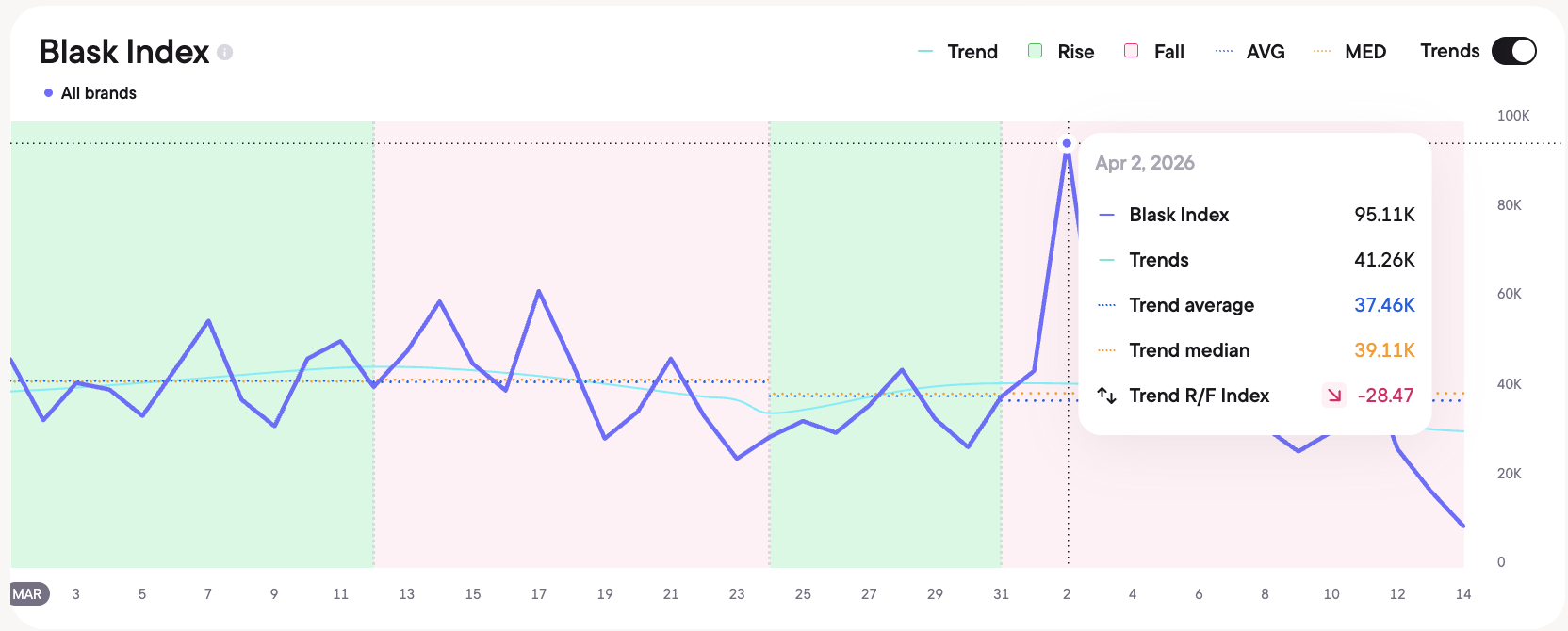
One brand drove almost the entire event. Norsk Tipping, Norway’s state-owned gambling monopoly, held 89.45% of market demand that day, with an absolute Blask Index of 85,079. Every other operator — offshore or domestic — split the remaining 10.55%.
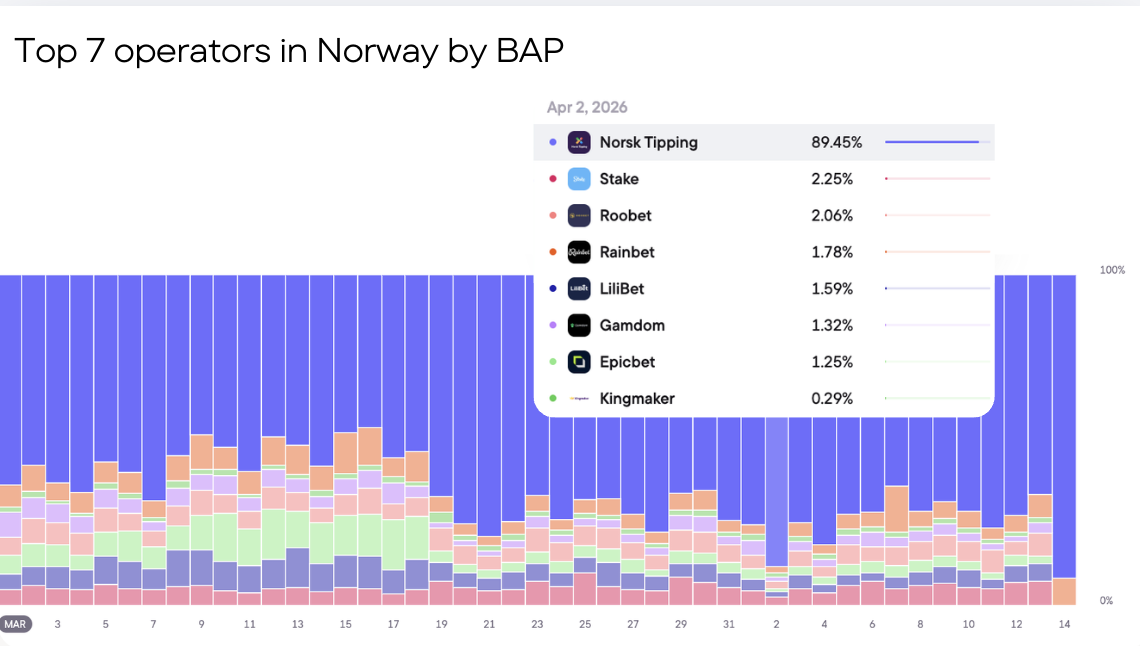
The cause is Supertrekning, Norsk Tipping’s quarterly mega-lottery draw. It takes place four times a year: Easter, summer, autumn, and Christmas. In the Easter 2026 edition, a 44 million NOK pool was distributed among 42 individual winners — each receiving 1 million NOK — on Easter Saturday (April 4). Unlike standard Lotto, Supertrekning requires no winning numbers: every ticket entered since the previous draw is a lottery entry.
The search spike lands on Thursday, not Saturday. This is because Norwegians traditionally leave for their mountain cabins (hytter) on Maundy Thursday, and ticket submissions close Saturday at 18:00. Buying a ticket before departure is a national ritual. The demand peak happens when people search for Norsk Tipping on their phones before they lose signal on the way to the mountains.
This is product design translating directly into demand timing. Norsk Tipping doesn’t need to advertise Easter — the holiday makes the product relevant, and the deadline creates urgency.
Finland: a broader lift
Finland shows a similar but more diffuse pattern. Veikkaus, the state-owned operator, held 48.79% of Finnish iGaming demand on April 2 and climbed to 60.09% on Easter Saturday (April 4), when its absolute Blask Index peaked at 169,404.
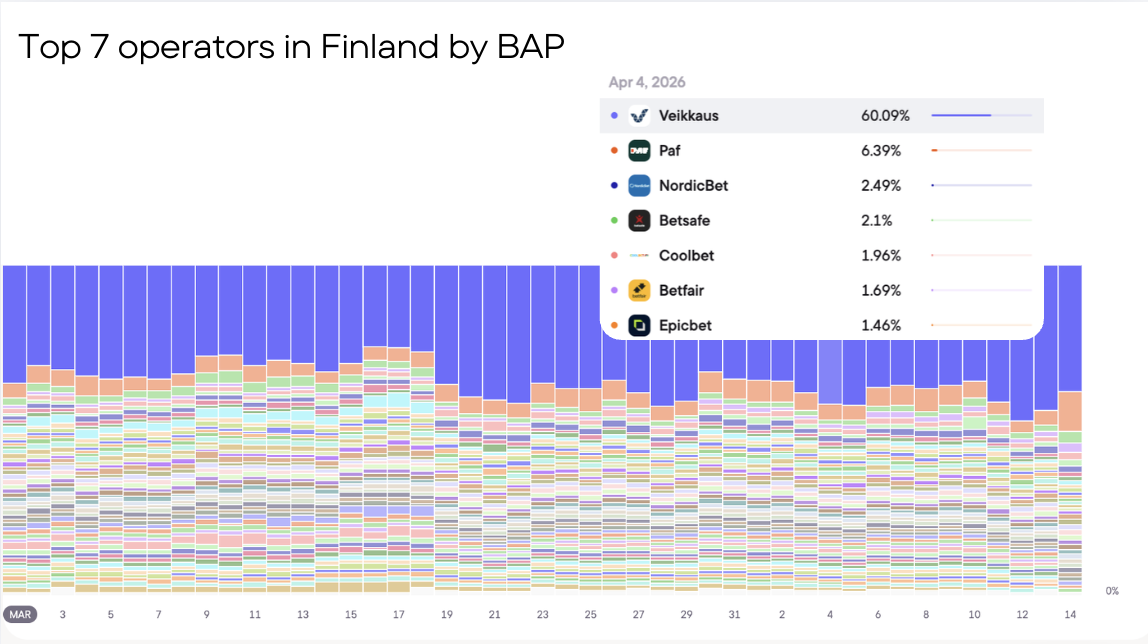
Unlike Norway, Finland’s lottery demand runs high throughout the year. Veikkaus generated €468M in lottery GGR in 2025 — 53% of its total revenue — driven by Lotto, Eurojackpot, and its newer daily Milli game. Easter Saturday represents a genuine peak in a market that already runs warm, not an isolated spike from a flat baseline.
The Finnish Easter pattern is consistent with Veikkaus’ general dominance: the monopoly operator concentrates demand during holidays because lottery players have no legal alternative. Finland is scheduled to liberalize its online gaming market in 2027. When that transition happens, the Easter pattern will likely change — the Veikkaus share will fragment, demand may spread across operators, and holiday-linked demand will compete with sports-event-driven demand from new entrants.
Sweden: no Easter effect
Sweden’s Easter data tells a different story. Svenska Spel — the state lottery and casino operator — recorded 74,142 in Blask Index on Easter Saturday (April 4). That is nearly identical to its performance on the two preceding Saturdays: 76,794 on March 21 and 72,677 on March 28.
Sweden has no Supertrekning equivalent. Swedish Lotto draws happen every Saturday with no special holiday edition that generates outsized jackpots or timing-driven search behavior. Easter Saturday in Sweden is just another lottery Saturday.
Sweden also liberalized its online gambling market in 2019, bringing commercial operators into direct competition with Svenska Spel. The competitive landscape dilutes any single operator’s ability to concentrate holiday demand the way Norsk Tipping or Veikkaus can.
United Kingdom: Easter doesn’t exist
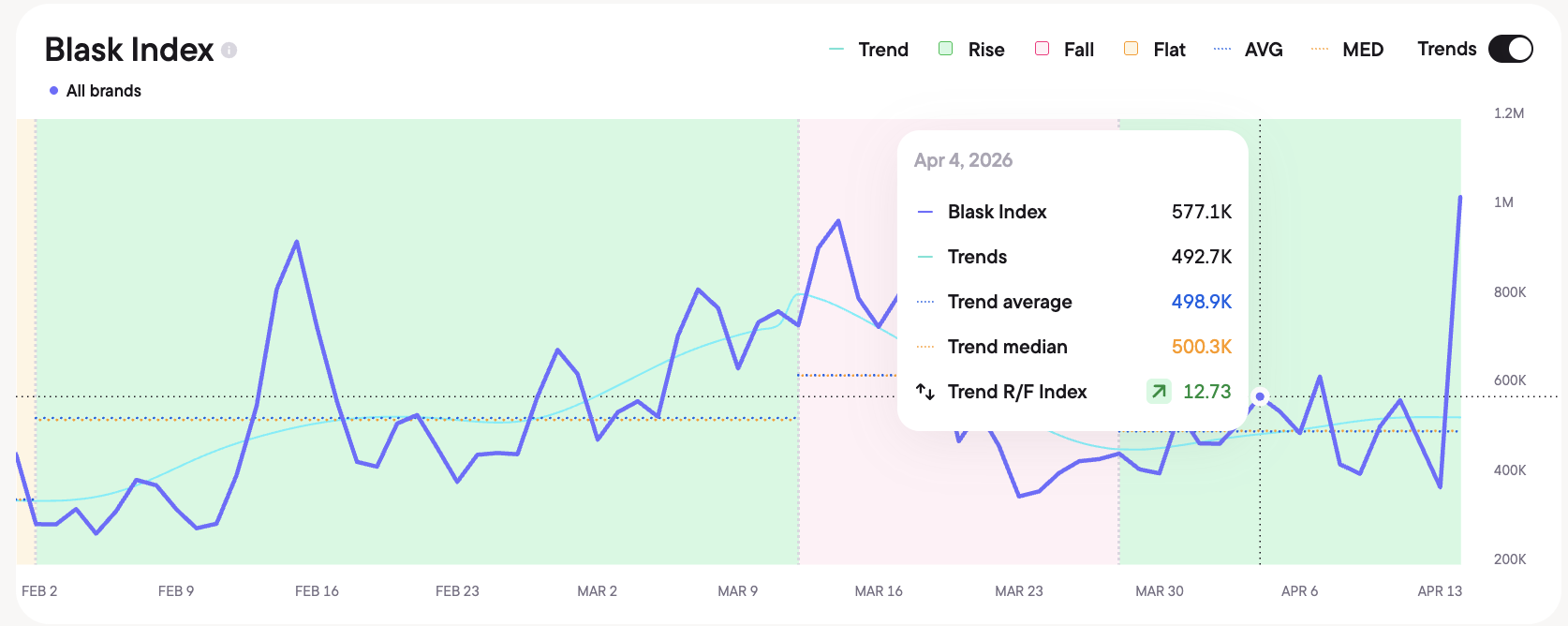
In the UK, Easter produced no measurable iGaming demand spike. Bet365 — the UK’s most-searched gambling brand by Blask Index — held steady at 174K on April 2, 190K on Good Friday (April 3), and 213K on Easter Saturday (April 4). That Easter Saturday figure is comparable to any normal Saturday in March: 224K on March 21, 209K on March 28.
The UK market is fully liberalized, with over 350 active brands competing for the same players. No single product or operator event can concentrate national demand the way a state lottery monopoly can during a holiday.
The UK’s iGaming calendar runs on horse racing and football. The real demand event came a week later: on April 10 (Ladies Day at Aintree), bet365’s Blask Index hit 270K — its highest single-day reading in this period — as Grand National week opened. Easter is irrelevant to British betting culture. The Grand National is not.
Germany: UCL, not Easter
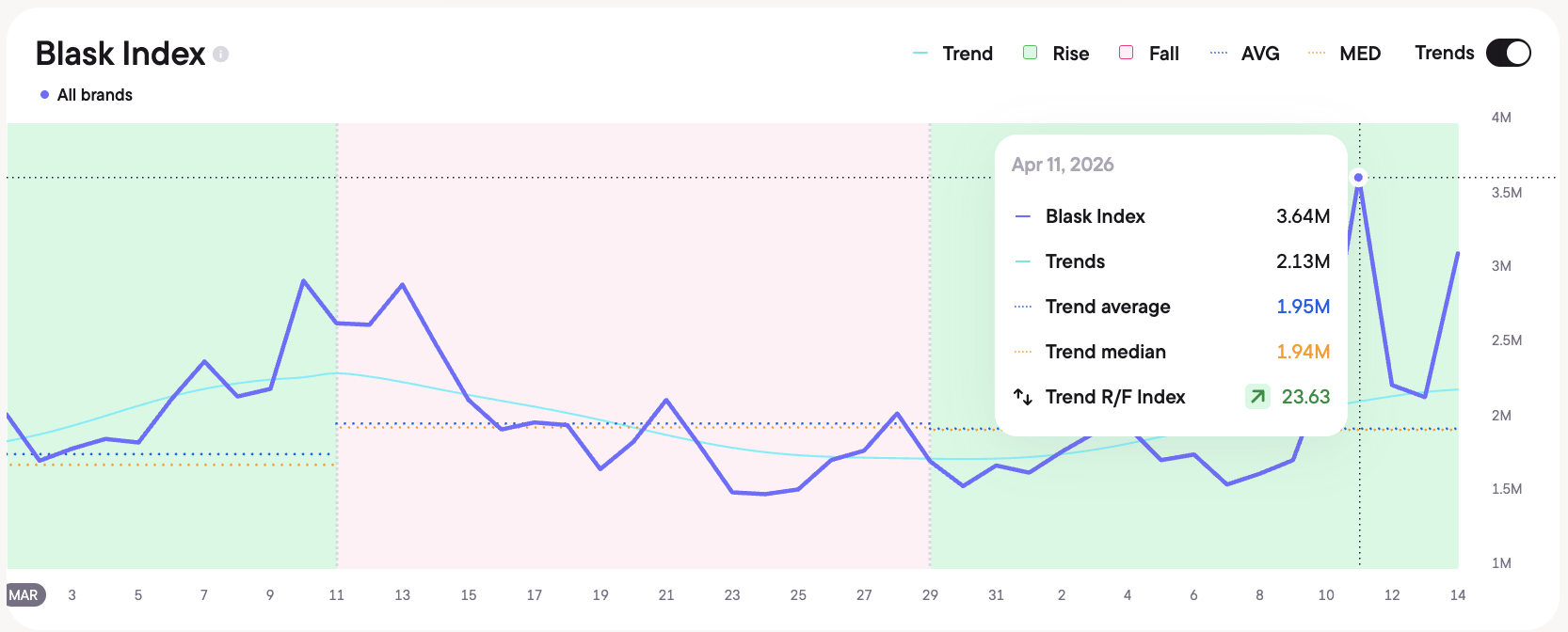
Germany follows a similar sports-first logic. Tipico, the country’s leading licensed sportsbook, held 18.63% of market demand on Maundy Thursday (April 2) — below its March average of 18–26% — and climbed modestly to 27.88% on Easter Saturday (April 4), likely driven by Bundesliga fixtures.
The real spike came on April 7, the Tuesday after Easter, when Tipico’s Blask Index surged to 241,976 and its BAP reached 38.90%. April 7 marked the first leg of UEFA Champions League quarter-finals, a fixture calendar event that dwarfs any holiday-linked demand.
In Germany’s licensed market, Easter is a minor bump. UCL is the seasonally significant event.
Two models, two calendars
The five-market comparison reduces to a single structural observation.
In markets where a lottery monopoly controls access — Norway, Finland — public holidays drive iGaming demand. The monopoly’s product is tied to the holiday, deadline pressure concentrates search activity on specific days, and the operator captures nearly all of it.
In liberalized markets — Sweden, UK, Germany — operators compete on sports, not calendars. The sports schedule (Grand National, UCL, Bundesliga) determines demand peaks. Easter is just a long weekend.
| Country | Easter peak operator | Easter peak BAP | What drove it |
|---|---|---|---|
| Norway | Norsk Tipping | 89.45% | Supertrekning lottery (44M NOK, 42 millionaires) |
| Finland | Veikkaus | 60.09% | Holiday-linked lottery demand, state monopoly |
| Sweden | Svenska Spel | 22.23% | Regular Saturday lottery — no Easter effect |
| UK | Bet365 | 10.92% | No Easter effect; Grand National week later |
| Germany | Tipico | 27.88% Sat / 38.90% April 7 | UCL quarter-finals > Easter |
What this means for timing
For operators active in monopoly-adjacent markets, the Easter window is not primarily about promoting sports betting. It is about lottery adjacency and awareness. Players searching for Norsk Tipping on Maundy Thursday are in lottery mode — sports betting campaigns won’t convert that intent.
For operators in liberalized markets, Easter is a budget consideration. The UK’s real spring opportunity is the Grand National festival (April 9–11). Germany’s is UCL knockout rounds. Marketing spend tied to the Easter calendar in these markets will underperform.
The inverse is also worth noting. When Norway’s iGaming demand spiked in February — driven by Johannes Klaebo’s Olympic gold medals at Milano-Cortina — Norsk Tipping held just 16.47% of demand while offshore operators LiliBet and Gamdom captured 76.83% together. The monopoly operator that dominates Easter cannot compete on live sports betting against offshore brands offering better odds and wider markets.
Norway’s iGaming demand runs on two completely different engines depending on the event type. Easter belongs to the monopoly. Sports events belong to offshore operators.