- Updated:
- Published:
Influencer campaigns in iGaming are a channel

Influencer campaigns in iGaming are a channel. Views are not the result.
iGaming still buys creators the way it bought display a decade ago: by audience size, by screenshot, by a promo code that may or may not be used. The question that matters in 2026 is narrower. Did branded demand in that country move when the creator was live, and did it stay moved after the stream ended?
That is an affiliate marketing problem as much as a brand problem. A large share of creator inventory is still contracted through affiliate or streaming-agency terms. The GSC query that already hits this URL — influencer promotion inside affiliate marketing — is the intent the page should answer.
“After 2025, the winners are those who don’t just collect data, but extract market signals from it — and act faster than the competition.”
Max Tesla CEO and co-founder of Blask
Reach was never the missing number
A stream can produce a five-figure concurrent audience and leave search demand for the brand unchanged. The viewers were already in the category, already had accounts, or never intended to deposit. Click and promo-code reports do not separate those cases.
Market-level demand does. Blask Index tracks branded search interest in a country over time. A campaign that is doing distribution work shows up as a geo-specific lift against the brand’s own baseline in the hours around the stream. A campaign that is recycling the same audience does not.
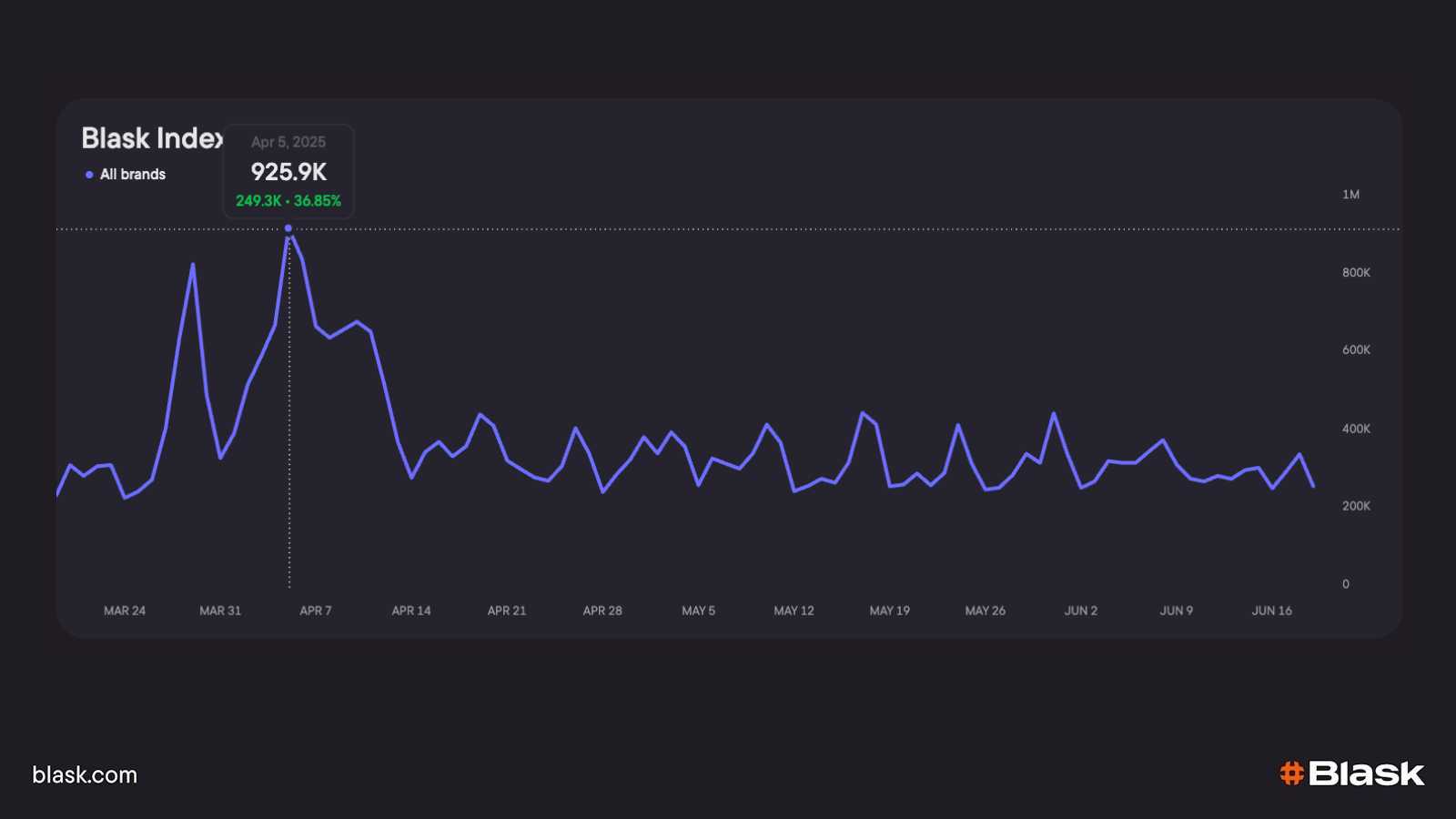
💡 Key point: Blask Index is not traffic, not GGR and not an FTD count. It is the demand layer.
Acquisition Power Score and Competitive Earning Baseline sit further down that pipeline and should not be read as a streamer scorecard.
📚 Read more: What is Blask Index
Creators sit next to affiliates, not above them
Calling creators “the new affiliates” hides the contract. Many deals are still CPA, hybrid or a media fee against an affiliate tracking link. The difference is the inventory: a live audience and a public archive, rather than a comparison page.
📚 Read more: What is iGaming affiliate marketing
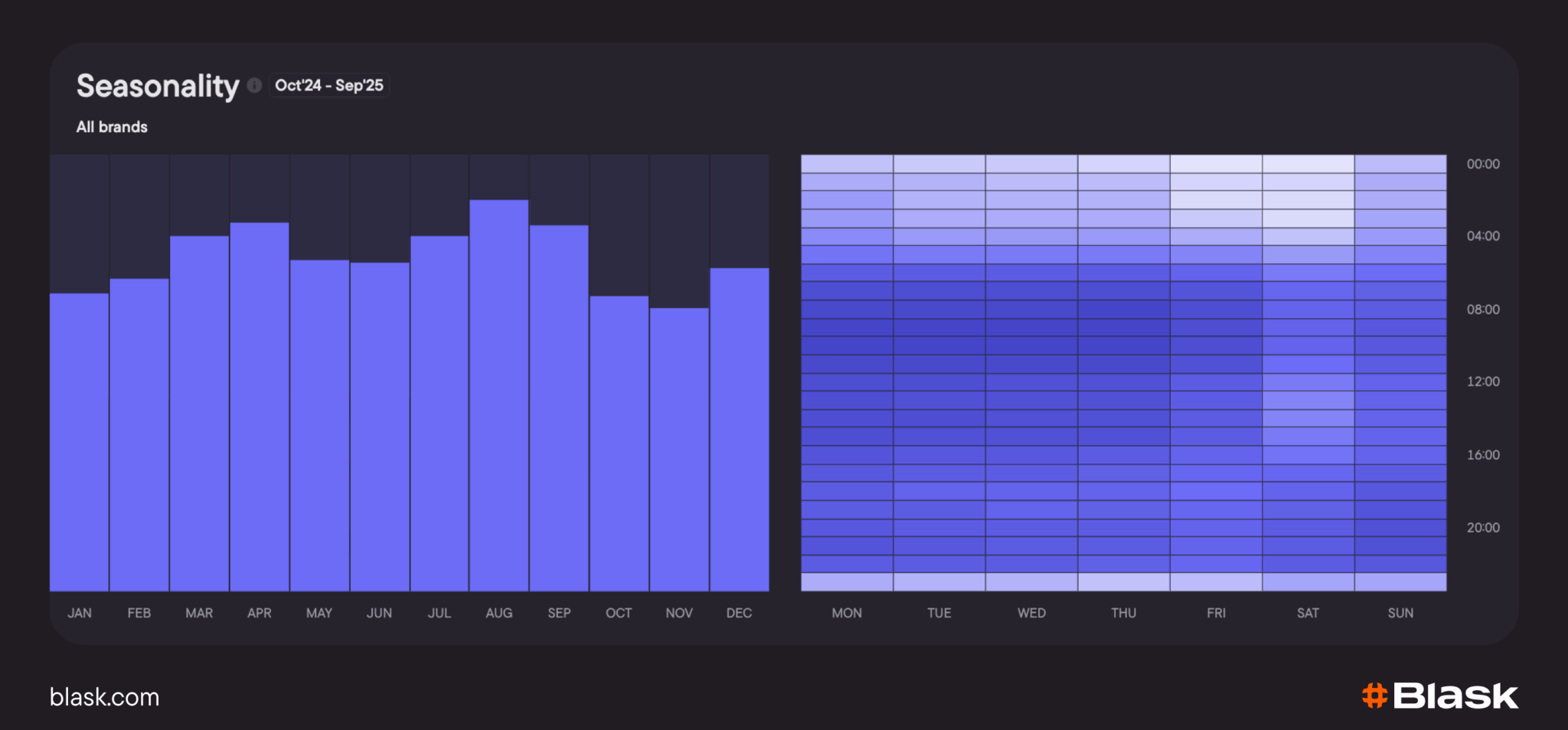
That inventory is timed. A Sunday football slate and a Tuesday afternoon are not the same demand condition in a sportsbook market. Seasonality in Blask Index is the reason two identical creatives can print different lifts in the same country.
It is also regulated. Great Britain, Brazil and a growing list of US states restrict who can appear in gambling advertising and what a stream can show. A creator who is legal inventory in one geo is not automatically legal inventory in the next.
What a clean read looks like
The comparison is the brand against itself, in one geo, in a tight window.
Before the stream, the brand has a demand baseline. During and immediately after, Index either leaves that baseline or it does not.
A spike that is national when the creator’s audience is one country is probably not that creator. A spike that matches the geo and then collapses to the exact pre-stream line is attention without residual demand.
Competitive context belongs in the same window. If a rival brand in that country jumps on the same hour, the lift may be the match, the bonus or the news cycle. Creator attribution that ignores the rest of the market is just a recap of the broadcast.
Games can be part of the same read. A casino stream tied to a title that is already losing share of interest in that country is asking the creator to push against the shelf. Alignment with a title that is already gaining is a different experiment. Neither result should be inferred from chat size.
What this page is not
It is not a briefing template for Customer Profile tabs. It is not a three-band APS workflow. It is not a promise that a 15% Index move equals a round number of first-time depositors.
Those conversions are operator-side, and they depend on the cashier, KYC and the offer — the same variables that sit inside any other channel.
📚 Read more: What APS and CEB mean in iGaming
The industry already has a word for paying for attention that does not become demand. Inflated customer acquisition cost on creator deals is usually that word, not a failure of the format.
Bottom line
Influencers remain a distribution surface in iGaming. The 2026 test is the same test as every other paid surface: whether branded demand in the target market moved, in time with the placement, against a baseline and against rivals.
💡 Views are the inventory metric. They are not the campaign result.