

- Updated:
- Published:
How to reduce CAC in sports betting: 6 tactics operators actually use in 2026

Customer acquisition cost in sports betting has reached $250–$750 per player and is still climbing. Prediction markets are bidding up the same sports keywords and media inventory that traditional sportsbooks rely on, while operators opening new regulated states and provinces face the same auction pressure from day one.
Cutting spend alone does not fix the unit economics — the operators that keep CAC workable in 2026 change how they acquire and retain players. Below are six tactics on how to reduce CAC in sports betting.
1. Identify markets where your brand already has organic strength — and start there
2026 is a year with a severe competition across iGaming operators. To reduce CAC in order to draw players attention, it’s better to launch paid acquisition campaigns in countries where the brand already has a strong organic presence.
For example, on 13th July, Alberta (Canadian province) iGaming went live. Bet365 is one of the operators who applied for the local license. This brand already takes place in a top-5 leaderboard, holding the third place with 5.22%. It means that paid acquisition campaigns could be cheaper for Bet365 because users there know about this brand.
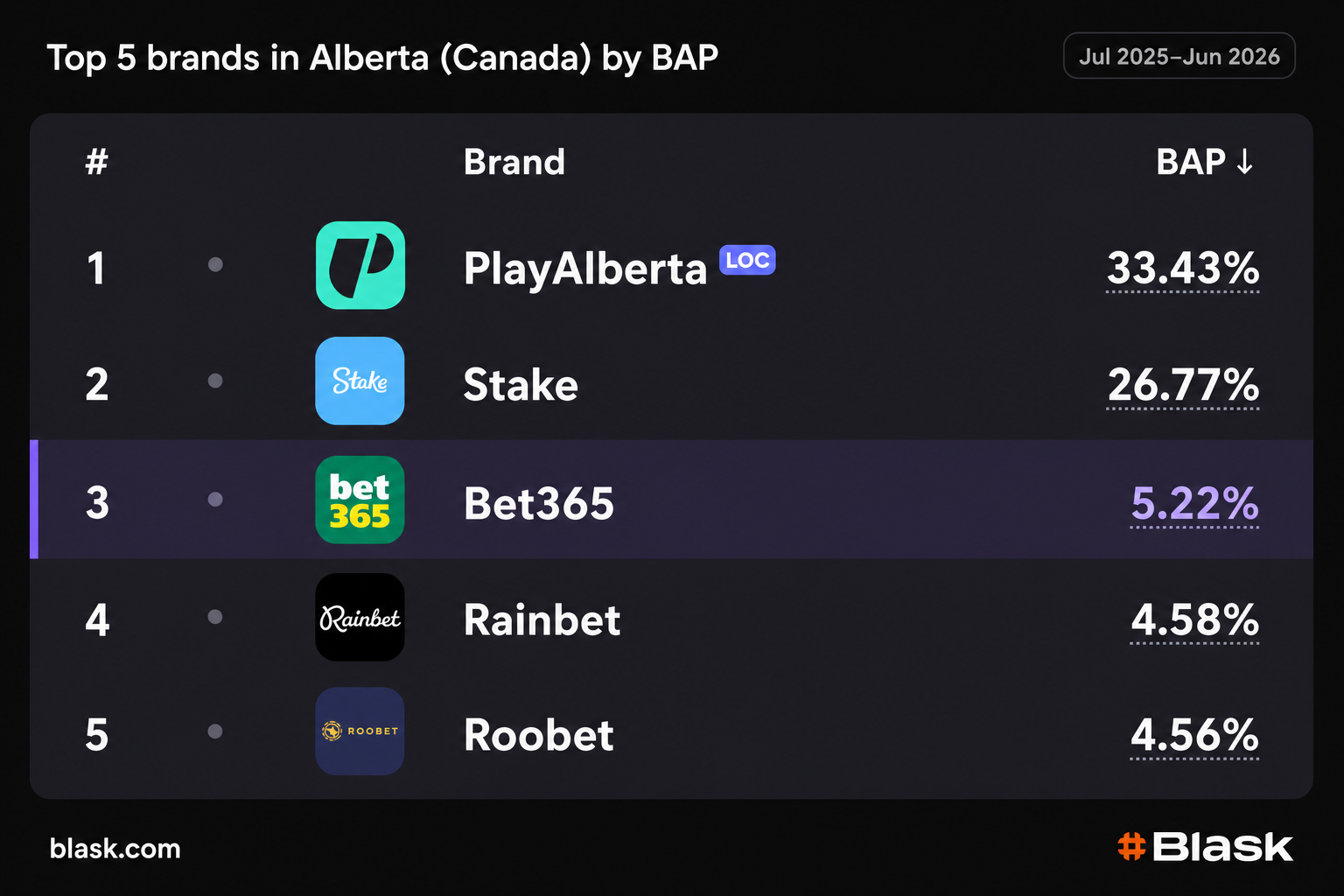
This is how Blask can help. Thanks to detailed analysis of each brand’s dynamics, operators can evaluate their position in a particular market.
Or another example. NV Casino is the only offshore brand in Sweden’s top tier. If it obtains a local licence and starts marketing in channels available only to licensed operators, its CAC will be far lower than a cold-entry competitor’s. The reason is the same iGaming paid VS organic acquisition logic: it is already on the leaderboard. Paid spend buys conversion on known demand, not awareness from scratch.
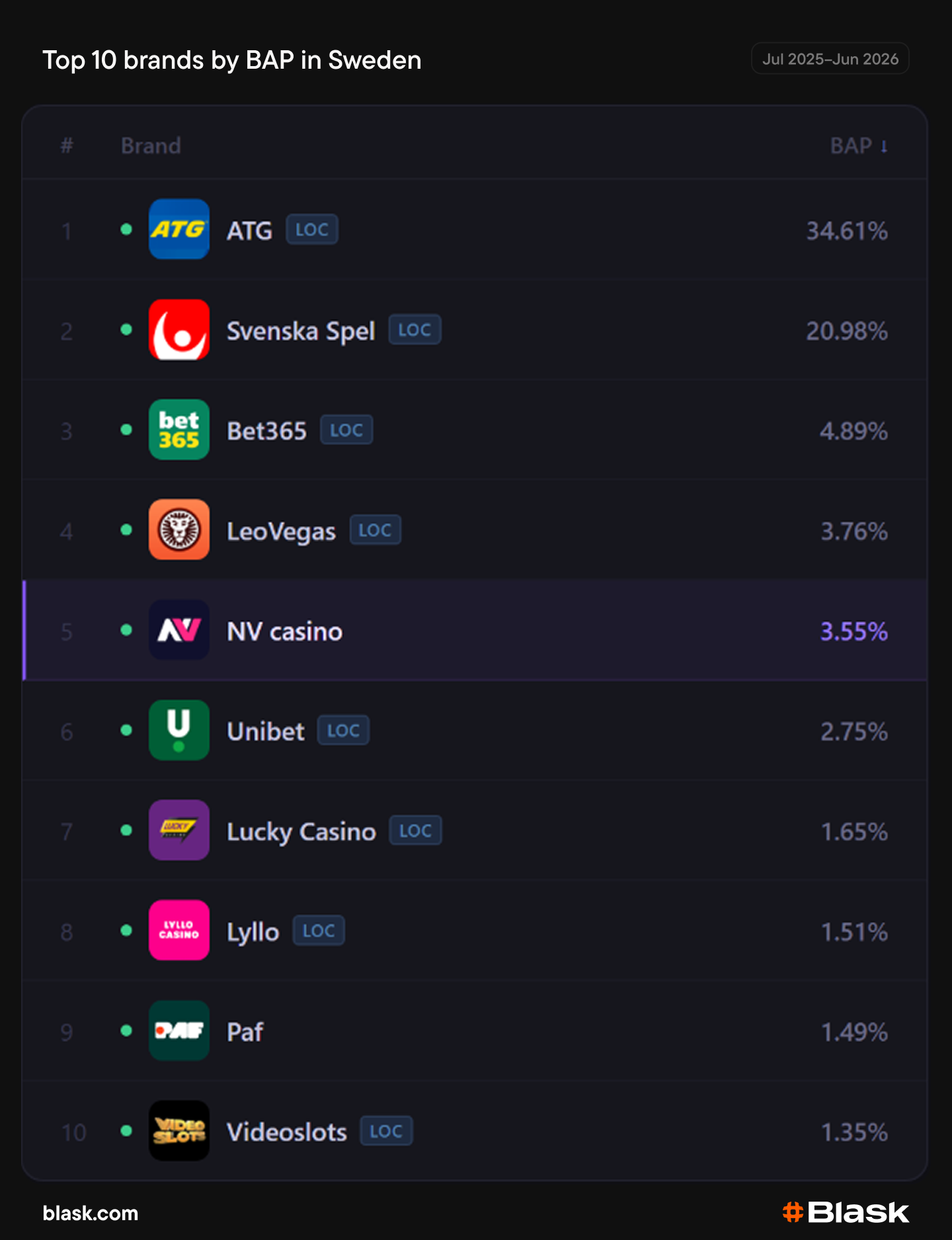
NV Casino is the only offshore brand in the Swedish top 10 leaderboard.
2. Use APS to detect funnel leaks before they inflate your CAC
Flaws in the funnel can be the reason for high customer acquisition cost sports betting 2026. Sometimes these funnels can be detected only at the end of the month, but sometimes they are invisible because all metrics are growing, the product is growing, everything is OK.
Comparison to rivals is a strong tool enabling operators to understand whether the funnel has leaks or not. Two brands with the similar CEB can have identical APS. Cases can be even more contrasting, for example, Easywin and NairaBet.
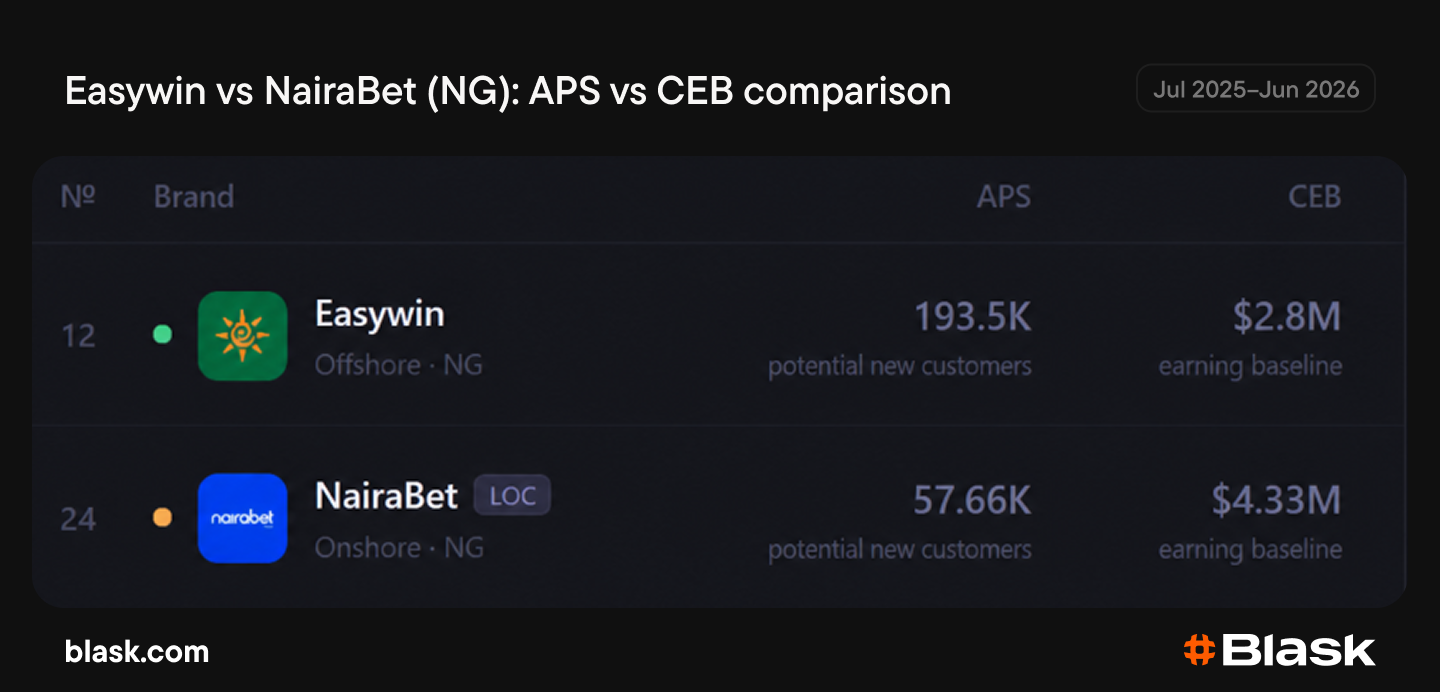
Two brands operate in the same market, but have absolutely different results.
Easywin and NairaBet operate in the same market, Nigeria. NairaBet carries a 55% higher CEB ($4.33M vs $2.8M), meaning Blask’s model gives it a stronger earning baseline — more visibility, more market potential. But its APS is 57.7K versus Easywin’s 193.5K. Same market, stronger position on paper — 3.4x fewer active players.
| That gap is exactly what Blask’s APS is designed to flag. If the operator notices a big difference between its and rivals’ APS, it could be a signal of funnel leaks. |
3. Benchmark revenue against CEB, not just internal targets
Most sportsbook teams still judge performance the same way: this month’s GGR versus last month’s. But this does not answer whether an operator is winning the market. A book can post +10% MoM while category demand and peer monetization run at +30%. Internally the dashboard looks green; competitively the brand is leaking share of earning power.
CEB is Blask’s AI-generated revenue corridor for a brand at its current market position — Worse / Average / Better. It estimates how much a sportsbook could earn in a particular country.
Operators can pair CEB with APS in order to improve iGaming acquisition cost optimization. If APS is healthy and their GGR still sits below the Worse band, the leak is monetization. For example, the problem in retention, product mix, cross-sell, promo waste. Pouring more budget into CAC in that state buys more of the same under-earning base.
Clear example. In June 2026, Blask CEB and APS for the UK put two major sportsbooks almost on top of each other by audience — and far apart by earning baseline:
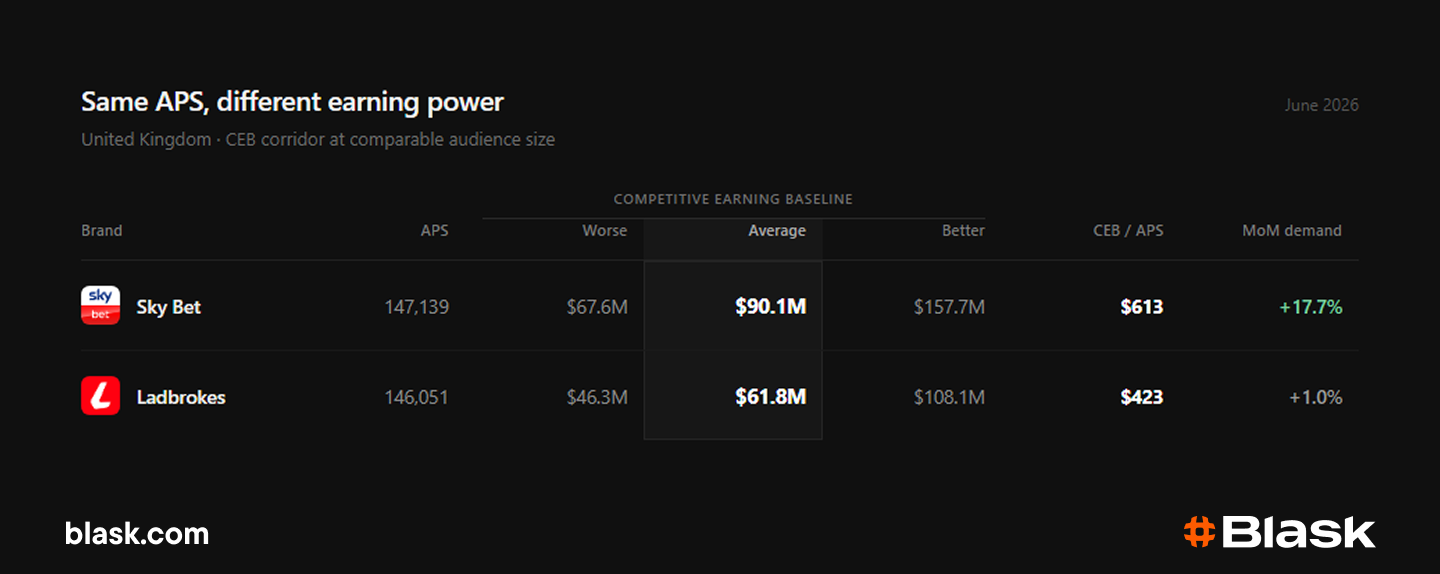
Sky Bet and Ladbrokes have almost the same APS; however, their CEB is different.
Same scale of active demand (~146–147k APS), but Sky Bet’s Average CEB is about 46% higher. A Ladbrokes-style MoM read (+1% demand) can look like a traffic problem and trigger another acquisition push.
That is the CAC decision CEB is built for. When the corridor says the operator is under-earning for its position, the efficient move is to raise revenue per acquired player. When APS is weak and CEB tracks that weakness, then — and only then — acquisition is the lever.
4. Target high-value segments, not just volume
Paying $500 for a user who places one bet and churns is a transfer of marketing budget into a short-lived handle with no LTV behind it. The operators that are winning on CAC in 2026 are not buying the cheapest click. They are buying the player who stays, deposits again, and compounds value over months.
BetMGM made that trade-off explicit. In Q1 2026 the brand reported a deliberate shift toward quality over volume: average monthly active users fell 9% YoY, while handle per active user rose 23% (online sports NGR per active user +25%). Management framed the lower headcount as the result of disciplined acquisition and player management focused on a premium-mass audience. Fewer accounts, higher value per account.
Blask Customer Profile turns that strategy into targeting rules, helping to reduce CPA for sports betting operators. Built from 80,000+ player surveys, it gives a live portrait of the average bettor by country:
- age,
- income,
- employment,
- product mix,
- motivations (earn-money / thrill vs casual)
- first-touch channels (YouTube, social including Telegram, search, affiliates).
Instead of buying “sports fans 18–34” as one bucket, operators can push spend toward cohorts with higher predicted LTV.
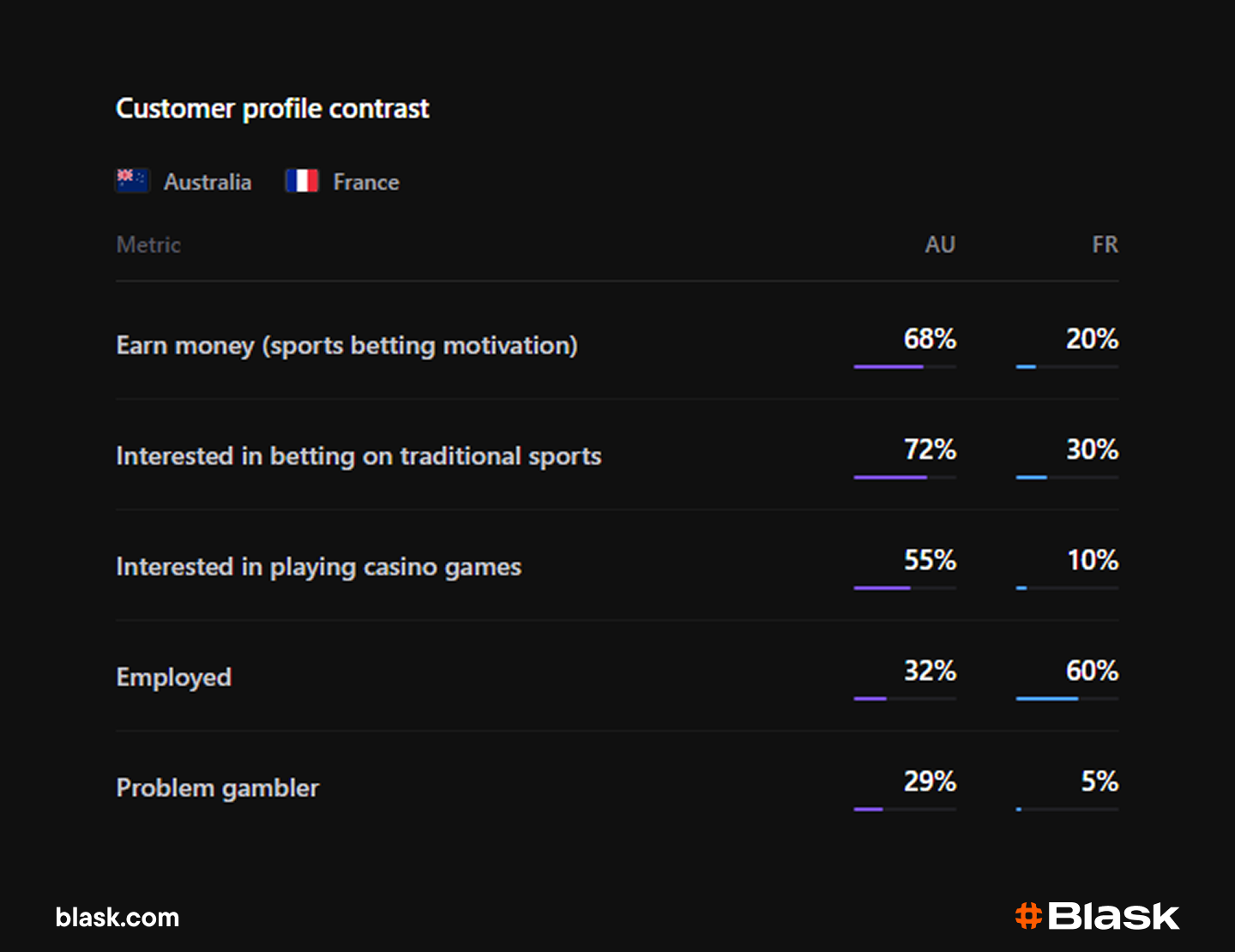
Australia and France are both tier-1 markets but with absolutely different players’ preferences.
For example, Australia looks like a high-intensity market: the average player is older, more money-driven, and more product-hungry. France is calmer and more selective: more wage-employed, less “earn money” energy, thinner casino appetite. Although there is the same tier on paper, they require different bonus mechanics, channel mix, and LTV assumptions in practice. This is exactly where sports betting marketing efficiency is checked.
5. Time your campaigns around market demand peaks, not calendar
Launching campaigns on fixed calendar dates means paying full CAC whether or not the audience is ready to convert. Match days, tournament brackets, regulatory openings, and seasonal sports calendars create windows where organic interest is already several times higher than a quiet Tuesday in the off-season. Buying attention in those windows is cheaper than manufacturing it.
Blask Index updates hourly for every market and makes those windows visible in real time. When the index is already climbing — IPL starts in India, a newly opened regulated market, a World Cup knockout night — acquisition rides an audience that is warming itself.
The 2026 World Cup made the pattern measurable. On the day the US faced Belgium, Blask’s US World Cup Index rose 51% versus the previous day — even though the US lost 4–1 on the pitch.
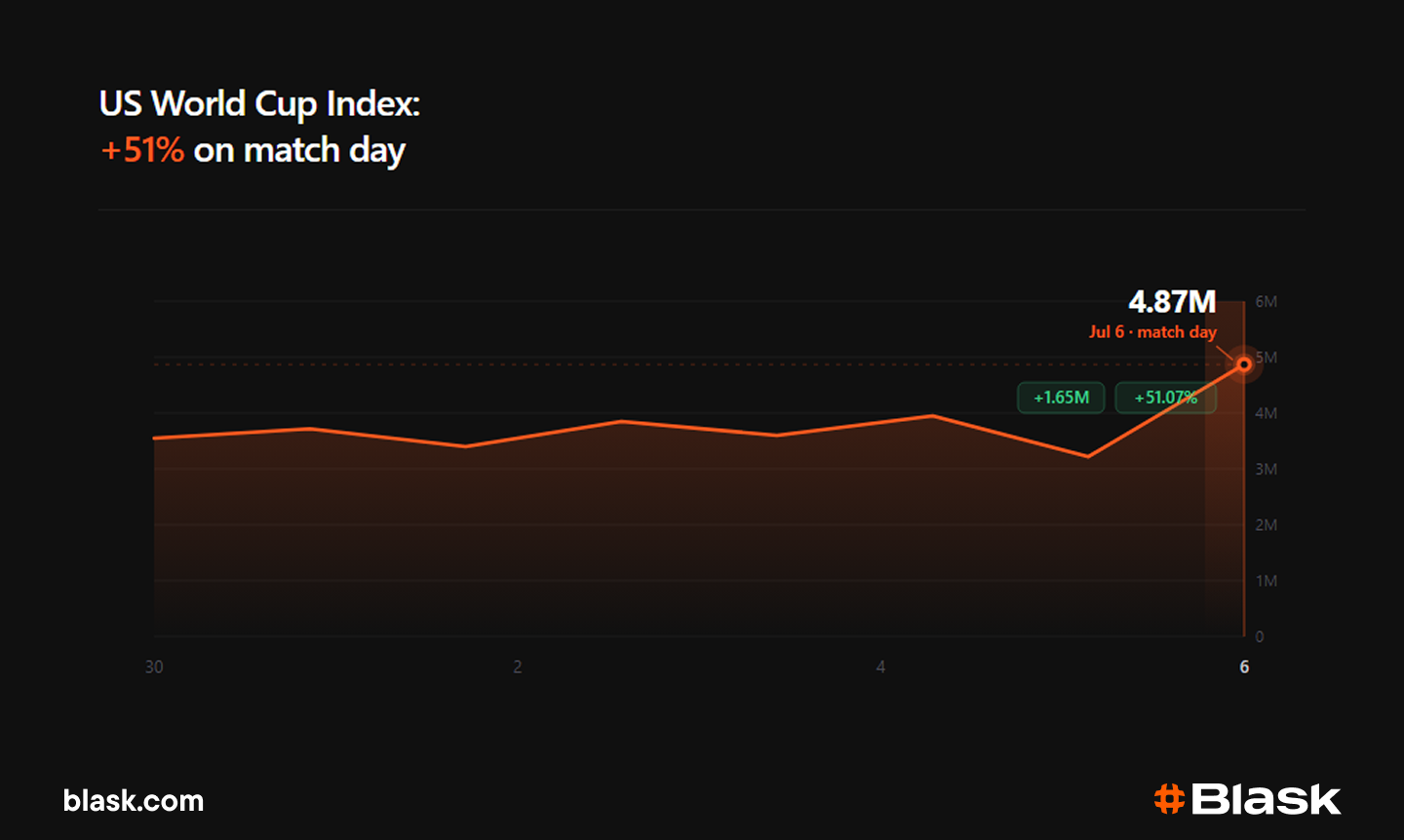
The surge was not driven by the result. It was driven by pre-match drama: Folarin Balogun’s red-card suspension, a presidential call to FIFA, and a disputed decision that let him play. That controversy turned an elimination fixture into the tournament’s dominant pre-match story, and player activity spiked before kick-off.
6. Target GEOs where online betting is more popular than online gambling
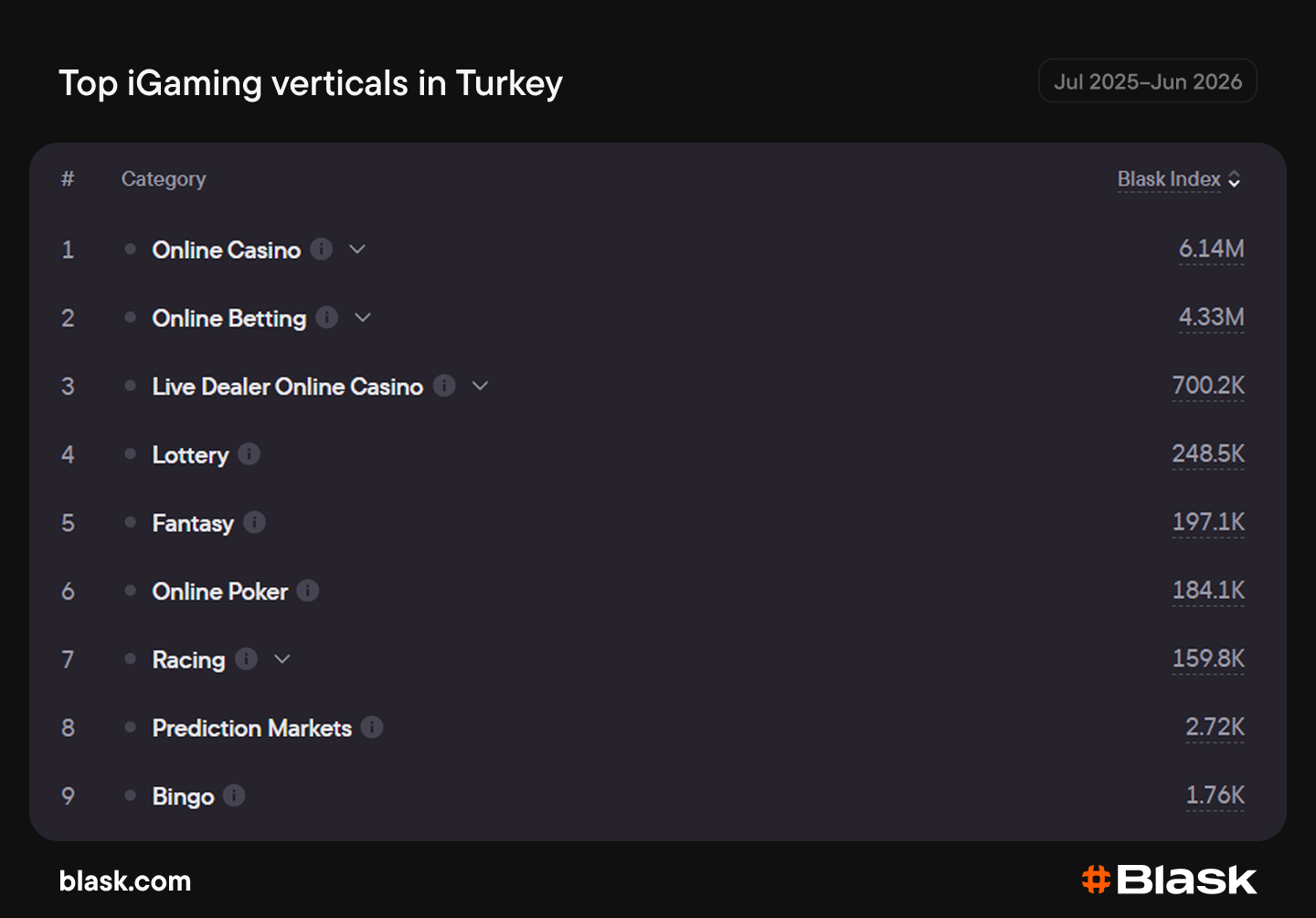
There are a few countries where online betting is not the most popular iGaming category. Instead, people in these jurisdictions prefer online casinos or even lotteries. For example, Turkish players like gambling more than betting — there is an almost 1.5x difference.
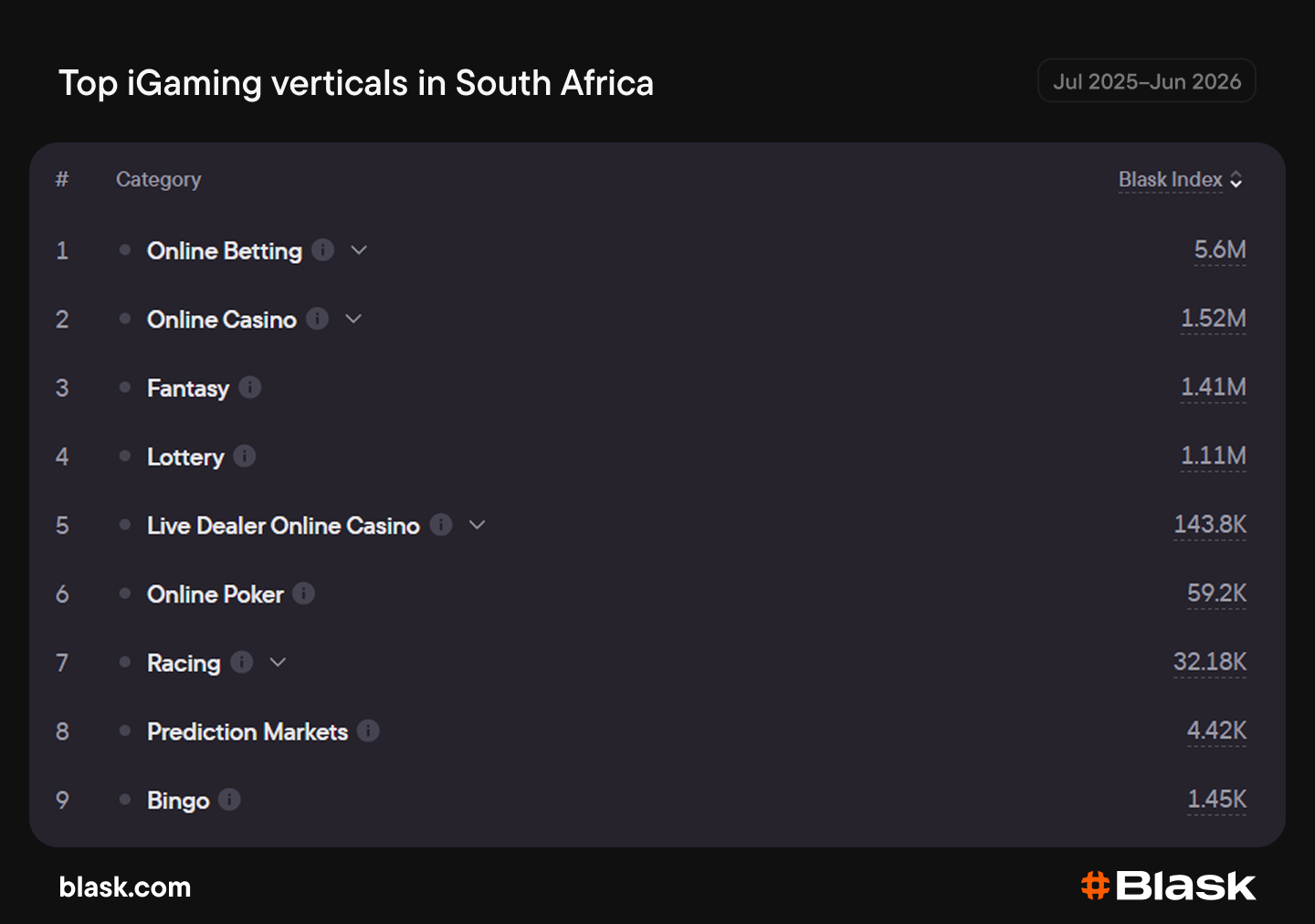
But South Africa demonstrates the picture that betting-focused operators need. This iGaming category heavily dominates here with an almost 3.7x gap.
Some countries show interest in a niche type of betting. For example, in Japan racing takes second place after lotteries. It means that classical sports betting will not have a huge demand. Instead, iGaming operators need to focus on racing and its types (horse racing, boat racing, keirin — the kind of sport existing only in Japan).
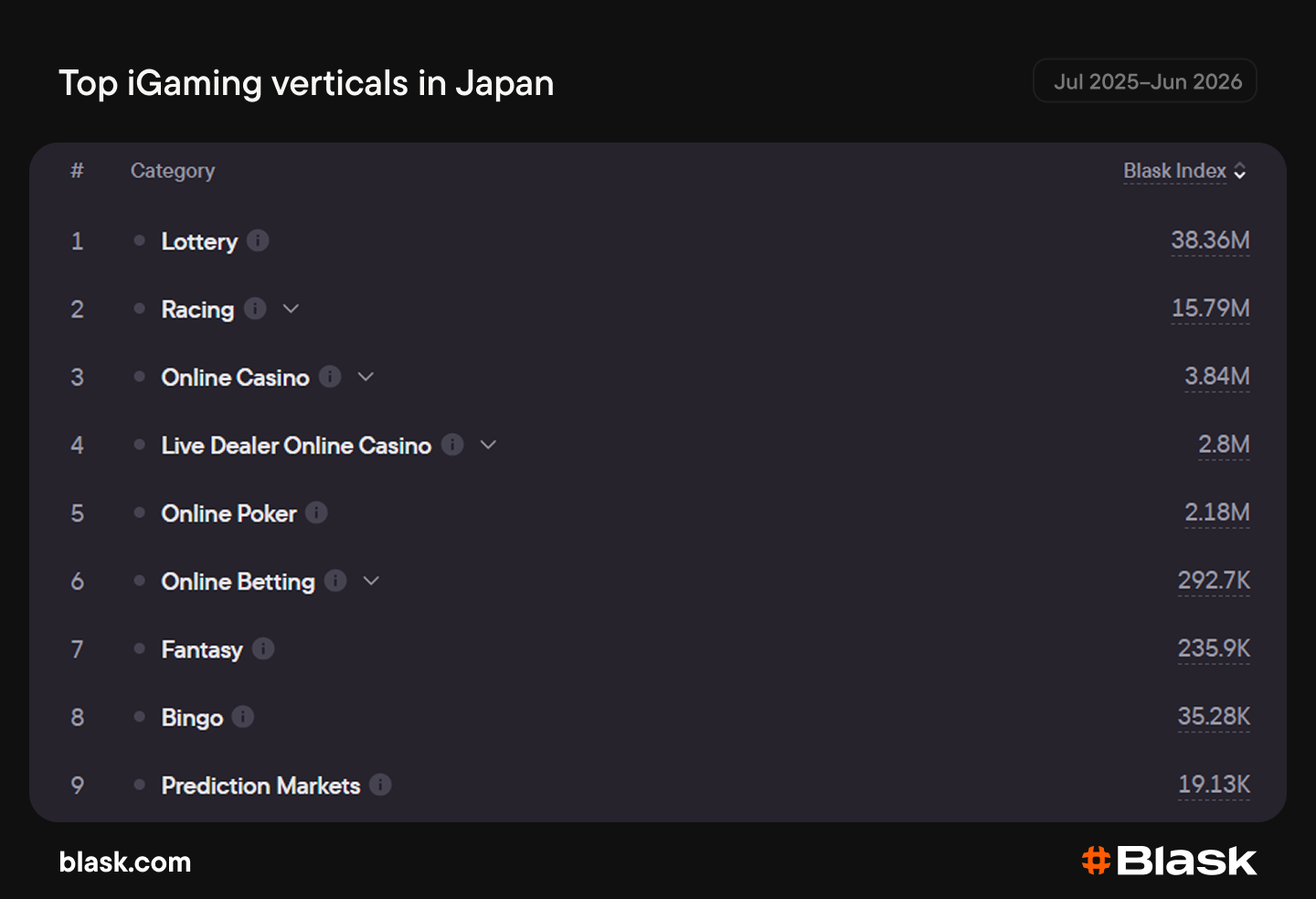
Blask helps to identify popular iGaming categories in different GEOs. It will help to choose with GEOs to prioritize and when it’s important to change the strategy by focusing on gambling instead of betting.
Bottom line
Cutting CAC is not about shrinking the media budget — it is about spending with precision. Brands that know their BAP, keep APS in view, and buy when demand is actually peaking pay less per FTD while keeping the same growth volume. The rest keep bidding into noise and calling it acquisition strategy.
Want the metrics behind these tactics? See what APS measures — or book a Blask demo and pressure-test your own corridor against the market.